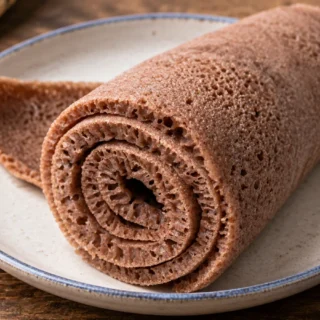
Combine 2 cups teff flour with 3 cups distilled water in a glass or ceramic bowl and stir smooth. Distilled water matters here because chlorine and fluoride suppress the wild microbes that drive the ferment.
Cover the bowl with a breathable cloth or loosely laid plastic wrap - it needs air circulation, not a seal - and leave it undisturbed at room temperature.
Ferment for at least 48 hours and up to 5 days, checking daily. It is ready when the teff has sunk, a layer of liquid has separated on top, the surface bubbles, and the smell is sharply sour. The day count is a range, not a rule; readiness is judged by these signs.
Pour off the separated liquid from the top - Yang's method discards roughly 1¾ cups of foam and liquid. This removes excess acidity and concentrates the batter.
Stir in ½ cup fresh filtered water, then the salt and optional baking soda, until the batter runs like thin crepe batter. Baking soda is a flavor choice: it neutralizes some tang and is not part of a pure traditional ferment.
Grease a preheated cast-iron skillet or non-stick griddle and set it to medium; on an electric skillet target about 325 to 350°F. Too high blows large bubbles, too low makes the batter stick.
Pour the batter from about 6 inches above the pan in a circular motion, working outward, to a thickness of roughly 6 mm. The height and the spiral pour spread it evenly before it sets.
Do not flip. Cover with a lid and cook on medium for about 3 to 5 minutes, until air pockets rise across the surface - around 30 seconds in - and the top is dry to the touch, never wet. Steam under the lid cooks the top so no flip is needed.