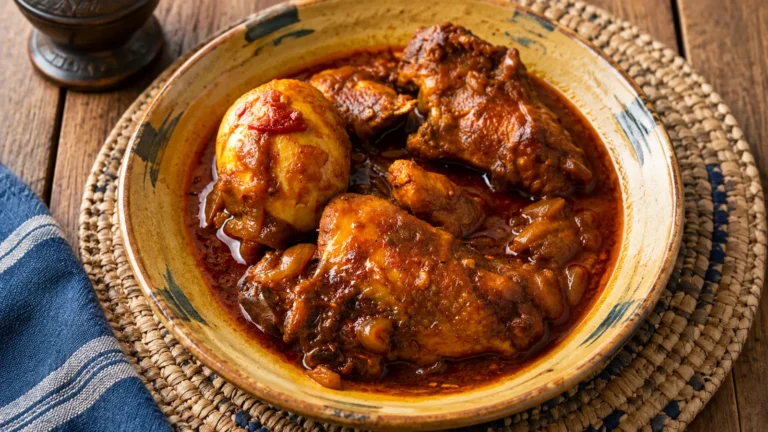
GypsyPlate reports that authentic Doro Wat starts from a whole chicken chopped into exactly 12 pieces, each cut carrying symbolic meaning. That single detail separates a documented Ethiopian stew from a bowl of spiced chicken, and it is the kind of specification most versions quietly drop. This guide to Ethiopian wat recipes cross-references five published sources on two of the best-known stews, Doro Wat (chicken) and Misir Wat (red lentil), pulling out the exact onion timings, berbere quantities, and the fermentation clock behind the injera that carries them. The sources disagree in places. Where they do, the disagreement is spelled out rather than averaged into a single fake number.
Ethiopian wat recipes are built on three fixed parts: a long-cooked onion base, a berbere spice blend, and a spiced butter called niter kibbeh. For Doro Wat, onions go down first, cooked 30 to 45 minutes depending on method, before garlic, ginger, and about ½ cup berbere join them. Bone-in chicken thighs or drumsticks stand in for the traditional 12-piece whole bird. Hard-boiled eggs, slit before nesting, finish the pot. Misir Wat swaps chicken for red lentils, simmered 20 to 40 minutes. Injera, the sour flatbread underneath, needs multi-day fermentation, not hours. Serving sizes run from 4 to 8.
Doro Wat vs. Misir Wat: which wat to start with
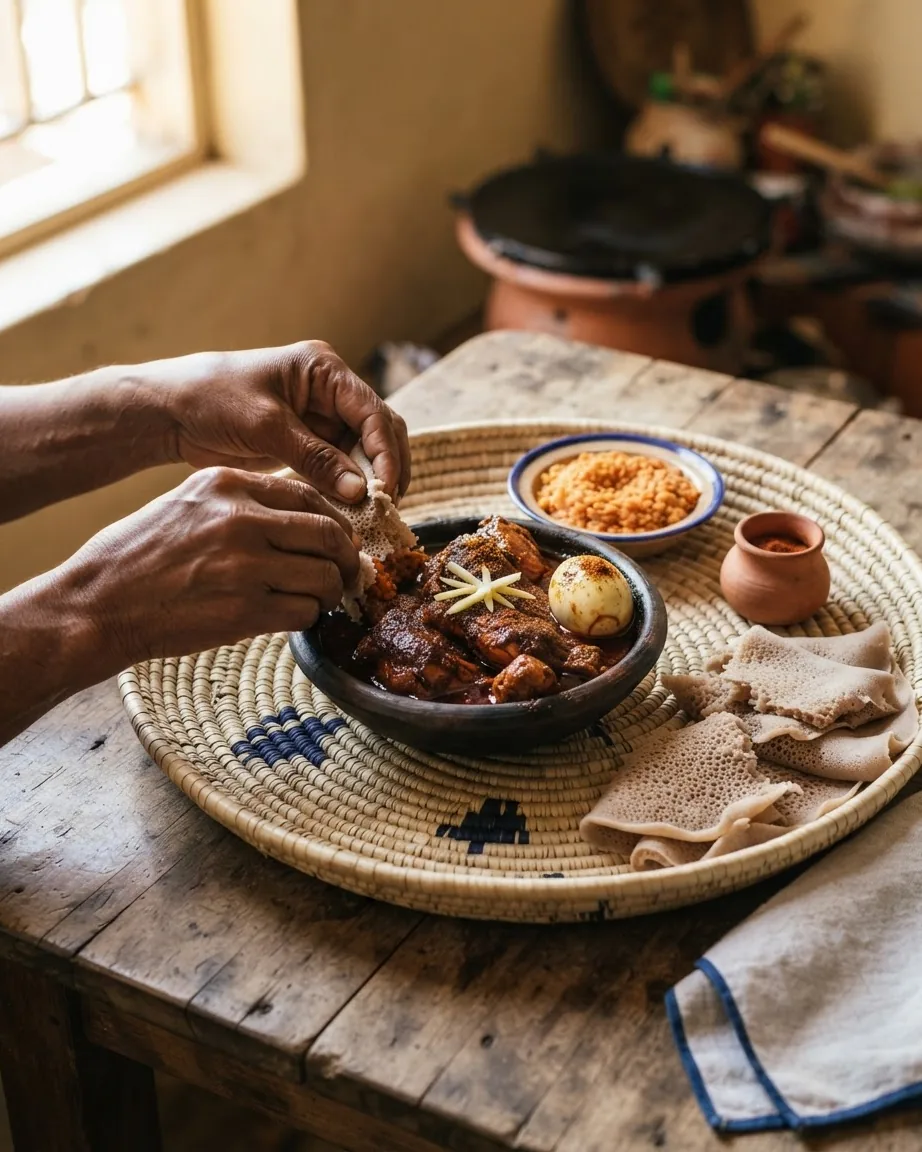
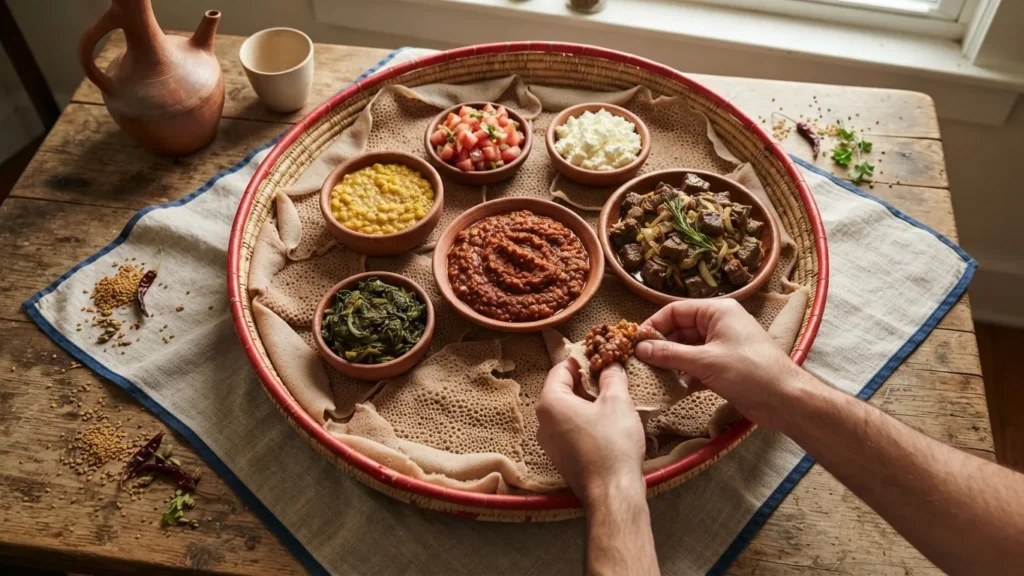
Wat (also spelled wot) is the general Amharic word for the stew that anchors an Ethiopian plate. The two documented here sit at opposite ends of effort. Doro Wat, the chicken version, is the celebration dish, and every source treats it as a long project: GypsyPlate lists a total time of 1 hour 50 minutes across a yield of 8, while Nom Nom Paleo runs 120 minutes total for 6 people. Misir Wat, the red lentil stew, is the weeknight entry point, vegetarian and forgiving.
If this is a first attempt, Misir Wat is the safer build: fewer moving parts, no bone-in poultry to bring to a safe temperature, and a shorter clock. Doro Wat rewards patience but punishes a rushed onion stage. The choice comes down to how much time you have for the onions, which is the part no version lets you skip. For a fuller breakdown of the chicken version alone, see our Doro Wat Recipe and the wider African recipes section.
How to cook the onion base without oiling out the dish
The onion foundation is where the sources split into two camps, and the split is worth understanding before you commit a pan.
My Kitchen Little documents the traditional “dry sweat”: cooking a large volume of onions with no oil at all, over medium heat, until they turn pink and dry out enough to stick to the pan somewhat. That step takes about 35 to 30 minutes as written. The point of the dry method is to drive off water and concentrate the onion without adding fat the dish does not need, which keeps the final sauce thick instead of greasy.
Nom Nom Paleo runs the other approach. Onions go into ¼ cup ghee, cook undisturbed for 1 to 2 minutes, then get turned every 3 to 4 minutes; after they soften and reduce in volume at about the 15-minute mark, the heat drops to medium-low and they continue 30 to 40 minutes until golden brown and caramelized. GypsyPlate splits the difference, sautéing chopped onions in niter kibbeh and olive oil, covered, for about 45 minutes with occasional stirring.
The practical read: the dry method risks nothing in fat and gives the leanest sauce, but demands attention so the onions scorch instead of sticking. The ghee method is more hands-off and more forgiving, at the cost of a richer, heavier base. Either way, budget at least half an hour. No source shortcuts the onions, and neither should you.
Keeping the sauce thick: the hot-water rule
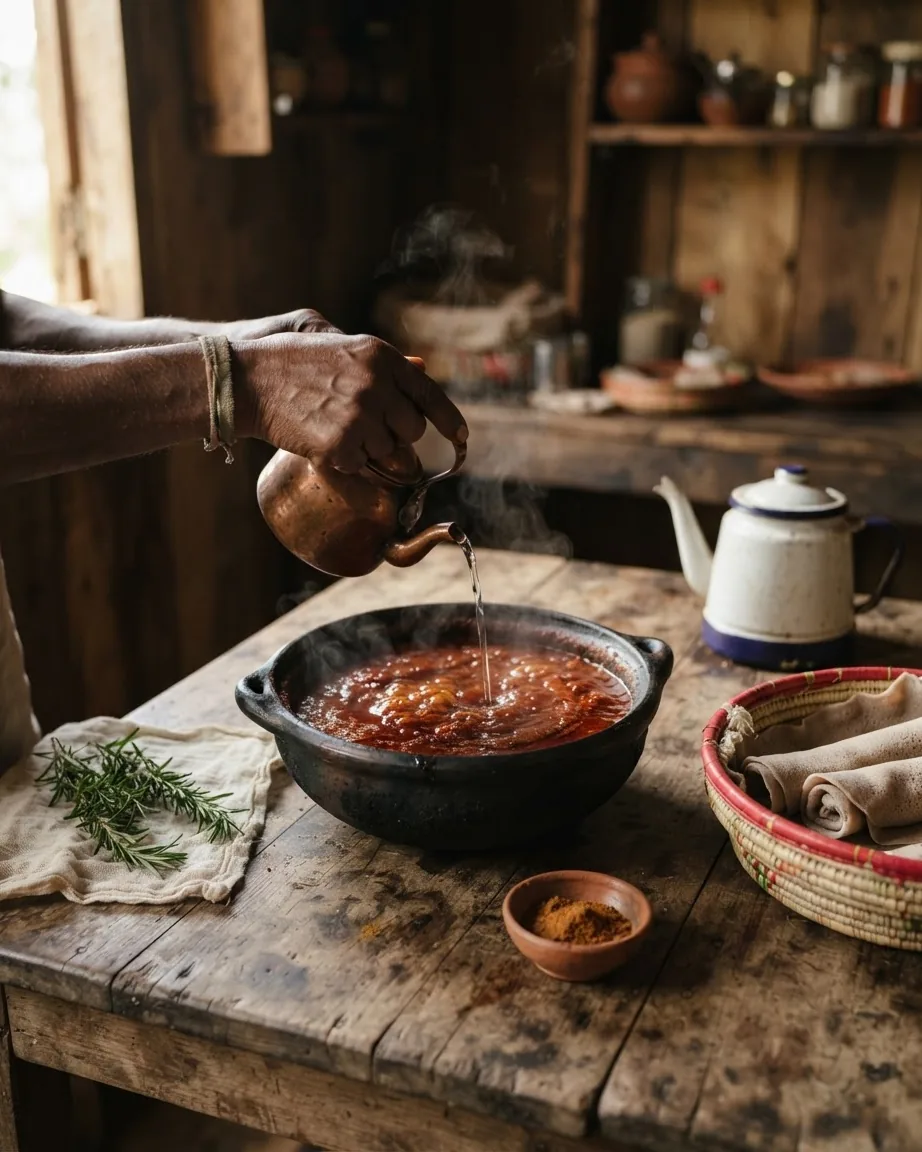
A watery wat slides off injera instead of clinging to it, which defeats the point of the bread. The fix sits inside GypsyPlate’s method: after the berbere and tomato paste go in, add hot water in ¼-cup increments, cooking the spiced onion mixture roughly 30 minutes and topping up only as it dries. Adding water gradually lets each addition cook down before the next, so the base stays a paste rather than a soup.
My Kitchen Little adds a single cup of water with the aromatics and then braises, a lower-liquid route suited to its oven-finish. Nom Nom Paleo goes the opposite direction, using 2 cups chicken broth, then, after the chicken is cooked, uncovering the pot and reducing the liquid by approximately one-third over medium-high for 5 to 10 minutes. All three arrive at the same target: a gravy thick enough to hold on the bread. If yours is thin, the reduction step is the honest correction, not a starch.
The 12-piece chicken cut, and what bone-in thighs change
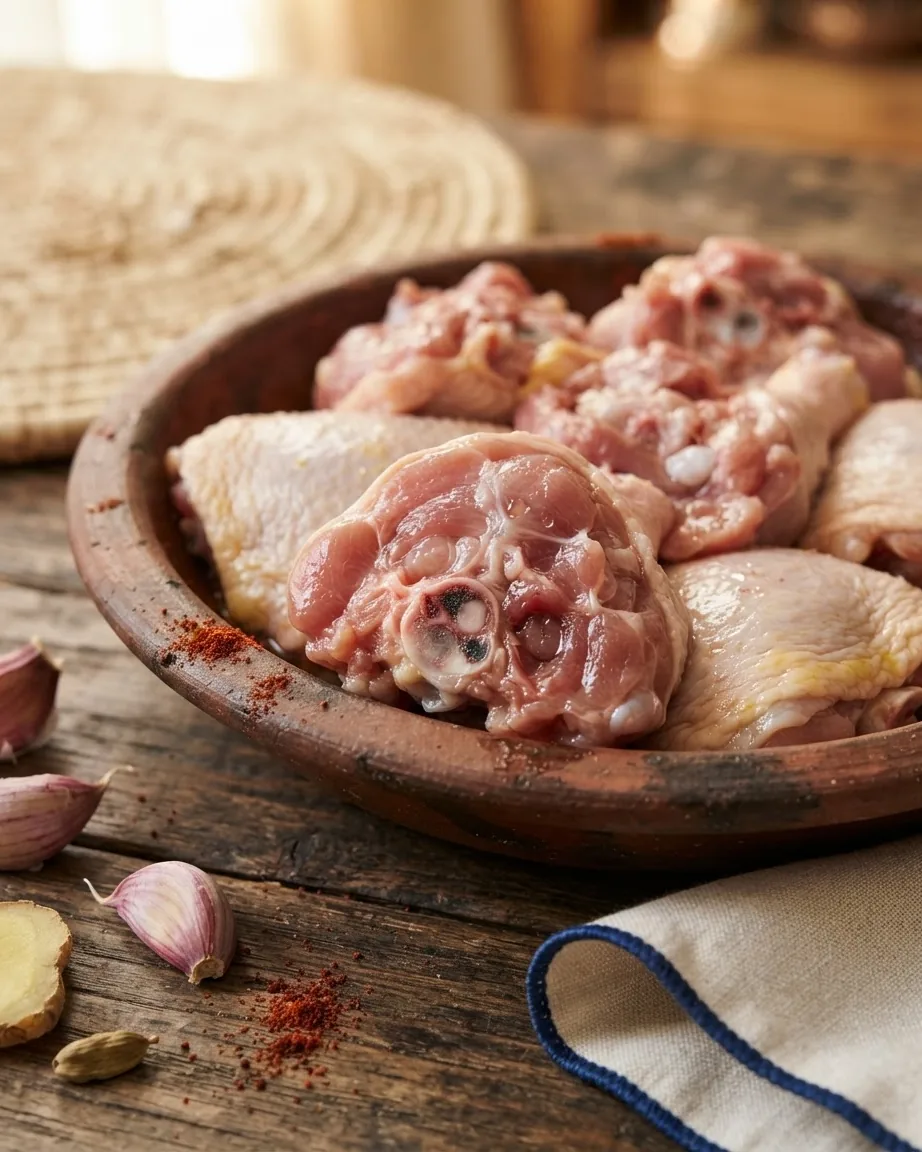
Traditional Doro Wat uses a whole chicken broken into exactly 12 pieces, a cut GypsyPlate notes carries symbolic meaning, and the bird is skinned and given a vinegar-and-water wash before it ever meets the pot. That preparation is the authentic version.
Contemporary published adaptations bypass it. GypsyPlate itself calls for 4 lbs of bone-in, skinless chicken thighs and drumsticks. My Kitchen Little uses 8 skin-on drumsticks and browns them about 4 minutes per side before building the stew, a searing step the traditional stew does not include. Nom Nom Paleo uses 3 pounds of drumsticks, skin on or off.
What the substitution changes: bone-in thighs and drumsticks give a similar flavor profile to the whole-bird cut and are far easier to source, but skipping the vinegar wash and adding a sear moves the dish toward a Western braise. Neither is wrong; only the 12-piece skinned bird is the traditional one, and no adaptation should be sold as such. Whichever cut you use, poultry must be brought to a safe temperature, measured with a food thermometer, per USDA FSIS.
Berbere and niter kibbeh: the two flavor engines
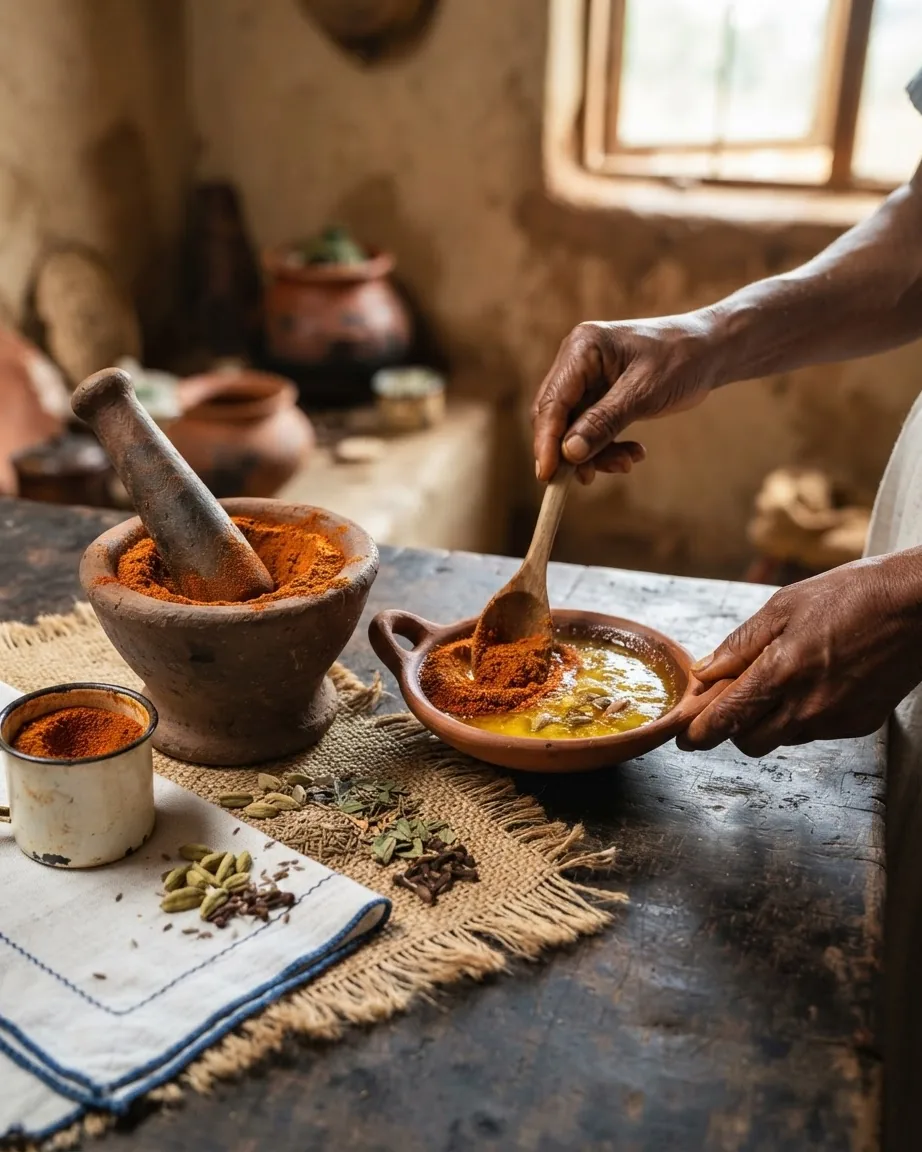
Berbere is the chili-forward spice blend that sets a wat’s heat. My Kitchen Little’s quick-fix version toasts a dry blend – ¼ cup Hungarian paprika, ½ teaspoon each garlic powder, onion powder, and cinnamon, ¼ teaspoon ground cloves, ¼ teaspoon cayenne (or more), ½ teaspoon ground allspice, 1 teaspoon each ground ginger, coriander, and optional fenugreek – in a dry skillet for about 4 to 5 minutes to draw out and activate the flavors. That toast is not optional flourish; raw blends taste flat. Heat sits at the cayenne, so the blend is medium unless you push it.
Commercial berbere sold online sometimes reads flat because of high preservative content, which is the practical argument for the homemade blend above. Fenugreek is the hardest single ingredient to find and is marked optional for that reason; leaving it out mutes a slightly bitter, maple-like note but does not break the dish.
Niter kibbeh is the spiced clarified butter. The Curry Guy documents a from-scratch route: stir the aromatics into the ghee and simmer over medium heat for 30 to 60 minutes, and the finished kibbeh keeps up to six months under refrigeration. If you have none, ghee or plain butter substitutes directly, as My Kitchen Little and GypsyPlate both note; the swap costs the cardamom-and-fenugreek perfume the spiced butter carries but not the body.
How to prepare red lentils for Misir Wat
Misir Wat is the red lentil wat, and here the two sources disagree on the one number that decides dinner. GypsyPlate simmers the lentils about 30 to 40 minutes until soft. Baking Hermann simmers covered for 20 minutes or until the lentils are just tender.
Both are correct for different targets. Red lentils collapse fast, so 20 minutes lands them “just tender” with a little structure, while 30 to 40 minutes takes them to the creamy, broken-down texture many Ethiopian kitchens prefer. Check at 20 minutes; keep going toward 40 only if you want them fully soft. Taste, do not clock-watch.
The base matters as much as the lentils. Baking Hermann sautés finely chopped onion in oil until it begins to turn golden, 8 to 10 minutes, then blends garlic and ginger with around 50ml of water into a smooth paste and cooks it with the onion for 1 to 2 minutes until the liquid evaporates and the raw garlic scent disappears – that evaporation is the cue the aromatics are cooked, not just warmed. GypsyPlate melts niter kibbeh, sautés diced onion 5 to 8 minutes until softened, then cooks the spiced mixture, stirring frequently, for 3 to 4 minutes before the lentils go in. Our Injera Recipe covers the bread these lentils are scooped with.
Injera underneath: fermentation in days, not hours
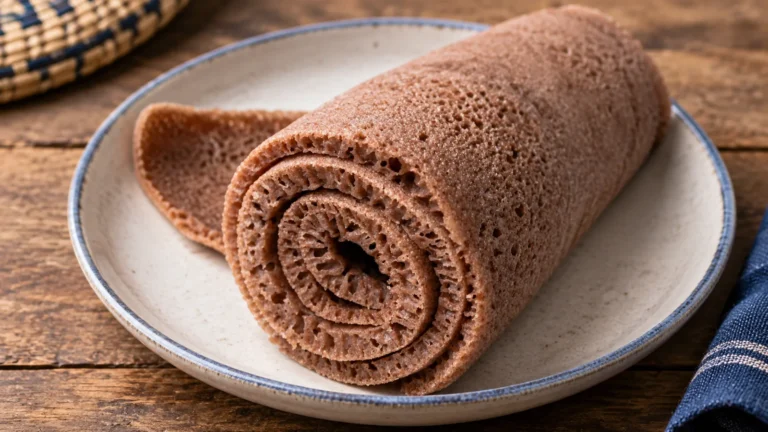
The stew is only half the plate. Injera, the sour, spongy flatbread, is what you eat wat with and off of, and its defining quality comes from natural fermentation measured in days. Injera relies on a multi-day fermentation to develop both the sourness and the open, spongy texture that lets the bread soak up sauce.
Teff blends are common outside Ethiopia because pure teff can be costly and tricky, and an honest recipe says so rather than pretending a same-day batter matches a multi-day ferment. The timeline is the make-or-break: rush it and you get a bland, dense round; give it the days and the sourness and holes arrive on their own. What the exact timeline depends on – flour, starter, and room temperature – is its own subject, treated in full in our injera guide linked above.
Quick-fix berbere blend (My Kitchen Little):
- ¼ cup Hungarian paprika
- ½ teaspoon garlic powder
- ½ teaspoon onion powder
- ½ teaspoon cinnamon
- ¼ teaspoon ground cloves
- ¼ teaspoon cayenne pepper (or more to taste)
- ½ teaspoon ground allspice
- 1 teaspoon ground ginger
- 1 teaspoon ground coriander
- 1 teaspoon ground fenugreek (optional)
Misir Wat: the full recipe (adapted from Baking Hermann and GypsyPlate)
Ingredients, following Baking Hermann’s blended aromatic base. Vegetarian.
- 1 cup dry red lentils, rinsed
- 1 onion, finely chopped
- 2 tablespoons oil (or niter kibbeh)
- 3 garlic cloves, peeled
- 1-inch piece ginger, peeled
- 50 ml water (for blending), plus water or stock for simmering
- 2 to 3 tablespoons berbere spice blend
- Salt, to taste
Steps:
- Sauté the onion in the oil over medium heat for 8 to 10 minutes until it begins to turn golden.
- Blend the garlic and ginger with 50 ml water until smooth (or finely grate both).
- Add the paste to the onion and cook 1 to 2 minutes until the liquid evaporates and the raw garlic scent disappears – the signal the aromatics are cooked through.
- Stir in the berbere and cook briefly until fragrant.
- Add the rinsed lentils and enough water or stock to cover, then simmer. Check at 20 minutes for “just tender”; continue toward 40 minutes for a creamier texture.
- Season with salt and serve with injera.
Getting the eggs and the leftovers right
The most common Doro Wat miss is bland eggs floating in a deeply spiced pot. The documented fix is mechanical: cut small slits into the peeled hard-boiled eggs before nesting them, so the sauce works into the whites instead of beading off the surface. GypsyPlate adds the slit eggs and cooks them in the finished stew 5 to 10 minutes, long enough for the sauce to color and season them.
On storage, refer to the FoodSafety.gov cold storage chart for how to handle hard-cooked eggs. That guidance applies to eggs held in the finished wat as well. When in doubt on any leftover, the food thermometer, not the calendar, is the honest test for the reheated chicken.
Onion-Base Time Budget: Three Methods, Side by Side
The onion foundation is the one stage no source lets you skip, but the published timings hide a real spread once you add up each method’s own steps. Here is what each source actually commits you to before garlic and berbere ever go in.
- My Kitchen Little (dry sweat): no oil, in a single stage.
- GypsyPlate (ghee + olive oil, covered): about 45 minutes in a single sauté.
- Nom Nom Paleo (ghee, two stages): ~15 minutes to soften, then 30 to 40 minutes to caramelize – a total of 45 to 55 minutes.
Put those totals against each other and the planning math is clear: the fastest route (dry sweat, 30 minutes) and the longest (Nom Nom Paleo’s full two-stage ghee method, 55 minutes) sit 25 minutes apart. Even between the two ghee methods, GypsyPlate’s 45 minutes and Nom Nom Paleo’s low-end 45 minutes match, while its high end runs 10 minutes longer. If your window is tight, the dry-sweat method saves you up to 25 minutes over the slowest caramelization – at the cost of steadier attention so the onions stick rather than scorch.
Frequently asked questions
Can I use store-bought berbere instead of making it?
You can, but commercial blends sold online sometimes taste flat from high preservative content, which is why the homemade toasted blend is preferred. If you buy it, toast it briefly in a dry pan before use to wake up the spices, and start with less – potency varies widely between brands, and you can always add more heat.
Why do the two Misir Wat sources give different cooking times?
They target different textures. Baking Hermann’s 20 minutes leaves the red lentils “just tender” with some structure, while GypsyPlate’s 30 to 40 minutes takes them fully soft and creamy, the more common Ethiopian preference. Red lentils break down quickly, so start checking at 20 minutes and cook further only for a smoother result.
What can replace niter kibbeh if I can’t find it?
Ghee or regular butter substitutes directly in every wat here, as My Kitchen Little and GypsyPlate both note. You lose the cardamom-and-fenugreek aroma the spiced butter carries, but not the richness or body. To make your own, The Curry Guy’s method simmers aromatics in ghee for 30 to 60 minutes, and it keeps up to six months refrigerated.
Do I have to use a whole 12-piece chicken?
No. The 12-piece skinned whole bird with a vinegar wash is the traditional cut, but 4 lbs of bone-in thighs and drumsticks give a similar flavor and are far easier to source. Just note that skipping the vinegar wash and searing the pieces moves the dish toward a Western braise rather than the authentic stew. Can I make Doro Wat ahead of time? Yes, and the onion base rewards it. Because the foundation depends on a 30 to 45 minute onion stage no source shortcuts, cooking it a day ahead spreads the work and lets the berbere settle into the sauce. Store the finished stew refrigerated and reheat the chicken until it returns to a safe temperature, checked with a food thermometer rather than by eye. The slit eggs are best added during the final reheat so they take on color and seasoning without turning rubbery from a second long cook. Which wat should a beginner cook first? Misir Wat. It has fewer moving parts, no bone-in poultry to bring to a safe internal temperature, and a shorter simmer, with lentils checked from 20 minutes. Doro Wat is the celebration project, running close to two hours in the sources here, and it punishes a rushed onion stage more than the lentil stew does. Build confidence on the onion base and berbere with Misir Wat, then step up to the chicken version. Bringing the plate together Every wat in this guide stands on the same three legs: a patiently cooked onion base, whether dry-sweated with no oil or caramelized in ghee, a toasted berbere blend, and niter kibbeh for body. The numbers the five sources give diverge in exactly two places worth naming, the Misir Wat simmer of 20 versus 30 to 40 minutes and the traditional 12-piece chicken versus adapted bone-in thighs, and both divergences are choices about texture and authenticity rather than errors. Cook the onions all the way, keep the sauce thick with gradual hot water, slit the eggs, and give the injera its days to ferment. Do those and the plate holds together the way it is meant to.
Ethiopian Wat Recipes: The Onion Base, the Berbere, and the Timings Five Sources Actually Give
Ingredients
- 8 chicken drumsticks (skin on)
- Salt and pepper, to season
- ½ cup berbere spice blend (recipe below)
- 2 tablespoons vegetable oil, plus more as needed
- 3 large red onions, finely chopped
- 6 garlic cloves, minced or grated
- 1.5 -inch piece fresh ginger, peeled and minced
- 2 teaspoons chicken stock concentrate (such as Better Than Bouillon)
- 3 Roma or vine-ripe tomatoes, cut into wedges
- 1 tablespoon niter kibbeh (ghee or regular butter can substitute)
- 6 soft or hard-boiled eggs
- 1 cup water, plus more as needed
Instructions
- Toast the berbere: combine all spices in a large dry skillet over medium heat and stir occasionally for 4 to 5 minutes until fragrant, which activates the flavors. Set aside.
- Season the drumsticks with salt and a little of the berbere. Heat the oil in a Dutch oven or braising pan over medium-high; brown the chicken about 4 minutes per side until golden, then remove.
- Wipe the pan, reduce heat to medium, and add the onions with no oil. Cook 30 to 35 minutes, stirring occasionally, until pink, dried out, and sticking to the pan somewhat.
- Preheat the oven to 375°F (190°C).
- Add the garlic, ginger, ½ cup berbere, stock concentrate, niter kibbeh, and tomatoes. Cook 2 minutes, then add 1 cup water. Return the chicken, cover, and braise until the meat reaches 165°F (73.9°C); add water in small amounts if it dries.
- Slit and nest the eggs into the sauce so it can penetrate. Serve hot with injera.