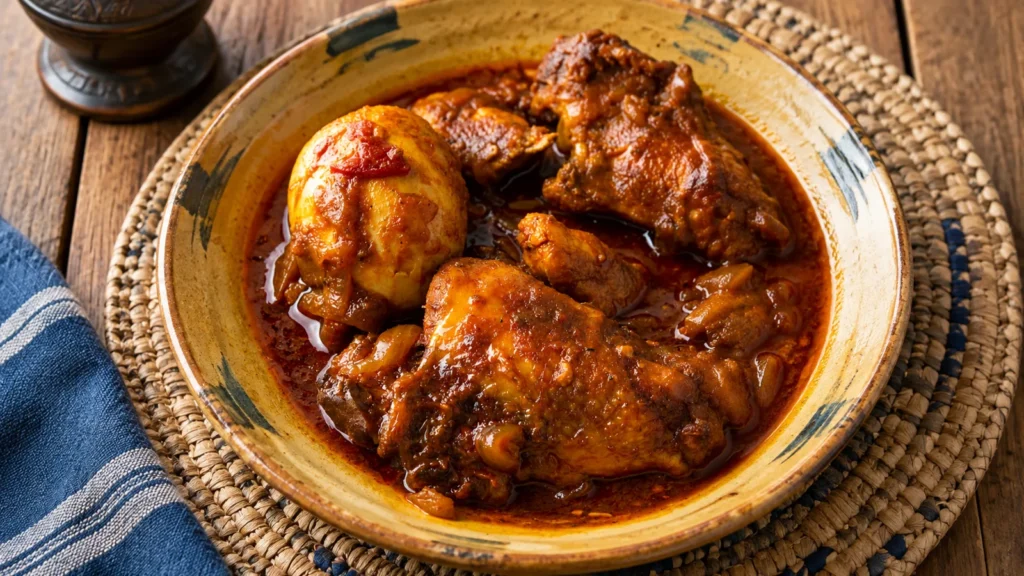
The instruction that ruins doro wat is “sauté the onions 5 to 10 minutes until soft.” The Ethiopian chicken stew depends on onions cooked far longer than any Western sauté – diversivore’s Sean puts the figure at 25 to 30 minutes, and The Daring Gourmet’s Kimberly Killebrew runs hers covered on low heat for a full 45 minutes. This doro wat recipe is transcribed from four published sources, and it names where those sources disagree rather than papering over the gaps. The dish is spiced chicken (doro) simmered in a berbere sauce (wat), finished with whole hard-boiled eggs, and served over injera.
The AtlasPlate Recipe Desk cross-references regional versions across cited cooks, identifies the specific variant on the plate, and pulls the exact ingredient lines and timings into one format without changing the method. This desk has not cooked this dish; every figure below carries the source that publishes it.
Quick answer: Doro wat is a slow-simmered Ethiopian chicken and egg stew built on a very large quantity of onions and berbere. Cook 3 to 6 cups of minced onions 25 to 45 minutes until they collapse and darken – this is the flavor base, not a shortcut step. Use 1/4 to 1/2 cup berbere; if it is a salted blend, drop the added salt. Bone-in thighs hold up to the long simmer better than breast. Add pierced whole hard-boiled eggs near the end.
Who wrote this doro wat recipe down, and where the four sources part ways
Doro wat is an Ethiopian chicken stew, and the Jewish Food Society records it as a Shabbat dish. The four sources transcribed here agree on the skeleton: onions, berbere, spiced butter, chicken, eggs. They part ways on technique, and those splits are the useful part.
Hunter Angler Gardener Cook’s Hank Shaw and diversivore’s Sean both cook minced onions in a dry pan first, no fat, to drive off water before any butter goes in. The Daring Gourmet and GypsyPlate start the onions in niter kibbeh or oil from the beginning. GypsyPlate also records a piece of symbolism worth keeping: traditionally a whole chicken is cut into twelve pieces, standing for the twelve tribes of Jacob in the Bible. This desk does not claim one lineage as the single correct one – the recipe card below reflects the most widely shared method and flags the fork in the road at the step where it matters.
The onion base: why 45 minutes is the recipe, not a suggestion
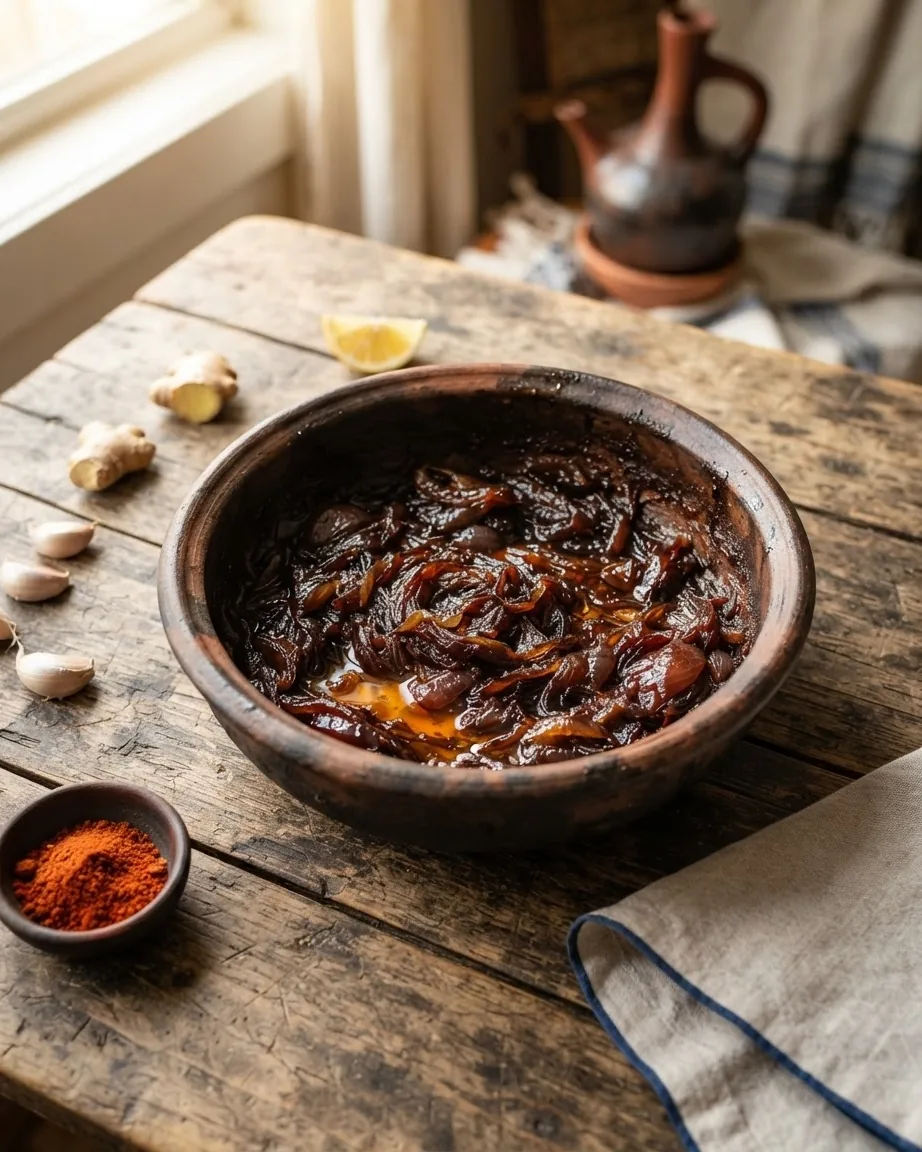
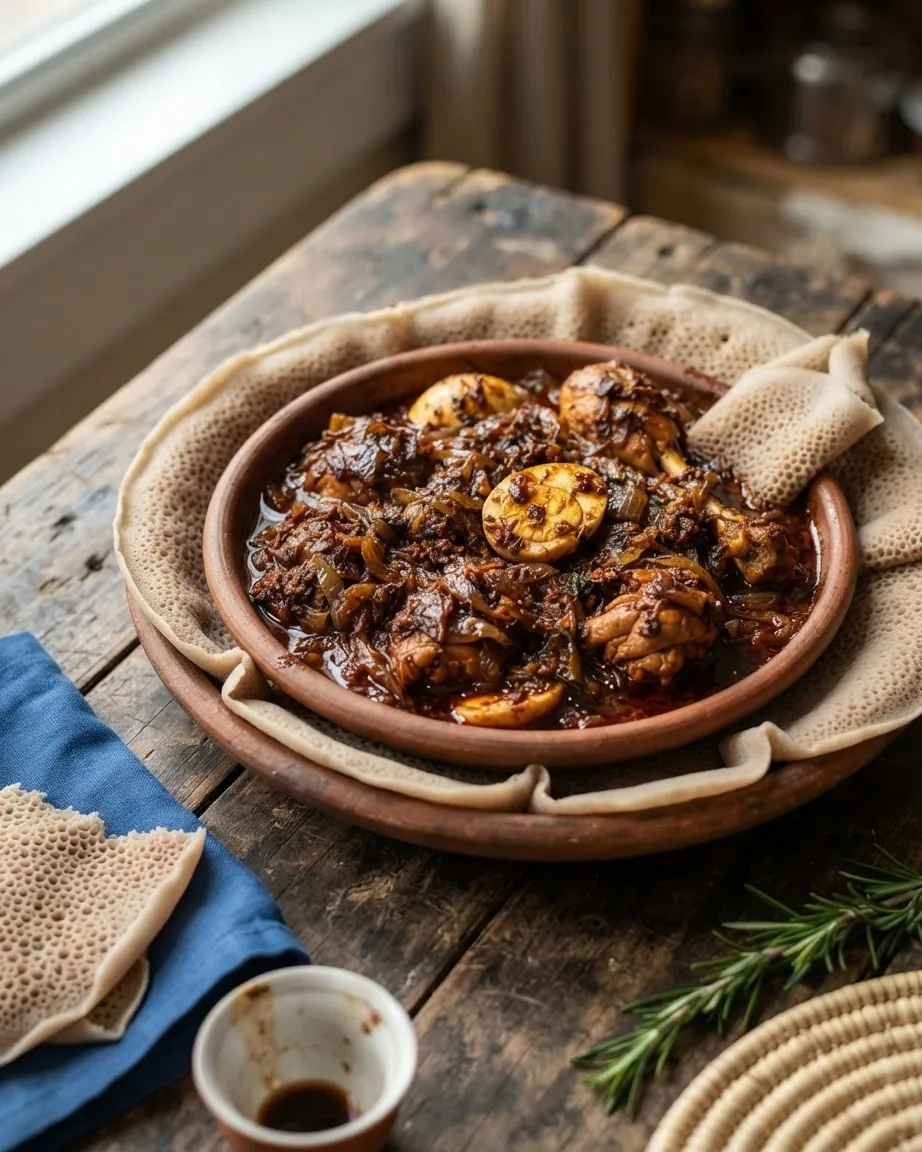
Onions are the body of the sauce. There is no roux, no cream, no blender purée standing in – the collapsed onions are what gives doro wat its texture. diversivore is blunt that the common “cook onions for 5 to 10 minutes until caramelized” line is wrong for this dish, because that window does not give the onions time to break down and release their sugars.
Two documented approaches, and what each one does:
- Dry-pan first (Hank Shaw, diversivore): minced onions go into a dry, heavy pot over medium-low heat. They release their water, wilt, then begin to brown. diversivore times this at 25 to 30 minutes. Driving off the water before adding fat concentrates onion flavor and stops the sauce from turning watery later.
- Fat from the start (The Daring Gourmet): 2 tablespoons oil plus 2 tablespoons niter kibbeh, onions added, then covered and cooked over low heat for 45 minutes, stirring occasionally. The lid traps steam so the onions soften rather than fry.
The Jewish Food Society variant lands between them – chopped onions cooked about 30 minutes, stirring constantly. Whichever route, the finish line is the same sensory cue: onions collapsed to a soft, darkened mass. If they still look like distinct slices, they are not done.
Berbere quantity, heat, and the hidden-salt trap
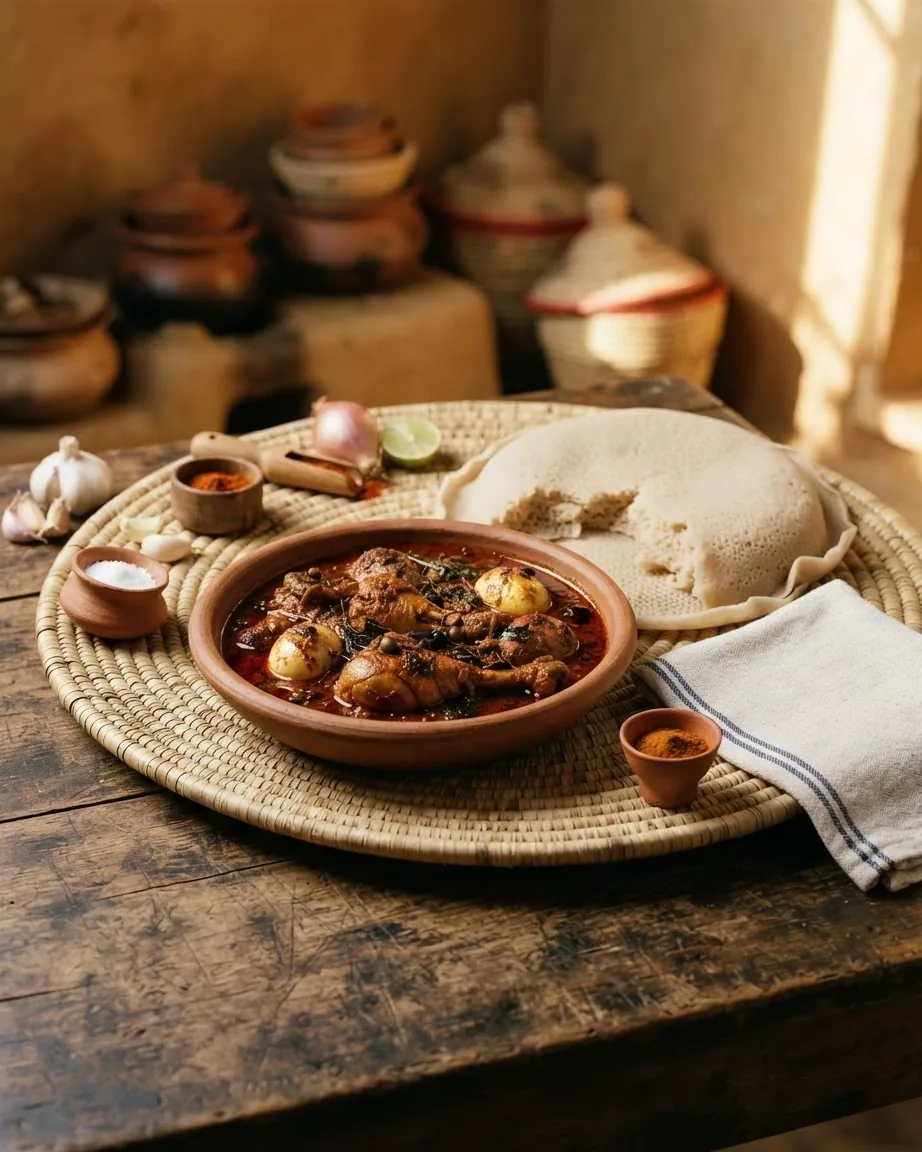
Berbere – the chili-and-spice blend that defines the color and heat – goes in by the quarter-cup, not the teaspoon. The Daring Gourmet calls for 1/4 to 1/3 cup for a batch; diversivore uses a full 1/2 cup across 8 servings. At those volumes, the blend is a bulk ingredient, and that changes how you handle salt.
Store-bought berbere is often salted, sometimes heavily. When you are adding half a cup of it, the salt in that blend can carry the whole dish past the point of return, and you cannot pull salt back out of a stew. The Spice House sells its own blend, and The Daring Gourmet argues strongly for making berbere at home precisely so you control both heat and salt. Practical rule for this desk: read the berbere label first. If salt is listed, cut or omit the recipe’s added salt (1 to 1 1/2 teaspoons in the sources) and season only at the end, by taste.
Heat scales with the blend and the amount. A hot berbere at 1/2 cup makes an assertive, genuinely spicy stew; a milder blend or the lower 1/4-cup pour gives a warm, gentler wat. Adjust the quantity to your blend, not the other way around.
Niter kibbeh: what plain ghee replaces and what it doesn’t
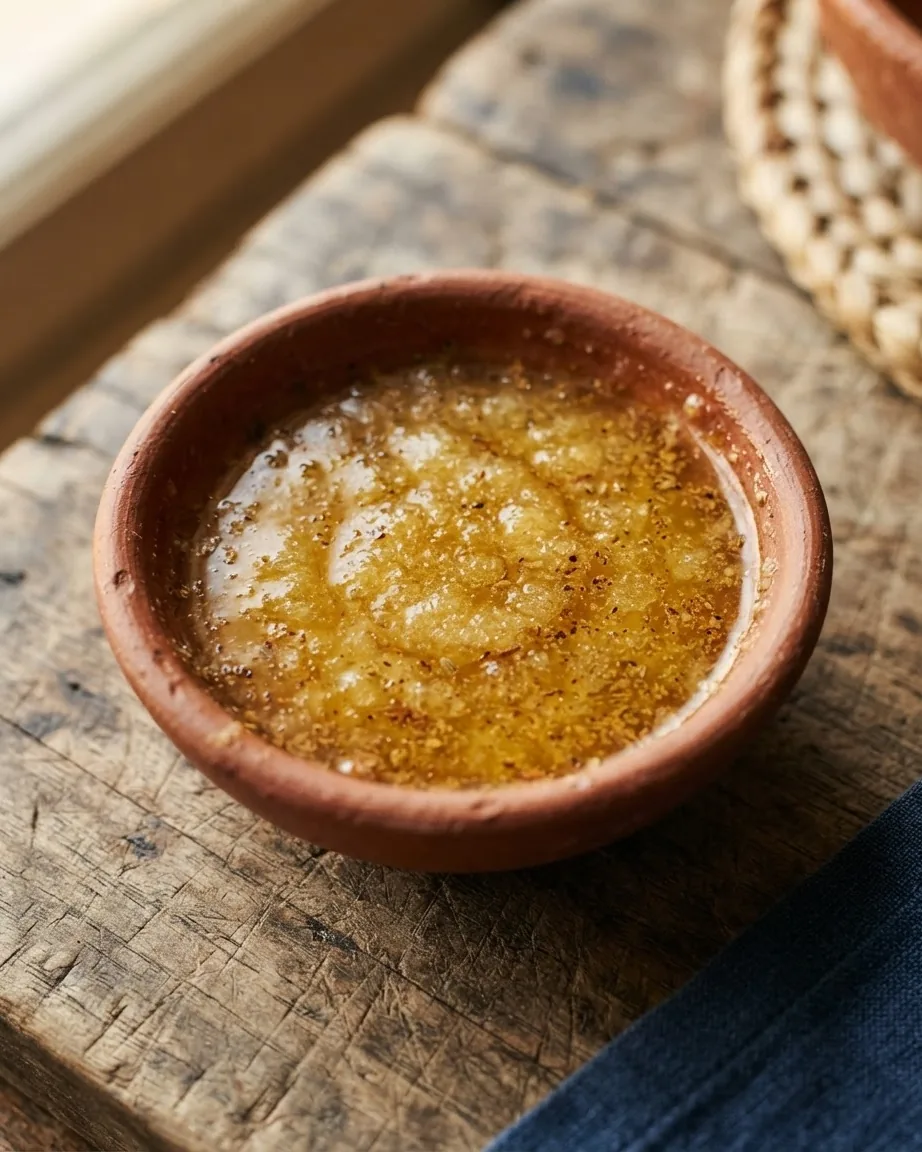
Niter kibbeh is spiced clarified butter – butter simmered with aromatics until the milk solids drop out and the fat takes on ginger, garlic, cardamom, fenugreek and often korarima. Most sources here (The Daring Gourmet, Hank Shaw, GypsyPlate) treat it as foundational. The Jewish Food Society variant omits it entirely, building the stew on olive oil and tomato paste instead – a legitimate, documented version, not a mistake.
If you swap in plain ghee or regular butter, understand what you are and are not doing: you replace the fat, but you lose the layer of embedded spice that niter kibbeh carries. To close that gap, infuse the ghee before it hits the onions – warm it gently with extra ginger, garlic, a pinch of cardamom or korarima, fenugreek, and a little dried mint, then use it as the recipe’s spiced butter. That restores the flavor profile rather than only the grease.
Chicken cut and simmer time: where the sources openly disagree
This is the sharpest contradiction across the four recipes, and it hinges on the cut you buy.
diversivore recommends bone-in thighs and specifically says chicken breast is not the pick, because the long simmer turns lean breast stringy and dry. The Daring Gourmet deliberately uses boneless breast (or 1-inch thigh pieces) – a faster-cooking build. The simmer time swings with that choice. Hank Shaw cooks the chicken gently, covered, until tender, which he puts at about 2 hours. diversivore simmers roughly 1 hour. The Spice House cooks until the meat is fully done, around 40 minutes, and notes boneless pieces run 20 to 30 minutes depending on size.
Resolution for your situation: if you want fall-apart, forgiving meat and are using bone-in thighs or a cut-up whole bird, plan for the long, gentle 1-to-2-hour simmer. If you are using boneless breast, cook it short – 20 to 40 minutes – and pull it as soon as it is done, or it will dry out. Time is a lever set by the cut, not a fixed number. Regardless of route, doneness is decided by temperature, covered in the safety section below.
The eggs: pierce them whole, don’t mash them in
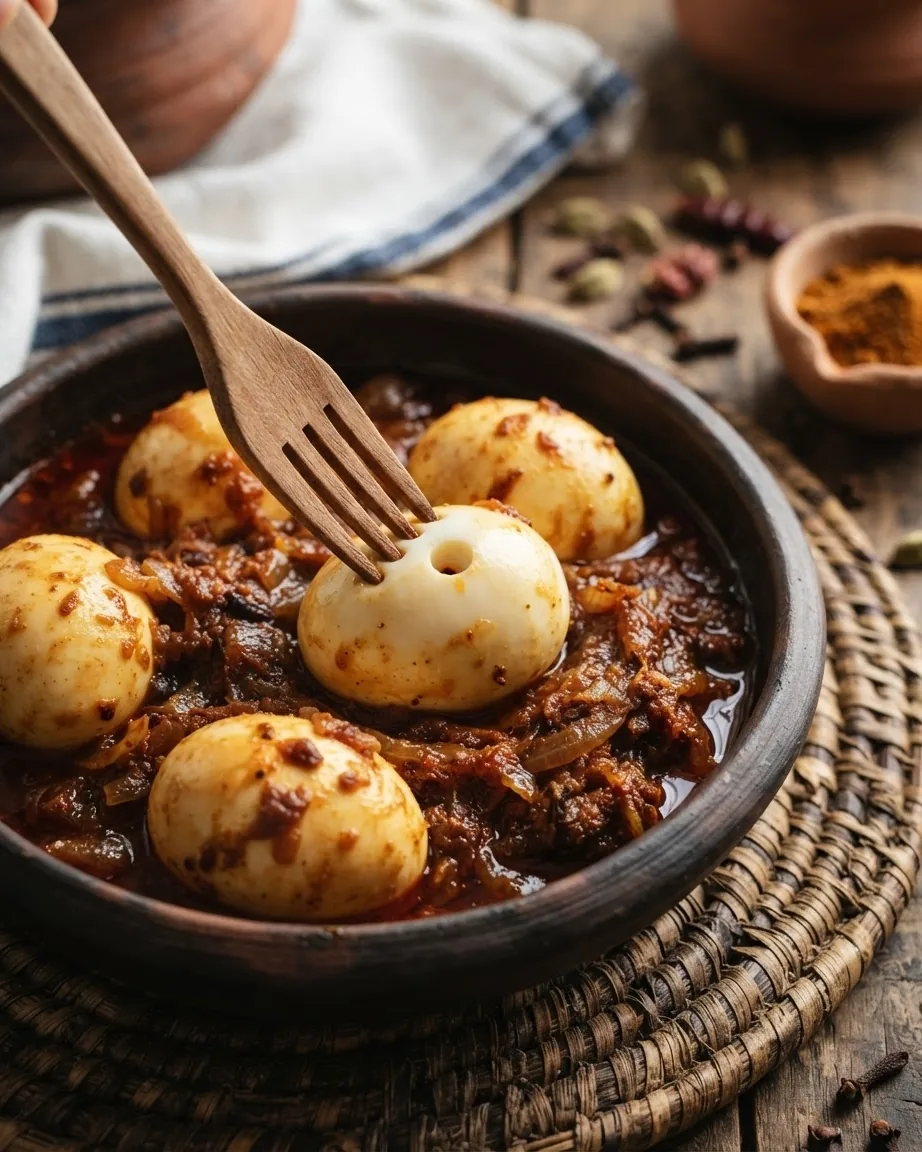
The hard-boiled eggs are a defining element, and there is a specific technique the sources share. Do not chop or stir the eggs into the sauce. Peel them, then stab them all over with a fork – Hank Shaw and The Daring Gourmet both specify piercing, the latter about 1/4 inch deep. Those punctures let the berbere sauce soak into the white, so the egg carries the flavor of the stew instead of sitting as a bland lump.
Timing matters too. The eggs go in late – Hank Shaw adds them about 15 minutes before serving, diversivore about 10 minutes out. That is long enough to color and absorb sauce, short enough that the whites don’t turn rubbery from a full simmer. Add them whole, spoon sauce over, and serve them halved or quartered on the plate.
Serving over injera, the gluten question, and tej substitutes
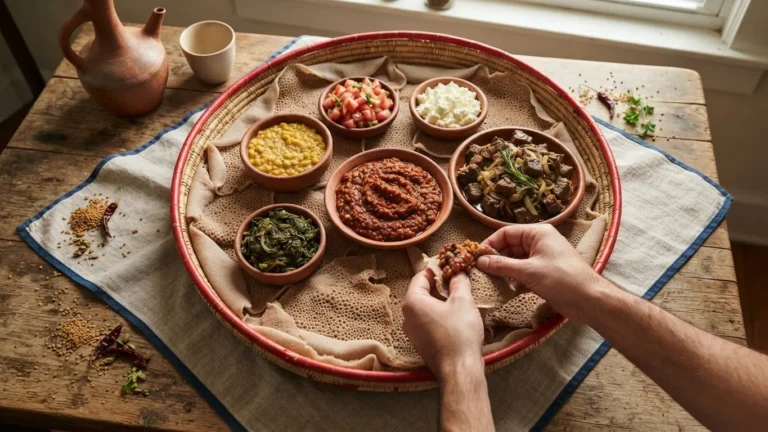
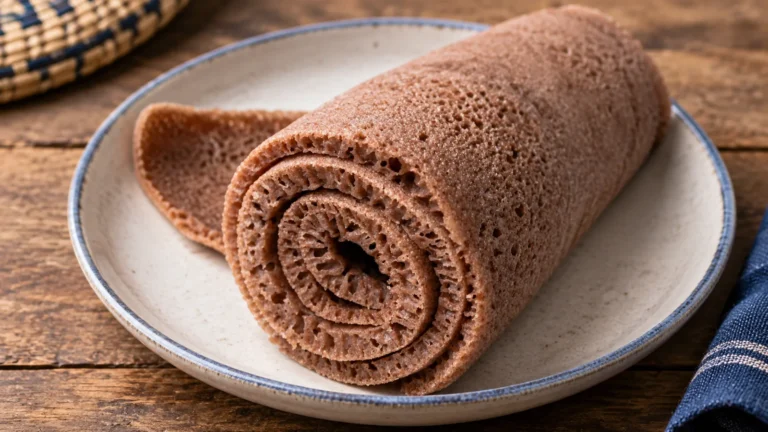
Doro wat is eaten with injera, the sour fermented flatbread torn and used to scoop the stew. The tang of injera is load-bearing here – it balances the richness and heat of the wat. The Daring Gourmet notes injera batter ferments for up to 4 days before use, which is where that sourness comes from; this is measured in days, not the few hours a quick-bread rests. Our wider write-ups on the injera-and-teff question and the rest of the region’s stews sit in the African recipes section.
If you serve over rice instead of injera, you lose that sour note. Compensate by stirring a few teaspoons of vinegar or lemon juice into the finished stew – it approximates injera’s tang against the berbere. A related trick appears in other one-pot staples where the acid is the balancing act, like the flavor bases in our Dal Bhat Recipe: Reconciled Ratios, Three Flavor Bases, and the Full Plate.
Allergen warning
On gluten: doro wat itself is naturally gluten-free. Injera is the catch. Authentic injera is teff, which is gluten-free – but restaurant and takeout injera is rarely 100% teff. It is commonly cut with wheat flour, which makes it unsafe for anyone with celiac disease. If gluten is a hard limit, ask what the injera is made from, or serve the stew over rice with the acid fix above.
Tej is Ethiopian honey wine, and it adds a sweet, faintly floral depth. The Daring Gourmet’s stated substitute is white wine mixed with 1 teaspoon honey; Hank Shaw’s list uses mead or red wine interchangeably. For a non-alcoholic build, a splash of stock with a little honey and a touch of the vinegar or lemon fills the role – sweetness plus acid – without the wine.
Doro wat recipe: ingredients and steps
The build below follows Hank Shaw’s structure at Hunter Angler Gardener Cook, cross-checked against diversivore, The Daring Gourmet, and the Jewish Food Society for the points of disagreement. Quantities are transcribed from those sources, not scaled or estimated.
Safe temperatures and how long the stew keeps
Doneness in this dish is set by temperature, not by clock.
The hard-boiled eggs carry their own limits, and the sources transcribed here do not agree on them. Hank Shaw keeps the finished stew about a week in the refrigerator; the Jewish Food Society gives four to five days. When two cooks split like that, the shorter figure is the one to plan around.
Storage figures for the finished stew vary by source: The Spice House gives 3 to 4 days refrigerated and up to 2 to 3 months frozen; the Jewish Food Society says 4 to 5 days in an airtight container; Hank Shaw says about a week. The conservative reading, and the one that lines up with FSIS home-storage guidance for cooked chicken dishes (3 to 4 days refrigerated), is to eat within 3 to 4 days. If you freeze it, remove the eggs first – cooked whites turn watery and rubbery after freezing and thawing.
Berbere by the numbers: it out-salts your salt shaker 16-to-1
The sources tell you to add berbere “by the quarter-cup” and salt “by the teaspoon,” but they never put the two on the same scale. Do the arithmetic and the over-salting warning stops being a vibe and becomes a ratio.
Take diversivore’s build: 1/2 cup of berbere for 8 servings. .
Now line that up against the deliberate salt. The recipes add 1 to 1 1/2 teaspoons. So the berbere is:
- 16× the volume of your added salt at the 1 1/2 tsp bound (24 ÷ 1.5)
- 24× at the 1 tsp bound (24 ÷ 1)
You’re seasoning the dish with the label you didn’t read, not the spoon you did. That’s why the fix is to read the berbere label first, drop the recipe’s added salt entirely when salt is listed, and season only at the very end.
One more number worth having before you shop: the sources don’t agree on how much berbere a batch needs. The Daring Gourmet’s floor is 1/4 cup (4 tbsp); diversivore’s is 1/2 cup (8 tbsp) – double. Pick your pour by how hot your specific blend is, and scale from the 1-tbsp-per-serving figure rather than trusting a single recipe’s total.
Frequently asked questions
Why does my doro wat taste watery instead of rich?
The onions were not cooked long enough. At 5 to 10 minutes they still hold their water, which thins the sauce. The dry-pan method drives that water off before any fat goes in; give the onions 25 to 45 minutes until they collapse into a dark, soft mass. There is no other thickener in the dish.
How much berbere is too much?
Quantity itself isn’t the risk – sources use anywhere from 1/4 cup to 1/2 cup. The problem is salted store-bought berbere. Half a cup of a salted blend can overwhelm the dish, and you can’t remove salt once it’s in. Check the label; if salt is listed, drop the recipe’s added salt and season only at the very end.
Can I use chicken breast instead of thighs?
You can, but change the timing. diversivore warns that breast turns stringy over a long simmer, while The Daring Gourmet uses it successfully with a short cook. Bone-in thighs tolerate the full 1-to-2-hour simmer.
What can replace niter kibbeh if I can’t find it?
Plain ghee or butter covers the fat but not the spice. Infuse the ghee first: warm it with extra ginger, garlic, a pinch of cardamom or korarima, fenugreek, and a little dried mint before adding it to the onions. That rebuilds the aromatic layer niter kibbeh carries, rather than only supplying the fat. What can I use instead of tej? Tej is Ethiopian honey wine. The Daring Gourmet substitutes white wine with 1 teaspoon honey; Hank Shaw uses mead or red wine. For an alcohol-free version, use a splash of stock with a little honey and a touch of vinegar or lemon juice, which supplies the sweetness and acid without the wine. Is doro wat gluten-free? The stew is naturally gluten-free. The risk is the injera. Authentic injera is teff, which contains no gluten, but restaurant and takeout injera is rarely 100% teff and is usually cut with wheat flour, making it unsafe for anyone with celiac disease. Ask what the bread is made from, or serve over rice with a few teaspoons of vinegar or lemon juice stirred in to replace injera’s tang. How many servings does this make, and what are the numbers? diversivore’s batch is built for 8 servings. Hank Shaw’s recipe lists per-serving figures of 479 kcal, 18g carbohydrates, 25g protein, and 30g fat, of which 12g is saturated, 4g polyunsaturated, and 11g monounsaturated, with 0 trans fat. The short version Doro wat rewards patience at exactly one step and forgives almost nothing there: the onions. Cook 6 cups of them 25 to 45 minutes until they collapse, build the sauce on a large pour of berbere with the salt watched carefully, and match your simmer time to the cut you bought. Where the four sources disagree, this desk has named the split rather than hidden it, so you can pick the version that fits your kitchen.
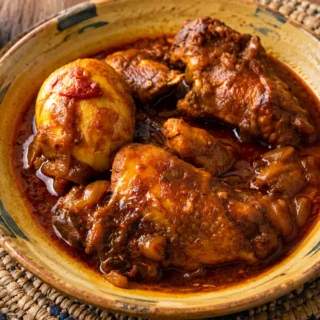
Doro Wat Recipe: The Onion Base, the Berbere, and the Numbers Four Sources Actually Give
Ingredients
- 1 whole chicken, cut into serving pieces (bone-in thighs hold up best to a long simmer; boneless breast cooks faster but dries out)
- 1/4 cup lemon juice
- 6 cups red onions (about 4 medium onions), sliced or minced
- 1/2 cup spiced butter (niter kibbeh), or ghee or regular butter
- 4 garlic cloves, minced
- 1 tablespoon minced fresh ginger
- 3 tablespoons tomato paste
- 1/4 cup berbere (up to 1/2 cup for a hotter, more assertive sauce)
- 1/2 teaspoon black pepper
- 1/2 teaspoon ground cardamom
- 1/2 teaspoon ground fenugreek (optional)
- 1 cup mead or red wine (or 1/2 cup white wine mixed with 1 teaspoon honey)
- 2 cups game or chicken stock
- Salt to taste (omit or reduce if your berbere is salted)
- 6 hard-boiled eggs, peeled
Instructions
- Rub the chicken pieces all over with the lemon juice and set aside while you start the onions.
- Add the onions to a large, heavy dry pot over medium heat. Cook with no fat, stirring often, for 25 to 45 minutes – they release water, wilt, and darken to a soft, collapsed mass. This is the flavor base; do not rush it.
- When the onions are close to browning, add the spiced butter, garlic, and ginger. Cook 1 to 3 minutes, then stir in the tomato paste, berbere, black pepper, cardamom, and fenugreek until fully combined.
- Add the chicken and turn to coat. Cook a few minutes until the surface turns opaque, then season with a little salt.
- Pour in the stock and mead or wine – the meat should sit under about an inch of liquid; add water if needed. Bring to a simmer, taste for salt, cover, and cook gently until the meat is tender: roughly 20 to 40 minutes for boneless breast, up to about 2 hours for bone-in pieces. Confirm doneness with a thermometer (see below).
- About 10 to 15 minutes before serving, pierce the peeled hard-boiled eggs all over with a fork, about 1/4 inch deep, and nestle them into the pot so the sauce soaks in. Adjust salt, add a splash of water if you want a thinner sauce, and serve with injera.