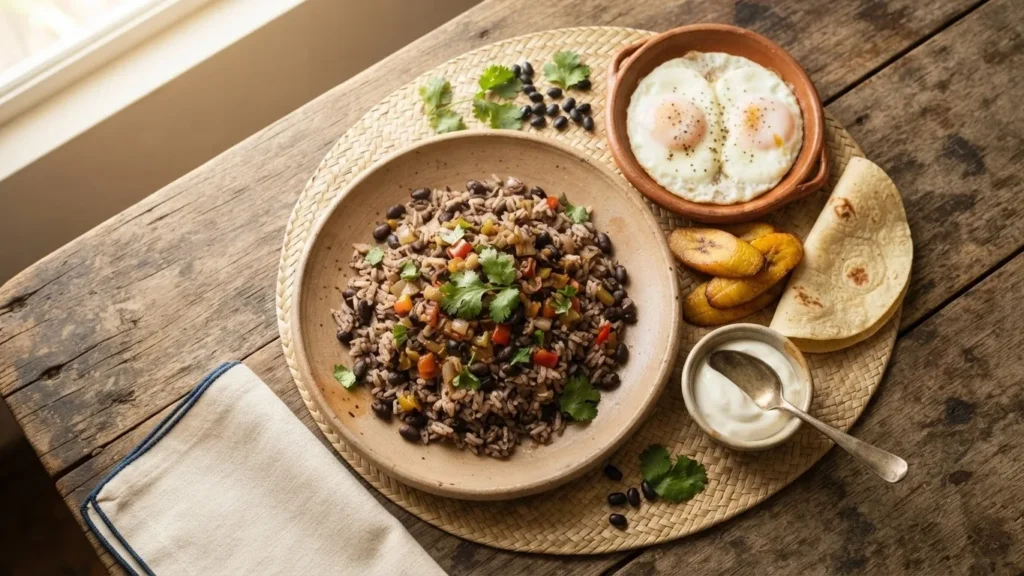
The reason your gallo pinto turns to mush is almost always the rice, and the fix depends on which country’s method you follow. Costa Rican cooks reach for day-old rice pulled straight from the refrigerator; Nicaraguan cooks skip cooked rice entirely and simmer raw grains in the bean liquid instead. These are not two spellings of the same trick. They are opposite assembly mechanics, and a good gallo pinto recipe has to pick one and commit. This piece keeps both paths separate so you can choose the one that matches what is already in your kitchen, then walk it through without the grains clumping into risotto.
Gallo pinto splits along a national line. The Costa Rican Valle Central build uses black beans, aromatics of onion, sweet pepper and cilantro, and Salsa Lizano, assembled with day-old refrigerated rice. The Nicaraguan build uses small red beans, drops the Lizano, cooks raw long-grain rice directly in the bean cooking liquid, and often finishes with fried cheese. To avoid sticky rice, match your rice to your method: cold leftover rice for the Costa Rican pan, uncooked rice-in-bean-broth for the Nicaraguan pot. Beans and rice together form a complete protein, but authentic versions can hide a chicken bouillon cube or cheese.
Black beans or small red beans: the choice that names your version
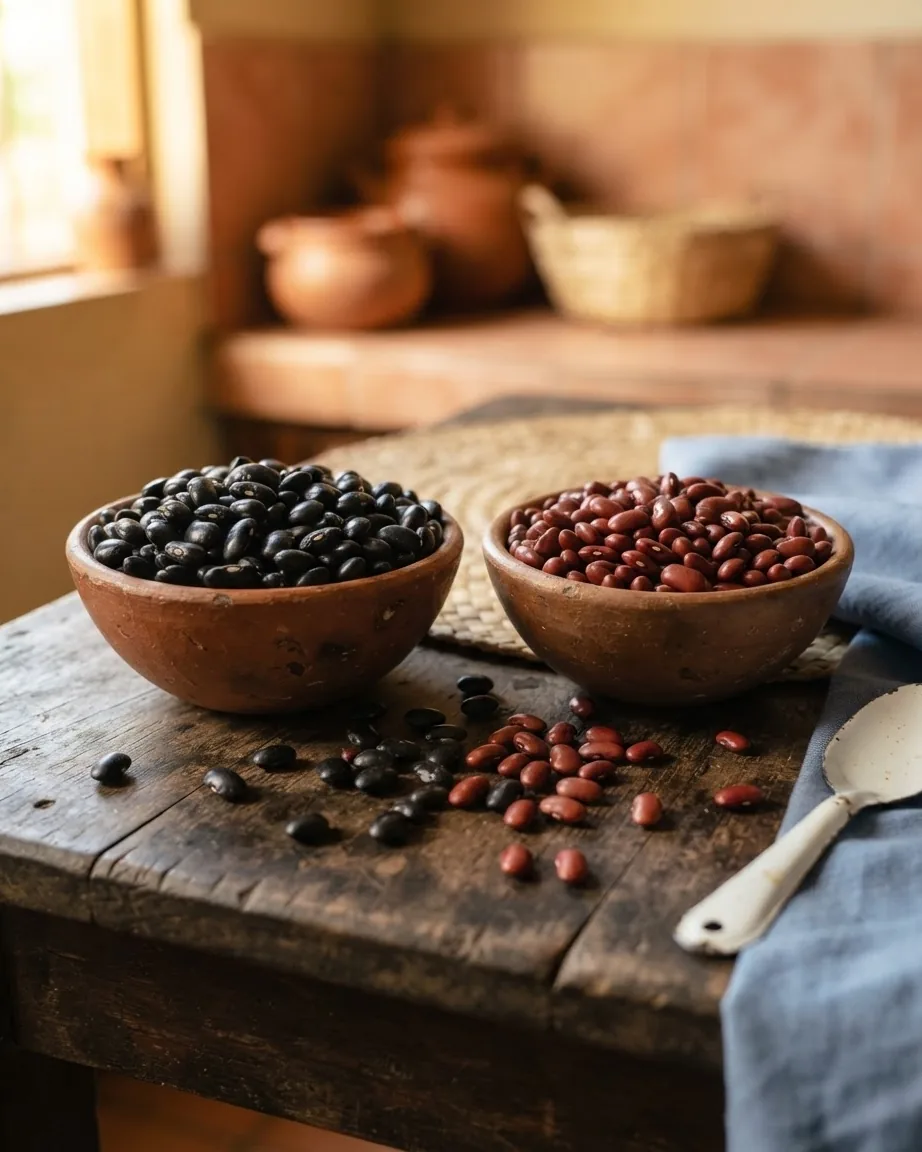
Before any technique, the bean decides which country you are cooking in. The Costa Rican Valle Central version runs on black beans, and the recipes from Striped Spatula, Mytanfeet and Boulder Locavore all treat that as fixed rather than optional. Cross the border into Nicaraguan territory, and the pot changes color: small dried red beans, specifically Central American red beans and not kidney beans, according to Casablanca Cooks, which calls for a 14-16 oz (400-450 g) package. Jar of Lemons and the encyclopedic summary at Wikipedia line up on the red-bean side too.
There is a middle case worth knowing. Costa Rica’s Guanacaste region, up in the northwest near the Nicaraguan border, leans to a fattier red-bean version rather than the Valle Central black-bean standard. So “Costa Rican gallo pinto” is not one answer. If a recipe hands you black beans and Salsa Lizano in the same breath, you are reading a Valle Central recipe. If it wants red beans and no Lizano, you are closer to Guanacaste or Nicaragua. Pick the bean first and the rest of the shopping list falls into place.
The sticky-rice fix: day-old cold rice versus raw rice in bean broth
Mushy grains are the failure that ruins the dish, and the two national schools solve it in incompatible ways. Do not try to blend them.
The Costa Rican route uses cooked rice that has already dried out. Striped Spatula specifies 3 cups cooked rice, preferably day-old and refrigerated, folded into 2 cups cooked black beans near the end. Cold rice has lost surface moisture and firmed up in the fridge, so the grains stay separate when they hit the hot pan. In that build you sauté the aromatics 6-8 minutes, simmer the beans and their liquid about 5 minutes until slightly thickened, then stir in the rice and heat it through for only 3-5 minutes so it warms without breaking down.
The Nicaraguan route, as Casablanca Cooks describes it, cooks the rice directly in the sautéed beans and their cooking liquid, seasoning with salt and covering the pan until the liquid is absorbed. The raw grain absorbs seasoned bean broth as it cooks, which is how Nicaraguan cooks keep it from turning gummy. Serious Eats, referenced through the same Nicaraguan tradition, sets a similar starch-to-liquid ratio of 1 1/2 cups (300 g) white rice to 3 cups (710 ml) water or stock.
So the practical decision is inventory-based. Have cold leftover rice sitting in the fridge? Take the Costa Rican assembly and fold it in at the end. Starting from dry raw rice with a pot of beans going? Take the Nicaraguan cook-together and let the grain drink the broth. Choosing the wrong one for your ingredients is what produces the risotto texture people complain about.
Salsa Lizano in the Costa Rican gallo pinto recipe, and what a substitute costs you
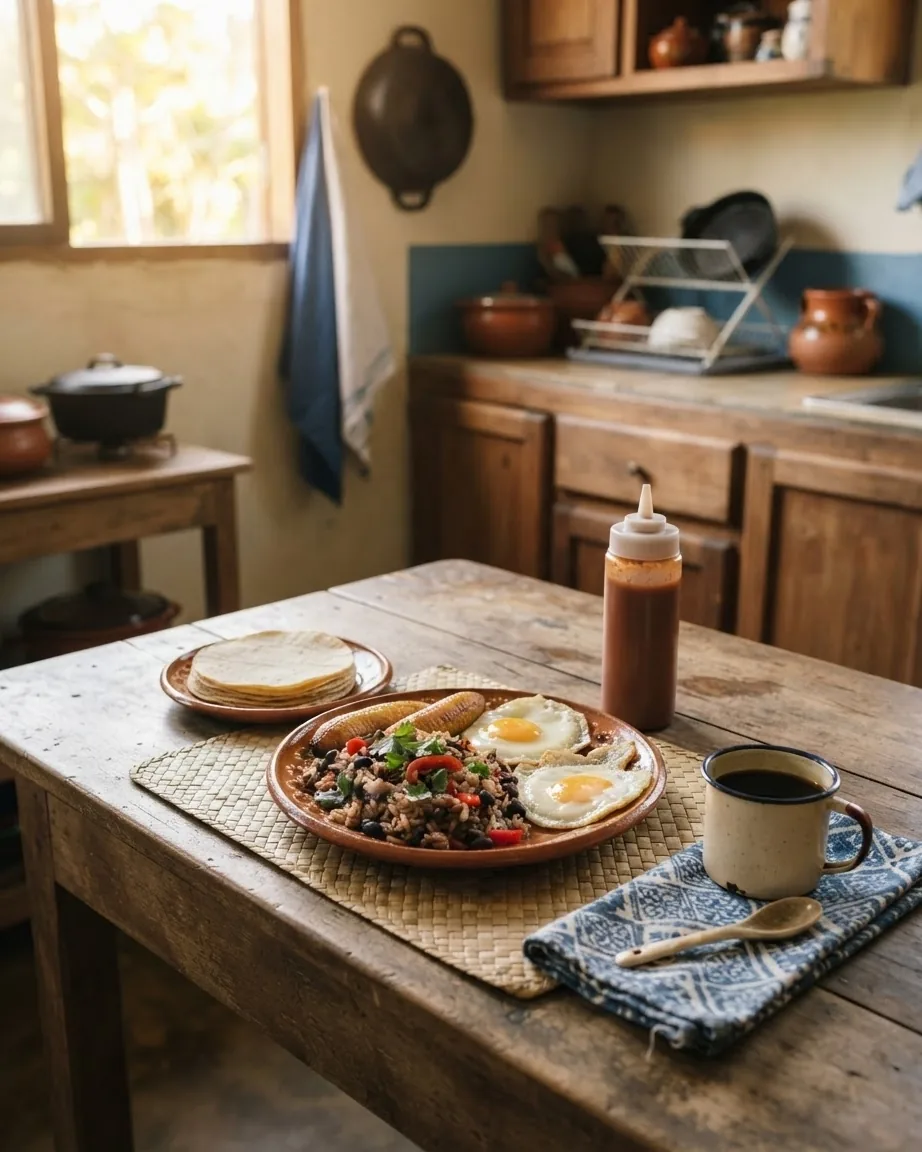
Salsa Lizano is the seasoning that makes a Costa Rican gallo pinto recipe taste Costa Rican. Striped Spatula and Mytanfeet both treat it as the primary flavoring, not a garnish. It is a mildly spiced, slightly sweet-sour brown sauce, and Striped Spatula notes it also comes in a light version with 25% less sodium marked “Suave,” which matters if you are watching salt: a single serving of the plain beans-and-rice base already runs about 15 mg sodium per Boulder Locavore’s build, but the bottle is where most of the salt enters.
Here is the schism to respect. Nicaraguan recipes from Casablanca Cooks and Jar of Lemons leave Lizano out of the base entirely, using it as an optional table condiment at most. So Lizano is not a universal gallo pinto ingredient; it is a marker of the Costa Rican style specifically.
If you cannot find Lizano, the common swap is Worcestershire sauce. It gets you the fermented, tangy, umami backbone, but it lacks the mild vegetable-forward sweetness and gentle smokiness of the original, so the result reads sharper and less rounded. Worcestershire also carries anchovy, which quietly removes a vegan claim. Treat the substitute as an approximation of the direction, not a replacement for the flavor, and add it more cautiously than the recipe’s Lizano amount.
The aromatics that carry the pan: onion, chile dulce, cilantro, garlic
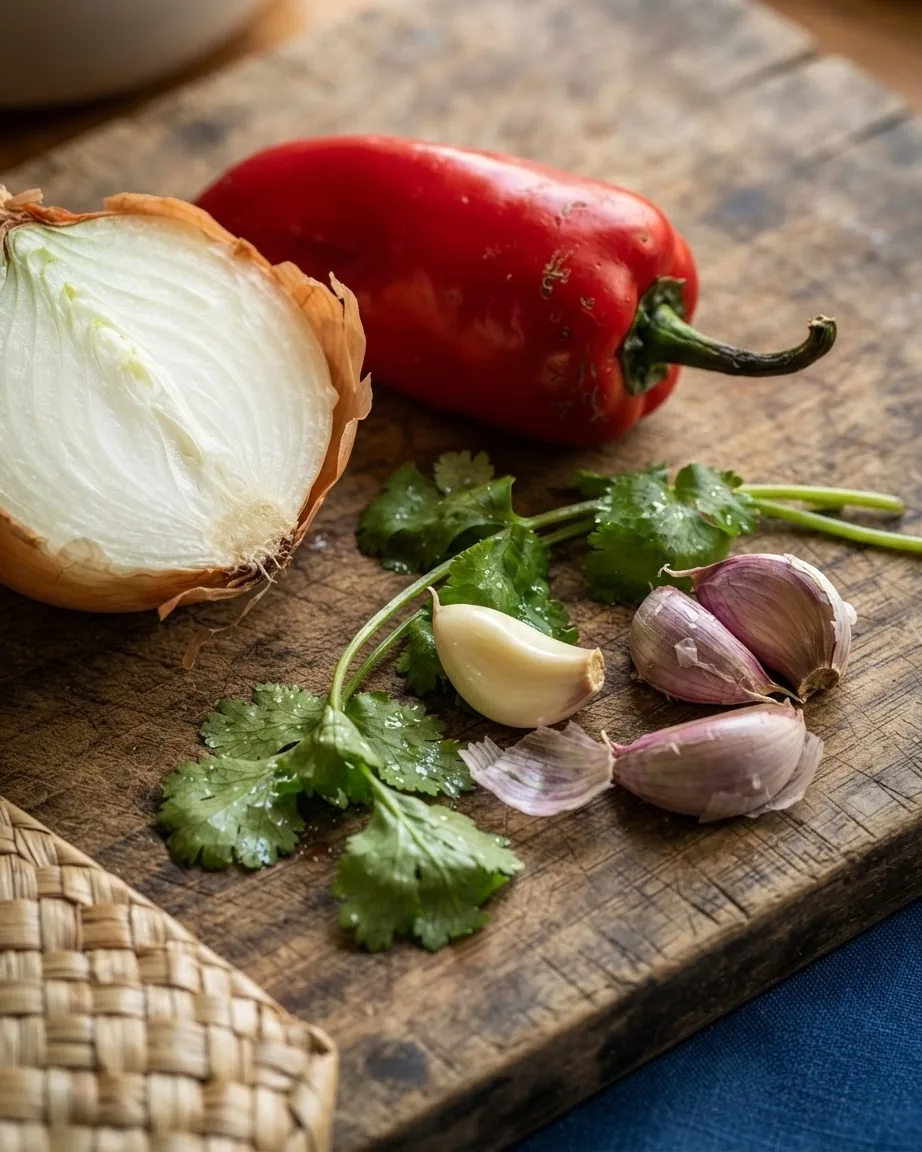
Underneath the bean-versus-bean and Lizano-versus-none arguments, the aromatic base is where the versions actually agree. Onion, sweet pepper (chile dulce), cilantro and garlic do the heavy lifting. Chile dulce is the Central American sweet pepper, not a hot chile; a red or green bell pepper is the closest stand-in, and it changes very little because chile dulce is itself mild.
Timing here is short and easy to overshoot. Striped Spatula sautés chopped bell pepper and onion 6-8 minutes until the pepper is soft and the onion translucent. Boulder Locavore is quicker, frying onion and bell pepper in vegetable oil about 3 minutes. Mytanfeet frets less about the vegetables and more about the garlic, frying it on high for about 2 minutes in a large frying pan. The lesson across all three: build the aromatic fond first, before beans or rice ever enter, and stop while the onion is translucent rather than browned. Cilantro goes in late so it stays fresh rather than stewing into the pan.
The hidden animal products in a “vegetarian” plate
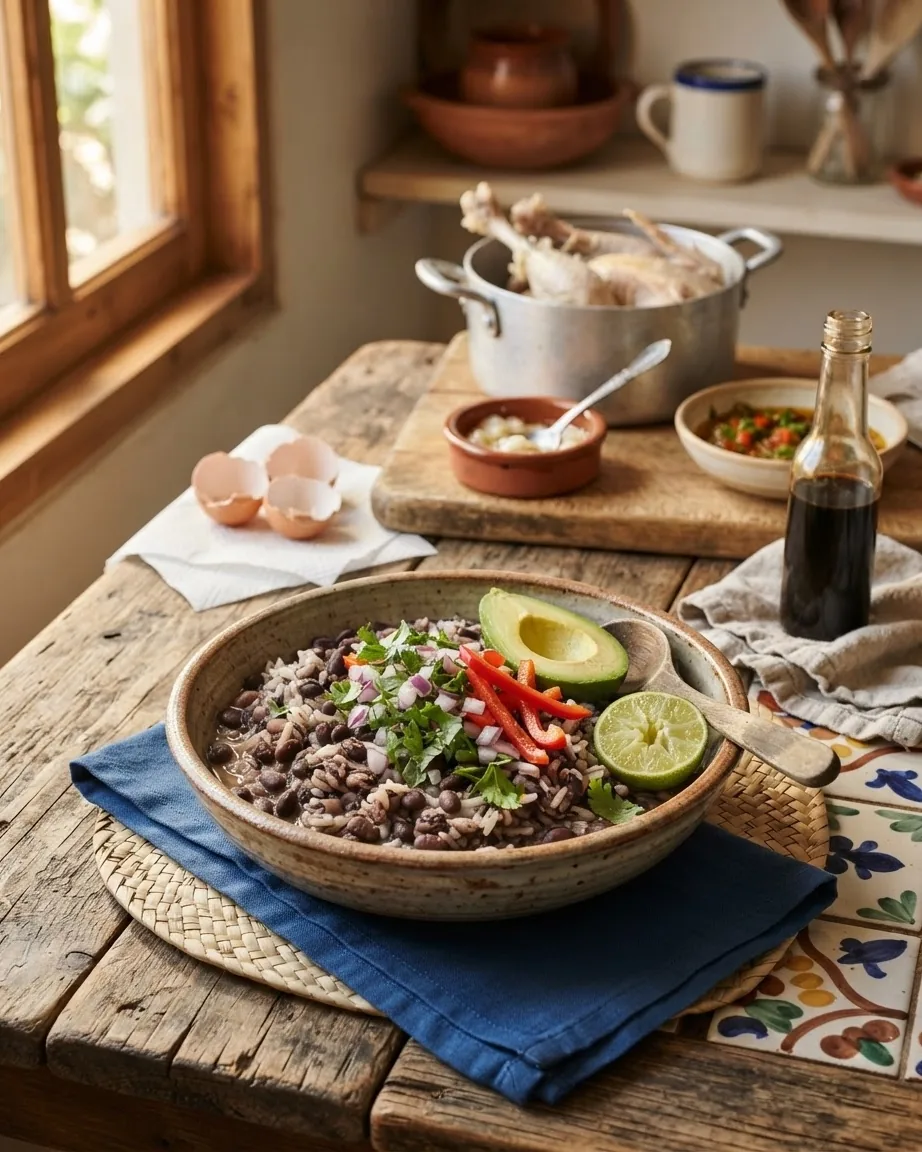
Beans and rice together supply the full set of amino acids, which is why Boulder Locavore flags gallo pinto as a complete plant protein. That makes the dish look automatically vegan. It often is not.
The Costa Rican trap is a chicken consommé or bouillon cube dropped into the beans for depth, common enough in Tico kitchens to catch people who assumed beans-and-rice was safe. The Nicaraguan trap is the cheese: Casablanca Cooks and Jar of Lemons finish the plate with queso fresco or a fried-cheese topping, and Jar of Lemons walks through crisping ingredients in the pan for about 10-12 minutes until they blister. The Worcestershire substitute mentioned above adds a third, less obvious animal ingredient through its anchovy.
None of this is hard to work around. Skip the bouillon cube and season with salt, Lizano (check the label) and the vegetable fond; leave off the cheese or use a plant version; reach for a vegan Worcestershire or more Lizano instead. The point is that a stock recipe will not warn you, so read the finishing steps before you serve it to someone avoiding animal products.
How much to cook, and how long it actually keeps in practice
Gallo pinto is a batch dish in its home countries, not a single-serving side. Casablanca Cooks notes that Nicaraguan households commonly cook a large batch of beans at a time to make fresh gallo pinto every day of the week, because it is eaten almost daily. Those beans simmer about 1 1/2 hours until tender but firm, an “al dente” bean rather than a soft one, which is what lets them hold their shape when fried the next morning.
On the finished dish, cooks describe scaling a pan to last several days. Mytanfeet describes fixing a batch large enough to last about 5 days and eating it every morning with bacon and eggs. That is a household habit, not a food-safety limit. For actual storage guidance on cooked rice and beans, follow the government safe-handling window rather than a blog’s breakfast routine; the federal guidance on leftovers is published at FoodSafety.gov, and cooling cooked rice promptly matters because it can harbor bacteria if left at room temperature. Reheat only what you will eat, and keep the rest cold.
Speed, when you already have the components, is genuine. Jar of Lemons puts the whole thing together in one pan in about 30 minutes when you are working from leftovers, and Mytanfeet simmers the assembled pinto about 20 minutes until the excess liquid is absorbed. The long part is always the beans; the pinto itself is fast.
The Gallo Pinto War, and why nobody owns the dish alone
Treating gallo pinto as one country’s monocultural invention misses both its roots and its rivalry. The dish carries disputed Afro-Caribbean origins, and the encyclopedic account at Wikipedia records how the Costa Rica – Nicaragua argument over ownership boiled over into competitive cooking. Costa Rica cooked an enormous batch of gallo pinto to set a Guinness record, and Nicaragua answered with an even bigger pot of its own. The one-upmanship is the joke and the point: two nations claiming the same breakfast so hard they weighed it.
Serious Eats, cited through that same encyclopedic thread, is where several of the specific Nicaraguan technique claims trace back. The takeaway for a cook is not to pick a winner but to name which version you are making. Guanacaste’s red-bean, sometimes coconut-milk Caribbean-coast variants sit between the two capitals and remind you the map is not a clean border. Attribute the dish to the shared Central American and Afro-Caribbean tradition it comes from, not to a single flag.
Building the everyday plate from what you have
Once the pinto is in the pan, the plate assembles from a short list of parts, most of them swappable. Keep the pinto as the base and add from whatever is on hand:
- Eggs – fried or scrambled, the standard Tico and Nica breakfast partner.
- Fried plantains (maduros) – ripe sweet plantains, the most common starch alongside.
- Queso fresco or fried cheese – the Nicaraguan finish; Jar of Lemons crisps its toppings 10-15 minutes until the moisture evaporates and they start to brown.
- Natilla or sour cream – a cool, tangy spoonful over the top.
- Avocado – sliced, for fat and body.
- Corn tortillas – made from nixtamalized corn masa; fresh masa gives the best flavor, but masa harina (the dried, pre-nixtamalized flour) rehydrated with water is the practical stand-in and behaves reliably.
Because these are add-ons, the calorie count of “gallo pinto” is meaningless without knowing the plate. Boulder Locavore’s plain beans-and-rice base lands at 118 kcal per serving, while Jar of Lemons’ fully loaded plate with plantains, avocado and fried cheese reaches 659 kcal. Both are correct for their own builds and cannot be averaged; the toppings, not the pinto, drive the number. Build the plate from what you have and read the count off the version you actually made.
Frequently asked questions
Can I use canned beans for gallo pinto?
Yes, though you lose the seasoned cooking liquid the Nicaraguan method relies on. For the Costa Rican assembly with day-old rice, canned black beans work well because you are folding them in at the end. For the cook-together Nicaraguan style, you will need to add stock or water to replace the missing bean broth the raw rice absorbs.
Is gallo pinto the same as regular rice and beans?
Not quite. Gallo pinto is fried together as one dish with aromatics and a specific seasoning, so the grains and beans take on each other’s flavor rather than sitting side by side. The name means “spotted rooster,” describing the speckled look of dark beans through pale rice, which plain rice-and-beans plated separately does not have.
Why does my gallo pinto turn out sticky?
You most likely mixed the two methods. Using fresh warm rice in the Costa Rican assembly, or adding already-cooked rice to the Nicaraguan bean liquid, both create excess surface starch and moisture. Match the technique to your rice: cold day-old rice folded in at the end, or raw rice cooked straight in the bean broth. Never both.
What is the difference between Salsa Lizano and Worcestershire?
Lizano is a mildly spiced, slightly sweet Costa Rican brown sauce, sold in a regular version and a “Suave” version with 25% less sodium. Worcestershire is the usual substitute and delivers the fermented tang, but it is sharper, misses Lizano’s rounded sweetness and mild smokiness, and contains anchovy, so it is not vegan.