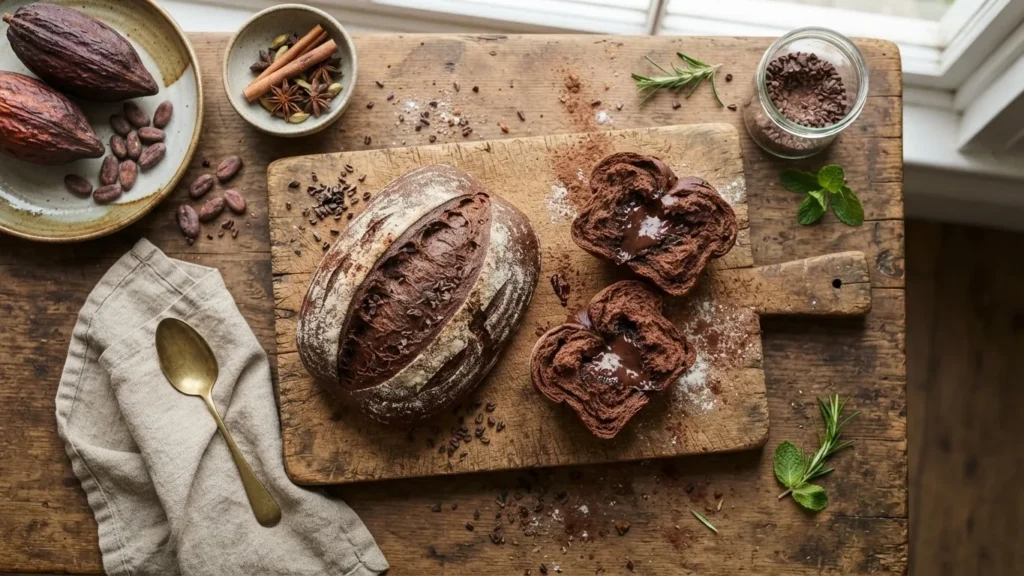
Three published recipes carry the name chocolate bread, and they do not share a method, a sweetness level, or a way to tell when they are done. One is leavened with baking powder and mixed in minutes. One is a yeasted, egg-rich dough with chocolate rolled through it. One is a lean yeast loaf where cocoa replaces part of the flour and almost no sugar goes in at all. A fix that saves the first can wreck the third, which is why picking the right one before you turn on the oven decides everything that follows.
The AtlasPlate Recipe Desk compiles the figures below from the recipes published by Sugar Salt Magic, The Recipe Critic, Pinecones & Acorns, Preppy Kitchen, The Vanilla Bean Blog, Catfish Out of Water, and King Arthur Baking Company. Each version is described in prose, with the source that carries the full recipe named at the point it applies.
What chocolate bread actually means. The name covers three loaves. The first is a no-yeast quick bread, raised with baking powder or baking soda and built like a chocolate cake in a loaf pan; it comes together in about 15 minutes of mixing. The second is babka, a yeasted dough made with extra eggs and chocolate swirled through it, baked in a loaf pan. The third is a lean yeasted cocoa loaf, close to a plain bread, where roughly 10% of the flour weight is swapped for cocoa powder. Sweetness and doneness cues diverge across all three, so match the recipe to the result you want first.
What Separates the Three Chocolate Breads
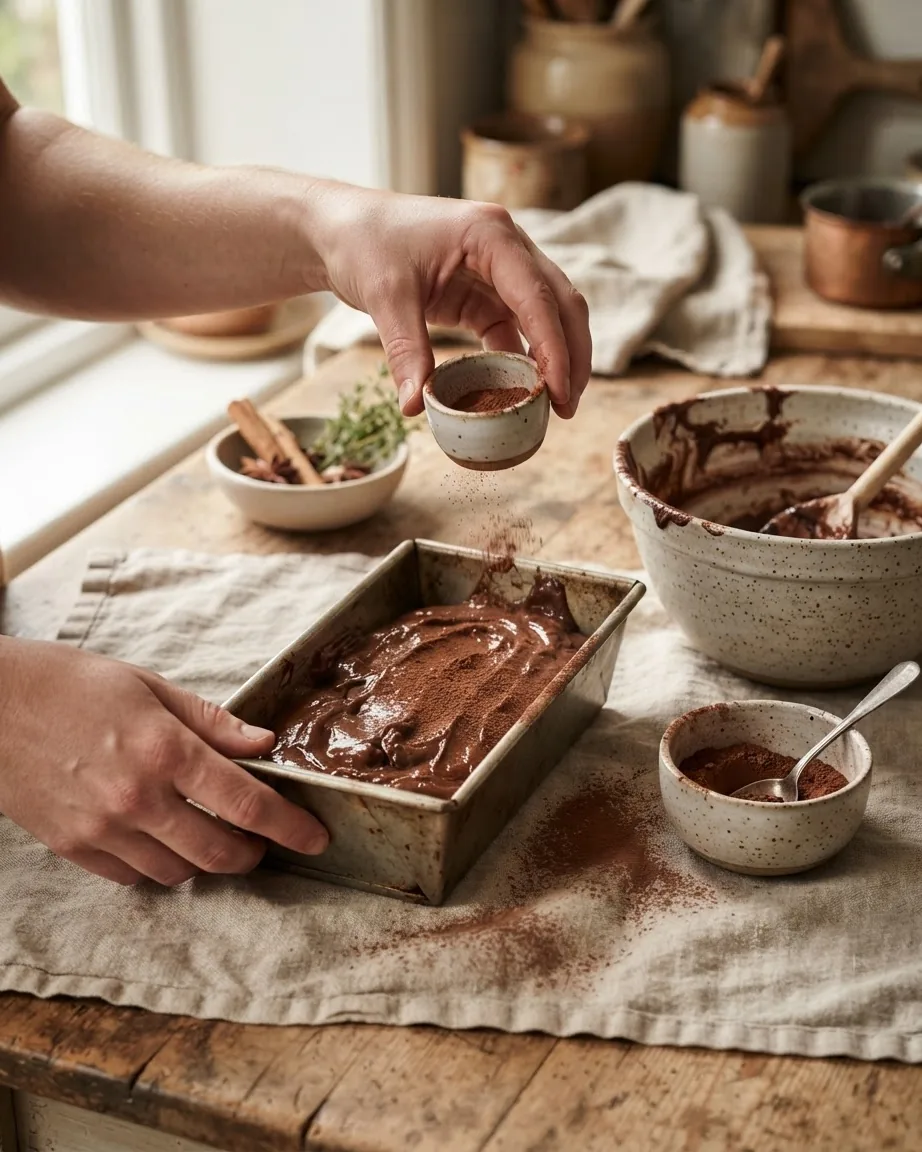
The split matters because the leavening dictates the method. A quick bread leans on chemical leavening, which is why a batter can go from bowl to pan in minutes and needs no proofing time. Pinecones & Acorns places its loaf squarely in that family: no yeast, baking soda or powder doing the lift, and a crumb that reads as chocolate cake baked in a loaf tin rather than bread in any structural sense.
Babka and the lean cocoa loaf both run on yeast, but they want opposite things from the dough. Babka is enriched and sweet, carrying its chocolate as a filling that gets rolled and twisted so the finished slice shows ribbons. The lean loaf keeps the chocolate dissolved into the crumb itself and adds barely any sugar. Cocoa is the one ingredient all three share, though it plays a different role in each: structure and sweetness in the quick bread, color and backbone flavor in the lean loaf, and a supporting note behind the filling in babka.
Use this table to decide which loaf you are actually after before committing to a recipe.
| Loaf | Leavening | Cocoa’s role | Sweetness | Doneness cue | Keeps |
|---|---|---|---|---|---|
| No-yeast quick loaf | Baking powder / soda | 55 g cocoa to 225 g flour, baked in | Dessert-sweet | Toothpick with a crumb or two | Up to 5 days airtight; 2 months frozen |
| Babka | Yeast plus extra eggs | Swirled filling, not mixed into crumb | Sweet, cake-like | 190°F internal | Up to 3 days wrapped |
| Lean cocoa loaf | Yeast | ~10% of flour weight swapped for cocoa | Nearly savory (about 7 g sugar total) | 190°F internal | Best fresh |
Building the No-Yeast Quick Loaf
This is the version most people mean when they type the phrase, and it is the fastest. The Sugar Salt Magic recipe builds its loaf on 55 g of Dutch-processed cocoa to 225 g of plain flour, with the batter coming together in roughly 15 minutes before it goes in the oven. It bakes at 350°F for 50 to 55 minutes, and it is done when a toothpick pushed into the center pulls out with just a crumb or two clinging to it. That crumb cue, not a clock and not a color, is what tells you to stop.
Cocoa does more than flavor here. In a loaf with no yeast, it sits alongside the flour as part of the dry structure, which is why the ratio is fixed rather than a splash added to taste. Dutch-process is the cocoa called for, and it is stocked in the baking aisle of most US supermarkets, though a few brands are easier to track down online than on a shelf.
A documented flavor lever: Pinecones & Acorns stirs 1 teaspoon of espresso powder into the batter to deepen the chocolate without reading as coffee. The amount is small on purpose. Espresso powder sharpens cocoa’s darker notes at that dose; push it much higher and the loaf starts tasting like a mocha instead. The espresso powder lives near the coffee or baking shelves in a regular supermarket, or online if your store does not carry it.
For a sense of how a loaf-pan quick bread behaves around fat and liquid, our eggless banana bread notes sit in the same quick-bread family.
Three Fixes for a Dry Chocolate Loaf
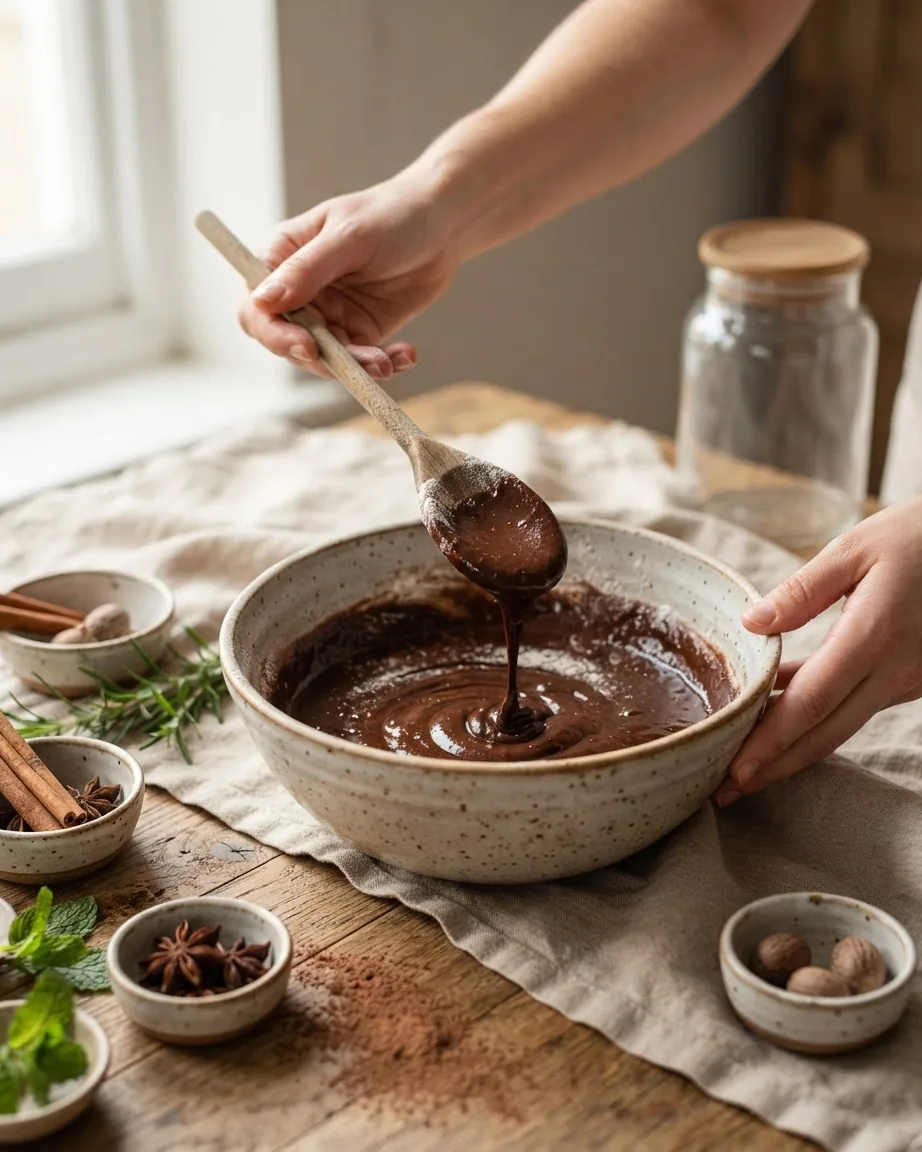
Dryness is the complaint that shows up most with the quick-bread style, and there are three separate levers that address it. They are independent, so you can pull one or all three.
- Stop mixing early. A quick bread turns tough and dry when the batter is overworked, because stirring past the point where the flour is just moistened develops gluten the loaf does not want. Mix only until the dry streaks disappear, then stop.
- Change the fat and the dairy. After readers reported dry loaves, Sugar Salt Magic rebuilt its recipe to use oil in place of butter and buttermilk in place of plain milk, which made the crumb reliably moister. Oil stays liquid at room temperature where butter firms up, and buttermilk’s acidity tenderizes the crumb.
- Bloom the cocoa in hot coffee. The Vanilla Bean Blog pours hot coffee into the batter, where it loosens into a dark sludge that bakes into a moist loaf and pulls the chocolate flavor forward. The heat wakes up the cocoa’s aromatics, and the extra liquid keeps the finished crumb soft.
These do not conflict, but they stack. If you swap to oil and buttermilk and add hot coffee and underbake slightly, you have changed four variables at once and will not know which one mattered. Change one per bake if you want to learn the recipe. For a loaf already built around oil as its fat, see our banana bread recipe with oil.
Dutch-Process or Natural Cocoa: What Changes
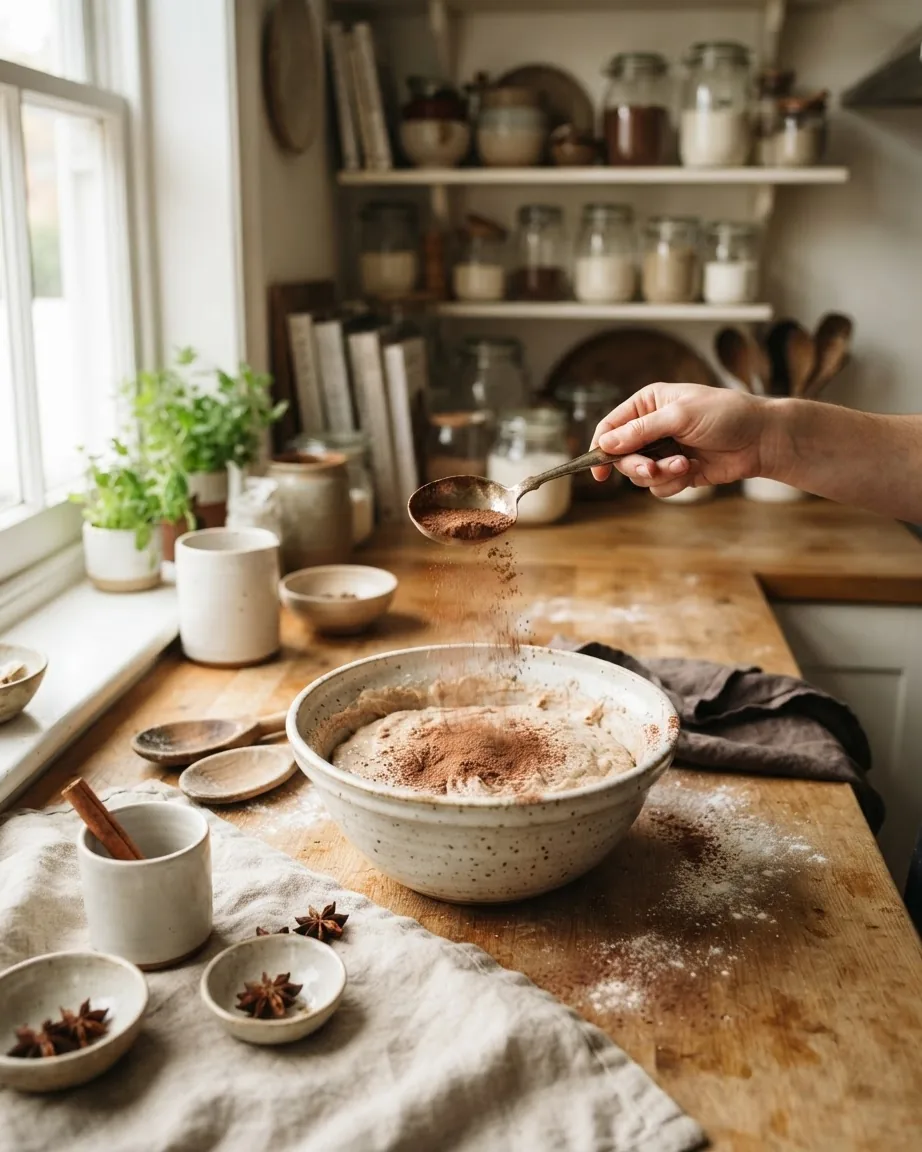
The cocoa you reach for changes flavor, color, and chemistry, and the two types are not freely interchangeable in a chemically leavened loaf. Dutch-process cocoa has been alkalized, which lowers its acidity and gives it a mellower, deeper flavor and a darker color than natural cocoa. The Recipe Critic’s quick bread calls for cocoa as a core structural ingredient, so the choice between the two carries through to both the taste and the look of the finished loaf.
The chemistry matters most when leavening is involved. Natural cocoa is acidic and reacts with baking soda; Dutch-process has had that acidity neutralized. Swap one for the other in a recipe tuned for a specific leavener and the rise can suffer, which is why it pays to follow whichever cocoa a given recipe names rather than grabbing whatever is in the pantry. If you want the darkest color and the roundest flavor, Dutch-process gets you there; natural cocoa reads brighter and more acidic in the mouth.
Babka: The Swirl Is the Recipe
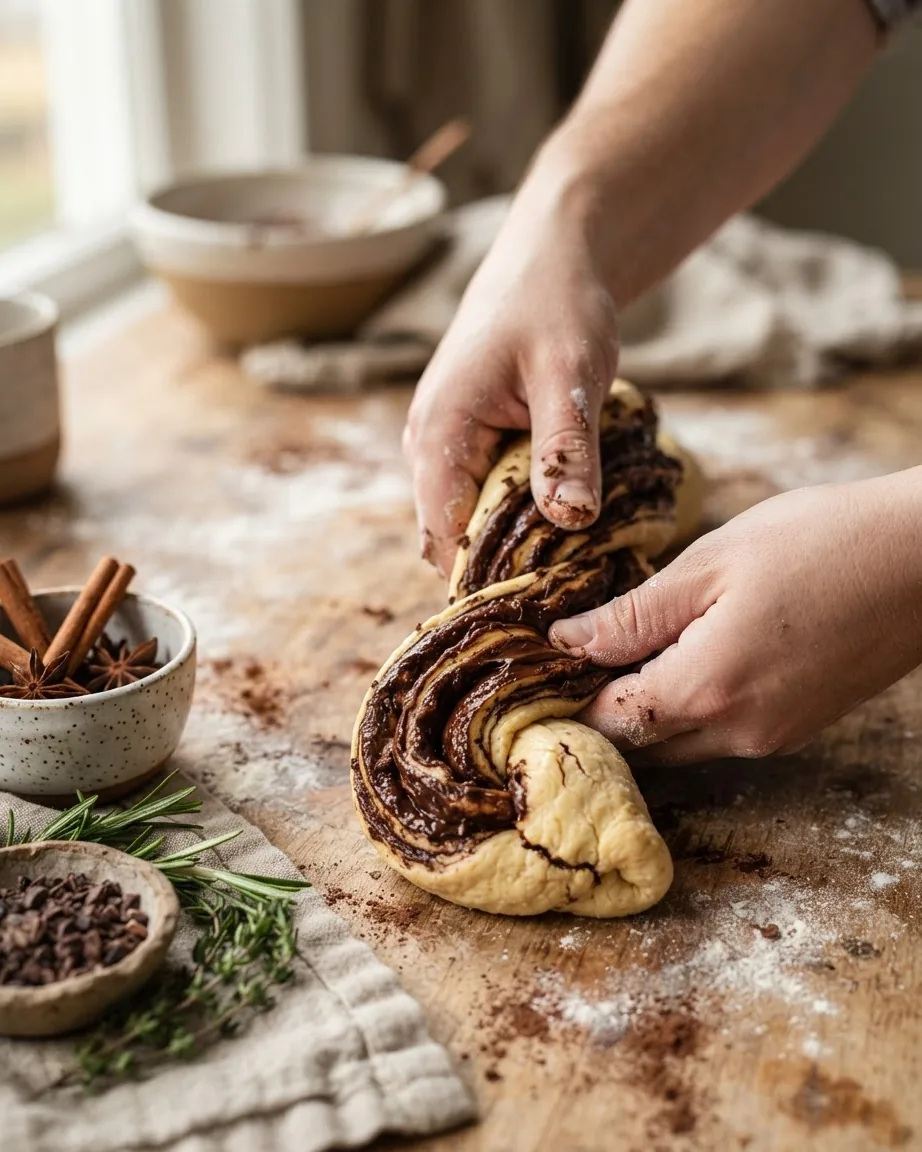
Babka is a yeast-based hybrid, part bread and part cake, made with more eggs than a plain dough and baked in a loaf pan with chocolate swirled through the inside. The defining move is structural: Preppy Kitchen notes that adding chocolate to an enriched brioche dough does not make babka on its own. Rolling the dough out, spreading the filling, then rolling and twisting it so the chocolate runs in ribbons through the crumb is what makes it babka. The shaping is the recipe, not an afterthought.
For the filling, bars beat chips. Chocolate chips carry less cocoa butter and include added stabilizers that help them hold their shape in a cookie, which is exactly why they do not melt as smoothly into a babka swirl. A chopped bar melts into a cleaner ribbon. If chips are all you have, chop them fine and accept a slightly less even swirl.
Two numbers run the babka timeline. The milk is warmed to between 110 and 120°F before it meets the yeast, warm enough to wake the yeast and cool enough not to kill it. The dough is then refrigerated for at least 8 hours, or overnight, before shaping, which firms the butter and makes the enriched dough workable. Because a dark chocolate dough hides its color, the loaf is done when the internal temperature reaches 190°F on an instant-read thermometer, not when the top looks right. Wrapped in plastic or kept in an airtight container, babka holds at room temperature for up to 3 days.
Giving a Yeast Loaf a Chocolate Makeover
The third chocolate bread is lean: a yeasted cocoa loaf closer to a rustic boule than a dessert. Catfish Out of Water’s no-knead Dutch oven version takes a plain cocoa loaf and barely sweetens it. By the author’s own figure, there are only about seven grams of sugar in the entire loaf before any chocolate chips go in, which is why it leans savory and pairs more like a bread than a cake.
The conversion rule is simple to state and easy to get wrong. To make a lean yeast loaf chocolate, replace about 10% of the flour weight with cocoa powder. On a 570 g flour base, that works out to 57 g of flour removed and 57 g of cocoa added. King Arthur Baking Company lands on the same starting point, recommending a cocoa quantity around 10% of flour weight when you turn any yeast dough chocolate.
The trap is hydration. Cocoa carries no water, and 10% to 24% of its weight is fat, depending on the manufacturer, so it does not behave like the flour it is replacing. When you add cocoa to a firmer dough, the added liquid may need to roughly match the quantity of cocoa, or the dough comes up short of the water the yeast needs to work. Skip that adjustment and a loaf that looked fine in the bowl bakes up tight and dry.
The method around it is standard no-knead. The yeast is given about 15 minutes to start bubbling, the dough proofs for 2 hours or until doubled, and the covered Dutch oven preheats to 450 degrees before the loaf goes in. As with babka, color is no guide on a dark dough, so an internal temperature around 190°F is the doneness target. Cocoa powder sits in any supermarket baking aisle; bread flour and instant yeast are stocked alongside it, so nothing here sends you to a specialty store.
How Much Cocoa, How Many Chips
Here the sources disagree, and the disagreement is the useful part. King Arthur’s author starts near 10% of flour weight. Catfish Out of Water uses 10% as well. But the pastry experts King Arthur consulted, Jacquy Pfeiffer and Sebastien Canonne, prefer a lower band, a 5% to 8% range of flour weight. Three credible positions on the same operation means this is a guidance band, not a single correct number: start at 5% to 8% for a subtler chocolate note, push to 10% for a darker, more assertive one, and adjust the liquid as the cocoa goes up.
Chocolate flavor and chocolate color come from different places, and that split is the real lever. Cocoa powder drives the color and the background bitterness; chips or a filling drive the sweet chocolate hit. In one King Arthur experiment, substituting 10% of the flour for cocoa and adding 15% chocolate chips to flour weight was judged too low on chocolate, and doubling that to 30% chips produced the better result. Lean on the filling for the sweetness you taste, and on the cocoa for the color you see.
The practical close is to treat the first loaf as a data point. As King Arthur puts it, when you taste, “These were done at 27 minutes” and so forth, writing the timing down for next time. A dark dough gives you so few visual cues that your own notes from the last bake are worth more than any generic bake time.
How Long Each Chocolate Bread Keeps
Storage is where the three loaves split one more time, and the figures are not interchangeable. The quick-bread style holds longest because sugar and fat slow staling.
- No-yeast quick loaf. Stored in an airtight container at room temperature, it keeps up to 5 days per The Recipe Critic. Pinecones & Acorns wraps the cooled loaf tightly in plastic or foil and holds it on the counter for up to 3 days. For longer storage, Sugar Salt Magic freezes it in individually wrapped slices for up to 2 months, which lets you thaw one portion at a time.
- Babka. Wrapped in plastic or kept airtight, it holds at room temperature for up to 3 days. The egg-rich crumb is best inside that window.
- Lean cocoa loaf. With almost no sugar to hold moisture, the lean yeast loaf is best eaten fresh, the way most no-knead breads are.
The pattern tracks the sugar: the sweeter the loaf, the longer it stays soft, and the lean cocoa loaf has the shortest useful life precisely because it carries so little.
Common Questions About Chocolate Bread
Why does my lean cocoa loaf taste bitter or savory?
That version is built to lean savory. Catfish Out of Water’s no-knead loaf carries only about seven grams of sugar across the whole loaf, so unsweetened cocoa reads as bitterness rather than dessert. The fix is chips or a filling, which supply the sweet chocolate flavor you taste, while the cocoa powder keeps doing the color and backbone work.
Can I use the 190°F doneness test on the quick bread?
No. The 190°F internal reading applies to the yeasted loaves, babka and the lean cocoa bread, where a dark dough hides visual cues. The no-yeast quick bread uses a different test entirely: a toothpick inserted in the center that comes out with only a crumb or two attached. Transferring the yeast-bread number to a quick batter will leave you overbaking.
Do chocolate chips ever work in a babka filling?
They can, with a tradeoff. Chips contain less cocoa butter and added stabilizers that keep them from melting into a smooth ribbon the way a chopped bar does. Chop them finely to help, and expect a slightly broken, less glossy swirl in the slice. For the cleanest ribbons, a bar is the better choice despite the extra chopping.
Make-Ahead Math: Quick Loaf vs Babka on the Counter
If you are baking ahead, the two room-temperature keeping times in this article already tell you which loaf buys you more slack. The no-yeast quick loaf holds up to 5 days in an airtight container; babka holds up to 3 days wrapped. Run the numbers against each other and the gap is concrete:
- 2 days longer: 5 days − 3 days = 2 extra days for the quick loaf before it goes stale.
- About 1.67× the shelf life: 5 ÷ 3 ≈ 1.67, so the quick loaf keeps roughly 67% longer than babka at room temperature.
Bake the quick loaf when you need it to sit out across a long weekend; reach for babka when it will be eaten within a couple of days, or freeze the quick loaf instead to stretch it well past either counter window.