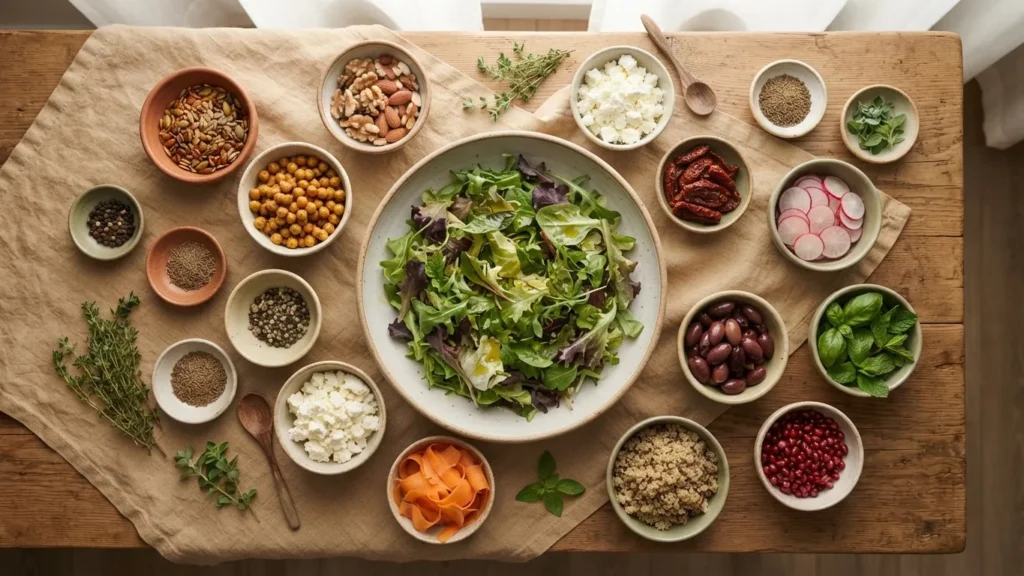
One spoonful decides the accent. Za’atar over cucumber, tomato, and feta reads as Levantine. Furikake over plain greens reads as Japanese. A handful of crispy fried shallots reads as Southeast Asian. The lettuce underneath can be identical in all three bowls, and the plate still tastes like three different kitchens. That is the mechanism behind the most useful salad topping ideas: a finishing blend or a crunchy garnish carries more regional signal than the vegetables it sits on, and it does so for a lot less work than cooking a separate component.
This guide sorts those finishers by the cuisine they point toward, then documents the one prep constraint that governs each – the temperature, the timing cue, or the sequence that separates a topping that works from one that goes soft, soggy, or bitter. The numbers and methods below are drawn from recipes published by Jessica Gavin, A Couple Cooks, MasterClass, Drive Me Hungry, and Clove Garden. No quantities for a full recipe are reproduced here; where a dish needs one, the source that carries it is named in the text.
The short version. The fastest salad topping ideas are regional finishers that change a bowl’s whole character with one sprinkle. For a Middle Eastern tilt, scatter za’atar or sumac. For an Egyptian or North African nutty crunch, use coarse dukkah. For Japanese umami and a fine crackle, furikake. For Southeast Asian depth, crispy fried shallots with peanuts. The rule that decides success on all of them: add anything crunchy at the very end, after the greens are dressed and tossed, so nuts, croutons, and shallots stay crisp rather than soaking up vinaigrette. Toast nuts to a fragrant, golden stage; dry chickpeas before roasting; keep dukkah coarse, never a paste.
The AtlasPlate Finisher Map: one sprinkle, one cuisine
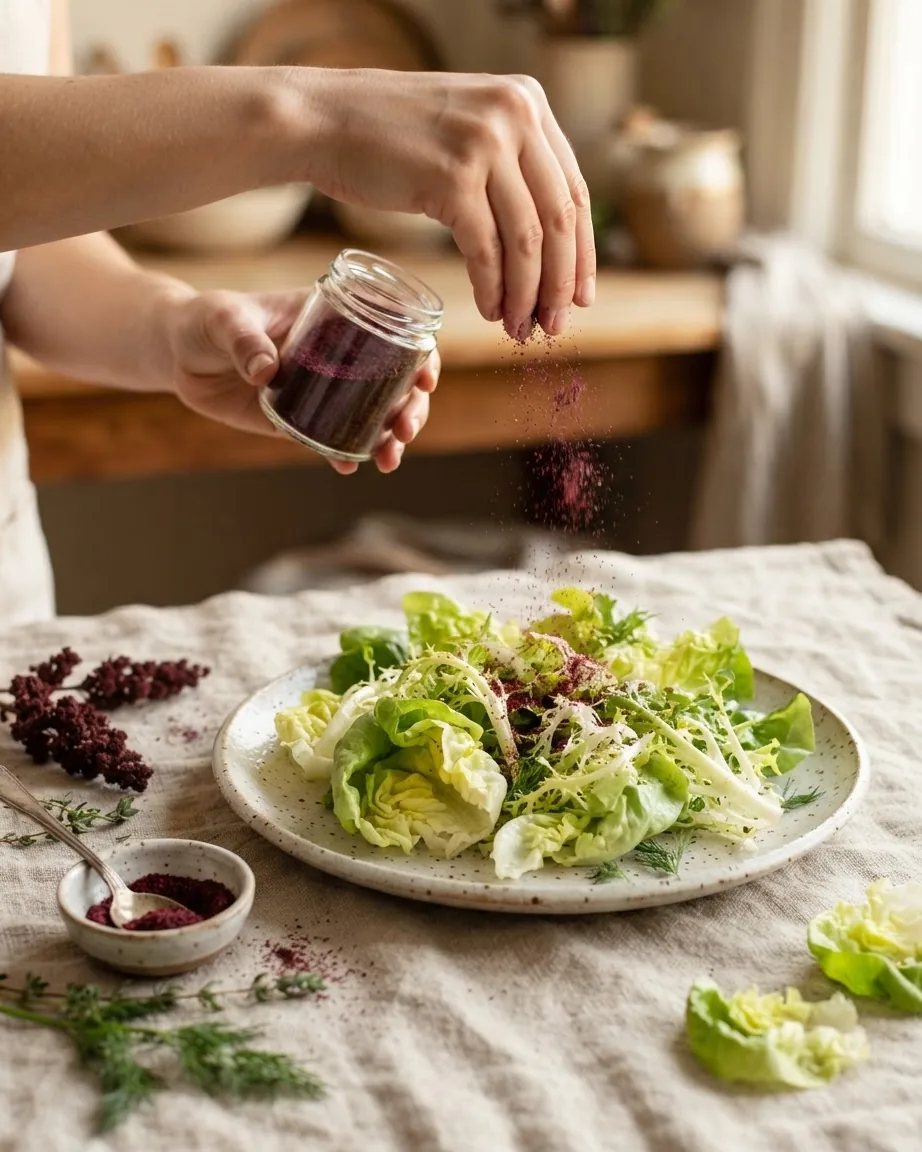
Most salad “ideas” are really substitutions of the same four building blocks – a seed, a nut, a crouton, a crumble. The regional finishers below change the perceived cuisine instead of the texture alone, which is why a single one can redirect a whole bowl. The table sorts them by the accent they produce and by how much stove time each demands, so the choice comes down to how much effort the plate is worth that night.
| Regional accent | Finisher | What it adds | Effort |
|---|---|---|---|
| Middle Eastern / Levant | Za’atar, sumac | Dried herb, sesame, and a dry tang | No cook |
| Egyptian / North African | Dukkah | Coarse toasted nut and seed crunch, warm spice | Light toasting |
| Japanese | Furikake | Umami from nori and sesame, fine crackle, salt | No cook |
| Southeast Asian | Crispy fried shallots + peanuts | Deep savory crunch, aromatic oil | Slow fry |
Read the far-right column first. Three of the four finishers – za’atar, sumac, and furikake – are no-cook: open a jar, pinch, scatter. They move a salad across a regional line with zero heat and no risk of a burnt or bitter result. The two that reward the stove, dukkah and fried shallots, pay back the time with a texture the dry blends cannot match: dukkah’s nut shards, and the long, brittle crunch of properly fried shallots. If a weeknight bowl needs rescuing in under a minute, pick from the no-cook row. If the salad is the meal, the slow-fry row earns its place.
The map also explains why these toppings rarely clash with each other inside one bowl. Sumac and za’atar overlap, so they double rather than fight. Furikake and dukkah both bring crunch but point at opposite ends of the world, so a bowl that gets both tastes confused. The practical move is to commit to one accent per salad and let the greens and the acid stay neutral underneath it.
Sumac, the dry acid that brightens without wetting the bowl
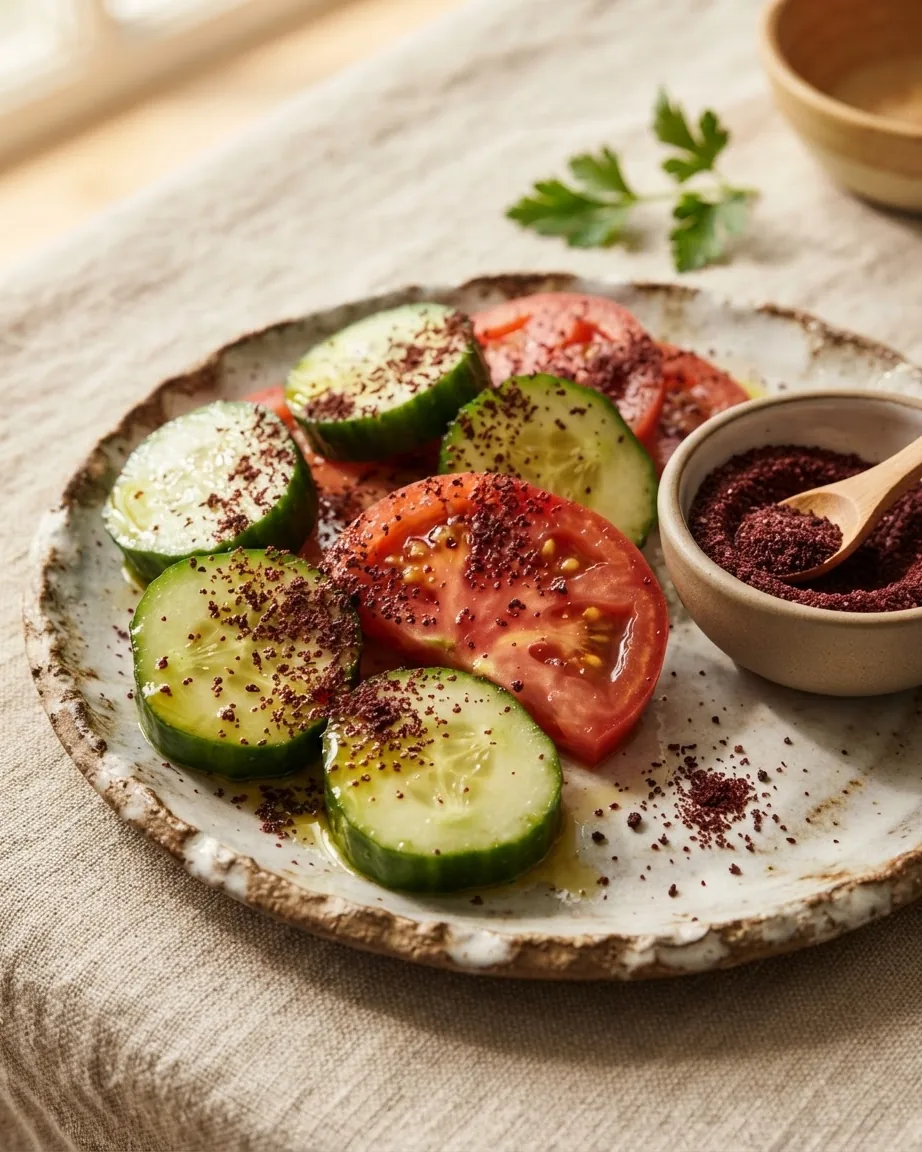
Sumac is a ground dried berry with a sour, lemon-adjacent edge, and its most useful property for a salad is that it adds tartness in powder form. A squeeze of lemon or a splash of vinegar thins a dressing and loosens the greens; a pinch of sumac delivers a comparable brightness while the leaves stay dry and the dressing stays where it was. For any bowl already carrying as much liquid as it can hold – a heavy tahini drizzle, a creamy yogurt base – sumac is the way to push acidity up without flooding the plate.
It pairs where lemon would pair: cucumber, tomato, red onion, chickpeas, feta, and anything built on yogurt. A standard Levantine move is a dusting over a cucumber-and-tomato salad with a little olive oil, where the powder clings to the oil-slicked surfaces and releases its tang on the first bite. Because the flavor is concentrated, start with a pinch and taste; sumac reads as gentle in the jar and sharpens once it hits fat and salt.
For a salad that leans the other direction – crisp, cold, and built on rice rather than greens – the acid question changes entirely, and our Thai rice guide is a separate entry on the site.
Za’atar or dukkah: herb-fine against nut-coarse
These two blends get swapped in conversation constantly, and the swap ruins both. Za’atar is an herb-forward, relatively fine mixture built on sumac, dried thyme or oregano, and toasted sesame seeds. Its job on a salad is seasoning and perfume: it coats, it clings to oil, and it tastes of dried herb and tang. It pairs with the same cast as sumac – chickpeas, cucumber, feta, and yogurt-based dressings – and because it is a dry blend, it goes on last with no cooking at all.
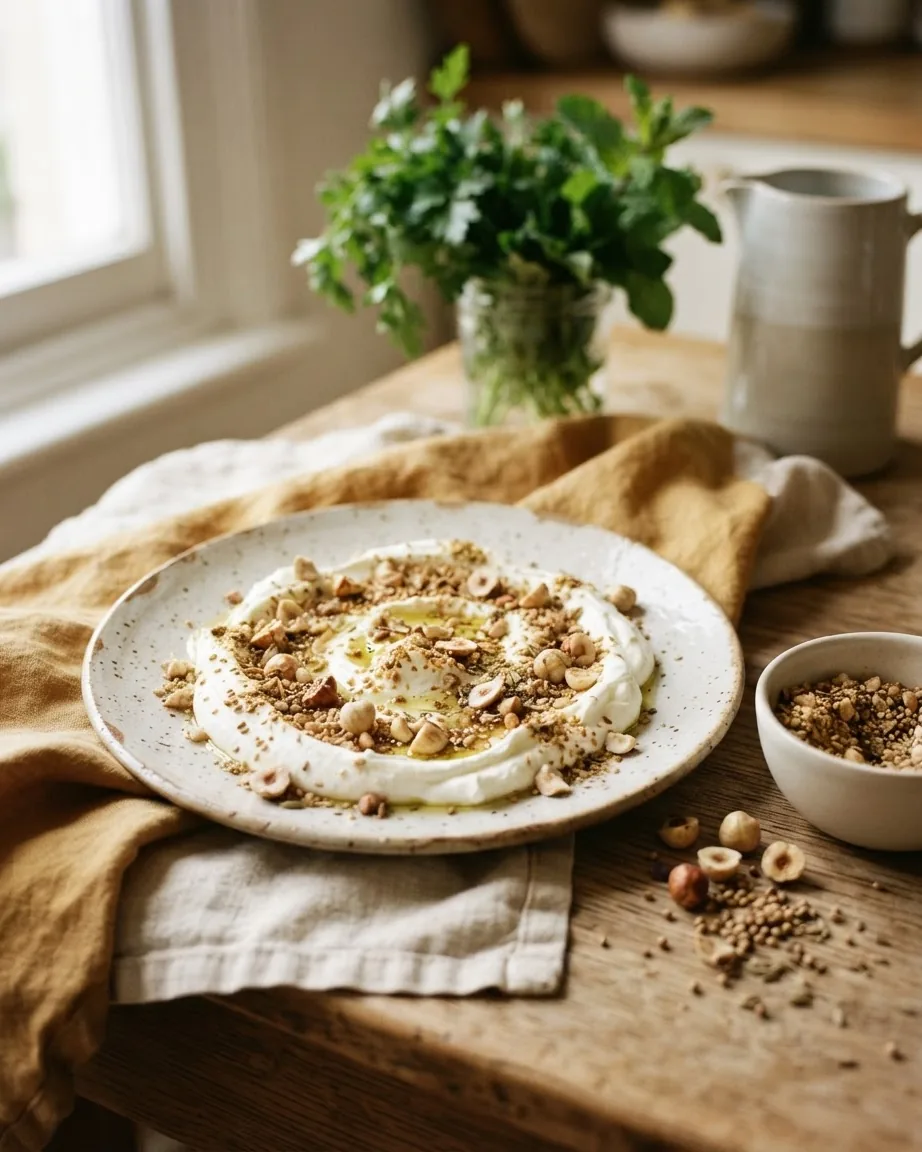
Dukkah is a different object. It is an Egyptian nut-and-seed blend, coarse by design, typically built on toasted hazelnuts and sesame with coriander and cumin ground in. The defining rule is texture: it must stay coarse, a rubble of nut shards and whole seeds, because a dukkah pulverized to a paste loses the entire reason to use it. On a salad it functions as the crunch element and the spice element at once – a spoonful scattered over roasted vegetables or soft cheese does the work of croutons and seasoning together.
The toasting is where dukkah is made or lost, and the timings are specific. Per the method published by MasterClass, hazelnuts spread on a rimmed baking sheet toast until golden and the skins loosen, about 8 to 10 minutes, while sesame seeds go in a dry pan over medium heat for roughly 2 to 5 minutes, stirring often, until lightly browned. Those are short windows with a hard ceiling: nuts and seeds slide from golden to acrid fast, and the scent turning sharp is the signal to pull them. After toasting, the grind is a few pulses only – enough to break the hazelnuts, not to smooth them.
So the choice is a texture decision before it is a flavor one. Want seasoning and tang that disappears into the leaves? Za’atar. Want a spiced crunch you can feel between your teeth? Dukkah. They are not interchangeable, and a salad that calls for one is rarely improved by the other.
Furikake: what a spoonful adds, by the numbers
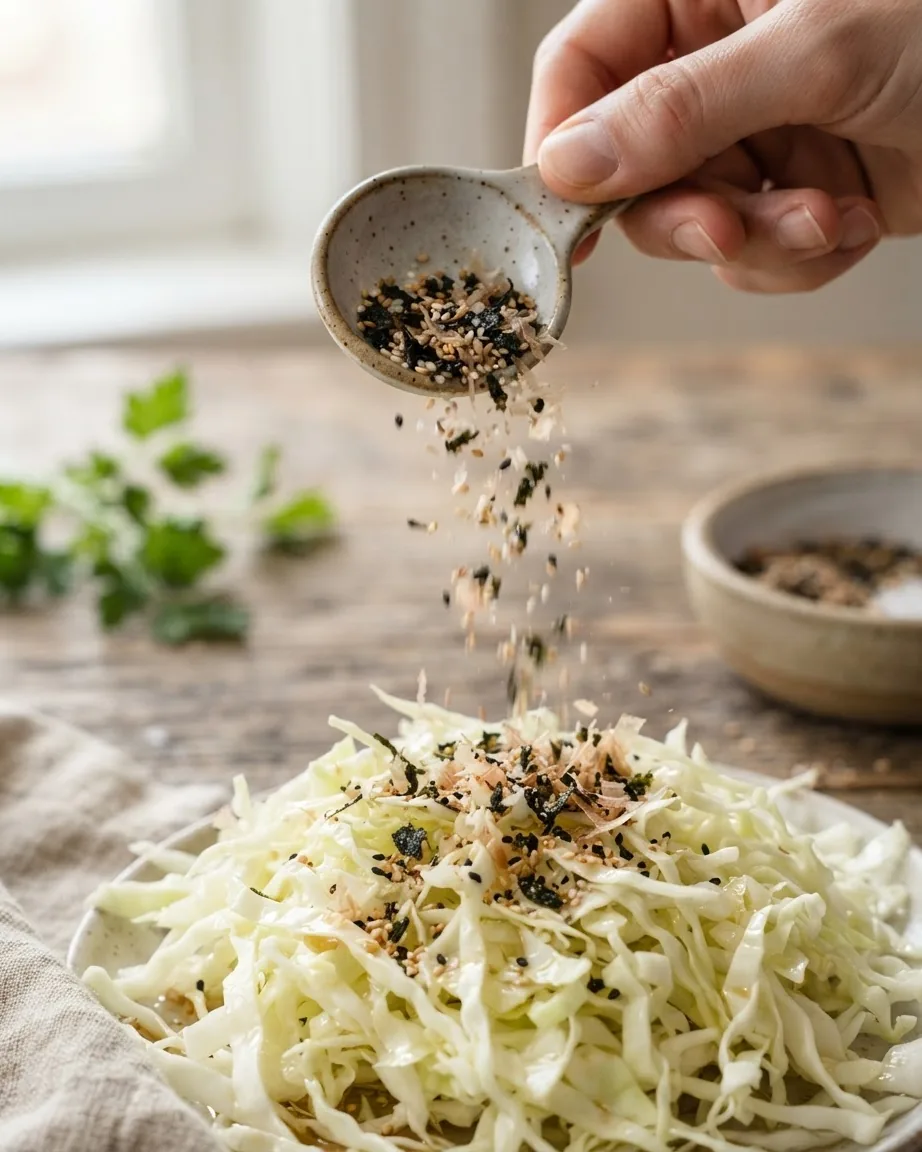
Furikake is a Japanese dry seasoning, and the basic home version – often called nori komi – combines sesame seeds, crumbled nori, and salt, with dried fish flakes in many formulations. On a salad it is the Japanese-direction finisher: it brings a savory, oceanic umami plus a fine sesame-and-seaweed crackle, and it does so straight from the jar with no cooking. It sits well on cold tofu, cucumber, avocado, shredded cabbage, and plain leafy greens dressed lightly, where its salt and umami replace a heavier dressing.
The appeal for anyone watching what a topping contributes is how little it adds by weight. A single serving of a nori komi furikake, as reported by Drive Me Hungry, runs about 40kcal with roughly 2g of carbohydrate, 1g of protein, 3g of fat, and 1g of fiber. The same read lists sodium at 195mg and potassium at 34mg per serving. The sodium figure is the one to watch: furikake is doing the salting, so a salad finished with it rarely needs added salt in the dressing, and stacking both pushes the plate well past where it should sit.
Making it at home is a dry-pantry job rather than a cooking project – toast sesame, crumble nori, combine with salt and any dried-fish component – which is why furikake belongs in the no-cook column of the map even though store-bought jars are everywhere. The home blend lets the salt level be dialed down, which matters given that 195mg per serving built on a store formula you did not mix yourself.
Crispy fried shallots, and the slow fry that keeps its crunch
Crispy fried shallots are the Southeast Asian finisher that doubles as a crouton swap: deep, savory, aromatic, and shatter-crisp, scattered over noodle salads, shredded-vegetable salads, or any bowl that wants a toasted-allium crunch without a wet dressing to carry it. The crunch is the entire value, and the crunch depends on one counterintuitive rule – fry slow, not fast.
The window is published, and it is long. According to the method on Clove Garden, the fry is about 25 min of hands-on work with a total that can stretch from 25 min out to 6 hours depending on how low and slow it is run, and the source is blunt about the floor: if the shallots crisp in under 15 minutes, “your temperature is too high and you risk bitterness.” A rushed fry browns the outside before the moisture leaves, so the shallots go limp and scorched instead of brittle. That same batch yields enough fried shallots to fill an 8 oz jar plus a bit less than a cup of the strained shallot oil, which is itself a finisher – a spoonful over the salad carries the allium flavor into the dressing.
The storage step is where most home batches fail after the fact. Fried shallots must cool completely before they go into a jar; sealing them warm traps steam, the steam resoftens the crunch you spent 15 minutes or more building, and the batch turns chewy overnight. Cool, then seal. A bowl that wants the crouton-style crunch but not the fry can lean on the shallots as a direct swap – same role, more flavor, no bread.
Fried shallots also anchor the most explicit example of a layered-texture salad: the Burmese tea leaf salad, laphet thoke, which stacks fried shallots, fried garlic, peanuts, and toasted chickpea-flour crunch over fermented tea leaves. It is the clearest demonstration of the principle that a salad can be built as a system of distinct crunches rather than one greens-and-dressing base, with each fried element added for a different texture at a different size.
Roasted chickpeas: dry first, roast hot, season after
Roasted chickpeas are the finisher that also does protein duty – a crunchy, savory handful that turns a side salad into a meal. They are the one topping on this list with a documented three-step order where skipping any step changes the result, and the order is: dry, roast hot, season after.
Dry first. Surface moisture is the enemy of crunch. Chickpeas going into a hot oven wet will steam before they crisp, and they come out leathery. Patting them thoroughly dry, as the crispy-chickpea technique on A Beautiful Plate stresses, is the step that lets the oven do its job. Spreading them to roll off a towel, discarding loose skins, and letting them air a few minutes all push toward a drier bean and a crunchier result.
Roast hot, and shake. Per the recipe from Jessica Gavin, chickpeas roast at 400°F for 30 to 35 minutes, shaking the pan every 10 minutes so they brown evenly instead of charring on their down-facing side. That is a method difference rather than a contradiction – a hotter oven over drier beans crisps faster but leaves a narrower margin before bitterness, while 400°F for the full 35 min is the more forgiving setting. For a first batch, the lower temperature and the every-10-minute shake are the safer combination.
Season after. Spices added before roasting scorch in the dry heat and turn acrid. The documented order is to roast plain, then toss the hot chickpeas with salt and ground spices – cumin, smoked paprika, za’atar – in the final step so the seasoning sticks to the oil-slicked surface without burning. That post-roast toss is also where the chickpea can be pointed at a cuisine: za’atar for Levantine, a pinch of the dukkah from earlier for Egyptian, chili and lime for something else entirely.
For plant-forward bowls where chickpeas and other roasted components do the heavy lifting, the broader category of already-plant-based cooking runs deeper than one topping, and our vegan Chinese recipes guide is a separate entry.
Toast the nuts until they smell done, not until the timer says so
Toasted nuts are the most common salad topping of all, and the most commonly wasted, because the doneness signal everyone reaches for – the clock – is the wrong one. Nuts carry different oil contents and sizes, they sit at different depths on the pan, and the line between golden and burnt is a matter of seconds once it arrives. The reliable cue is the nose: the moment the kitchen smells of toasted nut, they are done or nearly so.
The timings exist as a guide, not a rule. The method from A Couple Cooks gives about 3 minutes for pine nuts and 4 to 5 minutes for harder nuts like pecans, walnuts, and almonds, and anchors the call on scent and color – toast “until the nuts are fragrant and golden brown or one shade darker.” Those windows are short, which is exactly why the timer fails: a 30-second lapse past 5 minutes is the gap between toasted and scorched.
Temperature is a method choice, not a contradiction, and two valid approaches land in different places. Both routes agree on the real test – stop at the scent and the first golden shade, not at a fixed number on the dial. For anything on a sheet pan, pull it a touch early; residual heat keeps the nuts darkening after they leave the oven.
The payoff is specific. Toasting converts a raw nut’s flat, slightly dusty flavor into something deeper and releases the oils that make the nut taste of itself, and it firms the texture so the nut stays crisp longer in a dressed salad. A raw walnut goes soft in vinaigrette within minutes; a toasted one holds.
The order that keeps your salad topping ideas from going soggy
Every crunchy topping above shares one failure mode: contact with dressing, over time, turns crunch to mush. The fix is not a better crouton or a drier nut – it is sequence. The build order that keeps crisp toppings crisp, as laid out by America’s Test Kitchen, is to dress the bowl first, then add the greens and toss them in the dressing already waiting at the bottom, and add anything crunchy only at the very end, right before serving. Dressing from below coats the leaves evenly with less liquid, and the late-added crunch never sits in a puddle.
Timing is the second lever. The Daily Meal’s rule for crunchy toppings is blunt in the same direction: they go on last, and ideally seconds before the salad reaches the table, because the clock between dressing and eating is what decides how soggy a nut or crouton gets. A salad tossed and left to stand for ten minutes while the table is set has already started softening its toppings; a salad finished at the last moment has not.
There is one deliberate exception, and it runs the other way. Food Republic’s nuts-in-dressing technique calls for stirring nuts into the dressing a few minutes before tossing – not long enough to soften them, long enough to let the dressing pick up toasted-nut flavor and distribute it. It works because the contact is measured in minutes, not the open-ended standing time that wrecks a finished bowl. The distinction is intent: a controlled few-minute soak flavors the dressing, while an accidental ten-minute wait ruins the crunch.
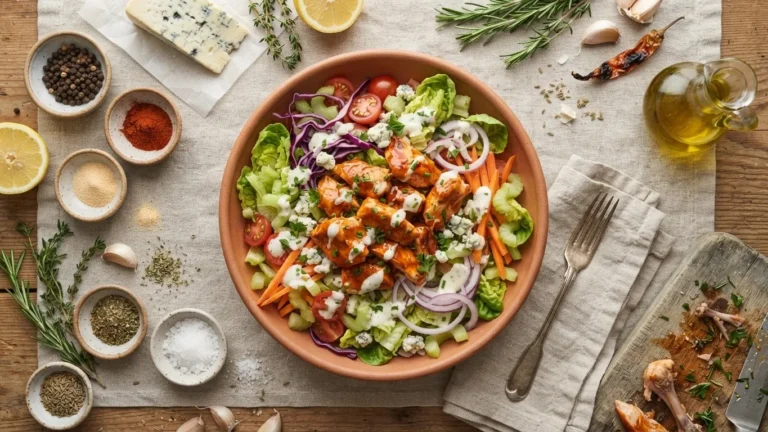
Put together, the sequence rules resolve the whole soggy problem for every finisher on this page. No-cook blends – za’atar, sumac, furikake – are immune, since they are seasoning, not texture, and can go on whenever. The crunch toppings – dukkah, fried shallots, roasted chickpeas, toasted nuts – follow one order: greens in the dressed bowl, toss, crunch last, serve. For a salad that is less greens-and-dressing and more a composed plate of its own, the same last-second-crunch logic applies, and our buffalo chicken salad guide is a separate entry on the site.
Furikake math: what a second and third sprinkle actually stack up
One serving of nori komi furikake is light: 40kcal and 195mg sodium. But furikake is also doing the salting, and nobody measures a serving over a bowl of greens. Run the per-serving figures up to a realistic heavy hand and the sodium is what moves, not the calories.
- 2 servings: 390mg sodium, 80kcal
- 3 servings: 585mg sodium, 120kcal
The calories stay trivial; the sodium nearly triples. And per serving the seasoning already carries 195mg sodium against just 34mg potassium – a 5.7:1 ratio, which is why furikake reads as salt first. The takeaway: let furikake be the salt.
Questions cooks ask about salad toppings
Can I make furikake without dried fish?
Yes. The nori komi style builds on sesame, crumbled seaweed, and salt, and the fish flakes are one optional umami layer rather than a requirement. A fish-free jar still lands near that 40kcal, 1g-protein profile per serving and keeps the sesame-and-nori crackle intact. Mixing it yourself also lets you drop below the roughly 195mg of sodium a store blend carries, which matters if the dressing is already salted.
How far ahead can I toast nuts or roast chickpeas?
Both hold once fully cooled and sealed airtight. Toasted nuts keep their crunch for days at room temperature; roasted chickpeas are best within a day or two, since they slowly reabsorb air moisture and soften. The failure is warmth: jarring either one before it has cooled traps steam and undoes the crisp overnight. Roast or toast, cool completely, seal, and add only at serving.
Why did my fried shallots turn bitter?
Heat ran too high. A fry that finishes in under 15 minutes scorches the shallot’s sugars before the water leaves, which reads as bitterness and a dark, brittle-but-burnt texture. The documented fix is patience: a low, slow fry stretching from 25 min toward several hours at the extreme, pulled at pale gold, not brown. Scoop them a shade before the color you want, because they keep darkening in the residual oil.
Should sumac and za’atar be used together?
They overlap rather than clash, since za’atar already contains sumac, so stacking them deepens the same tangy, herbal direction instead of muddying it. Use za’atar when you want the dried-herb and sesame notes alongside the tartness, and reach for straight sumac when a bowl needs only the sour lift – for example over a creamy or yogurt-heavy salad that cannot take more liquid from a squeeze of lemon.
What is the single biggest mistake with crunchy toppings?
Adding them too early. Dressing plus standing time is what turns a toasted nut, a crouton, or a fried shallot soft, and no amount of better sourcing fixes a topping that has been sitting in vinaigrette for ten minutes. Dress the bowl, toss the greens, and scatter the crunch at the last possible moment. The one sanctioned early contact is a brief, minutes-long stir of nuts into the dressing to flavor it.