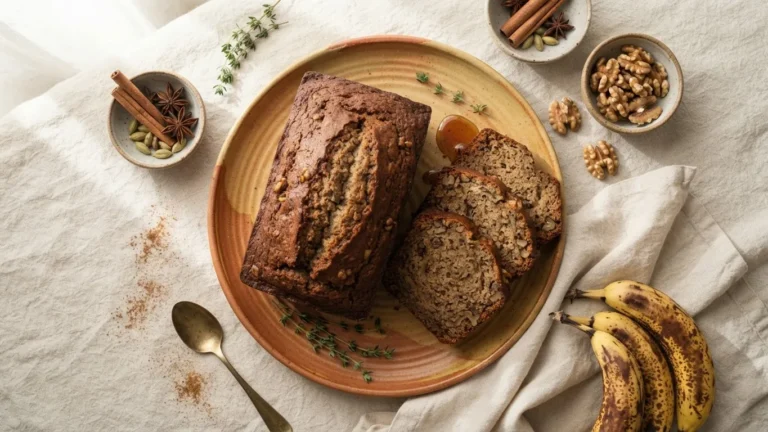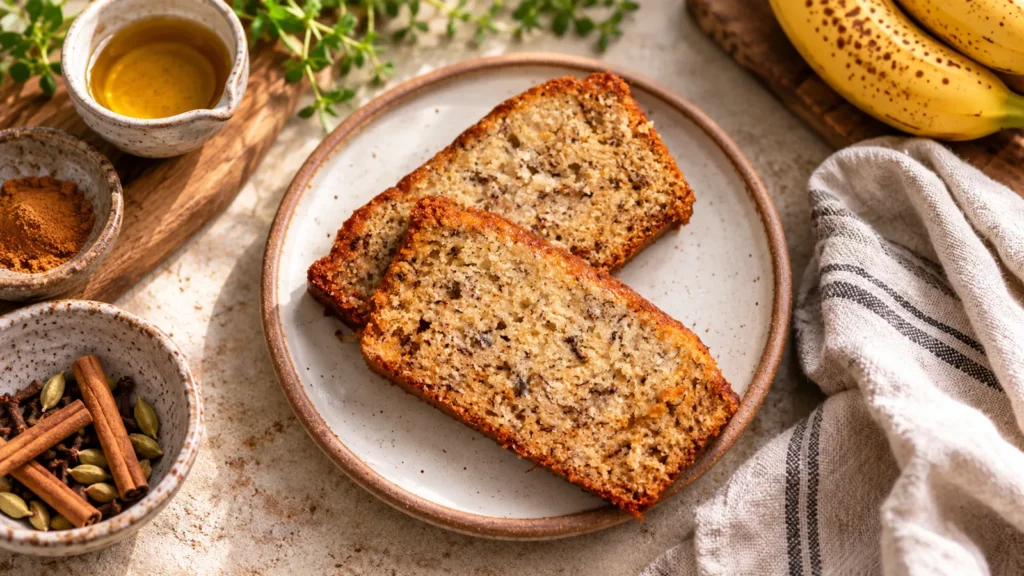
Reach the same amount of fat by two separate paths, and the result is the two most-followed oil loaves. Working from 1 1/2 cups flour and two bananas, Frosting & Fettuccine relies on 1/2 cup (about 118 ml) vegetable oil, while Bread Dad stretches that identical 1/2 cup (115 ml) of oil across two cups of flour and three large bananas. So a banana bread recipe with oil is not one formula but a small family of them, and the differences – banana-to-flour ratio, bake temperature, doneness cue – decide whether your crumb comes out dense, tender, or gummy. This desk aggregates the ingredient lists, timings, and method notes from several published recipes and keeps their disagreements visible instead of averaging them away.
The two blocks below give one cookable loaf, transcribed from Bread Dad’s structured recipe. Everything after that is the decision material: oil choice, temperature, substitution direction, and the signals that tell you it is done.
The short answer: oil amount, temperature, and doneness
A standard oil loaf uses 1/2 cup of neutral oil – 115 ml in Bread Dad’s version, about 118 ml in Frosting & Fettuccine’s. Bake it at 325 degrees F (163 degrees C) for a soft, tender crumb whose top does not outrun its center, or at 350 F (180 C) for a faster loaf with a firmer crust. It is done when an internal-temperature reading hits 200 to 205 degrees F, or when the edges pull from the pan and the top feels firm. Oil stays liquid at room temperature, which is the reason oil loaves read as moister than butter loaves and hold that texture for days.
Where Bread Dad uses 2 cups (240 grams) of flour, Frosting & Fettuccine’s super moist version holds back to just 1 1/2 cups (187.5 g), and it pairs that with only two bananas and 3/4 cup sugar. More banana per gram of flour means a wetter, denser slice; more flour gives a taller, cakier loaf. Neither is wrong – pick by the texture you want.
How much oil goes in one loaf, and why 1/2 cup keeps recurring
Across the oil recipes this desk pulled, the fat quantity barely moves: 1/2 cup. The leaner-flour loaf lists it as 1/2 cup (118.29 ml) vegetable oil; the three-banana loaf lists 1/2 cup (115 ml). The small numeric gap is a rounding artifact, not a recipe difference – a US half-cup is the same measure on both counters.
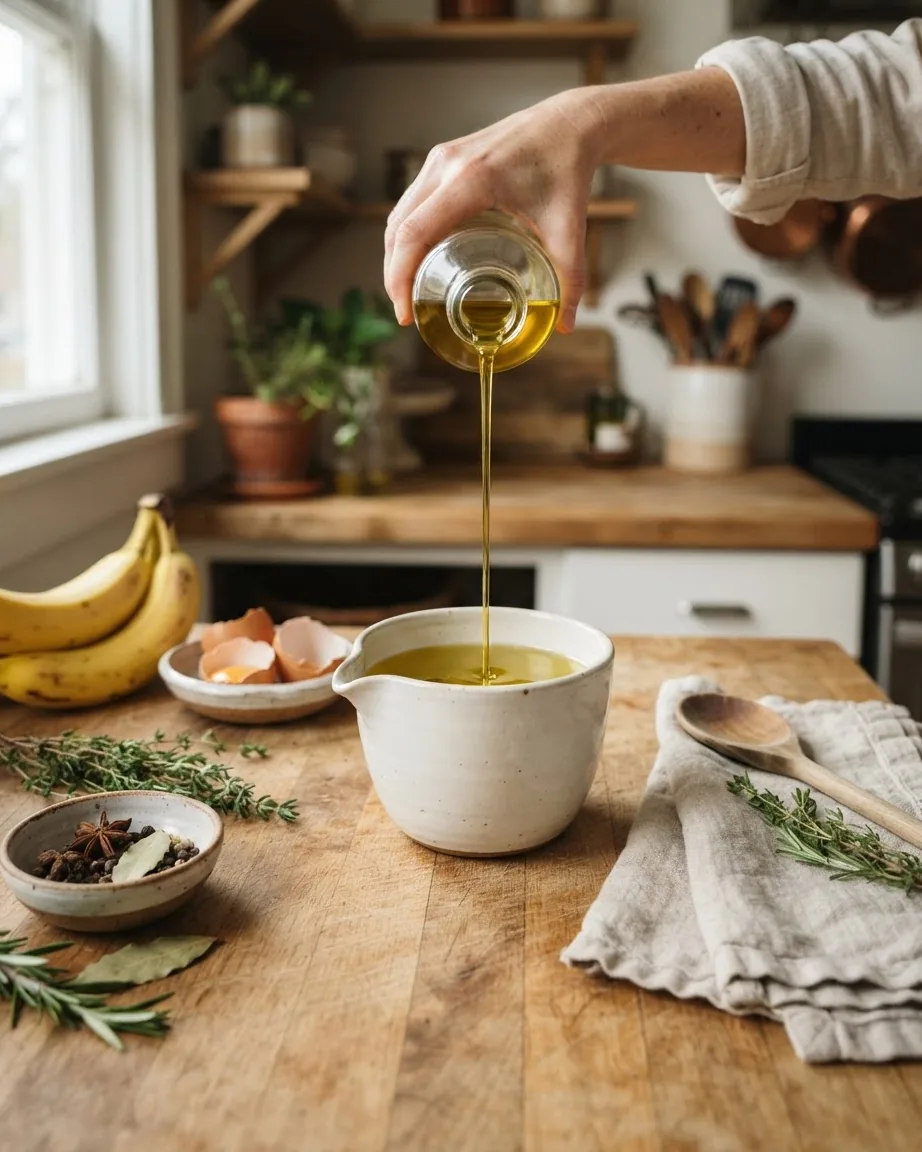
That half-cup does two jobs at once. It carries flavor compounds that only dissolve in fat, and because oil never solidifies at room temperature, it coats flour proteins and stays soft in the finished slice. Lion’s Bread’s classic loaf reaches the same half-cup with avocado oil (112 g) instead of vegetable oil, which tells you the volume matters more than the specific oil at this ratio. If you want a lighter slice without losing that softness, see the reduction levers further down – the fat and the sugar can both come down before the crumb dries out.
Which oil to use: neutral, olive, coconut, or avocado
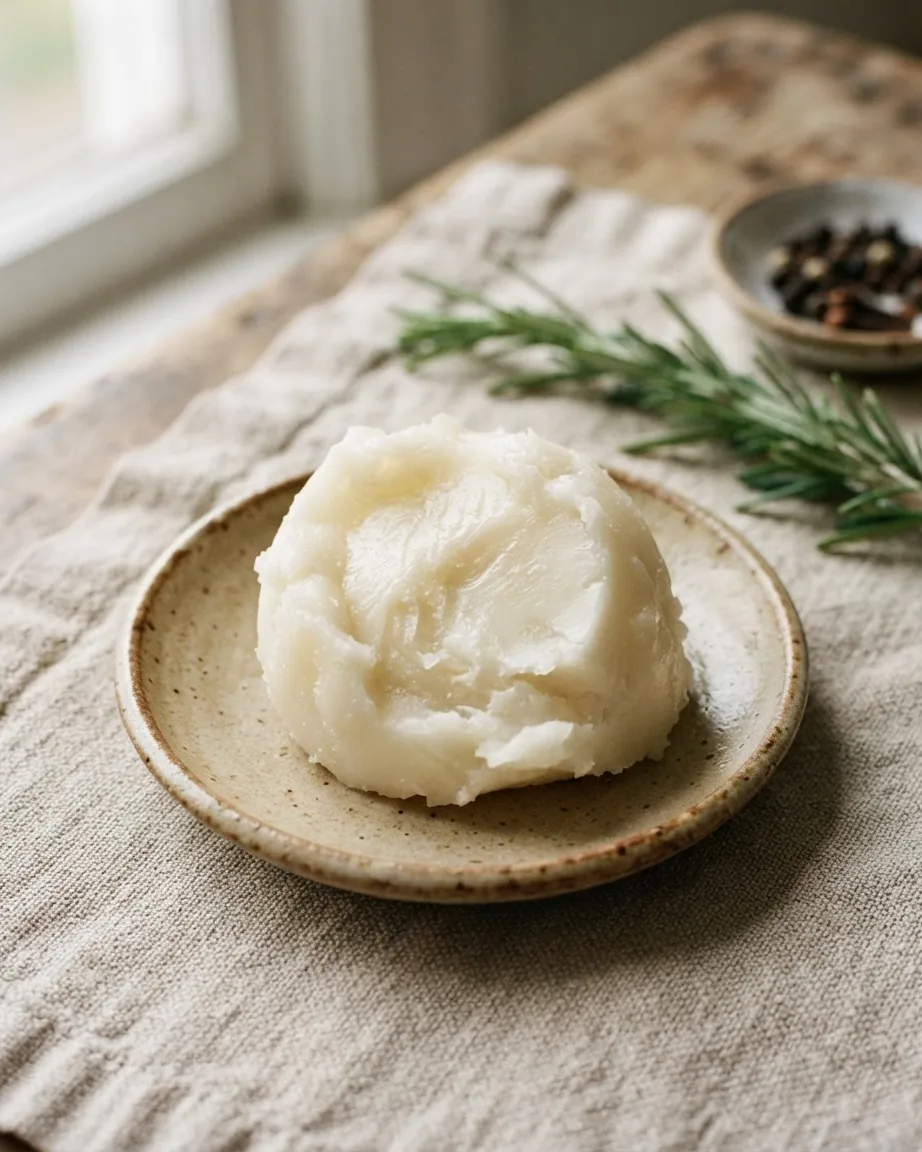
The oil you reach for changes flavor far more than it changes structure, so the decision is mostly taste and fat profile. Four families cover nearly every recipe:
- Neutral oils (vegetable, canola, corn, grapeseed): carrying no taste of their own, they let the banana and vanilla take the lead. This is the category chosen by both Bread Dad and Frosting & Fettuccine. Reach for it as your default whenever the goal is a loaf that tastes purely of banana.
- Olive oil: Cardamom and Tea builds an entire olive oil loaf around it. The North American Olive Oil Association, on its extra virgin olive oil banana bread page, states that olive oil does not taste like olives in the finished bake and that swapping butter for EVOO cuts saturated fat – read that as the trade group’s position, since it represents olive-oil producers, not as settled nutrition science.
- Coconut oil (refined or unrefined): refined is neutral; unrefined carries a faint coconut note. Both are solid at room temperature, so they behave more like butter than like a pourable oil.
- Avocado oil: mild and high-fat, used at the full half-cup by Lion’s Bread. A close stand-in for vegetable oil when you want a marketed-as-healthier fat without a flavor change.
One point often overstated: an oil’s smoke point does not matter here. The interior of a quick bread climbs only to roughly 200 to 205 degrees F, well under any cooking oil’s smoke point, so choose on flavor and fat profile rather than heat tolerance.
Is an oil loaf really moister than a butter one?
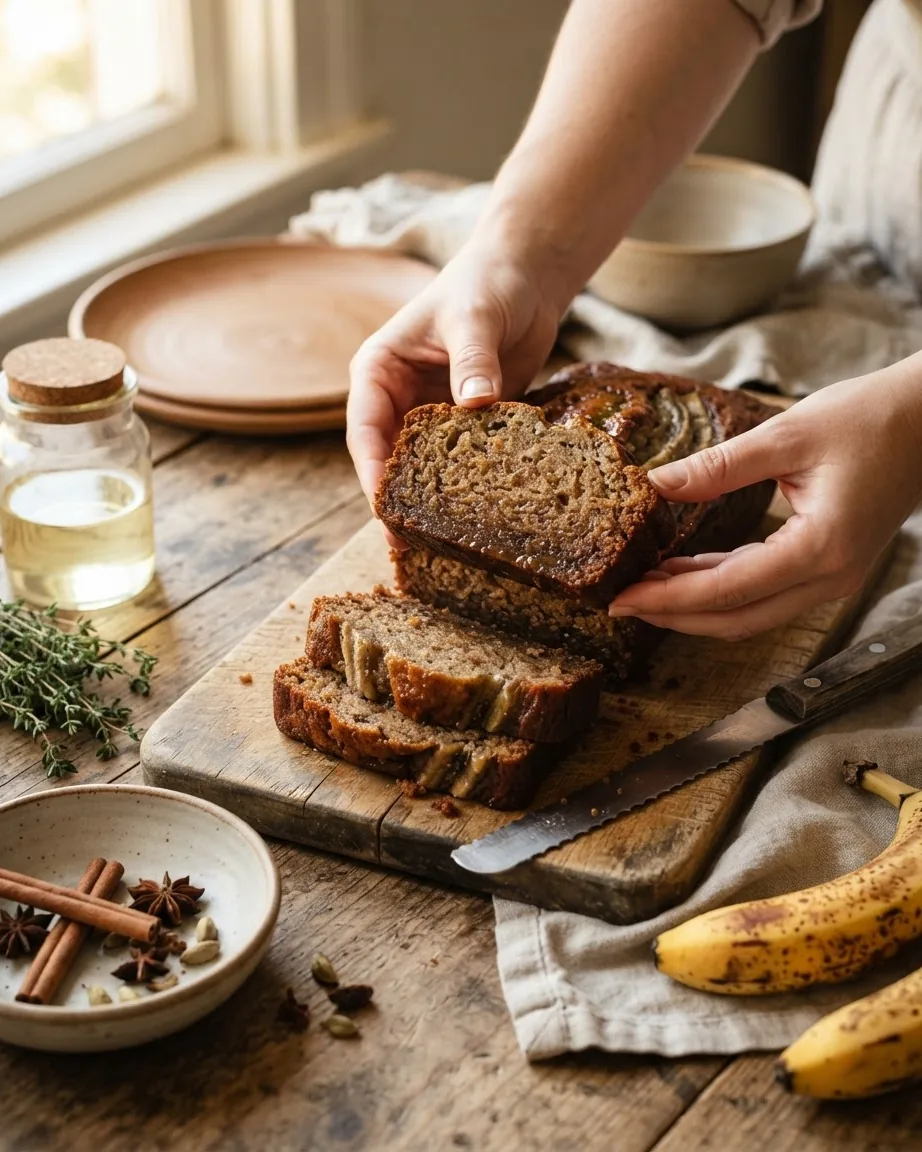
The mechanism is real, the number is not. Butter firms up as it cools while oil never solidifies, so an oil crumb stays soft on the counter where a butter crumb tightens. That is why oil loaves are described as moister and as holding that texture longer. What no inspected source supplies is a measured day-by-day staling comparison between the two, so treat “stays moist longer” as a well-supported direction, not a quantified promise. If you want the butter version’s flavor with the oil version’s softness, the substitution section below runs both directions.
Swapping oil and butter, in both directions
Going from butter to oil is the cleaner swap. cookEZrecipes reports avocado oil works at a 1:1 ratio replacing butter, and canola in an equal amount – useful directions, though that site carries lighter editorial weight, so corroborate before you rely on the exact figures. The mechanism holds regardless of source: oil stays liquid, so a butter recipe converted to oil generally reads softer.
The reverse – oil to butter – is where a published note gets shaky. bVintageStyle’s no-butter loaf says to “melt one butter stick or 1/4 cup of butter to replace the oil.” Those two options are not equal: a US stick of butter is 1/2 cup, not 1/4 cup. So the oil-to-butter ratio here is not cleanly pinned down. If you are converting an oil loaf to butter, melt a full 1/2 cup (one stick) to match the fat volume the recipe was built for, and expect a slightly firmer crumb once it cools. For a savory swap in the other direction, see also our Japanese bread crumbs notes.
325 F or 350 F: the temperature split, kept as a choice
Where published oil recipes part ways is oven temperature, and the disagreement reflects a real method decision, not an error. The 325 degrees F (163 degrees C) camp includes Bread Dad, Frosting & Fettuccine, and bVintageStyle. Sitting at 350 F (180 C) instead are two recipes: the olive-oil loaf from Cardamom and Tea and the no-butter loaf from Wholefood Soulfood.
The lower setting buys evenness. As Frosting & Fettuccine explains it, holding the oven at 325 keeps the top from setting ahead of the center, and the payoff is a crumb that turns out softer and more tender. The tradeoff is time. Turn the dial up to 350 F and the loaf finishes sooner, with the crust setting earlier too. How long each loaf stays in depends on both its temperature and its formula: 50 to 55 minutes for Lion’s Bread, 55 to 65 minutes for Frosting & Fettuccine, 60 to 70 for both bVintageStyle and Wholefood Soulfood minutes, Bread Dad 65 to 70 minutes, and Cardamom and Tea about 1 hour. Match the time band to the temperature you pick, and lean on the doneness signals below rather than the clock.
bVintageStyle bakes its 325 F loaf in a pan about 8 1/2 x 4 1/2 inches; a slightly smaller pan than a 9×5 builds a taller loaf that needs the longer end of its window.
Two doneness checks that catch each other’s blind spots
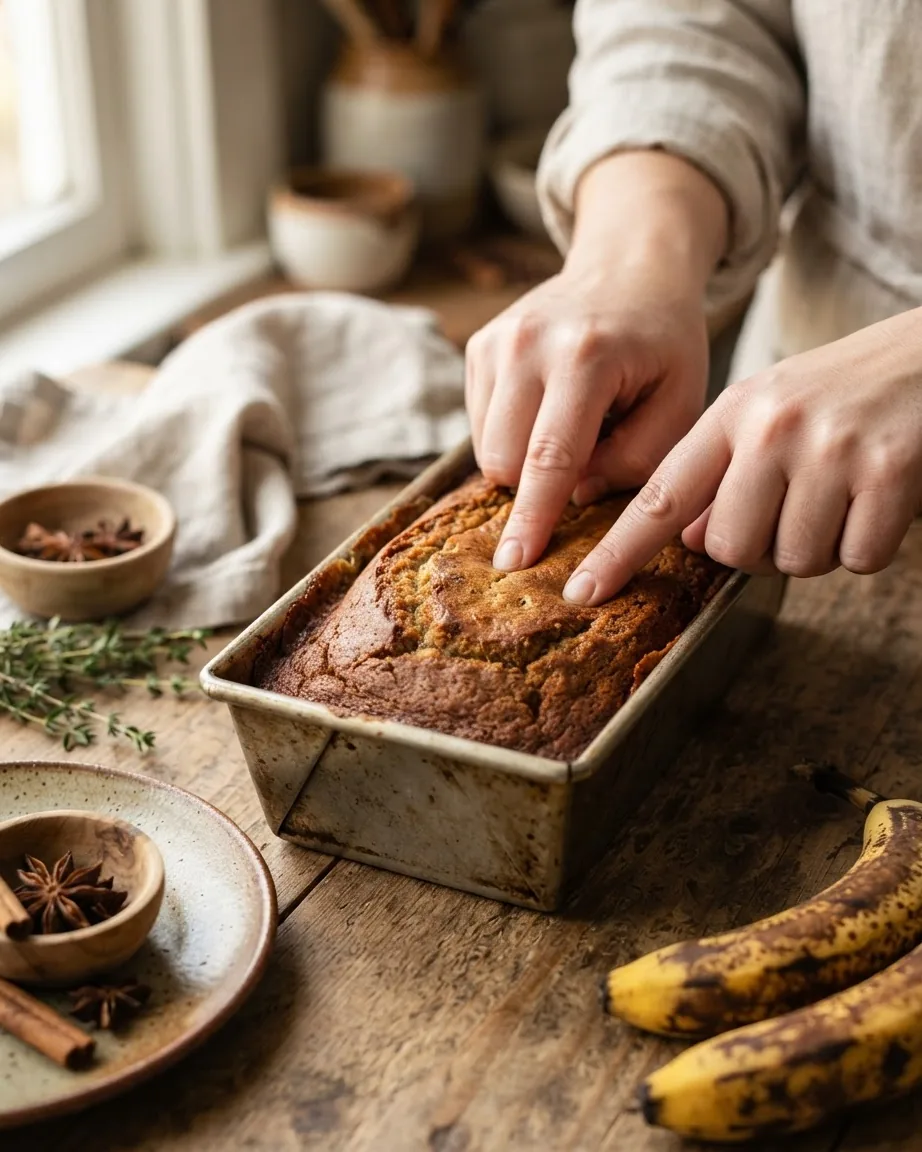
Most recipes give one signal; pairing two is safer. The visual cue is that the bread is done when the edges start to pull away from the sides and the top feels firm to the touch. The instrument cue is an internal temperature of 200 to 205 degrees F. Use both: a firm-looking top can still be raw at the core, and a thermometer reading alone won’t tell you the crust has set.
The most common failure is gumminess, and it happens before the oven. Overmixing once the flour is in develops gluten and leaves a dense, gummy slice – a large spoon rather than an electric mixer avoids exactly this. Keep stirring the flour mixture only to the point where no dry traces are left. If you are folding in chips or nuts, toss them with 1 teaspoon of flour first so they don’t sink to the bottom.
Cooling and storing the loaf
Cooling is part of the recipe, not an afterthought. Before it is turned out, Frosting & Fettuccine lets the loaf sit for a minimum of 10 minutes; Cardamom and Tea would rather you hold off 30 minutes before slicing, dropping to no fewer than 5 minutes when patience runs short, since the cooling crumb has not finished firming up. Cut too early and the center smears.
Storage limits differ by source, and this desk keeps them separate rather than picking one: Wholefood Soulfood gives up to 2 days at room temperature in an airtight container, Frosting & Fettuccine stretches that to three days at room temperature, and bVintageStyle allows up to 4 days provided the loaf is wrapped in plastic. For longer keeping, Frosting & Fettuccine reports frozen banana bread stays good for up to three months. Because those gaps come down to varying loaves and packaging methods, your safest bet is to default to the shortest window, reserving the longer ones for when you wrap tightly.
Lighter versions: cutting oil and sugar without a dry crumb
Because oil’s job is holding moisture, you can pull some of it and let another wet ingredient carry the load. Wholefood Soulfood’s lever is replacing part of the oil with applesauce at a 1:1 ratio – applesauce brings water and pectin, so a partial swap still bakes soft while dropping added fat. On sugar, using only 2/3 to 3/4 cup of white granulated sugar instead of a full cup makes a less-sweet loaf; sugar also holds water, so cut it in steps rather than all at once.
Per-slice fat figures from these recipes are auto-generated estimates, not lab measurements, and they don’t agree: Frosting & Fettuccine lists 2 g saturated fat per slice, Bread Dad lists 8 g. Those numbers come from different plugins, different slice counts (10 versus 12), and unspecified oils, and 8 g from a half-cup vegetable-oil loaf is implausibly high. Don’t treat either as a measured nutrition fact or compare them head to head.
The one-bowl workflow oil makes possible
Oil skips the step butter can’t: creaming. A butter loaf needs the fat beaten with sugar until fluffy to build structure. Oil pours straight in, so the whole batter comes together in one bowl – mash bananas, stir in oil, eggs, and sugar, then fold in the dry ingredients. That is why the whole thing runs about 10 to 15 minutes to prepare and clean up. It also caps how much you can overwork the batter, since there’s no creaming stage tempting you toward the mixer. For the ripe bananas the recipe depends on, Lion’s Bread notes fruit usually hits baking ripeness about 4-5 days after coming home from the store. For another single-bowl bake worth keeping in rotation, see also our Turkish homemade baklava guide.
Can I use a blender to mash the bananas?
Yes, and Cardamom and Tea leans on one for an ultra-smooth batter. Without a high-power blender, the workaround is to start blending, then stop and let the fruit sit to soak for about 10 minutes before finishing – the rest softens the banana so a weaker motor can puree it. For a chunkier crumb, a fork and a few lumps are fine.
Why did my banana bread turn out gummy even though it baked full time?
Time in the oven rarely causes gumminess – mixing does. Once flour meets the wet batter, stirring builds gluten, and an electric mixer accelerates it fast. Combine dry into wet with a spoon only until no dry streaks remain. A gummy band near the bottom can also mean underbaking at the core, which a 200-to-205 F thermometer reading rules out where a firm top alone cannot.
Does olive oil make the bread taste like olives?
According to the North American Olive Oil Association’s banana bread page, it does not – the olive character reads as background richness once baked, not as brine. Since that group represents producers, treat the reassurance as directionally sound and let your own palate decide: a light or extra-light olive oil is the mildest entry point, while a robust extra virgin will push a greener, more peppery note into the loaf.
Can I make this without any eggs?
The recipes here all use two eggs for structure and lift, and none of the inspected sources documents a tested egg-free version, so this desk won’t invent a ratio. The reliable move is to start from a recipe built without eggs rather than pulling them from an egg-based one, since removing them changes how the crumb sets and how high the loaf rises.
Per-slice breakdown and the banana-to-flour ratio that sets the texture
Because Bread Dad lists every ingredient by weight and states a yield of 12 slices, you can see what one slice actually contains – and because both documented loaves use the same 1/2 cup of oil against different amounts of flour, the arithmetic exposes which loaf will read as wetter before you ever turn on the oven.
Dividing Bread Dad’s gram weights by its 12-slice yield gives you, per slice:
| Item | Value |
|---|---|
| Oil | |
| Sugar | 200 g / 12 = about 16.7 g per slice |
| Mashed banana | 345 g / 12 = about 28.8 g per slice |
| Flour | 240 g / 12 = 20 g per slice |
The texture question comes down to two ratios. Set against a mere 187.5 g of flour, the leaner-flour Frosting & Fettuccine loaf carries 118.29 ml of oil, which works out to roughly 0.63 ml per gram – some 31% more oil for the flour it holds. Same half-cup of fat, less flour to absorb it: that is the calculation behind the article’s claim that fewer grams of flour give a wetter, denser slice, while Bread Dad’s extra flour gives the taller, cakier loaf.
Banana Bread Recipe With Oil: Two Documented Loaves, and the Choices Behind Each
Ingredients
- 3 ripe large bananas (345 grams – about 1 1/2 cups mashed)
- 1/2 cup vegetable oil (115 ml)
- 2 large eggs (114 grams)
- 1 cup white granulated sugar (200 grams)
- 2 cups all-purpose flour (240 grams)
- 1 teaspoon vanilla extract (5 milliliters)
- 1 teaspoon baking soda (5 grams)
- 1 teaspoon baking powder (4 grams)
- 1/2 teaspoon salt (3 grams)
Instructions
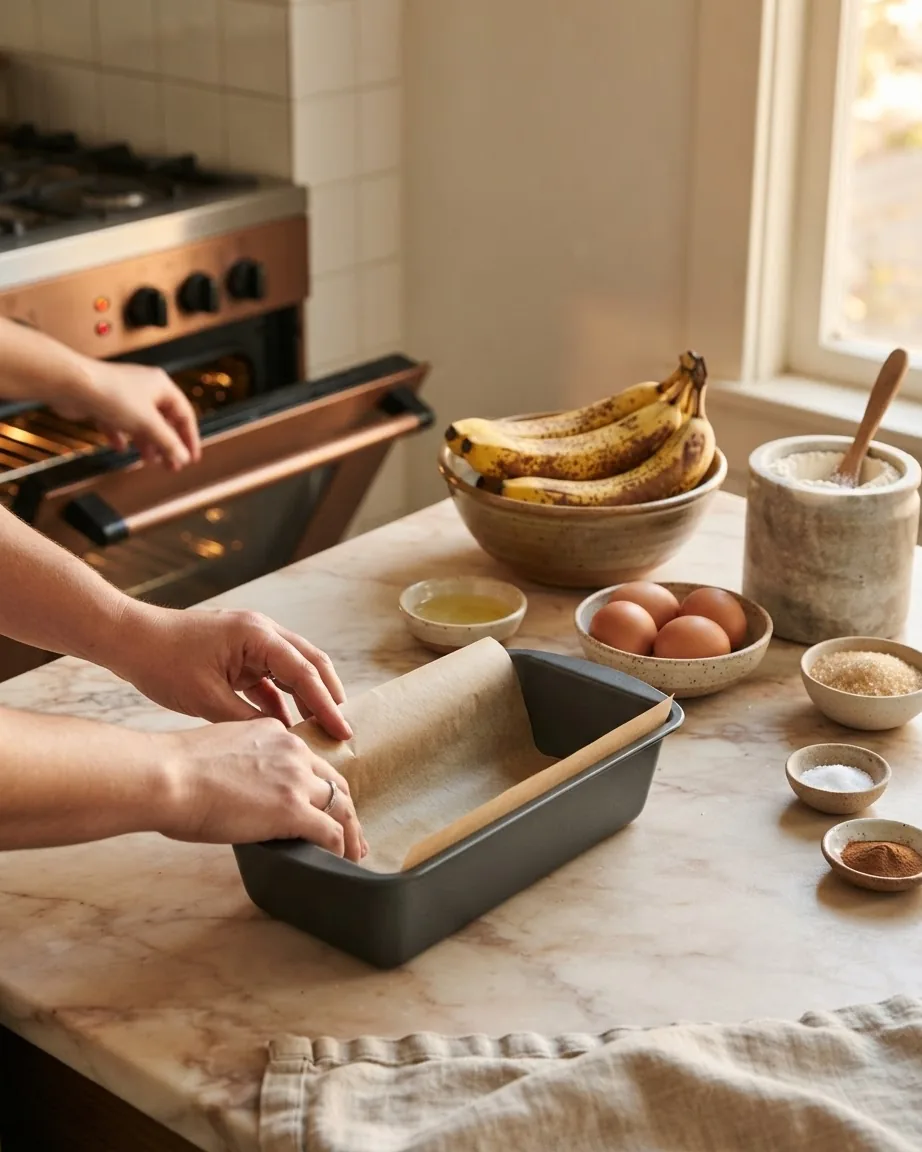
- Heat the oven to 325 degrees F (163 degrees C) and line or grease a 9×5 nonstick loaf pan.
- Mash the bananas with a fork until mostly smooth; small lumps are fine.
- Lightly beat the eggs, then combine bananas, oil, eggs, and sugar in a large bowl. Stir until fully blended.
- Add flour, vanilla, baking soda, baking powder, and salt. Stir with a large spoon just until combined – an electric mixer overmixes and turns the crumb gummy.
- Optional: fold in a cup of chocolate chips or chopped walnuts last.
- Scrape the batter into the pan and smooth the top.
- Bake at 325 F (163 C) for 65 to 70 minutes, until the internal temperature reaches 200 to 205 degrees F.
- Cool in the pan for 10 minutes – do not lift it out during this rest – then turn onto a rack. Full cooling can take 1 to 2 hours.