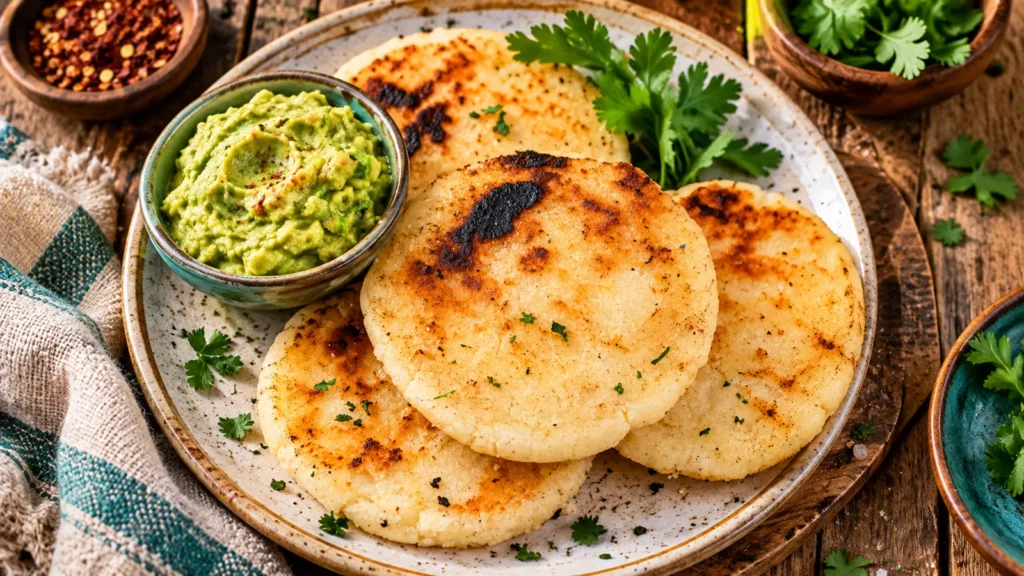
The one decision that settles whether a Colombian arepa works or turns to gravel is made in the store aisle, not at the griddle: buy masarepa, not cornmeal, and not masa harina. The Foreign Fork puts it plainly – “cornmeal does not absorb liquid the same way masarepa does, and your dough will not achieve the correct texture.” That single sourcing choice runs through most Colombian food recipes built on corn, and it is where this desk starts. Below, the AtlasPlate Recipe Desk transcribes four staples – arepas, ajiaco bogotano, bandeja paisa, and empanadas – from published regional sources, keeping their native names, exact quantities, and the durations each source actually specifies, without reworking the core method.
The desk’s method here: cross-reference the recipes across My Colombian Recipes, The Foreign Fork, At the Immigrant’s Table, Allrecipes, America’s Test Kitchen, and Love Live Hustle; identify the specific regional variant; and lay out ingredients and steps in a format you can cook from. For the wider region, see our latin american recipes section.
What Colombian cooking needs before you turn on the stove
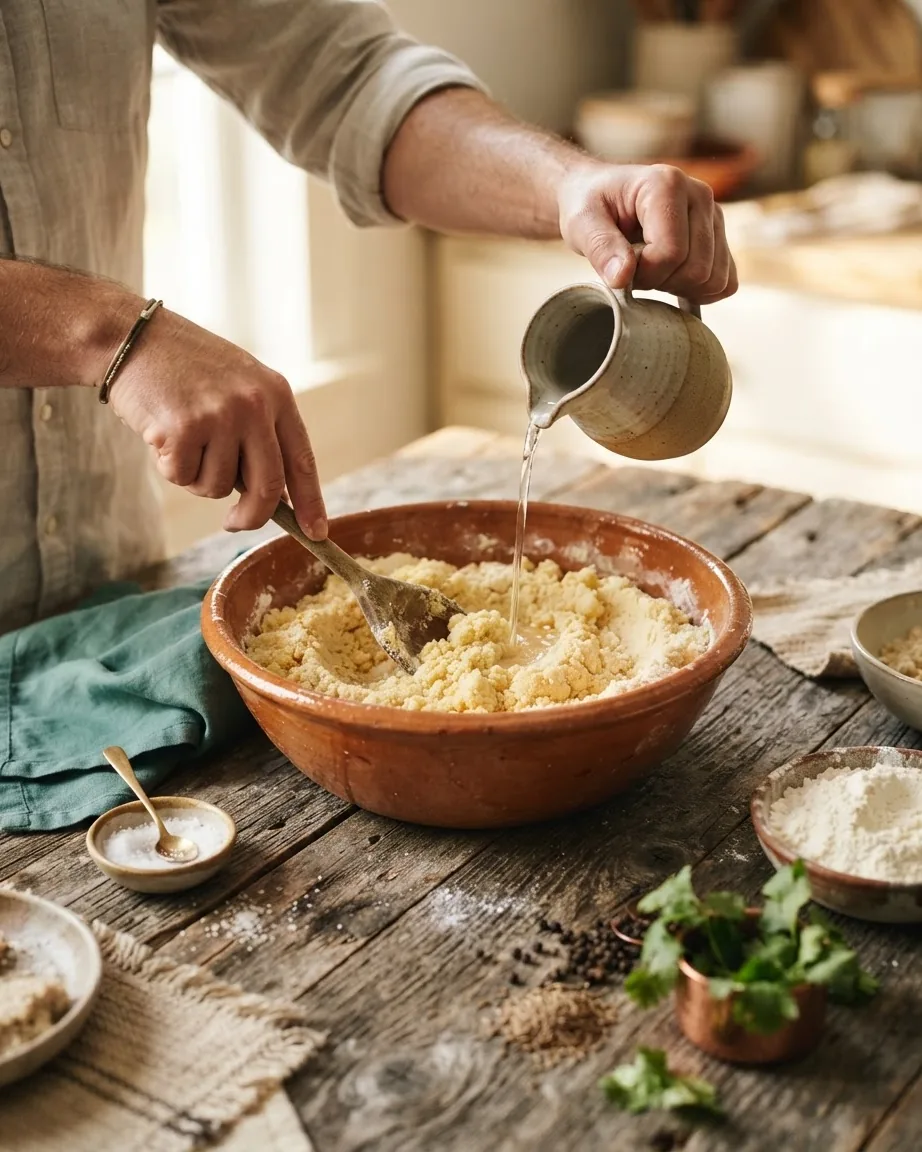
Two purchases decide most of these dishes. For anything built on arepa or empanada dough, buy masarepa – precooked, non-nixtamalized corn flour sold as Harina P.A.N. or Goya in many Walmart and Costco locations with a large Latin American clientele, and reliably at any Latin grocery or online. For ajiaco, source guascas and papa criolla, both usually frozen in a Latin grocery. Cornmeal and masa harina are not substitutes for masarepa. If dough feels too dry, add water; if too wet, add more masarepa. Heat level across these four dishes runs 0 to 1 – Colombian cooking is savory, not fiery, with heat coming from ají served on the side.
Masarepa vs. cornmeal vs. masa harina: which corn flour to buy and why the names collide
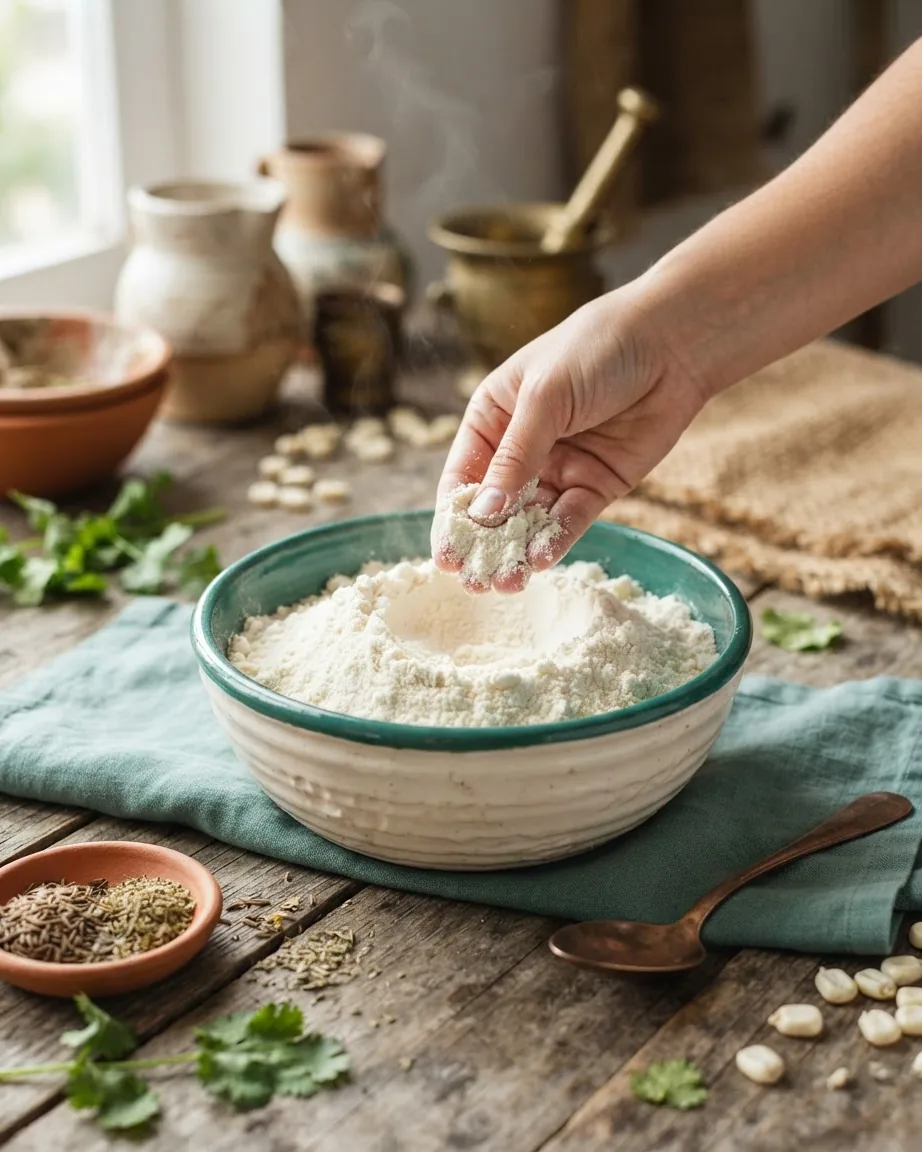
The naming is a mess, and it is worth understanding once. America’s Test Kitchen defines masarepa as “instant corn flour made from precooked corn that has not beennixtamalized” (the run-together word is theirs). Masa harina is a different product: America’s Test Kitchen describes it as “masa that has been dried and ground again into flour (hence its name, dough flour).” Masa harina goes through nixtamalization – treatment with an alkaline solution – while masarepa does not. That processing difference is why the two are not interchangeable in an arepa.
Part of the confusion is a trademark. According to America’s Test Kitchen, “Goya owns trademarks for Masarepa in the United States and Europe, and is the only producer that can label its product” that way. So the same precooked corn flour reaches shelves as “masarepa,” “masa de arepa,” “arepa flour,” or “precooked cornmeal” depending on the brand. Recipe writers use these interchangeably, and they are correct to – the underlying product is the same. What matters is that it is precooked and not nixtamalized. Masa harina, whatever the box says, is not it.
Color is a smaller fork in the road. My Colombian Recipes and Love Live Hustle default to white cornmeal (Harina P.A.N. white) for arepas, while At the Immigrant’s Table notes either white or yellow works. This is not a contradiction – both are used across Colombia. Pick by preference; white is the more common default for arepas, yellow is standard for the empanada dough below.
Colombian arepas: the 28-minute cheese version, plus the crack and gooey fixes
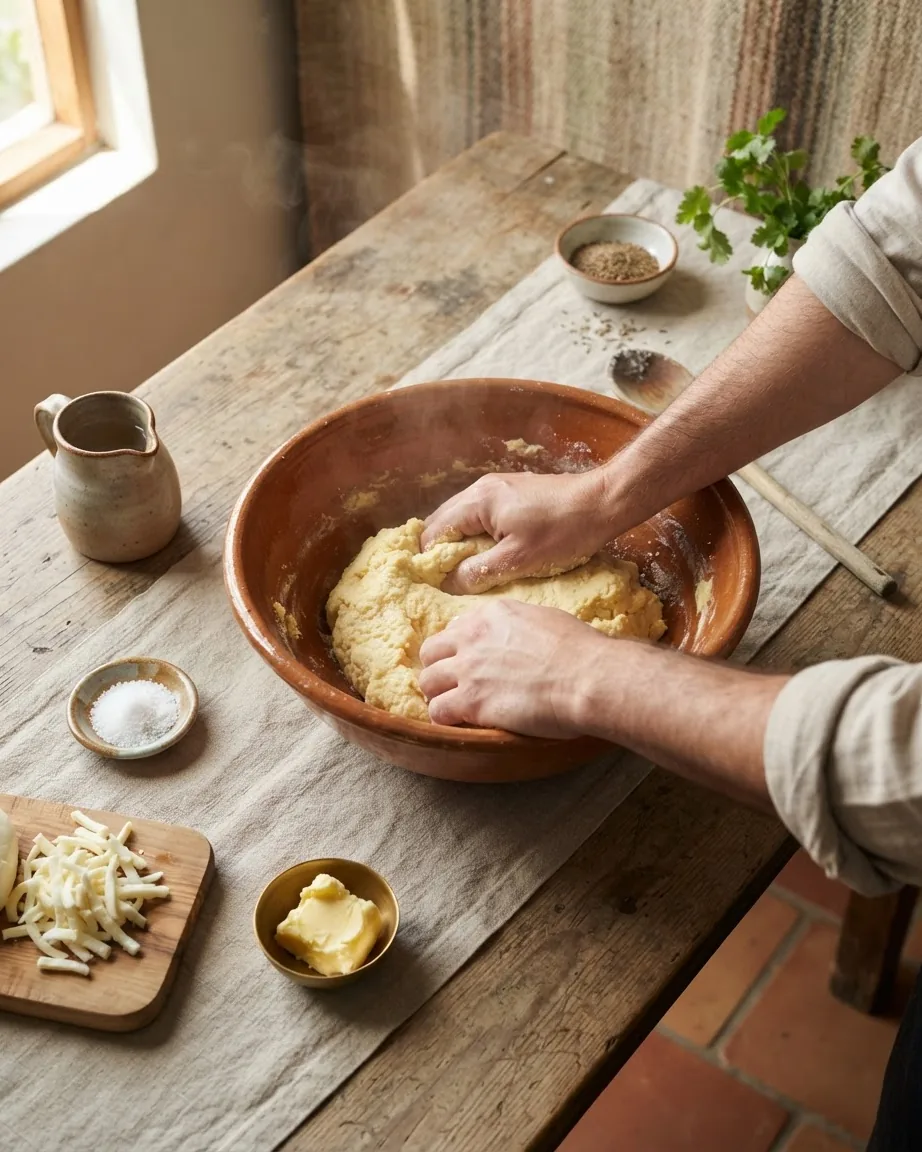
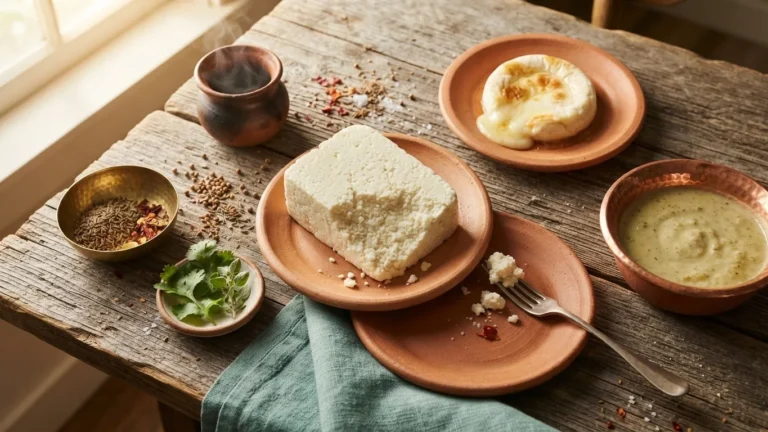
This is the Foreign Fork’s cheese arepa, researched using My Colombian Recipes and two Colombian video sources. It yields 8 arepas, with 10 minutes prep, 18 minutes cook, 28 minutes total. Heat level 0. Per-serving calorie figures for arepas are not comparable across sources because serving size and cheese load differ. These are naturally gluten-free, a point At the Immigrant’s Table makes for its cheese arepa.
Ingredients (arepas)
- 2 cups white cornmeal (masarepa/arepa flour)
- 1 tsp salt
- 2 cups warm water
- 1 cup shredded mozzarella cheese (4 oz / 113g) – or queso campesino or queso costeño, the traditional choices
- 3 tbsp butter, softened, divided
Steps (arepas)
- Combine the masarepa, salt, warm water, mozzarella, and 2 tbsp of the butter in a large bowl. Mix thoroughly by hand until the dough holds together.
- Cover with a towel and rest at room temperature for 5 minutes. The rest lets the precooked flour finish absorbing the water, which is what keeps the surface from cracking later.
- Divide into 8 pieces, roll each into a ball, and press flat in your hand to about ½ inch thick. Smooth the edges so no cracks form.
- Heat a cast-iron skillet or electric griddle and grease with the remaining 1 tbsp butter.
- Cook 4 arepas at a time over low-medium heat for 3 – 4 minutes until golden brown. Flip and cook the second side 3 – 4 minutes, until a crust forms on both sides.
Two failure modes have named fixes. If the dough cracks at the edges as you shape it, The Foreign Fork’s remedy is to “keep a bowl of water nearby, dip your fingers in it and use that tiny bit of water to smooth out any cracks in the dough.” Warm water in the dough helps too – it keeps the arepa pliable. If the center is gooey after cooking, the cause is usually thickness plus a too-hot pan cooking the exterior before the middle sets, or cutting in too soon. The Foreign Fork notes arepas keep cooking off the heat, so “allowing them to rest may solve the problem.” If the outside is done but the middle is raw, lower the pan temperature next time.
A note on style: The Foreign Fork observes that “Venezuelan-style arepas are often stuffed with toppings, rather than topped.” The Colombian default is to top the arepa or eat it plain with butter; the Venezuelan default is to split and stuff it. If you want the stuffed version, load the dough balls before cooking. For a barer starting point, Love Live Hustle describes “a simple version with just Harina Pan (cornmeal), oil, warm water, and salt” – no cheese, no butter in the dough.
Storage differs by source. The Foreign Fork holds arepas an airtight container. That microwave caveat is the useful detail – the reheat method changes the result more than the fridge time does.
Ajiaco bogotano: the two ingredients you cannot swap out
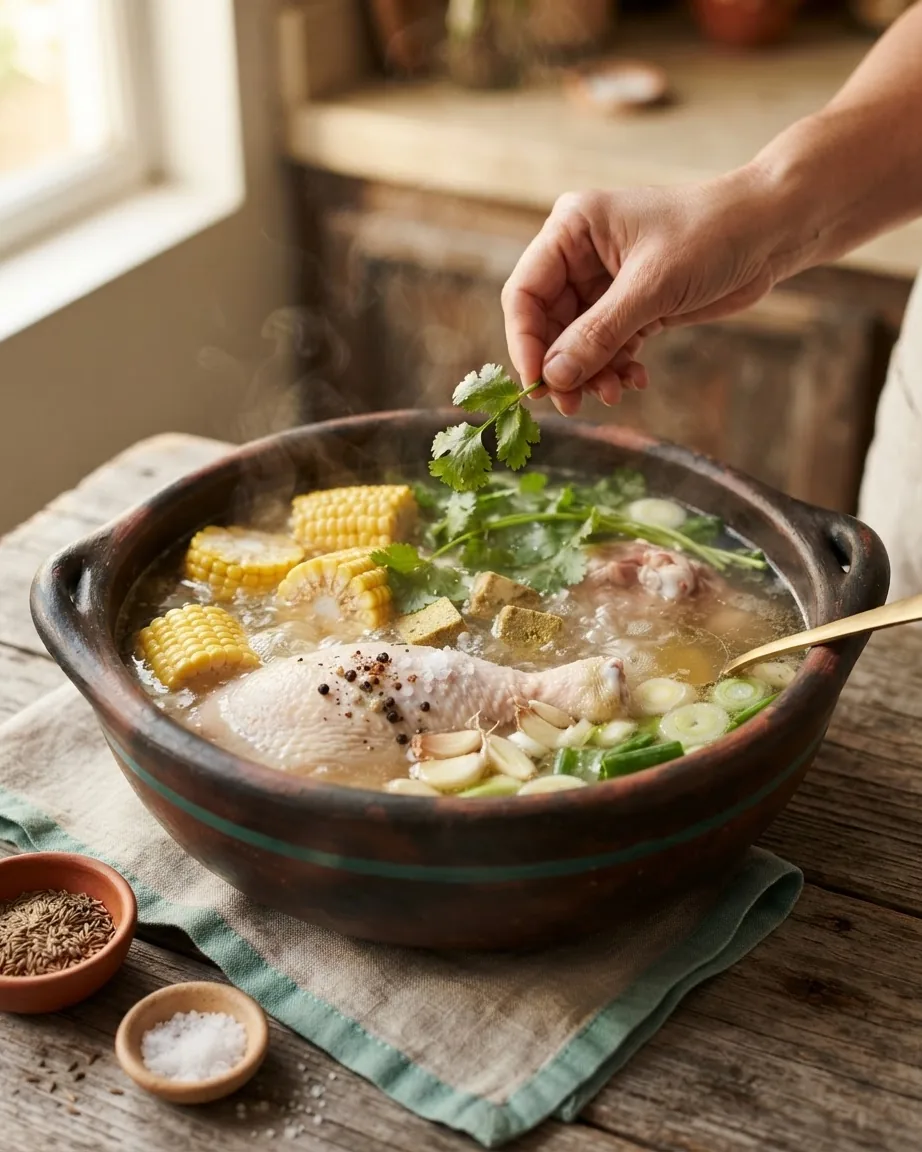
Ajiaco is a Bogotá chicken-and-potato soup, and My Colombian Recipes – written by Colombian-born Erica Dinho, who notes “I had my first ajiaco in Bogotá 10 years ago” – is direct about what defines it: “It is very important to use guascas and papa criolla as they are the key ingredients in this dish.” Everything else has give. The dish uses three kinds of potato, and the cream and capers are served on the side, not cooked in.
Guascas is the make-or-break herb. Wikipedia identifies it botanically as Galinsoga parviflora, noting “it is used as a herb in the soup ajiaco.” There is no clean substitute – without it, you have a chicken-potato soup, not ajiaco. Papa criolla, the small yellow Andean potato, is the other fixed element; it half-dissolves and thickens the broth. Both are typically sold frozen in Latin groceries in the US. The three potato types (papa criolla plus white and red potatoes) each behave differently – the red and white hold shape while the criolla breaks down – which is why swapping in a single all-purpose potato changes the texture. This recipe yields 6 servings.
Ingredients (ajiaco)
- 3 chicken breasts, skin removed
- 12 cups water
- 3 ears fresh corn, each cut into 2 pieces
- Salt and pepper to taste
- 2 chicken bouillon cubes
- 3 scallions
- 2 garlic cloves, minced
- 3 tbsp chopped cilantro
- 2 cups papa criolla (Andean potato)
- 3 medium white potatoes, peeled and sliced
- 3 medium red potatoes, peeled and sliced
- 1/3 cup guascas
- 1 cup heavy cream, for serving
- 1 cup capers, for serving
Steps (ajiaco)
- Put the chicken, corn, bouillon cubes, cilantro, scallions, garlic, salt, and pepper in a large pot. Add the 12 cups water, bring to a boil, then reduce to medium and cook 30 to 35 minutes, until the chicken is tender.
- Keep cooking the corn about 15 more minutes. Discard the scallions, then add the red potatoes, white potatoes, and guascas. Cook 15 more minutes so the sliced potatoes start breaking down and thickening the broth.
- Uncover, add the frozen papa criolla, and simmer 15 minutes. Season with salt and pepper.
- Shred the chicken and return it to the pot. Serve hot, with the heavy cream and capers on the side so each person stirs them in.
Serving the cream and capers separately, as My Colombian Recipes specifies, is deliberate – folding cream into the whole pot dulls the potato-forward broth and can’t be undone. Prep time is 20 minutes; cook time is 75 minutes.
Bandeja paisa: why it isn’t one fixed recipe, and what the 1402 kcal figure actually measures
Bandeja paisa is a loaded platter from Antioquia. The Foreign Fork traces its origin to the field: “Farmers in the Antioquia region would eat this dish for breakfast before they went out for a long days work in the field.” It is calorie-dense by design, and that history explains the size of the plate.
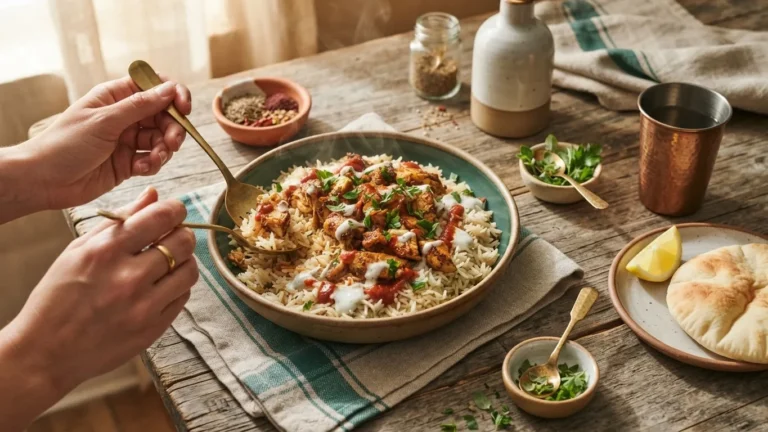
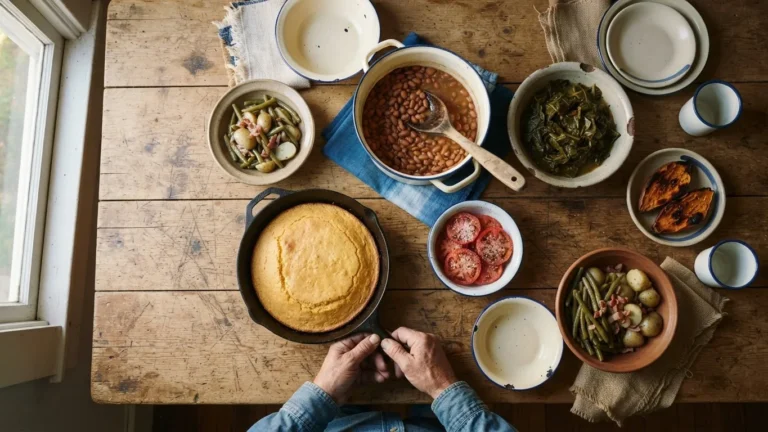
Here is where sources genuinely diverge, and the divergence is the point. My Colombian Recipes lists the traditional full composition: “Colombian style beans, white rice, chicharrón, carne en polvo, chorizo, fried egg, ripe plantain, avocado and arepa.” The Foreign Fork’s version deliberately omits the carne en polvo (powdered beef) and substitutes a generic spicy sausage, because of what’s available in US stores. So the plate you build depends on which path you take – the full traditional set from My Colombian Recipes, or the US-adapted, fewer-parts version from The Foreign Fork. Neither is wrong; they answer different sourcing situations.
That distinction also governs the calorie number people quote. The widely cited figure of 1402 kcal per serving – with 113g carbohydrates, 37g protein, and 90g fat – comes from The Foreign Fork, and it describes the adapted version, not the traditional composition. Do not attach 1402 kcal to the full traditional plate; the components differ, so the number would not carry over. Treat 1402 kcal as the adapted recipe’s own figure.
The traditional platter from My Colombian Recipes yields 4 servings and is an assembly job, not a single recipe – its power is the make-ahead workflow. Heat level 0 to 1, with the ají or hot element served alongside.
Components (bandeja paisa, traditional)
- 1 recipe paisa pinto beans (frijoles paisas)
- 1 recipe white rice (arroz blanco)
- 1 recipe powdered beef (carne en polvo)
- 4 fried pork belly pieces (chicharrones)
- 4 cooked chorizos
- 4 fried eggs, sunny side up
- 4 baked plantains or tajadas de plátano
- 1 recipe hogao
- Lime and avocado, for serving
Assembly (bandeja paisa)
- The day before: make the beans, hogao, and powdered beef, and refrigerate them. Splitting the work across two days is what makes this platter manageable – three of its parts hold overnight without loss.
- On serving day: reheat the beans, powdered beef, and hogao. Fry the chicharrones.
- Cook the white rice and the plantains.
- Fry the eggs and the chorizos.
- Plate the rice on a tray, then arrange the other components around it. Keep the beans in a separate bowl or ladle them beside the rice.
- Bring the hogao to the table in its own dish so people spoon it over the beans as they like.
For the pork belly on the adapted path, The Foreign Fork rests the seasoned belly wrapped in plastic in the fridge for 2 – 6 hours before cooking, then sautés it “about 5-10 minutes on each side, until the meat is cooked through and the exterior is browned.” Its bean-and-hogao base gets a “saute for about 2 minutes, then add vegetable stock” step. The chill rest firms the belly so it browns rather than steams.
Colombian empanadas: the corn dough that sets them apart, and the 360°F fry
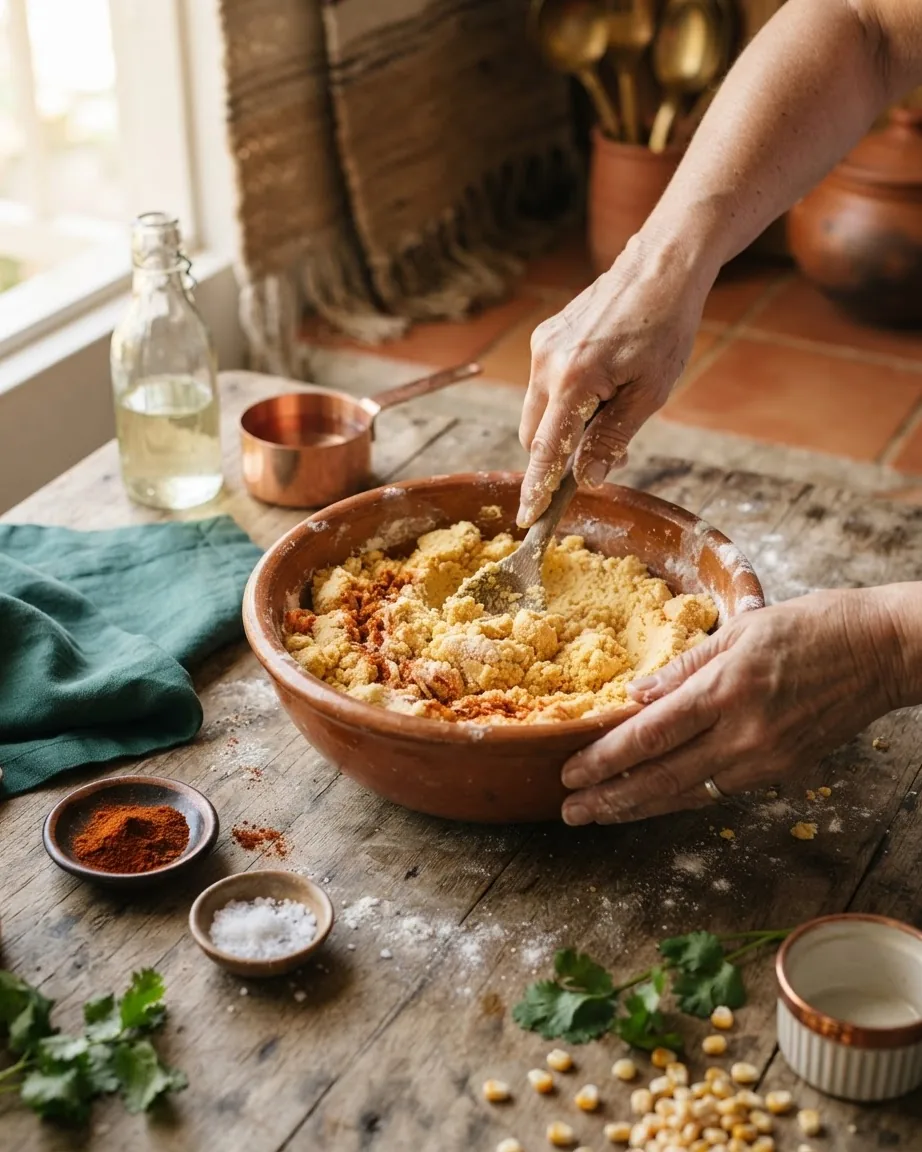
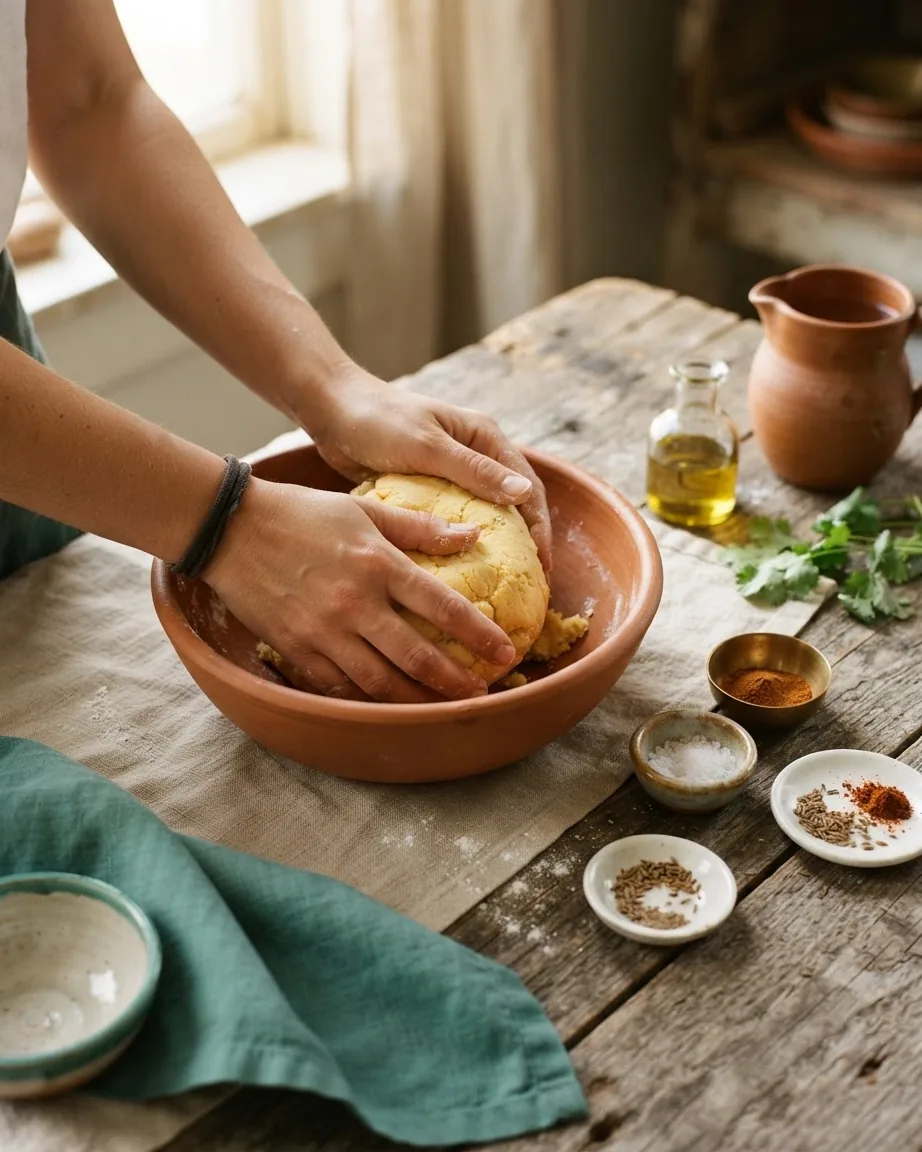
What separates Colombian empanadas from most others is the shell. My Colombian Recipes is explicit: “Colombian empanadas are made with a cornmeal dough (masa) rather than a flour-based pastry.” So there is no butter-and-flour pastry to rest and roll – it is masarepa (yellow precooked cornmeal), water, oil, and seasoning, filled with a potato-and-meat mixture and deep-fried. Erica Dinho’s recipe yields 12 empanadas. Heat level 0; the ají served on the side carries the heat.
There is a built-in meatless option that is not a compromise. My Colombian Recipes describes “empanaditas de iglesia” – small empanadas sold outside churches that “usually very small and just have a potato filling, a great alternative for vegetarians.” To make the vegetarian version, follow the recipe below and simply leave out the pork and beef; the potato filling stands on its own.
Ingredients – dough (empanadas)
- 1 ½ cups precooked yellow cornmeal (masarepa)
- 2 cups water
- 1 tbsp vegetable oil
- ½ tbsp sazón Goya with azafrán
- ½ tsp salt
The 360°F oil temperature is the number to trust here – hotter and the corn shell browns before the inside heats; cooler and it absorbs oil and turns greasy. Leftovers keep refrigerated up to 3 days; reheat on a sheet pan in a 350°F (177°C) oven about 15 minutes to bring back the crust rather than microwaving to a soft shell.
Why so many Colombian corn dishes are fried twice
Once you have arepa and empanada dough down, the double-fry unlocks two more staples, and it is the same trick both times. Love Live Hustle describes the arepa de huevo: “the arepa is formed with corn and water and deep-fried, then it’s taken out of the oil and cut open to drop a raw egg inside, then fried again.” The first fry sets and puffs the shell so a pocket forms; the second fry cooks the egg sealed inside. Patacones (tostones) run on the same logic – Love Live Hustle notes green plantains “are fried green, and fried twice.” The first fry softens the plantain enough to smash flat; the second crisps the flattened disc. Skipping the first fry on either dish is why home versions come out either raw in the middle or too hard to shape.
Adapting these dishes: gluten-free, vegetarian, and the swaps that cost you nothing
Several of these recipes adapt cleanly, and it helps to know which swaps are free and which change the dish. Arepas made with masarepa are naturally gluten-free, as At the Immigrant’s Table notes for its cheese version – no substitution required. For empanadas, dropping the pork and beef gives you the traditional empanaditas de iglesia, so the vegetarian route is not a workaround but an existing Colombian dish. On arepa cheese, mozzarella is the accessible US stand-in for queso campesino or queso costeño; it melts differently but keeps the dough workable. The swaps that do change the result are the ones the sources flag as non-negotiable: cornmeal or masa harina for masarepa, and any potato or herb for guascas and papa criolla in ajiaco. Those are not adaptations – they make a different dish.
If you’re building a plant-based repertoire across cuisines, the same principle – which dishes are already meat-free versus which need a real swap – shows up in our guide to Vegan Chinese Recipes: The Dishes That Are Already Plant-Based, and the Swaps for the Ones That Aren’t. And for another corn-and-chile tradition where the base ingredient dictates everything, see New Mexico Recipes: The Red Chile, the Posole, and the Braise, Transcribed From Their Sources.
The arepa batch math the recipe skips
The Foreign Fork’s recipe yields 8 arepas but cooks only 4 at a time, so the numbers you actually cook by aren’t on the card. Here’s the arithmetic from the recipe’s own figures.
| Item | Value |
|---|---|
| 2 batches, not one pass | 8 arepas ÷ 4 per pan = 2 batches. Plan the pan space and butter accordingly. |
| 6 – 8 min per batch | 3 – 4 min first side + 3 – 4 min second side. Both sides get a crust before you flip once. |
| 1:1 hydration to scale by | 2 cups masarepa to 2 cups water = 1 part flour to 1 part water. Doubling to 16 arepas means 4 cups of each – then adjust by feel (more water if dry, more masarepa if wet). |
| ¼ cup dough per arepa | 2 cups flour ÷ 8 = 0.25 cup each. Handy for portioning even balls or figuring how many arepas a bag of Harina P.A.N. gets you. |
FAQ
Can I make arepa dough ahead of time?
The dough is quick enough that it’s usually mixed fresh – it needs only a 5-minute rest before shaping. Cooked arepas, though, hold well: At the Immigrant’s Table keeps them refrigerated for up to 3 days and warms a fresh batch in a 200°F oven while the rest griddle. Reheat chilled ones at 350°F, never in a microwave, which turns the crumb rubbery.
What can I use if I can’t find guascas at all?
There is no true replacement. Guascas ( Galinsoga parviflora ) gives ajiaco its defining flavor, and Erica Dinho of My Colombian Recipes treats it as essential alongside papa criolla. Most US Latin groceries stock it dried or frozen, and it’s widely available online. Cooking the soup without it produces a chicken-potato broth that is pleasant but is not ajiaco bogotano.
Is bandeja paisa always this many calories?
The 1402 kcal figure applies only to The Foreign Fork’s US-adapted version, which swaps in a generic sausage and drops the carne en polvo. The traditional Antioquia platter has a different set of components – beans, rice, chicharrón, chorizo, egg, plantain, avocado, arepa, and powdered beef – so that number should not be transferred to it. Calorie counts here track the exact composition on the plate.
Why does my empanada dough crack when I roll it?
Cracking at the rolling stage means the masarepa hasn’t fully hydrated. Erica Dinho’s method knead the dough 2 minutes, then rests it under plastic for 20 minutes precisely so the flour absorbs the water evenly. If it still splits, work in a little more water; if it’s sticky and tears, add masarepa. Rolling between two plastic sheets also keeps the thin circles from breaking.
Colombian Food Recipes: The Corn Flour, the Two Non-Negotiable Herbs, and Every Timing the Sources Give
Ingredients
- 2 cups peeled and diced potatoes
- 1 chicken or vegetable bouillon tablet
- 1 tbsp olive oil
- ¼ cup chopped white onion
- 1 cup chopped tomato
- ¼ cup chopped green onions
- 1 chopped garlic clove
- 2 tbsp chopped red bell pepper
- ½ pound ground pork and beef (omit for the vegetarian version)
- ½ tsp sazón with azafrán
- ½ tsp salt
- ¼ tsp black pepper
- 2 tbsp chopped fresh cilantro
- Vegetable oil, for frying
- Lime and ají, for serving
Instructions
- Make the dough: stir the sazón and salt into the masarepa, then add the water and oil and mix to a dough. Knead into a ball for 2 minutes until smooth. Cover with plastic and set aside 20 minutes while you make the filling. That rest hydrates the flour so the dough rolls thin without cracking.
- Cook the diced potatoes in water with the bouillon tablet for 20 – 25 minutes, until tender. Drain and mash lightly.
- Heat the olive oil in a skillet. Cook the onion over medium-low heat 5 minutes, then add the tomato, green onions, garlic, bell pepper, cilantro, salt, and pepper and cook about 15 minutes.
- Add the ground pork and beef and cook 10 to 15 minutes, breaking up the meat, until fairly dry. Combine with the mashed potatoes.
- Roll ~1 ½ tbsp portions of dough into balls, flatten each very thin between two sheets of plastic, place 1 tbsp filling in the center, fold into a half-circle using the plastic, and crimp the edges shut with a fork.
- Heat vegetable oil in a pot to 360°F (182°C). Fry 3 or 4 at a time for about 2 minutes, until golden on all sides. Drain on paper towels and serve with ají and lime.