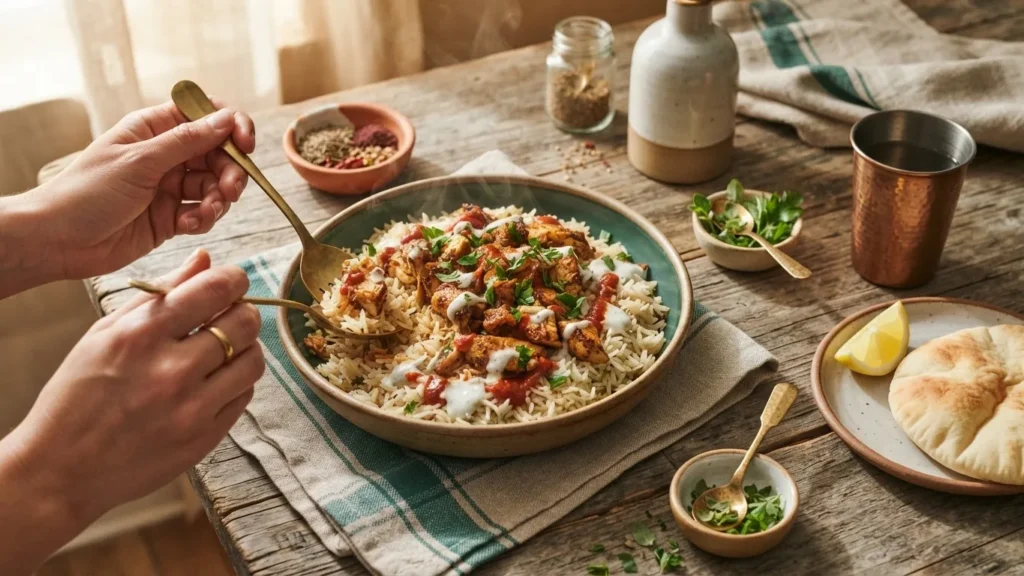
The white sauce is where the plate splits into three different dishes. One published recipe builds it from equal parts mayonnaise and Greek yogurt; another leans almost entirely on yogurt with a quarter cup of mayo; a third drops yogurt altogether and uses mayonnaise, toum, and sour cream. Halal chicken over rice looks like a single street-cart meal, but the sauce you pour decides whether the plate reads tangy, rich, or garlic-forward, and no single recipe page shows all three side by side. This guide sets the three bases against each other, pins down the cut and the doneness number, and pairs the official restaurant calorie figures that let you portion before you serve. For the broader category it belongs to, see our latin american recipes section.
The AtlasPlate Recipe Desk builds this guide by cross-referencing the published recipes from Serious Eats, Hungry Paprikas, Moribyan, Little Spice Jar, and Food Network Kitchen, identifying which regional variant each one documents, and extracting the exact timings, temperatures, and seasoning bases into one format without altering any source’s method.
Quick answer: Halal chicken over rice is marinated chicken thigh, griddled and chopped, over turmeric-yellow rice, finished with a creamy white sauce. For the sauce, pick a profile: mayo-plus-Greek-yogurt is balanced, yogurt-forward is lighter and tangier, mayo-toum-sour-cream is the richest and most garlicky. Cook the thighs to a center temperature of 165°F. Keep the marinade under 4 hours to avoid a mushy texture. Restaurant figures place a regular chicken platter at 648 calories and a 3 oz white-sauce serving at 450 calories, so the sauce is the biggest single lever on the plate.
Where the Halal Cart Plate Came From: One New York Vendor, Two Menus
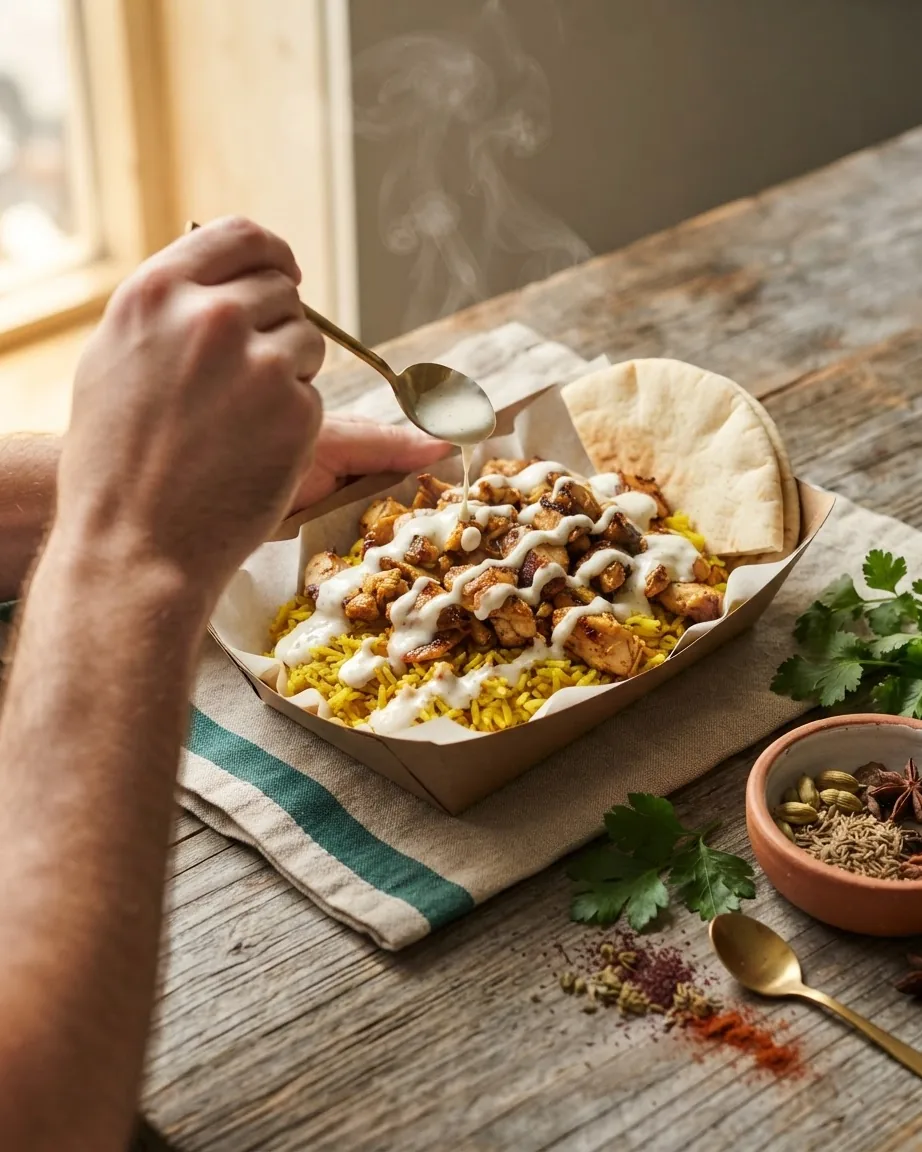
The dish that most Americans picture under this name traces to a single mobile vendor. According to Wikipedia, The Halal Guys began in 1990 as a hot dog cart in Manhattan and switched to the current menu of chicken, gyro meat, rice, and pita in 1992. That shift, from hot dogs to a halal platter aimed at Muslim taxi drivers who had few other options at the time, is the origin point for the chopped-chicken-over-yellow-rice format now sold from carts and franchises across the country.
The format is not a traditional recipe handed down from a single country. It is a New York street-food construction, Middle Eastern and South Asian in its seasoning instincts, built around portability and a one-container meal. The chicken carries warm spices like cumin and coriander; the rice is colored and perfumed with turmeric; the white sauce is the vendor’s own invention rather than a borrowed classic. That last point matters because of a persistent misconception.
Packet-based recreations and copycat write-ups describe the famous white sauce as essentially flavored mayonnaise, a distant cousin of tzatziki rather than a yogurt-garlic dip in the Mediterranean mold. If you approach it expecting the cucumber-yogurt sauce of a Greek plate, you will build the wrong thing. The sauce is creamy, tangy, and mild, closer to a seasoned mayonnaise base than to any herb-and-yogurt sauce. Keeping that straight changes which recipe you reach for.
Choose Your White Sauce: Three Sourced Bases, Three Different Plates
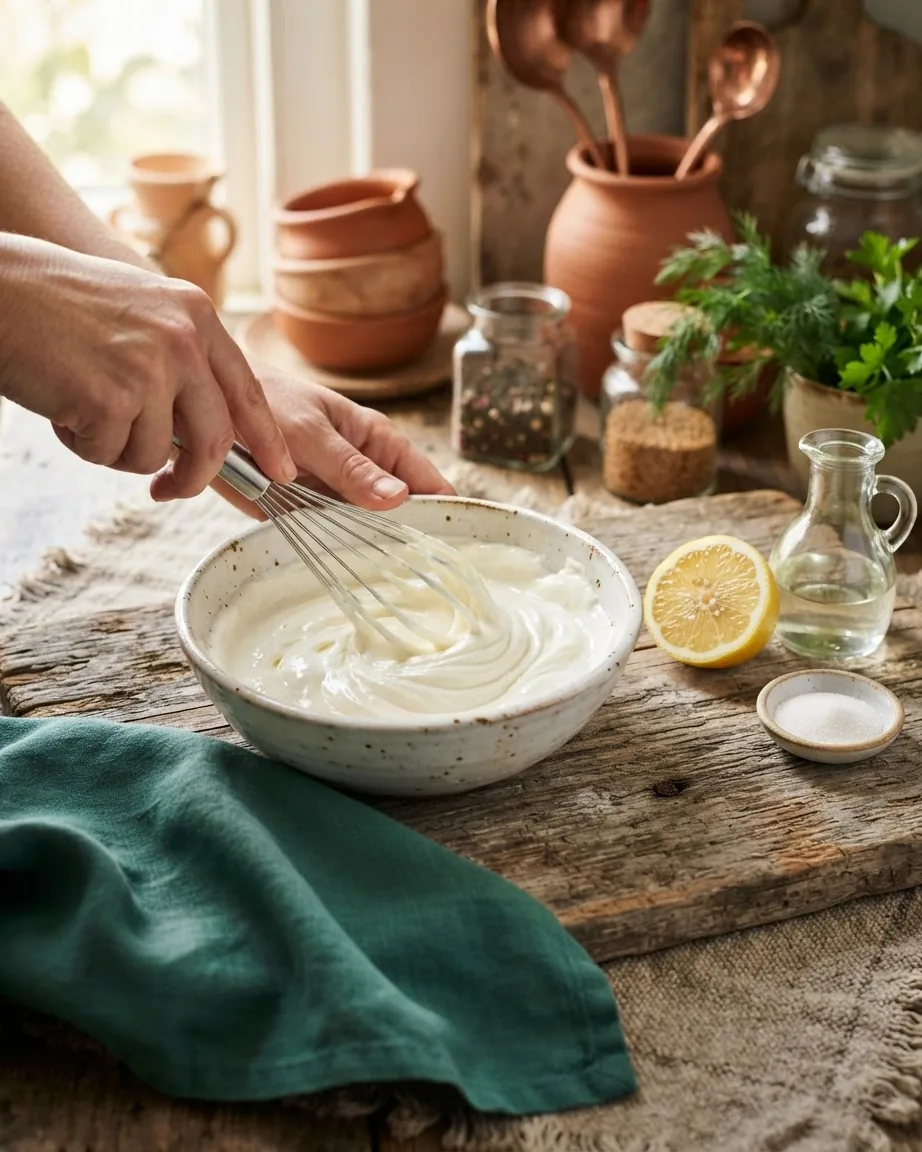
The sauce is where published recipes openly disagree, and each page presents its own version as the sauce. Laid side by side, they target three different results. Here is what each named source actually combines.
- Balanced (mayo + Greek yogurt): Serious Eats builds its white sauce from 1/2 cup mayonnaise, 1/2 cup Greek yogurt, 1 tablespoon sugar, 2 tablespoons white vinegar, and 1 teaspoon lemon juice. Equal parts mayo and yogurt give it body without going fully rich, and the sugar-plus-vinegar line sets the tangy-sweet profile.
- Lighter, tangier (yogurt-forward): Hungry Paprikas tilts the ratio the other way: 1 cup yogurt to just 1/4 cup mayonnaise, with 1 tablespoon white vinegar and 1 small minced garlic clove. More yogurt means a thinner, sharper sauce with less of the mayonnaise weight.
- Richest, most garlicky (mayo + toum + sour cream): Moribyan drops yogurt entirely, using 1/2 cup mayonnaise, 1/4 cup toum (a whipped garlic spread), and 2 tablespoons sour cream. This is the heaviest and most assertively garlic-driven of the three.
Little Spice Jar publishes a fourth take, a sour-cream-and-mayo base, for readers who want the dedicated sauce recipe with substitutions written out. The practical takeaway: these are not interchangeable. Choose by what you want on the plate, not by which recipe you opened first. If you want the closest thing to the mild, creamy cart sauce, the equal-parts mayo-and-yogurt build is the safe default; if you want a lighter finish, go yogurt-forward; if garlic is the point, the toum version delivers it.
For the full ingredient lists and method behind each sauce, the recipes live on their respective pages: Serious Eats, Hungry Paprikas, and Moribyan.
Thighs vs. Breast, and the Marinade Window That Caps at 4 Hours
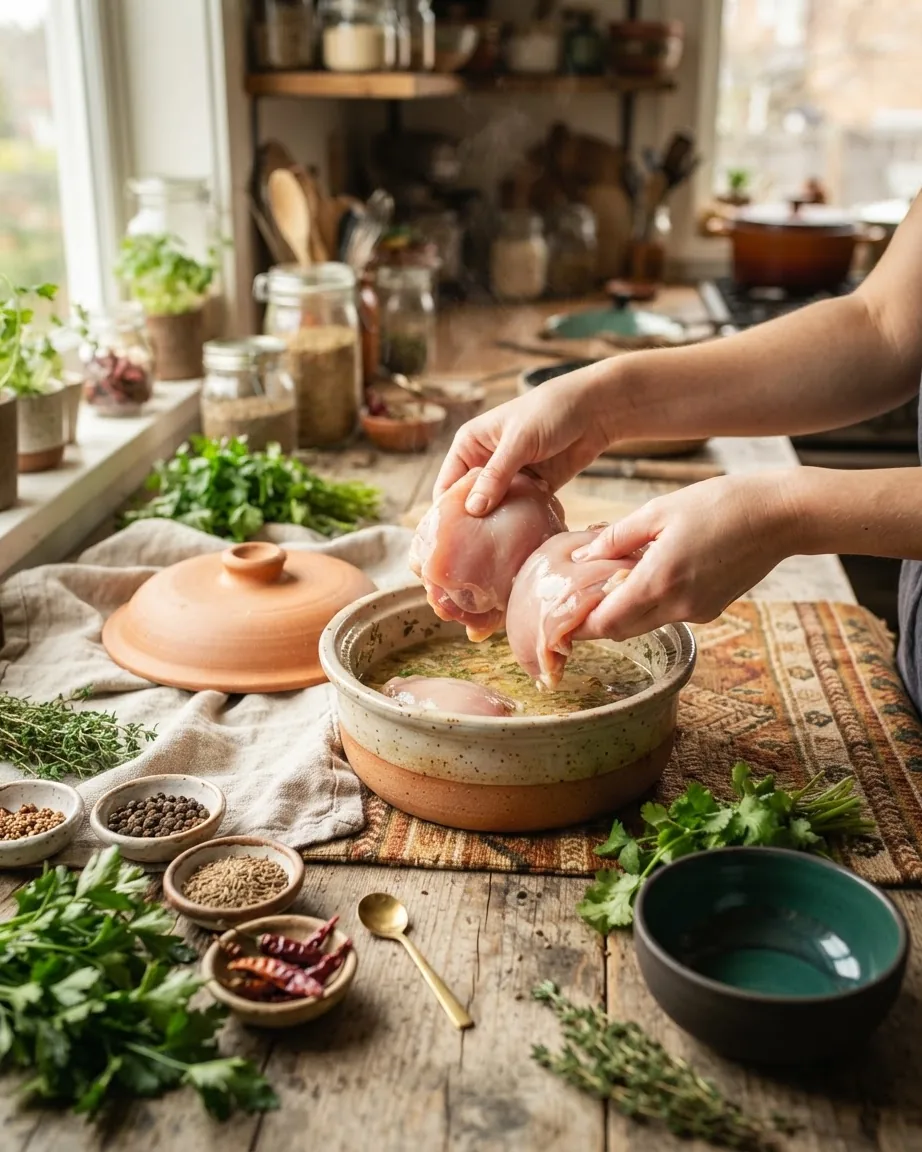
Nearly every documented version of this dish uses boneless, skinless chicken thighs, and the reason is practical: thighs carry more intramuscular fat and connective tissue, so they resist drying out on a hot griddle in a way breast meat does not. Breast will work, but it punishes overcooking harder and gives you a narrower margin between juicy and dry. For a chopped-and-griddled plate where the meat sits on the surface and takes direct heat, thighs are the lower-risk cut.
The marinade is where the sources point in different directions, and resolving that is worth your attention. Serious Eats states plainly: do not marinate the chicken longer than 4 hours or it’ll get a mushy texture. Hungry Paprikas, a different recipe, suggests leaving it to marinate in the fridge covered for at least 4 hours or overnight, and adds that if you don’t have the time, 30 minutes will do.
These are two sources with two different marinades, not a single recipe contradicting itself, but the upper-limit advice and the overnight advice genuinely conflict in spirit. The safe resolution: 4 hours is a reliable sweet spot both recommendations touch. If you are using an acidic marinade in the Serious Eats style, treat 4 hours as a ceiling, because acid breaks down muscle fiber over time and can turn the surface mushy. If you are short on time, 30 minutes still delivers flavor. The one choice to avoid is an overnight soak in a heavily acidic marinade when the recipe warns against it.
Cooking the Chicken: Sear Time, and Why 165°F Is Not the Only Safe Number
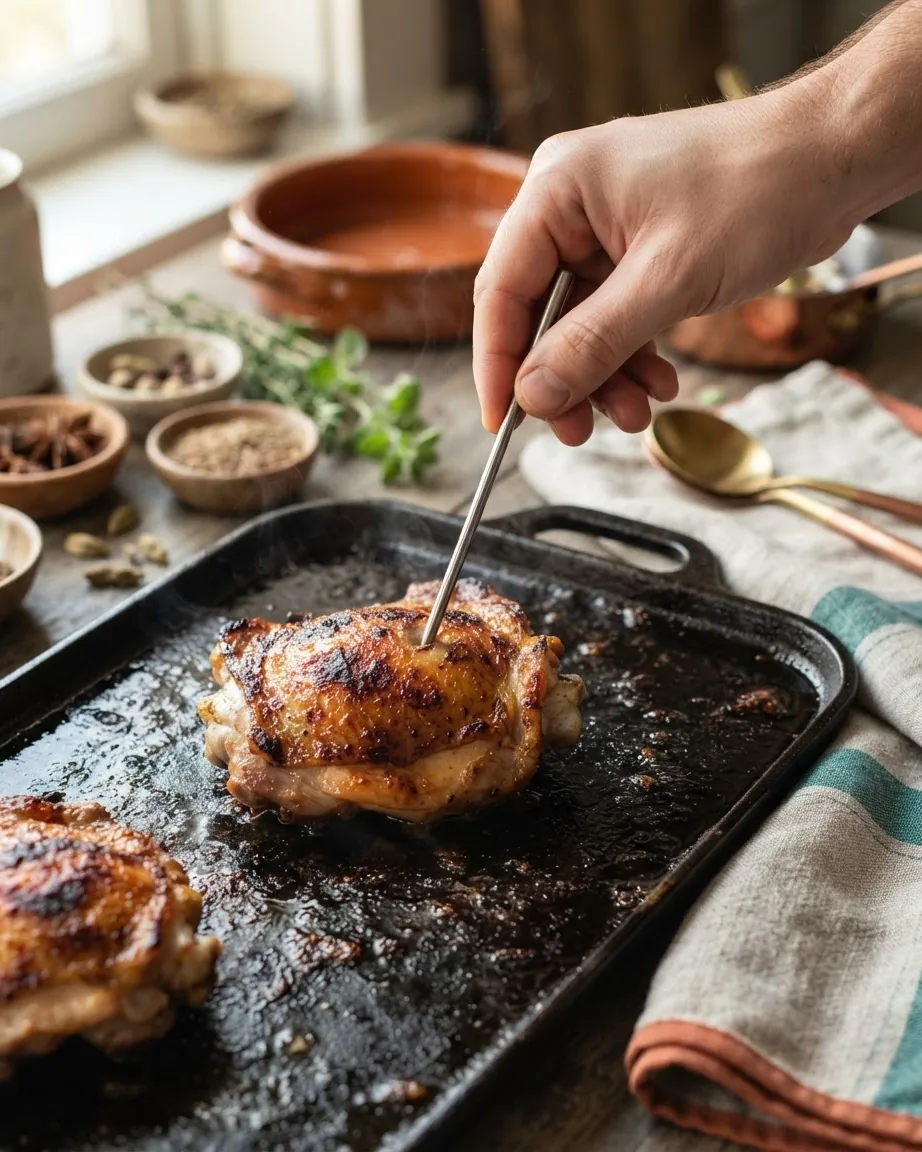
The operational doneness figure across these recipes is a center temperature of 165°F. Serious Eats cooks the thighs until the center of each thigh registers 165°F on an instant-read thermometer, about 6 minutes longer than the point at which the surface looks done. Moribyan’s method sears the chicken until a nice brown crust develops, about 4 minutes on each side, before the meat is chopped. Hit the crust first for flavor, then confirm the interior with a thermometer rather than by eye.
Here is the part that addresses the common complaint of dry chicken. The 165°F figure is an instant-kill standard, safe the moment the meat reaches it, which is why recipes use it. But it is not the only safe endpoint. According to the food-safety data compiled by Serious Eats, the leanest chicken at 1% fat is safe after being held at 150°F for at least 2.7 minutes. Pasteurization is a function of both temperature and time, not temperature alone.
That lower-temperature path can give you juicier meat, but read the caveat carefully: the 2.7-minute hold at 150°F is a lab-derived figure for lean chicken and should not be treated as a drop-in instruction for a pan-seared thigh, where measuring and maintaining a precise center temperature for a precise duration is hard to do reliably at the counter. If you can hold the temperature confidently with a good thermometer, the lower endpoint is a legitimate way to fight dryness. If you cannot, cook to 165°F and accept the slightly firmer result. The safety floor is non-negotiable; the method to reach it is where you have a choice.
The Yellow Rice: Toasting, Turmeric Restraint, and the Broth-Plus-Water Liquid
The rice is not plain white rice tinted yellow. It is built in a sequence that several sources treat as make-or-break, and skipping steps shows up in the bowl.
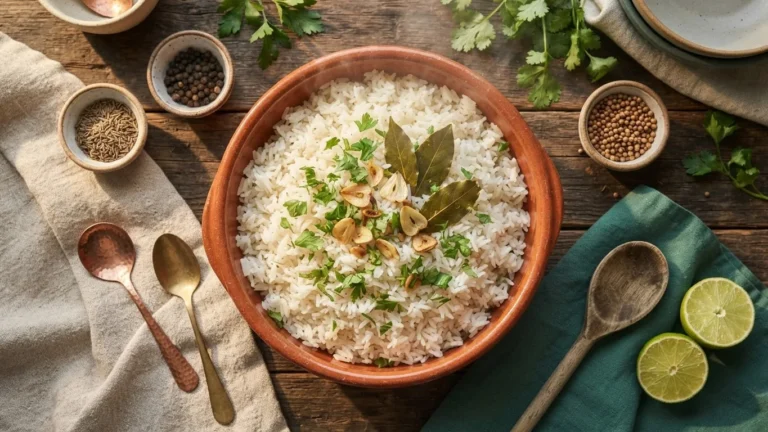
Start with the spices in fat. Hungry Paprikas seasons its rice with 1 teaspoon turmeric, 1 teaspoon salt, 1 cinnamon stick, and 3 cardamom pods, toasting them with the grain before liquid goes in. Toasting does two things: it blooms the turmeric and whole spices in oil so their aroma carries into every grain, and it coats the rice so it cooks up separate rather than clumped. A caution worth heeding on the turmeric itself, don’t overuse it. Turmeric past a certain point turns bitter and medicinal rather than warm, and the color saturates long before the flavor does.
The liquid is where Food Network Kitchen is specific: add the chicken broth and 2 cups water. Broth alone can read too salty and heavy once the spices and butter are in; cutting it with water keeps the rice savory without overwhelming the turmeric. For the full technique with its cautions, the recipe is on Food Network.
Rinsing or soaking before cooking changes the texture. Moribyan directs washing the rice for 2 minutes with warm water or until the water runs clear, which strips surface starch so the grains don’t glue together. As an alternative, Moribyan notes you can let it soak in water for 30 minutes and then drain, which hydrates the grain for a longer, more even result. Either reduces stickiness; soaking leans toward a fluffier, more separate grain.
For the cook itself, Hungry Paprikas brings the pot to a simmer, then covers it with a tight-fitting lid and cooks for 20 minutes undisturbed. The undisturbed part matters: lifting the lid releases the steam that is doing the cooking, and stirring breaks the grains and releases starch. Set the timer and leave it alone. The seasoning backbone of this rice, warm whole spices toasted in fat, echoes the aromatic approach in our Thai Rice guide and our Colombian food recipes.
The Chicken Spice Blend: What Goes in, and the Shawarma-Style Fork in the Road
The seasoning on the chicken is where two schools diverge. The halal-cart-leaning blend keeps it relatively simple and savory. Hungry Paprikas uses 2 teaspoons ground coriander, 2 teaspoons paprika, 1 teaspoon ground cumin, and 2 teaspoons onion powder, a profile that reads warm and mild rather than sharp.
Moribyan takes a shawarma-style turn, reaching for 2 tablespoons allspice, 1 tablespoon coriander, 1 tablespoon paprika, and 1 tablespoon cumin. The jump to allspice as the lead note, in tablespoon rather than teaspoon quantities, pushes the chicken toward the sweeter, more perfumed character of shawarma. Neither is wrong; they are different plates. If you want the cart-style savory profile, the coriander-cumin-paprika-onion blend gets you there. If you want something closer to a shawarma platter, the allspice-forward blend is the one to build.
These ingredients are all in reach. Ground cumin, coriander, paprika, turmeric, onion powder, cinnamon sticks, and cardamom pods sit on regular US supermarket spice shelves, and whole cardamom and better-priced bulk spices are easier to find at a Middle Eastern or South Asian grocery. Toum, the whipped garlic spread in the Moribyan sauce, is a Lebanese staple, look for it ready-made in the refrigerated case of a Middle Eastern market, or make it from scratch, since it is garlic emulsified with oil.
Calories and Sodium: The Sauce Is the Biggest Lever on the Plate
Portioning the sauce, not the rice or the chicken, is the decision that moves the numbers most, and the official figures make that visible in a way no single recipe page does. The Halal Guys publishes per-item nutrition data. A regular chicken platter totals 648 calories. A 3 oz serving of the white sauce, on its own, totals 450 calories. In other words, a single standard pour of sauce carries a large share of the calories of an entire chicken platter.
Both of those figures come from the same official source, which is why they can be read together, and both come from The Halal Guys nutrition menu. The practical move is simple: if you are watching the number, the sauce is the first dial to turn. Halving the pour changes the plate far more than swapping the rice would. This is information to portion with, not a prescription to restrict.
A homemade platter lands in a similar neighborhood but is not directly comparable. Hungry Paprikas estimates its full platter at 663 calories per serving, with sodium at 1623 mg. That homemade 663-calorie figure and the restaurant 648-calorie figure describe different portion sizes, different components, and different measurement methods, so reading one as higher or lower than the other would be misleading. Treat each as a self-contained estimate for its own recipe. The sodium figure of 1623 mg is the one worth noting if salt is a concern, and most of it is adjustable, since you control the salt in the rice and the marinade.
Make-Ahead and Storage: Component Windows Up to 5 Days
This plate is built for prep-ahead because its three parts keep separately. Hungry Paprikas states that each component can be stored in an airtight jar in the fridge for 4 to 5 days. That covers the cooked chicken, the rice, and the sauce held apart from one another.
The white sauce specifically holds on the longer end of that range. Little Spice Jar reports you can keep the sauce in a squeeze-top bottle for up to 5 days once it’s prepared. A squeeze bottle is worth the small effort: it keeps air contact down and makes the cart-style drizzle easy. Store each element on its own and assemble at serving time rather than combining and reheating a full plate, which keeps the rice from going gummy and the sauce from thinning under heat.
Finding the Ingredients and a Faithful Full Recipe
Everything this plate needs is available to a US cook without a specialty trip, with one or two exceptions. Boneless skinless chicken thighs, long-grain rice, mayonnaise, Greek yogurt, sour cream, white vinegar, lemon, and the core ground spices are all regular supermarket items. Chicken broth and butter for the rice are standard. The two items that reward a specialty stop are whole cardamom pods and toum: both are cheaper and fresher at a Middle Eastern or South Asian grocery, and toum is the only component that is genuinely easier to buy than to improvise if you have never emulsified garlic and oil before.
Because this is a guide rather than a recipe, the full quantities and step-by-step methods belong to the sources that published them. For a faithful copycat of the cart original with its food-science reasoning, the Serious Eats recipe is the reference. For a home-cook version with per-serving nutrition and make-ahead guidance, Hungry Paprikas documents it. For a shawarma-style, toum-sauce interpretation, Moribyan is the source, and for the dedicated white-sauce recipe with substitutions, Little Spice Jar carries it. Pick the variant that matches the plate you want, then follow that source’s exact amounts.
If you cook a lot of chicken plates, two other guides on this desk sit nearby: our Greek Chicken and Potatoes guide and our Buffalo Chicken Salad guide.
The Sauce Is Half the Plate: What 3 oz of White Sauce Does to Your 648-Calorie Platter
The white sauce isn’t a garnish on the calorie math – it’s the single biggest lever on the plate. Using The Halal Guys’ own published figures, a regular chicken platter totals 648 calories and a standard 3 oz serving of white sauce totals 450 calories. Put those two official numbers side by side and the sauce alone accounts for about 69% of the platter’s calories.
That makes sauce the easiest place to portion. Each ounce of white sauce runs 150 calories (450 divided across 3 oz), so the amount you pour translates almost directly into the number on your plate:
- Full 3 oz serving: the restaurant default, landing the plate at the published 648 calories.
- Per-ounce control: every ounce you add or skip moves the total by 150 calories, so dialing sauce is the most effective single adjustment you can make.
Both input figures come from the same official source and the same portion framework, so the comparison is apples-to-apples. If you want a lighter plate without touching the chicken or rice technique, the sauce ladle is where the real calories are.
Frequently Asked Questions
Can I use chicken breast instead of thighs?
Yes, though the margin for error shrinks. Breast lacks the fat that keeps thigh meat forgiving on a hot griddle, so it crosses from juicy to dry fast. If you go with breast, lean on a thermometer and consider pulling it toward the lower end of the safe range rather than relying on sight, and avoid long griddling after it chops.
Is the white sauce the same as tzatziki?
No. Despite both being pale and creamy, copycat recreations describe the cart sauce as closer to a flavored mayonnaise than to a cucumber-yogurt dip. Even the yogurt-forward versions carry mayonnaise and skip cucumber entirely. Reaching for a Greek tzatziki recipe gives you an herb-and-cucumber sauce with a different texture, acidity, and purpose on the plate.
How much sauce should I pour if I’m tracking calories?
Use the pour itself as the dial. A standard restaurant serving runs 3 oz, and that single portion carries 450 calories on its own. Cutting it to a lighter drizzle removes more from the plate than any rice or chicken swap would. You still get the signature finish, just less of the richest component.
Why does my rice turn out sticky or clumped?
Two likely causes: skipped starch removal and a disturbed pot. Washing the grain for 2 minutes until the water runs clear, or soaking it for 30 minutes and draining, strips the surface starch that glues grains together. After the liquid comes to a simmer, keep the lid on and the pot still for the full cook; opening or stirring releases steam and breaks grains.
Can I cook the chicken below 165°F and still be safe?
What keeps the meat safe is the combination of how long it is held and at what temperature, rather than temperature by itself. Lab-derived data shows lean chicken at 1% fat is safe after holding 150°F for at least 2.7 minutes. That lower endpoint yields juicier meat, but it demands precise, sustained temperature control that is hard to guarantee on a seared thigh. Without reliable equipment, cook to 165°F, which is safe on contact.