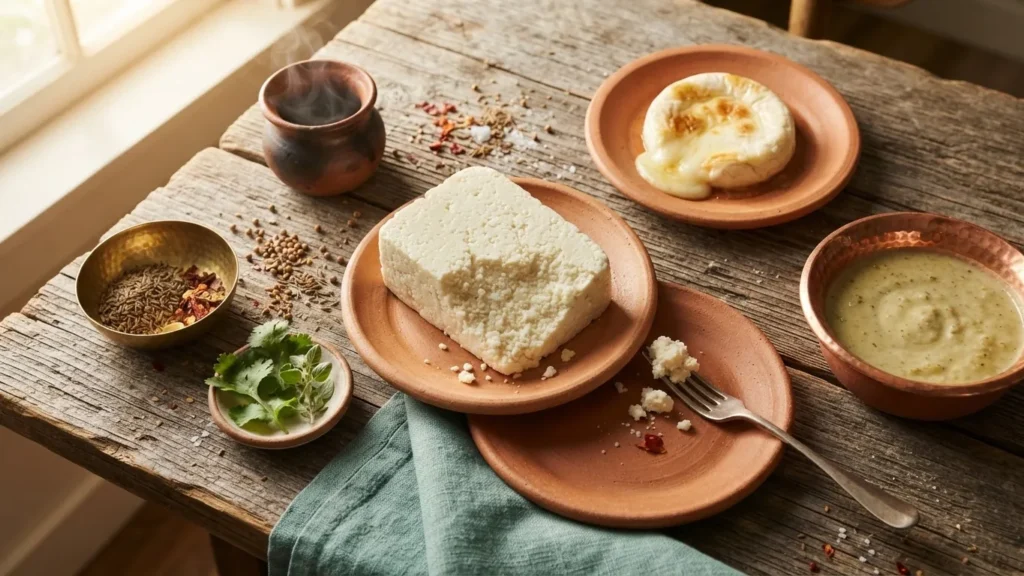
The smooth white dip ladled over chips in most US Mexican restaurants contains no fresh Mexican cheese at all. Its base is white American cheese, sliced to order at a deli counter; one home cook reports the places near her run on Land O’Lakes White American, sold only in 4-lb bricks the deli will slice down. A shopper who grabs a package of fresh queso blanco to reproduce that dip at home ends up with a grainy, broken pool, because traditional Mexican white cheese in its fresh form softens under heat but will not flow into a sauce. That one confusion sends more people home with the wrong cheese than any other question about Mexican dairy.
These cheeses come out of Mexican dairy tradition, and there are several of them, each built for a different job. The trap is that they share a color and, in one case, a name, while behaving nothing alike at the stove.
Mexican white cheese covers a family of cheeses that behave in three different ways under heat. Queso fresco, cotija, and fresh queso blanco crumble and stay put; they soften but do not turn into sauce. Panela holds its shape and takes to frying. Oaxaca, Chihuahua, and asadero are the ones that melt. The white queso dip on restaurant menus belongs to none of these categories; its base is deli white American cheese. Choose by the job in front of you: a crumbled topping, a cheese that fries without collapsing, or a cheese that melts smoothly for quesadillas and dip.
The naming trap: why “queso blanco” points to two different products
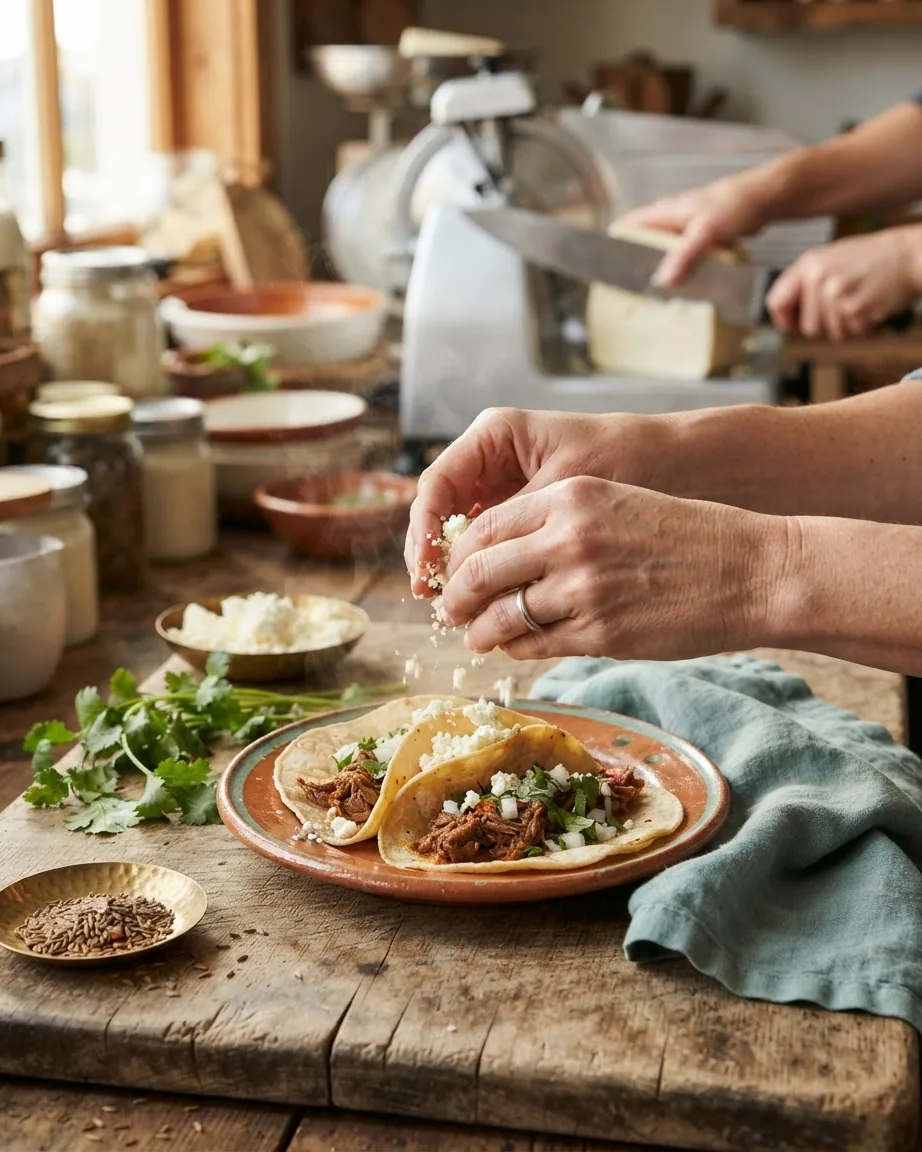
Queso blanco translates plainly as white cheese, and that literalness is the source of the trouble. As a cheese identity, queso blanco is the fresh, crumbly, mild Mexican cheese that resists melting. As a menu term in US Mexican restaurants, the same two words label a hot, pourable dip built on white American cheese. Same name, two products headed to opposite ends of the stove.
The encyclopedic reference at Wikipedia describes queso blanco as a fresh cheese, made and eaten quickly, that most often softens rather than melts. The developed recipes carrying the name on US food sites describe something else: a fast stovetop sauce. 40 Aprons, publishing at its white queso recipe, is explicit that the dip’s base is deli white American cheese, not the fresh cheese from the refrigerated Latin aisle.
For a shopper the practical rule is short. If the goal is the restaurant-style dip, ignore anything labeled fresh queso blanco or queso fresco and head to the deli counter. If the goal is a crumbled topping for tacos or beans, the fresh cheese is exactly right and the American cheese would be the mistake.
A purpose-first buying map for mexican white cheese
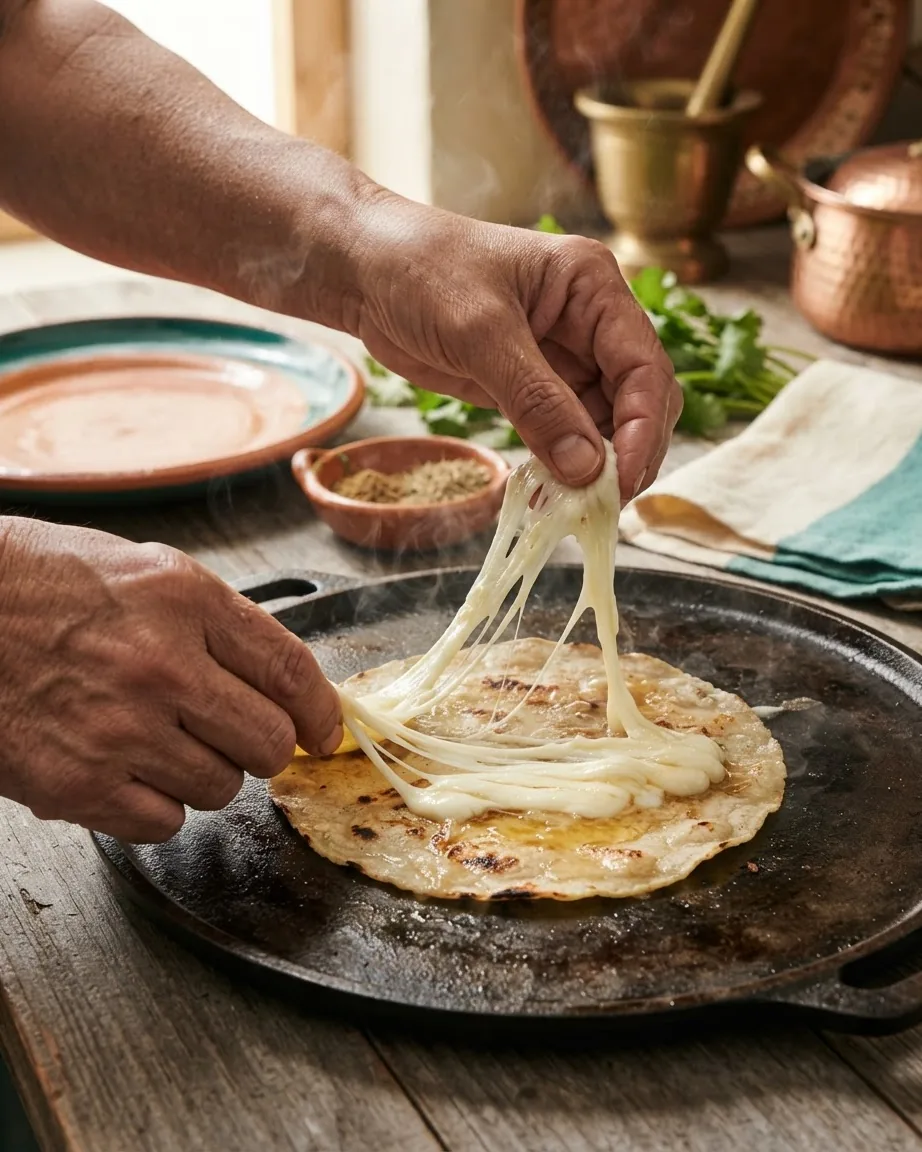
The fastest way to buy the right mexican white cheese is to name the job first, then pick the cheese that does it. There are three jobs, and each points to a different shelf.
- Crumble and scatter (non-melting topping): queso fresco or cotija. Fresco is mild and fresh; cotija is aged, dry and salty. Neither melts into sauce.
- Hold shape and fry: panela. Made with skim milk, it browns and holds its form in a hot pan instead of collapsing.
- Melt for quesadillas, filling, or dip: Oaxaca, Chihuahua, or asadero. These are the melters.
The dip on a restaurant menu sits outside the map, because its cheese is deli white American rather than any of the fresh Mexican types. Keeping the dip separate from the fresh-cheese decision is what stops the most common wasted purchase at the counter.
Mexican cheeses sit within the desk’s wider latin american recipes coverage. AtlasPlate transcribes other dishes into the same standard format; see our New Mexico Recipes: The Red Chile, the Posole, and the Braise, Transcribed From Their Sources and our Carne Adovada Recipe: The New Mexico Red Chile Pork, Reconciled From Three Published Versions.
Queso fresco and cotija: the mild crumble and the salty finish
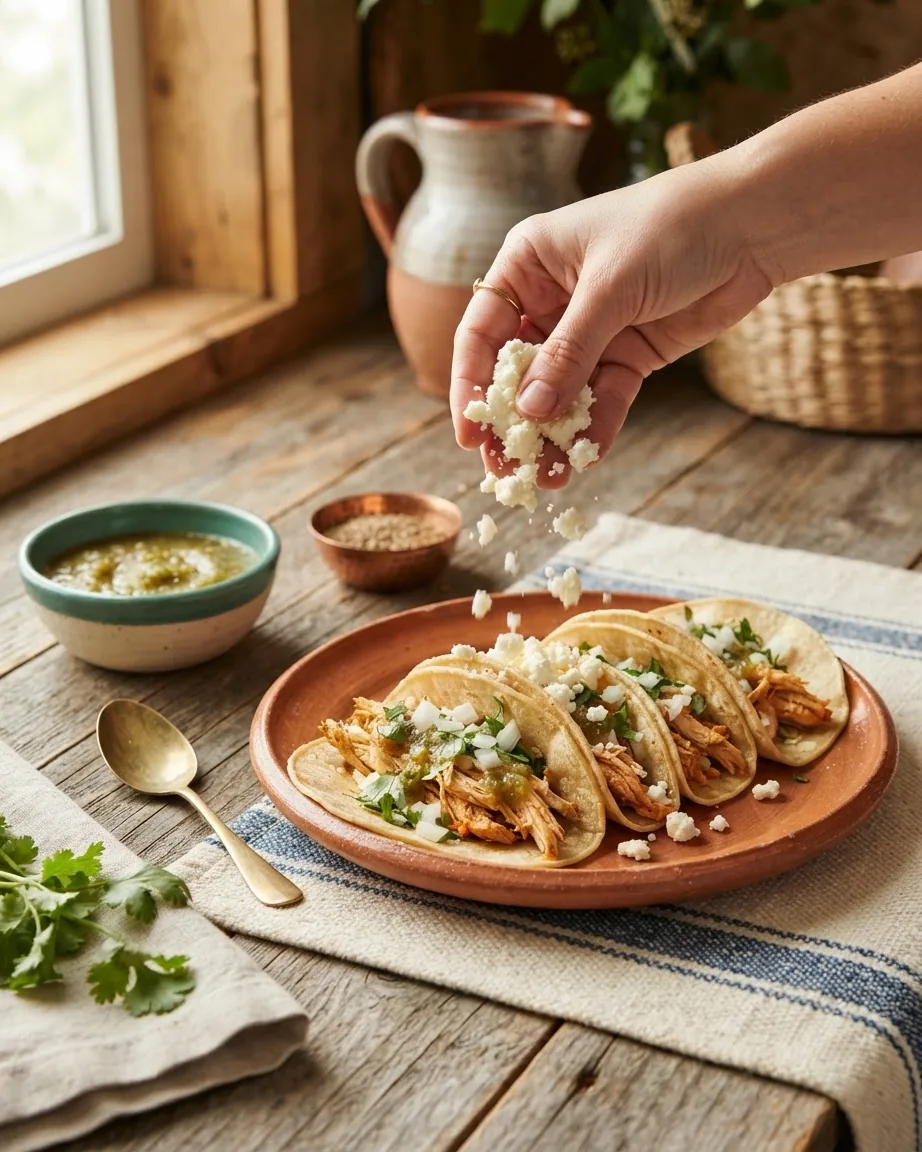
Both cheeses crumble, and both refuse to melt, which is why they read as interchangeable to anyone who has only used one. They are not. The choice between them comes down to mild freshness versus salty punch.
Queso fresco is a fresh, soft, mild white cheese, close in behavior to feta though gentler and less tangy. It crumbles over tacos, tostadas, enchiladas, and beans, softening in the heat of the dish without dissolving. Reach for it when the cheese should recede: a cool, milky note against something spicy or rich.
Cotija is the aged counterpart, dry and firm, sharp and salty, often compared to Parmesan and among the most-used finishing cheeses in Mexican cooking. A little goes far. Grate or crumble it where you want the cheese to assert itself, over elote, soups, or salads, the way you would use Parmesan on pasta.
One warning applies to both fresh forms. Fresh queso blanco and fresh queso fresco are highly perishable. Wikipedia notes this fresh cheese must be refrigerated and used quickly once made, a much shorter clock than the aged, salt-preserved cotija tolerates.
The melters: Oaxaca, Chihuahua, asadero, and where the ranking lands
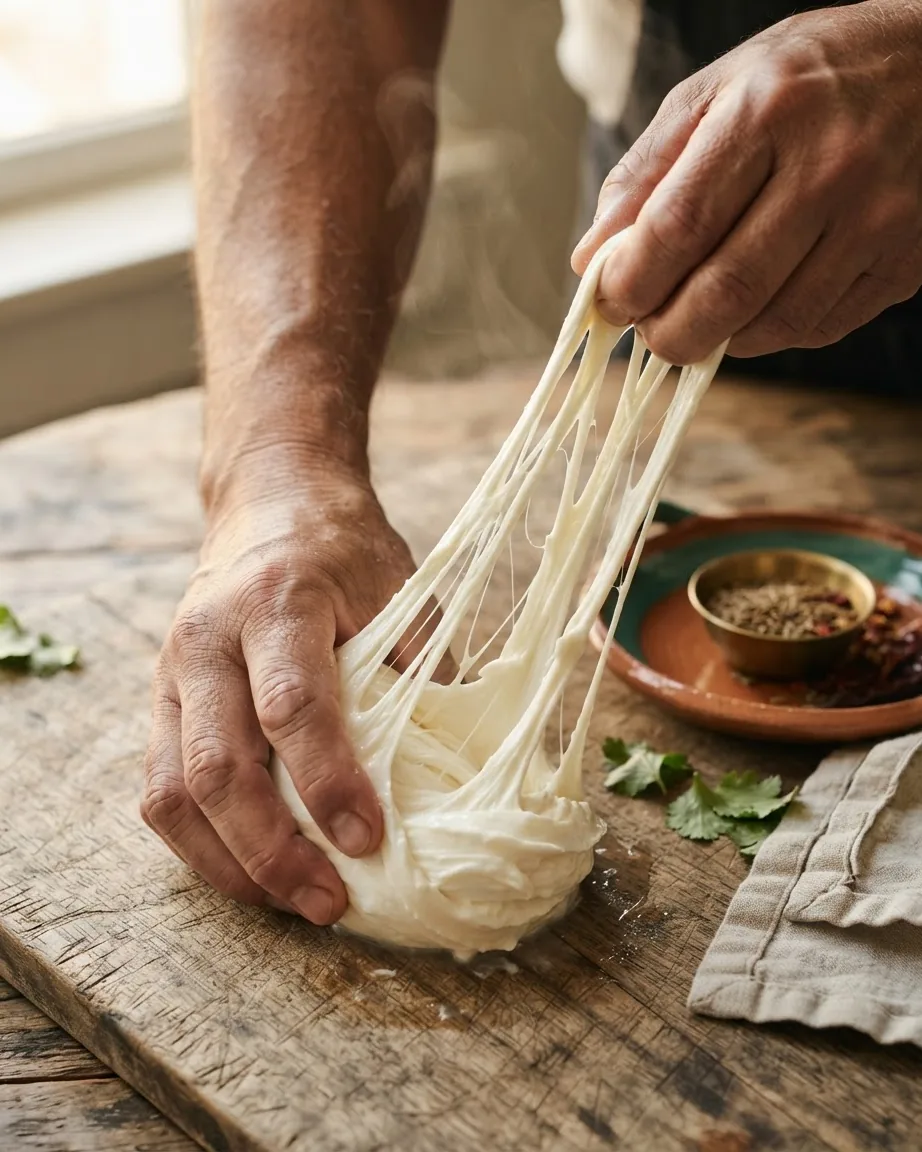
Three Mexican white cheeses melt well enough to build a filling or a sauce, but they do not melt equally, and the published sources disagree on the order.
Oaxaca is a soft white string cheese, wound into a ball, that melts easily and pulls into strands. It is the classic filling cheese for quesadillas. Chihuahua is a pale, semi-soft cheese Wikipedia rates as good for melting and comparable to a mild white cheddar or Monterey Jack. Asadero is a dedicated melting cheese, made for exactly that job.
So where do they rank? Wikipedia frames Mexican white cheeses as mostly softening, with Oaxaca called out as the exception that genuinely melts. Craving Some Creativity, testing these cheeses for a dip at its Mexican white cheese dip recipe, grades Chihuahua as one that “melts well” while Oaxaca only melts okay. Reconciling the two: for a smooth, pourable result, Chihuahua and asadero sit at the top, Oaxaca is a solid second that melts but stays more stringy, and queso fresco, cotija, and panela do not belong in a melted sauce at all. Put a crumbling cheese in a dip and you have a category error, not a lesser choice.
Panela: the cheese you fry because it won’t melt
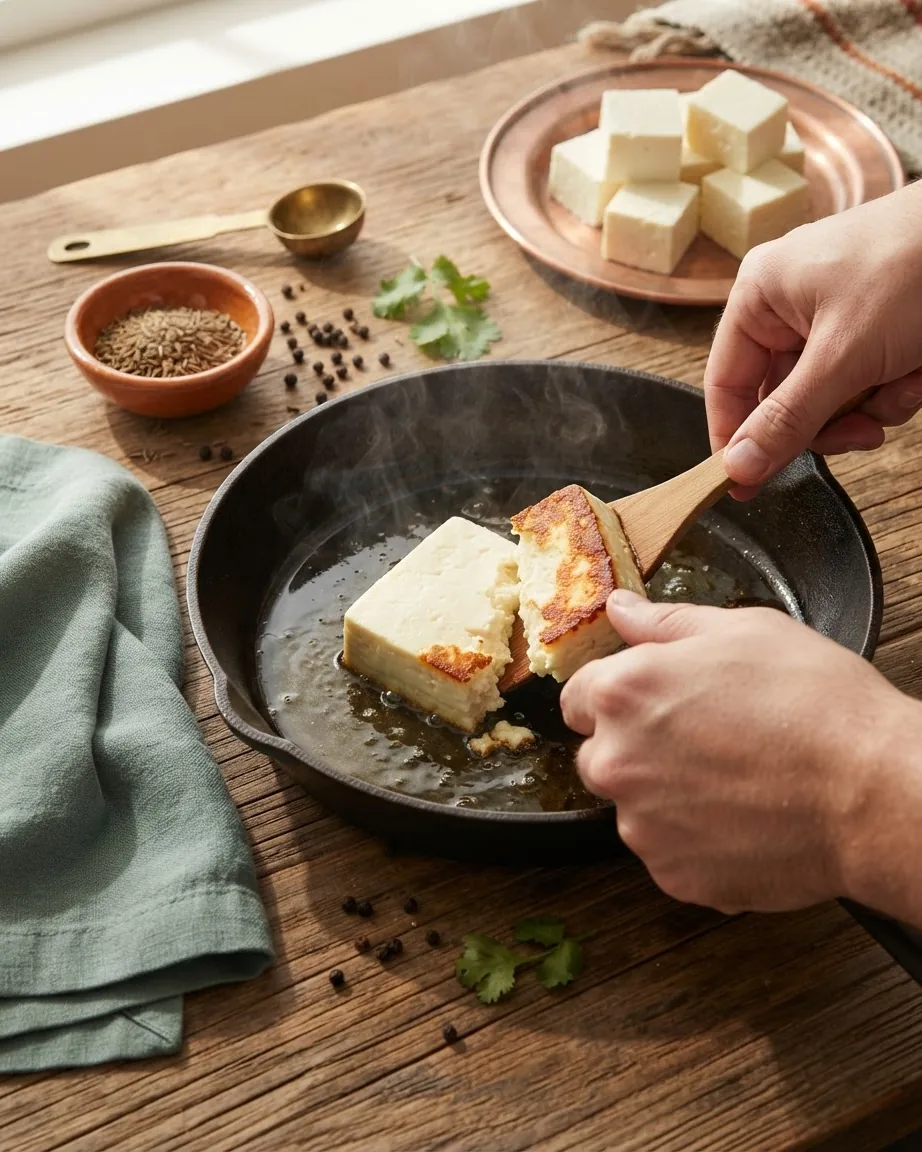
Panela is the odd one in the family. It is made with skim milk, and its defining behavior is that it holds its shape under heat instead of melting. That property, a flaw in a dip, is the whole reason to buy it: cubed and dropped into a hot pan, panela browns at the edges and stays intact, so it can be fried or grilled and served as its own component rather than a molten layer.
The published descriptions are not fully consistent about its texture. One reference calls panela hard, smooth, and salty, while the same page’s author comment calls it soft and white. The disagreement concerns mouthfeel rather than function. On the point that matters at the stove, the sources agree: panela does not melt, and its shape-holding is the reason to reach for it. If a recipe wants a cheese that survives frying, panela is the answer; if it wants a cheese that flows, look elsewhere.
Where to find each in a US store, and what to swap
None of these cheeses is hard to find in the US, but they live in different parts of the store, and the swaps are not all equal.
- Queso fresco and cotija: the refrigerated Latin or Hispanic foods section of most large supermarkets, and reliably at any Mexican or Latin grocery. Cotija also turns up near specialty hard cheeses. If a store carries neither, feta stands in for queso fresco (drier and saltier, so use a lighter hand), and Parmesan or a dry, salty pecorino covers cotija’s finishing role.
- Panela: the same Latin refrigerated case, though it is stocked less widely than fresco. Where it is missing, firm halloumi behaves similarly in the pan, since it also holds its shape and browns rather than melting.
- Oaxaca, Chihuahua, asadero: the Latin case in larger supermarkets and at Latin groceries. When none are available, low-moisture mozzarella substitutes for Oaxaca’s pull, and Monterey Jack or a mild white cheddar covers Chihuahua and asadero in a melt.
- White American for the dip: the deli counter, sliced to order, not the wrapped singles. Ask for it cut thick, or buy a small block. A 4-lb brick is the restaurant format; a single home batch runs on 8 oz.
Each swap shifts the result in a predictable direction. Feta pushes queso fresco saltier and tangier; mozzarella melts smoother but blander than Oaxaca; Monterey Jack melts cleaner than Chihuahua but with less of its cheddar-like depth. The swap that does not work at all is using any crumbling cheese in a melted dip. Fresco, cotija, and fresh queso blanco soften and weep, then break, no matter the technique.
What restaurants melt into white queso dip
The cheese behind restaurant white queso is white American cheese, and the sourcing detail matters more than the name. Craving Some Creativity reports that restaurants near the author use Land O’Lakes White American, sold in 4-lb bricks the deli slices to order, the same deli-counter product rather than the plastic-wrapped singles from the dairy case.
40 Aprons builds its version on 8 ounces of deli white American cheese, about 2½ cups shredded or torn, loosened with ¾ cup half and half, for 6 servings. Eating on a Dime, at its Mexican white cheese dip recipe, and Dang That’s Sweet, at its white queso dip recipe, both land on white American as the best-melting base, and both source it from the deli.
The takeaway for the cart: ask the deli to slice white American thick, or buy a small block if they will sell one. A 4-lb brick is restaurant scale; a home batch needs 8 oz. Skip the fresh Mexican cheeses for this dish entirely. They were built to crumble, and no technique makes them pour.
Why pre-shredded seizes and deli cheese melts smooth
Two things wreck a white queso, and both are avoidable once the cause is named.
The first is the cheese itself. Pre-shredded and pre-sliced packaged cheese is coated with anti-caking agents that keep the pieces from clumping in the bag, and those same agents block the smooth melt you want in a dip. Deli cheese, sliced fresh, carries none of that coating, which is why it melts into a clean sauce where the bagged version turns grainy. This is the practical reason every source points to the deli counter rather than the dairy aisle.
The second is heat. Push cheese too hot and its proteins seize and tighten; the dip goes stringy and separates. The fix is low, patient heat and gradual addition. 40 Aprons has you warm the half and half in a saucepan over low heat for 1 to 2 minutes before the cheese goes in, so the dairy is warm but never scorching, then add the cheese in stages.
For a party hold, Eating on a Dime keeps the dip in a crockpot on the warm setting, stirred every 20-30 minutes with a splash of milk if it thickens. Warm, never hot, is what keeps it from breaking while it sits. Put the two rules together and the method is short: deli white American cheese, low heat, add it in stages, and never let it boil.
The dip by the numbers: time, yield, and heat level
The white queso dip is fast, and the sources agree on how fast. 40 Aprons and Craving Some Creativity both put it at 5 minutes start to finish. Dang That’s Sweet lists five ingredients and a total under 10 minutes. Active time and total time are effectively the same here, since there is no rest or bake; the only wait is the 1 to 2 minutes warming the dairy.
Yield depends on the recipe. 40 Aprons makes 6 servings from 8 ounces of cheese; Dang That’s Sweet portions its version into 8 servings. Neither is spicier than mild, because the base dip carries no chile at all, which puts it at heat level 0 on a 0-to-3 scale. Anyone who wants heat adds it separately.
For a party, timing is the only planning needed. Eating on a Dime makes the dip ahead and reheats it 1 to 2 hours before guests arrive, gently on the stove or in the microwave in 30-second bursts, stirring between each, then moves it to a warm crockpot to hold.
Sodium, calories, and how long each keeps
The dip is rich, and the numbers say so. White American cheese is salty on its own, a figure worth knowing before a second bowl. Dang That’s Sweet reports 272kcal per serving on its recipe card, portioned across 8servings. The salt comes mostly from the cheese, so a lower-sodium American cheese is the lever if the sodium reading matters for a household.
Storage splits cleanly by product. The cooked dip keeps well: 40 Aprons says it can be made up to 3 days ahead and refrigerated in an airtight container, then reheated in the microwave. Dang That’s Sweet and Eating on a Dime both give a leftover window of 3 to 4 days in the fridge. The 3-day make-ahead figure and the 4 days leftover figure do not contradict each other; one counts from cooking before serving, the other from serving to discard.
Fresh queso blanco runs on a different clock. It is highly perishable and, once drained, needs refrigeration and quick use, nothing like the aged, salt-preserved cotija that keeps far longer. Do not judge the two by the same window.
How fresh queso blanco is made: heat, acid, and the drain
For anyone who wants the fresh cheese itself rather than the dip, the method is old and simple, and it explains why the cheese behaves the way it does. Wikipedia describes queso blanco as fresh milk heated close to boiling, then curdled with an acid, vinegar being typical, which separates the curds from the whey. The curds are collected and drained in cheesecloth for three to five hours until firm enough to crumble or slice.
That acid-set method is the reason the cheese does not melt. Acid coagulation produces a protein structure that softens under heat but will not flow, which is exactly the property that makes fresh queso blanco a crumbling, shape-holding cheese and disqualifies it from a smooth dip. The chemistry that gives it a clean, milky bite is the same chemistry that keeps it from pouring.
Because it is made without aging and with little salt, fresh queso blanco is perishable from the moment it drains. It is meant to be eaten within days, refrigerated, which is why the traditional cheese and the make-ahead restaurant dip live on completely separate timelines: one measured in days from draining, the other extended by cooking and salt.
Questions readers still ask
Can I substitute Monterey Jack or cheddar for these Mexican cheeses?
For the melters, yes. Asadero, Chihuahua, and Oaxaca stand in for Monterey Jack and cheddar, and the swap runs both directions, since Chihuahua sits closest to a mild white cheddar. For the crumbling cheeses, no easy trade exists: cheddar turns molten where fresco should stay dry and separate, so reach for feta if queso fresco is what you’re missing.
Can I freeze white queso dip, and for how long?
Yes. Eating on a Dime freezes leftover dip in a freezer-safe container for up to 3 months, separate from the 3 to 4 days it holds in the refrigerator. Thaw it in the fridge, then reheat slowly and stir hard, adding a splash of milk to pull it back together, since freezing tends to leave dairy sauces grainy until they’re worked warm again.
Is queso asadero the same as queso quesadilla?
Effectively, yes. Queso asadero is a Mexican melting cheese, and it is sometimes sold under the name queso quesadilla, a label pointing straight at its main use. If a store stocks one and not the other, treat them as the same purchase for a filling, a folded quesadilla, or any melted layer, with no change to how you handle it in the pan.
The deli-brick math: how far 4 lb goes, and the sodium per batch
The deli sells White American in a 4-lb brick, and the 40 Aprons dip uses 8 ounces per batch to make 6 servings. Run those figures together and the sourcing problem turns into a plan: you can see exactly how much cheese each serving carries and plan a purchase around it.
- Each serving = about 1.33 oz of cheese. 8 oz split over 6 servings (8 ÷ 6) is roughly 1⅓ oz of White American per bowl.
- One 4-lb brick spans many batches. A single home batch runs on 8 oz, so a full restaurant-scale brick stretches across a run of batches before it is gone.
- Buy to match the crowd. Buying the whole brick makes sense only if you’re feeding a crowd or freezing ahead; otherwise a small block sliced to order covers a home batch.