Published recipes for manakish give different oven settings and different bake times. None of the numbers is wrong. They describe two different pieces of equipment doing two different jobs, and the reader who copies one figure without knowing which job it belongs to is the reader who ends up with either a pale, doughy flatbread or a black-flecked za’atar topping. This piece cross-references the settings across the recipes that publish them and sorts them by method, so the choice becomes deliberate.
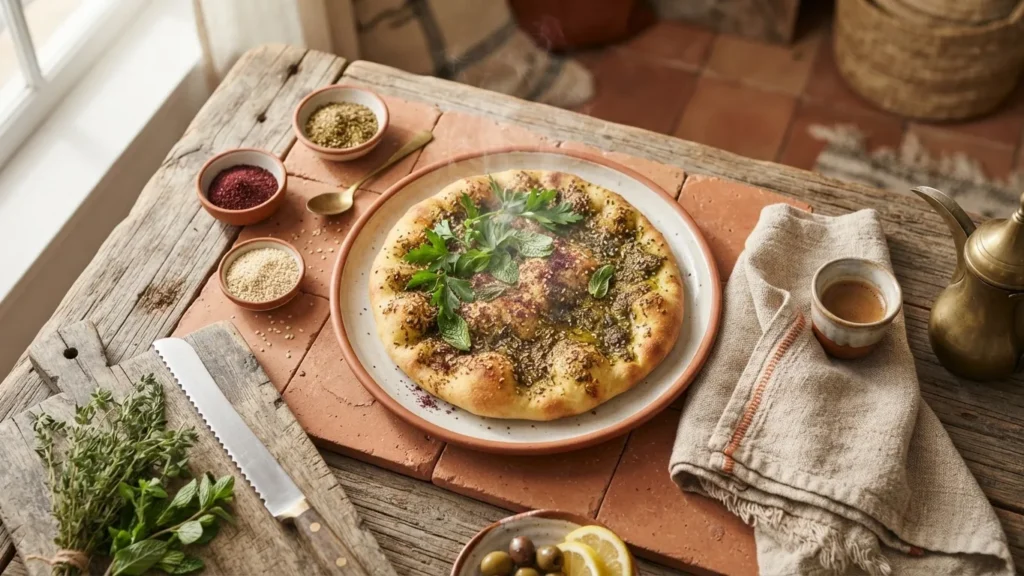
Manakish (the plural; a single one is a manoushe or mankosha, per Plant Based Folk) is a Levantine flatbread of dough topped with za’atar, cheese, or ground meat, eaten for breakfast or lunch, as Wikipedia defines it. It sits inside the wider tradition of middle eastern recipes this desk transcribes from regional sources. Below, the bake spread is resolved first, because that is the decision most cooks get wrong.
Quick answer: Manakish bakes two ways. On a baking steel or stone preheated to 550°F (288°C) – the oven’s top setting – it chars in spots in 3 to 4 minutes. On a tray or parchment at a moderate 375°F to 450°F (190 – 230°C), it needs 10 to 15 minutes to reach light golden underneath. Traditional cheeses are akkawi and kashkaval; feta-plus-mozzarella or queso-blanco-plus-mozzarella substitute well. The finger dimples are functional, not decorative: they hold the topping and stop the bread ballooning. Sugar in the dough drives the browning, so it is not optional.
The 375°F-to-550°F bake spread, sorted by what’s under the dough
The published temperatures do not compare directly, because each assumes a different setup and dough thickness. Reading them as a single range and averaging is how the topping burns before the base sets, or the base stays raw while the surface looks done. Here is what each source actually specifies:
- 550°F / 288°C, 3 – 4 minutes, preheated steel or stone. Maureen Abood’s method in The Splendid Table preheats a baking steel or stone to 550°F (288°C) or the oven’s highest temperature and bakes until the edges char in spots, 3 to 4 minutes.
- 230°C / 450°F, 10 minutes. Zaatar and Zaytoun uses the oven’s highest setting, usually 230°C/450°F, for 10 minutes.
- 425°F, 10 – 12 minutes, parchment sheet. Simply Lebanese bakes at 425°F for 10 to 12 minutes until golden brown on the bottom.
- 375°F, 12 – 15 minutes, baking sheet. Hungry Paprikas bakes at 375°F for 12 to 15 minutes until the bottom is lightly golden.
- 5 – 7 minutes, lightly golden. Alphafoodie bakes 5 to 7 minutes until lightly golden-brown, without burning the spices on top.
The pattern behind the spread: high heat works only when the surface it bakes on is already screaming hot. A steel or stone preheated to 550°F (288°C) transfers enough energy to set the base in 3 to 4 minutes, so the topping never sits long enough to scorch. Drop the bread onto a cold tray at that same temperature and the base lags while the za’atar darkens. That is why the moderate-oven recipes – the tray and parchment methods at 375°F to 450°F – trade heat for time and run 10 to 15 minutes instead.
So the decision is not “which number.” It is which tool you own. With a preheated stone or steel, take the top-heat, short-bake route. Without one, bake longer on a tray and judge by the underside, not the clock. Abood’s own cue is verbatim in Pack B: “Bake until the edges turn golden brown and slightly char in spots, 3 to 4 minutes.” That char-in-spots signal only appears on a hot surface; on a cold tray you will chase it past the point the topping survives.
Akkawi is hard to find in the US – here’s the swap and the salt step
Wikipedia names the two cheeses traditionally used on manakish as akkawi and kashkaval. In the US, akkawi (sometimes spelled akawi) turns up at Middle Eastern and some Mediterranean grocers and online, but rarely in a standard supermarket. Two named recipes solve the gap with cheeses you can buy anywhere.
Hungry Paprikas substitutes a mixture of feta and mozzarella for akawi, stating outright it is “actually my preference over Akawi.” Simply Lebanese uses shredded akawi with mozzarella, and gives a substitute of queso blanco mixed with mozzarella plus a pinch of salt. Queso blanco is stocked in the Latin aisle of most US supermarkets; block mozzarella is universal; feta is standard dairy-case stock. Either pairing gives you the pull and the mild salt that akkawi supplies.
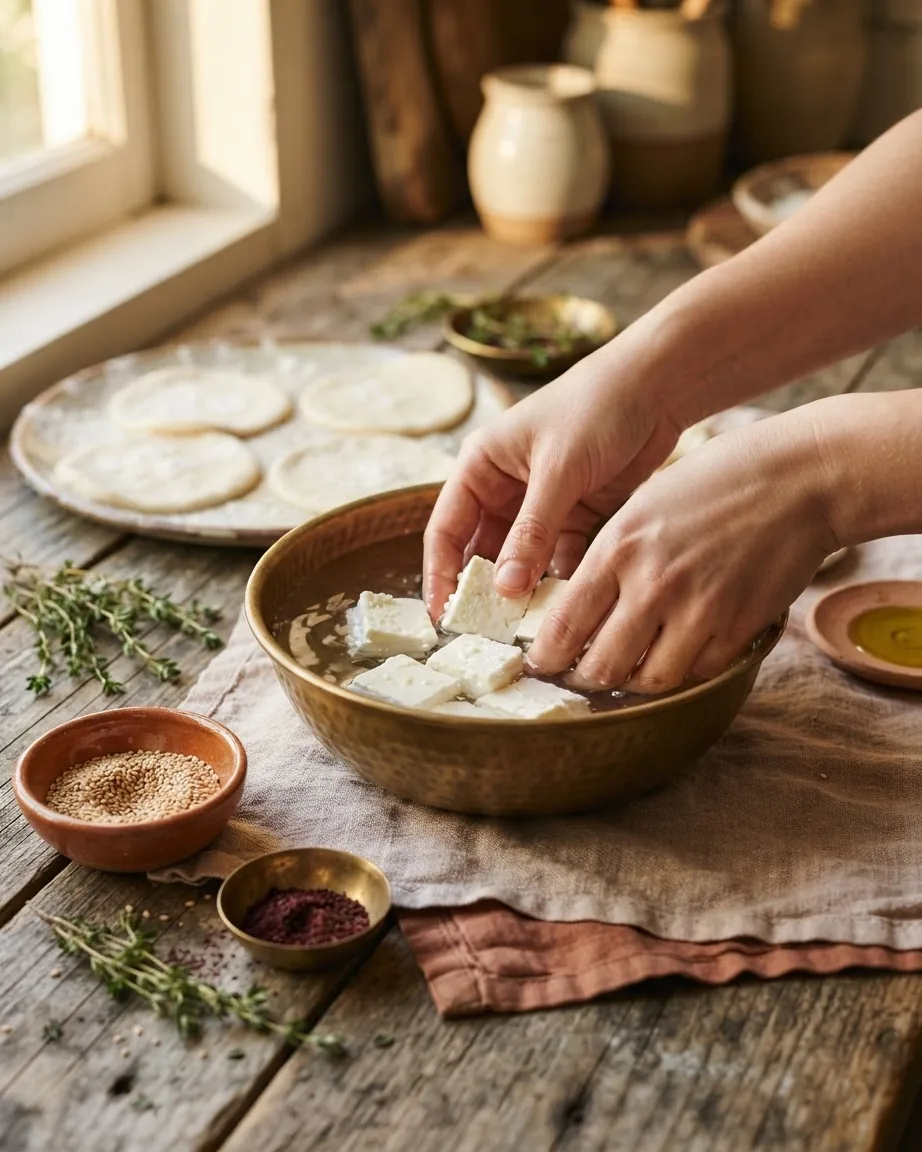
One step is non-negotiable if you do find real akawi. It carries a heavy brine, and both Simply Lebanese and a second source corroborate the fix: soak the akawi in cold water for at least 30 minutes to draw out some of the salt before it goes on the dough. Skip the soak and the cheese manakish comes out aggressively salty. When you use the feta-mozzarella or queso-mozzarella route instead, the salt is already moderate – the pinch of salt Simply Lebanese calls for is a top-up, not a correction, so add it only if the blend tastes flat. Za’atar is occasionally worked into cheese manakish to lift the flavor, per Wikipedia, and that pairing survives any of the cheese choices above.
Why the finger dimples are structural, not for looks
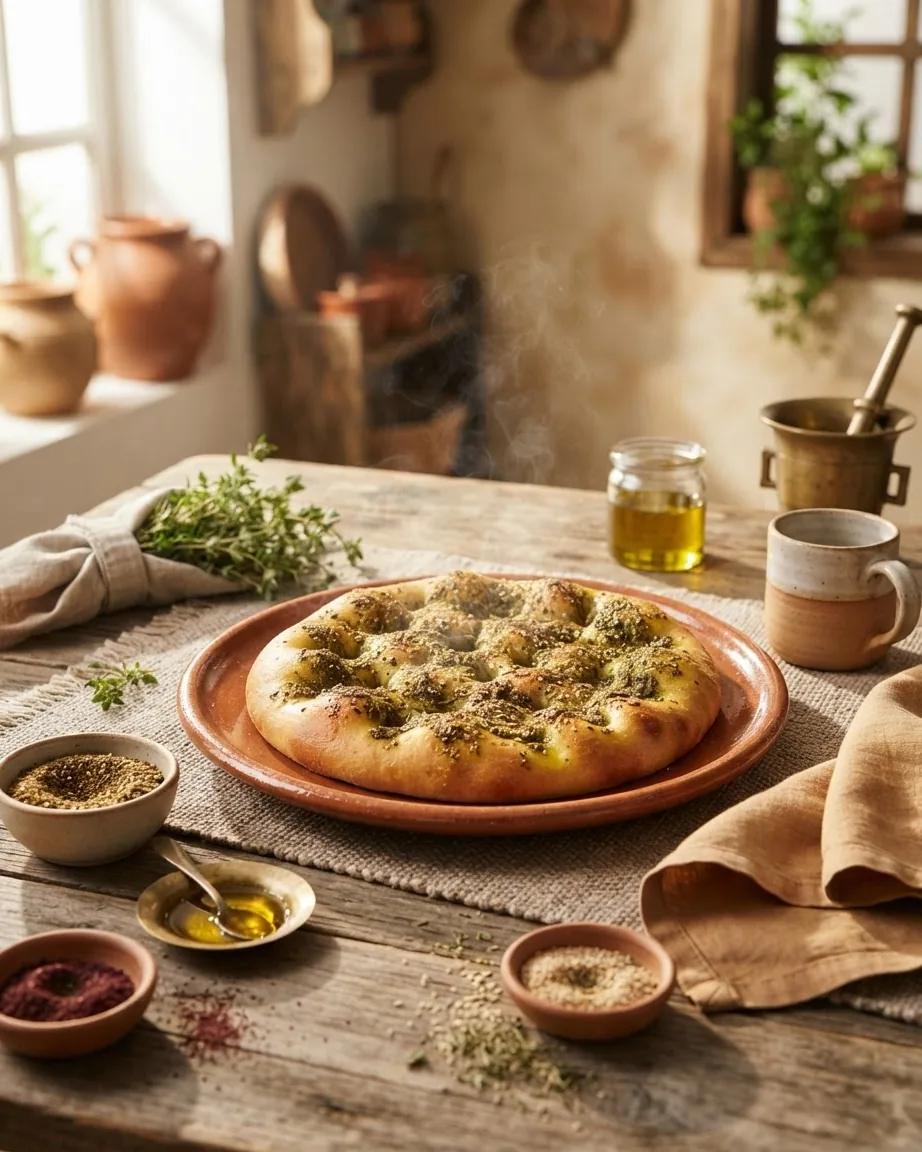
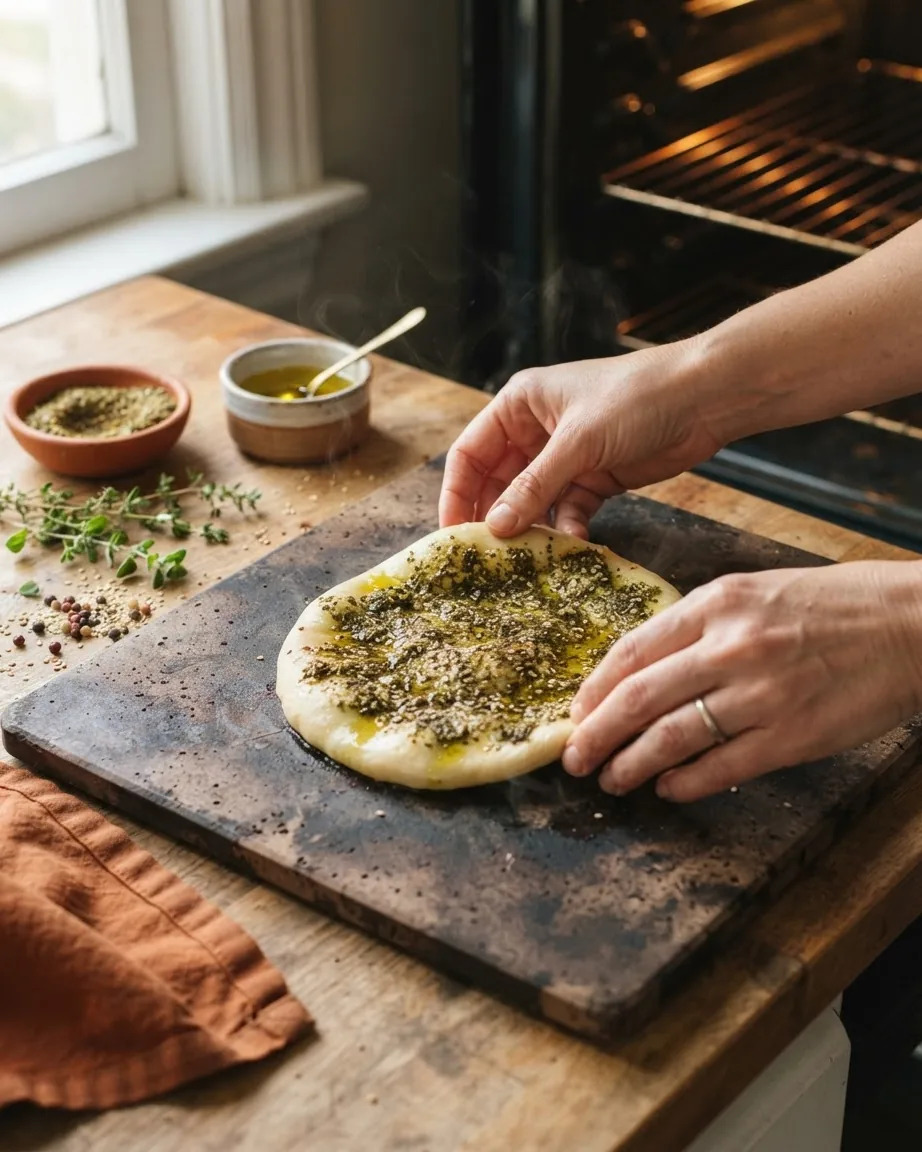
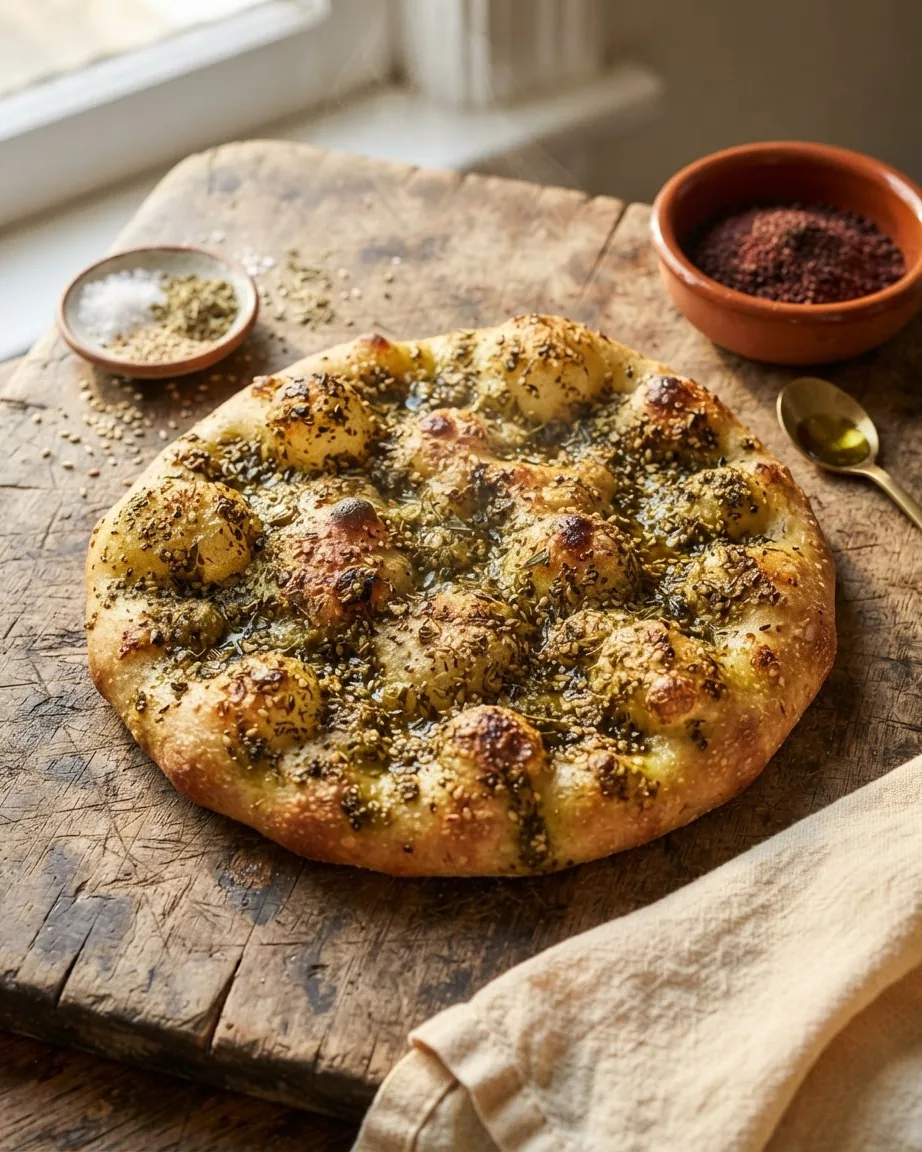
The name manakish comes from an Arabic root meaning to sculpt, carve, or engrave, and Wikipedia ties that directly to the method: the rolled dough “is pressed by the fingertips to create little dips for the topping to lie in.” The dimples are in the word itself. They are not a garnish.
Alphafoodie states the two jobs the dimples do at once: they keep the topping in place, and they stop the bread puffing up too much in the oven. A flat, un-dimpled round bakes into a balloon that sheds its za’atar down the sides. Press the surface with your fingertips before topping and both problems disappear – the oil-and-spice mix settles into the dips, and the trapped-air puff is broken before it starts. This is the one preparation step most home versions skip because it reads as cosmetic, which is exactly why the finished bread misbehaves.
Dough ratios: which numbers to trust and which to leave alone
Two dough ingredients are adjustable in ways that change the result, and two published figures give you a checkable baseline. Plant Based Folk builds its manakish dough at 60% hydration for a soft texture, using 480 g flour and 288 ml warm water at 40°C (104°F). Those two numbers belong to that recipe as a set; do not port them into a cup-based recipe, because the units are not interchangeable and the ratio breaks.
The warm-water temperature matters for a food-safety-adjacent reason of its own: 40°C (104°F) is warm enough to wake the yeast and cool enough not to kill it. Push the water hotter and the yeast dies before it can raise the dough.
On the ingredients you can move: sugar is essential because it produces the browning on the flatbread, and Plant Based Folk flags omitting it as a mistake. Leave the sugar out and the manakish stays pale no matter how long it bakes. Oil goes the other way. Plant Based Folk found that 1 tablespoon of oil per 2 cups of flour made the edges too crispy, and uses less. So sugar is a keep, oil is a dial – more oil, crisper and harder edges; less oil, a softer rim. If you want the room-temperature keeping window Alphafoodie describes, oil in the dough is what buys it.
Keeping the yeast alive: the two mistakes that kill a batch before it proofs
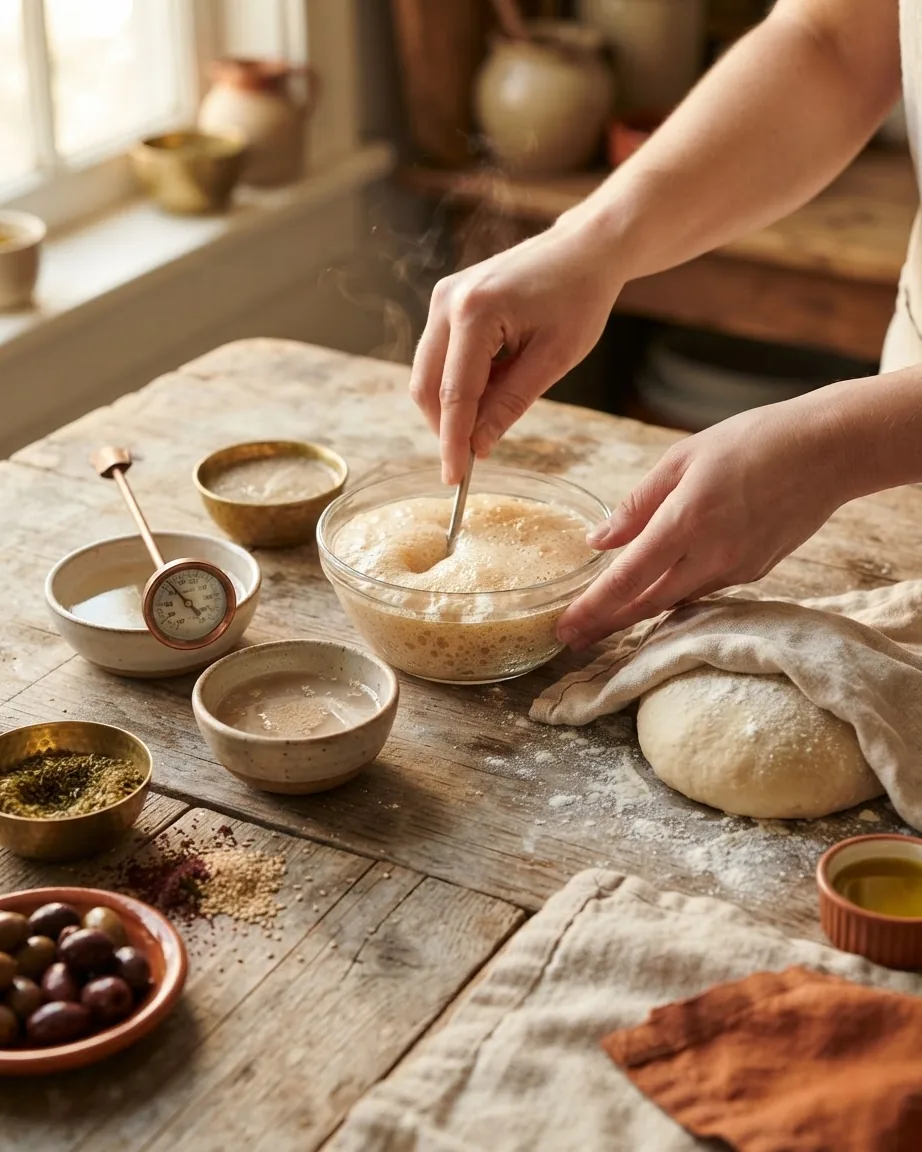
Two triggers ruin the rise, and both happen before the dough is even mixed. The first is water temperature, covered above. The second is contact: Zaatar and Zaytoun warns that adding the yeast directly onto salt will kill it. Salt draws water out of yeast cells on contact, so the fix is to keep them apart at the start – bloom the yeast in the warm water, add flour, and only then work in the salt.
The blooming windows the sources publish are short and worth timing. Hungry Paprikas mixes yeast with warm water and sets it aside for 3 to 4 minutes; Plant Based Folk stirs and lets the mixture sit 5 to 10 minutes to bloom; Simply Lebanese mixes and sets aside about 10 minutes until foamy. Foamy is the pass condition. No foam means dead or stalled yeast, and baking that dough wastes the flour.
Kneading time depends on your tool, and Zaatar and Zaytoun gives all three: about 10 minutes by hand, 8 minutes in a stand mixer, and 1 minute in a food processor fitted with a dough blade, which is the fastest option because it goes really fast. The doneness test is tactile, not timed – when kneading is complete the dough forms a smooth ball, and poking it should make the dent spring back; a dent that lingers means you should keep kneading. Plant Based Folk’s stand-mixer instruction lines up with the same window: once the dough starts to form, set a timer for 5 minutes and let the mixer keep working on low.
Rise times vary with the recipe and the room. Plant Based Folk calls the dough simple, needing a minimum of 30 minutes of proofing. Simply Lebanese covers the shaped dough and lets it rise an additional 30 to 45 minutes. Zaatar and Zaytoun goes longest, placing a damp cloth over the bowl and letting it rise about 2 hours. Longer rises deepen flavor; the 30-minute floor is the shortcut, not the standard.
The fix for dry, hard manakish, assembled from four scattered tips
Dry or tough manakish rarely comes from one error. Four separate cues from three sources add up to the fix, and no single recipe lists them together:
- Roll it thin. Hungry Paprikas rolls the dough thin because it rises slightly in the oven. A thick round bakes into bread rather than flatbread and dries at the center.
- Cover it out of the oven. Keeping the baked manakish under a towel stops them from drying out while the batch finishes, per Hungry Paprikas.
- Add water if the za’atar burns. Alphafoodie’s fix for a scorching topping is to add a little water to the za’atar mix, which prevents burning and can yield a softer manakish. The topping should be a loose paste, similar to pesto, not thick.
- Don’t panic at an oily surface. Abood notes the za’atar may look too oily straight from the oven, but it sets within minutes. Let the bread cool on a cutting board for at least 3 minutes before you judge it.
One salt caveat rides alongside the topping: if your za’atar blend already contains salt, omit any additional salt, per Abood. Many commercial blends are pre-salted, and double-salting the topping is a common and irreversible error. This same document-then-format approach shows up in how this desk handled the timings five sources give for Ethiopian wat, where scattered cues only make sense once they are cross-referenced.
Za’atar for breakfast, meat for lunch: matching the topping to the occasion
The topping is not a free choice at every hour. Wikipedia frames manakish as breakfast or lunch food, and the split runs along how heavy the topping is. Za’atar and cheese versions lean breakfast – lighter, quicker off the communal oven. Meat manakish, known as lahm bi ajeen, is served for lunch because of its heavier contents.
The traditional za’atar topping, as the UNESCO record describes it, is a mixture of thyme, sumac, toasted sesame seeds, salt, and olive oil spread on the dough. Beyond those three headline toppings, kashk manakish uses fermented drained or dried yogurt with finely ground wheat, on its own or with walnuts or onions, per Wikipedia. To turn a plain za’atar round into a full meal, the UNESCO record notes a second garnish added after baking: labne, tomatoes, cucumbers, olives, and mint. That post-bake layer is what carries a breakfast manoushe into lunch territory without changing the base.
Manakish as UNESCO heritage, not “Lebanese pizza”
The shorthand “Lebanese pizza” undersells what manakish carries. In 2023, it was inscribed on the UNESCO Representative List of Intangible Cultural Heritage as an emblematic culinary practice in Lebanon. The inscription is not a museum label – it comes with obligations. As the UNESCO record states, “The report on the implementation of the Convention, due by States Parties every 6 years, includes a section on the elements inscribed on the Representative List.” The practice is monitored on a six-year cycle, not simply commemorated once.
The practice UNESCO recognized is a domestic and communal one. Wikipedia records that women traditionally baked dough at a communal oven each morning, preparing smaller portions with different toppings for breakfast. That morning rhythm – one dough, many toppings, a shared oven – is the living detail the “pizza” comparison erases.
The naming carries the same specificity. Manakish is the plural. A single flatbread is a manoushe or mankosha, as Plant Based Folk notes. Ordering “a manakish” is like ordering “a spaghetti”; the correct singular is manoushe. This desk transcribes the regional term rather than flattening it, the same way it kept the local vocabulary intact in its Afghanistan cooking recipes for Kabuli Pulao and Bolani.
At-a-glance: times, yield, heat, and where to shop
Pulled from the sources named above, with the figures each publishes:
- Hands-on prep: about 20 minutes, per Alphafoodie, for a version with just 7 ingredients from scratch.
- Proofing floor: a minimum of 30 minutes (Plant Based Folk); yeast bloom 3 to 10 minutes; rise 30 to 45 minutes up to about 2 hours depending on source.
- Bake: 3 to 4 minutes at 550°F (288°C) on preheated steel or stone; or 10 to 15 minutes at 375°F to 450°F (190 – 230°C) on a tray.
- Cool before serving: at least 3 minutes.
- Storage: see the section below – the sources do not agree, and the difference depends on your dough.
Sourcing in the US: flour, yeast, sugar, and olive oil are supermarket standard. Za’atar blend and sumac are stocked at Middle Eastern grocers and increasingly in the international aisle; buy the blend pre-mixed if you can, and check whether it is pre-salted. Akkawi and kashkaval are Middle Eastern grocery or online items; the feta-mozzarella and queso-blanco-mozzarella swaps above cover a standard supermarket run.
Storage: why the shelf-life numbers don’t match, and which one is yours
The sources give different keeping windows, and the difference is not carelessness – it tracks what is in the dough and whether the bread was topped. Do not collapse these into one figure:
- Refrigerate up to 2 days, freeze up to 3 months. Abood’s figures, corroborated across two sources: stored in a sealable bag, the fridge holds 2 days, the freezer 3 months. Reheat from frozen in a 250°F (120°C) oven for 10 minutes.
- Freeze up to 3 months between parchment. Hungry Paprikas freezes baked manakish between sheets of parchment for up to 3 months, so they don’t fuse.
- Room temperature 3 to 5 days, covered. Alphafoodie’s longer counter window is conditional on oil in the dough. No oil, no room-temperature keeping – refrigerate instead.
So the storage answer depends on your recipe. An oil-enriched za’atar dough keeps covered on the counter for a few days; a leaner or cheese-topped one goes to the fridge for 2 days or the freezer for up to 3 months. The 250°F (120°C), 10-minute reheat is the one figure that revives a frozen batch without drying it out. The same documentary logic – reporting each source’s window rather than inventing an average – runs through this desk’s work on the mantu recipe and its filling split.
Check the dough: 480 g flour + 288 ml water is exactly 60% hydration
Plant Based Folk describes its dough as 60% hydration and gives the two weights that define it: 480 g flour and 288 ml warm water. You can verify the claim yourself, and once you trust the ratio you can scale the batch without guessing.
- The stated 60% is exact. 288 ml water divided by 480 g flour, times 100, is 60% – the number matches the recipe with no rounding.
- Per-unit rule: that works out to 60 ml of water for every 100 g of flour, which is the figure to carry to any metric flour weight.
- Scaling down: for a half batch of 240 g flour, hold the same ratio and use 144 ml water (240 × 0.60).
Keep this in grams and millilitres. As the source warns, these two numbers belong together as a set – porting them into a cup-based recipe breaks the ratio because the units are not interchangeable.
FAQ
Can I make manakish without a baking stone or steel?
Yes. Skip the 550°F (288°C) top-heat route and bake on a sheet pan for 10 to 15 minutes instead. A cold tray can’t set the base fast enough for the 3-to-4-minute char method, so give it the longer, gentler bake and check the underside for light golden color before pulling it.
My dough won’t rise. What went wrong?
Two culprits. Water above roughly 40°C (104°F) scalds the yeast, and yeast dropped straight onto salt dies on contact. Bloom the yeast in warm water first and confirm it foams within about 10 minutes; if it never foams, the yeast is dead and no rise time will save the batch. Add salt only after the flour is in.
Is manakish spicy?
No – it rates 0 on a 0-to-3 heat scale. Za’atar’s warmth comes from thyme and sumac’s tartness, not chile. Even the meat version, lahm bi ajeen, is seasoned rather than hot. If you want heat, it’s an addition you make yourself; no traditional topping described by the named sources includes chile.
Why call it manoushe sometimes and manakish other times?
They’re the same food at different counts. Manakish is plural; one flatbread is a manoushe or mankosha. So a single order is a manoushe, while the category and any plate of several are manakish. Using the singular correctly is a small marker of familiarity with the dish rather than the “Lebanese pizza” gloss.
What’s the fastest way to knead the dough?
A food processor with a dough blade – about 1 minute, versus 8 minutes in a stand mixer or 10 minutes by hand. Speed aside, the finish test is the same for all three: the dough should form a smooth ball that springs back when poked. If your fingerprint stays pressed in, it needs more time regardless of the method.