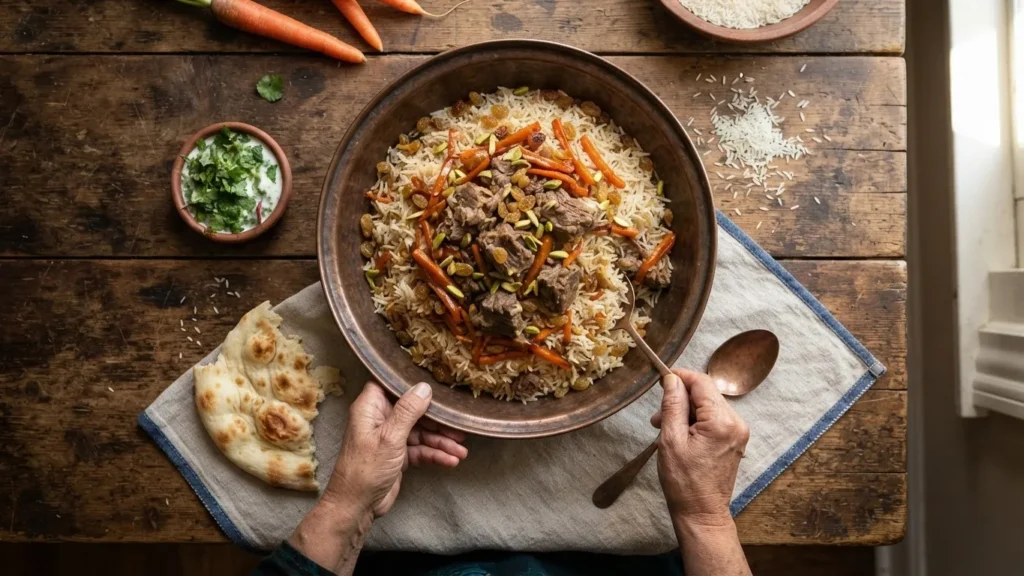
Char masala, the spice blend under most of these dishes, carries no chili powder. That single fact reorders how a first-time cook approaches Afghanistan cooking recipes: the heat that ruins a batch is almost always thermal, not capsaicin. Two published blends disagree on what goes into the “four spices,” and the resolution matters for your grocery list. This desk cross-references the recipes below across The Caspian Chef, The Delicious Crescent, Taste of the Place, Pick Up Limes and Afghan Cooks, names the regional variant each one follows, and pulls the exact soak, sear and steam windows into one place so the failure points are visible before you turn on the stove.
Quick answer: For Kabuli pulao, soak basmati about 30 minutes, parboil 5 – 7 minutes, then layer and steam roughly 40 minutes so the grains finish in flavored steam, not boiling water. Rinse rice until the water runs clear or the starch turns the dish sticky. Char masala is the flavor base and contains no chili. Bolani dough rolls thin, about 8 inches across, and rests at least 20 minutes; a wet filling makes it soggy. Mantu steams about 8 minutes and should be assembled the day it is served, because pre-packed wonton wrappers absorb moisture and slump.
Kabuli Pulao: Where the Rinse, the Parboil and the Steam Decide Texture
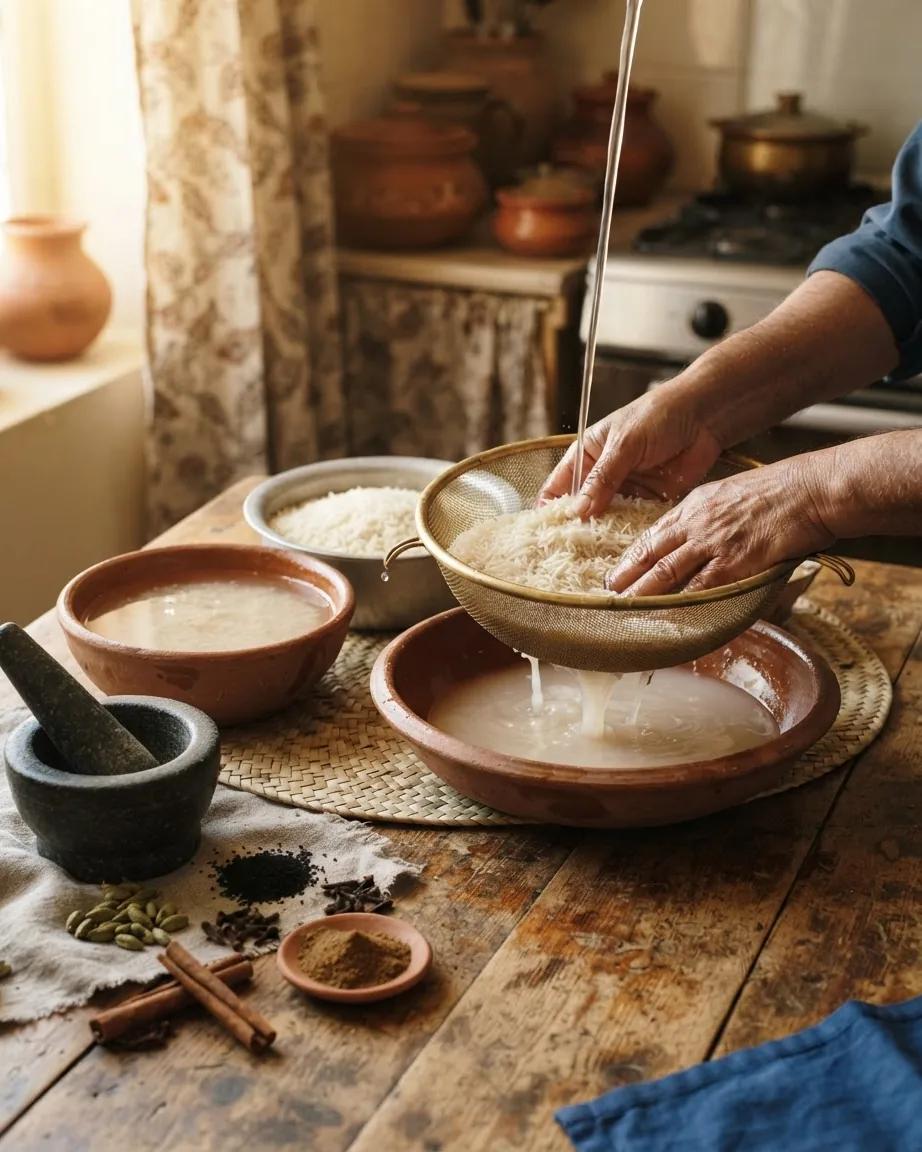
Kabuli pulao is the national dish, and it is where most cooks lose the texture battle. The core method across the sources is the same in shape: brown onions, cook the meat down into a stock, parboil rinsed rice, then finish the rice by steaming it over the meat and caramelized carrots. The Caspian Chef, published by Omid Roustaei, parboils basmati about 5 – 7 minutes, then layers and steams for roughly 40 minutes. That two-stage cook is the point: the grain hydrates in plain salted water, drains, then absorbs the lamb stock and spice as steam rather than sitting in liquid, which is what keeps it separate instead of gummy.
Two things ruin it. Unrinsed rice leaves surface starch that glues the grains together as they steam. And fully cooking rice in the first boil, instead of parboiling to firm-but-underdone, leaves no room for the steam stage and collapses the texture. Rinse until the water runs clear; pull the rice while the center still has bite.
The Delicious Crescent uses bone-in lamb shanks cut into 3-inch pieces and reports the dish at 431 kcal per portion across 8 portions. Its onions go to light golden brown and crispy over about 15 minutes before the lamb is seared on both sides for about 5 minutes; The Caspian Chef sautés onions about 10 minutes, browns lamb 5 minutes, then covers and cooks it over low heat for 60 minutes. The caramelized-sugar step, where sugar is melted to a caramel liquid before the carrots and raisins go in, is what gives the topping its color and the faint sweetness that defines the dish. This desk keeps that step exactly as the sources write it, and a fuller reconciliation lives in our Kabuli Pulao Recipe: The Ayubi Family Version From Parwana, With the Soak Counted.
Char Masala: The Four-Spice Base, and Why the Two Recipes Won’t Match
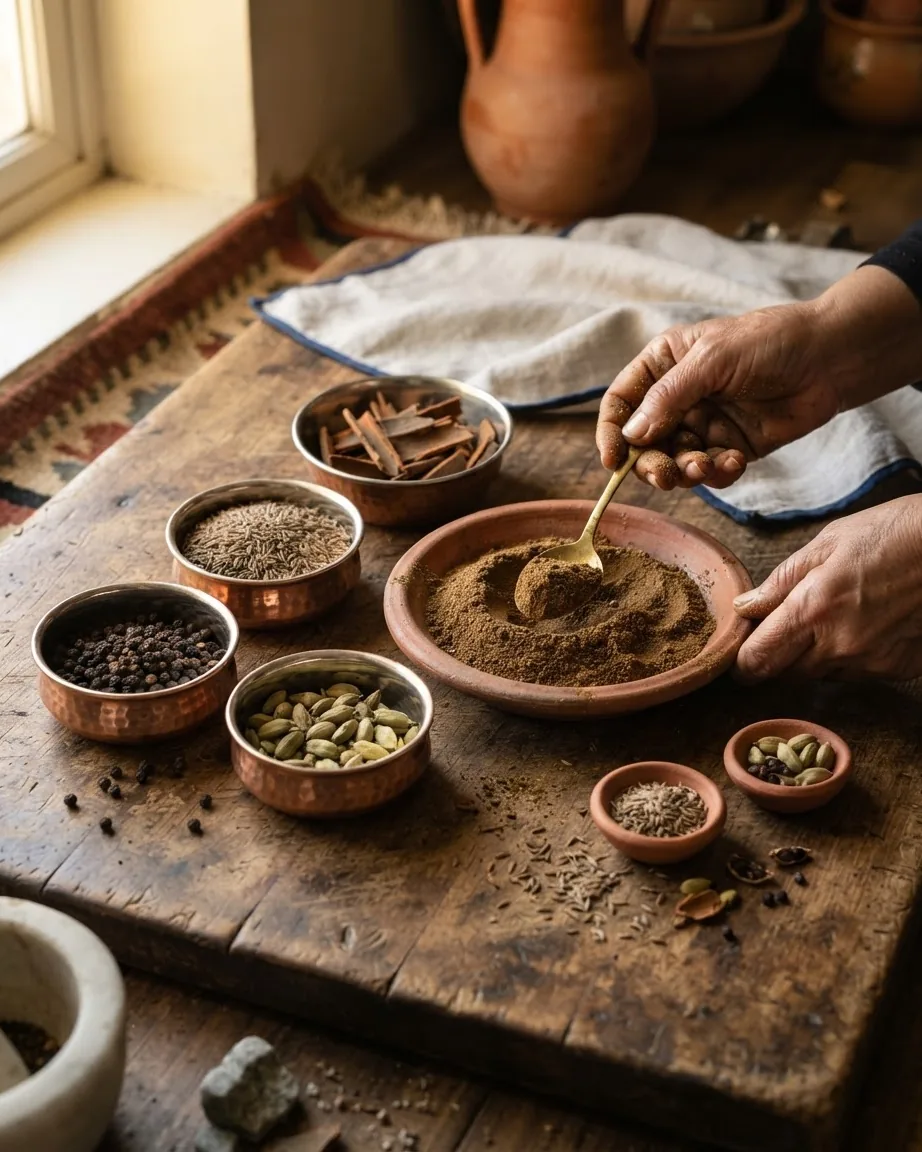
The blend that carries Afghan cooking is char masala, literally “four spices.” This is the correction most recipe pages bury: it holds no chili powder, so the flavor is warm and aromatic, not hot. Where competitors gloss over the composition, the two authorities here name different formulas, and you have to choose before you shop. Afghan Cooks, run by Mirriam Z. Seddiq, gives equal parts cumin, black cardamom, cinnamon and clove, 1 Tbs each. The Delicious Crescent defines the base as black cardamom, cinnamon, cloves and black pepper.
The split is real: cumin versus black pepper as the fourth spice. Cumin pushes the blend earthier; black pepper adds a dry bite without any capsaicin heat. Neither is “wrong.” If you want the version closest to the household blend Seddiq documents, use cumin. Whichever you pick, this is not garam masala and swapping in a store-bought garam masala changes the profile, since those blends often lean on coriander and lack the black cardamom smoke that defines the Afghan version. Seddiq notes she was born in Afghanistan and came to America at 18 months old; her char masala recipe is the anchor this desk uses for the cumin formula.
Bolani: Dough Hydration, the 8-Inch Round, and What Makes It Soggy
Bolani is a stuffed, pan-fried flatbread, and it fails in two predictable ways: soggy centers and raw, thick edges. Both trace back to dough handling and filling moisture. Taste of the Place, written by Julie A. Cockburn, uses a no-yeast dough of all-purpose flour, salt, olive oil and water, kneaded until smooth about 8 minutes and rested at least 20 minutes so the gluten relaxes enough to roll thin without snapping back. Each piece rolls to a thin round about 8 inches across. If refrigerated, bring the dough toward room temperature for about 45 minutes before rolling, or it fights the pin.
There is a yeasted alternative. Pick Up Limes rests an instant-yeast dough of flour, oil, salt and water for 30 minutes under a damp cloth at room temperature, then rolls each ball to a thin circle about 20 – 22 cm across, about as thin as a tortilla. The yeasted version puffs slightly and is more forgiving; the no-yeast version stays flatter and crisper. Either works, but keep the round thin and the edges no thicker than the middle, or the folded seam cooks slowly while the center scorches.
The soggy problem is water in the filling. Cockburn blanches the spinach and presses out the extra moisture; Pick Up Limes cooks the potatoes in boiling water for 15 minutes, then drains and mashes. Spinach that goes in wet steams the interior of the bread and softens it from inside. Press it dry. For a potato filling, drain well and cool slightly before it hits the dough. Bolani sits alongside the broader Indian and South Asian recipes table this desk documents, where the same “keep the filling dry” rule shows up in dumpling work too.
Ingredients (Bolani, following Taste of the Place, yield 6 as a side)
- 3 cups all-purpose flour, plus extra for rolling
- 1 teaspoon salt
- 1 tablespoon olive oil
- 1 cup or more water
- 3 tablespoons oil for frying (olive oil or a neutral high-heat oil)
- 1 pound fresh spinach leaves
- 1½ cups roughly chopped cilantro
- 1 cup roughly chopped green onions or leeks
- 1 jalapeño, roughly chopped (optional)
- 1 tablespoon olive oil (for the filling)
- Salt and freshly ground black pepper to taste
- For the yogurt dip: 1 cup Greek yogurt, 1 medium clove garlic (minced), ½ teaspoon ground coriander seeds, 1 teaspoon dried dill, salt, 2 tablespoons or more water
Steps
- Whisk the flour, salt and olive oil in a large bowl. Mix in 1 cup water, then knead, adding water a splash at a time, until smooth, about 8 minutes. Rest at least 20 minutes.
- Blanch the spinach by pouring boiling water over it in a colander until just wilted. Drain and press out as much moisture as possible.
- Combine the pressed spinach with cilantro, green onions, jalapeño, olive oil, salt and pepper.
- Divide the dough into 6 pieces. On a floured surface, roll each into a thin round about 8 inches across; keep covered under a damp towel.
- Spread filling over half of each round, fold, and press the edges to seal without leaving a thick rim.
- Fry in oil over medium heat until each side browns and the dough cooks through.
- Whisk the yogurt, garlic, coriander, dill and salt with 2 tablespoons water to a dipping consistency, adding more water as needed. Serve the dip cold alongside the warm bolani.
Mantu: The Wrapper Choice, the 8-Minute Steam, and Why You Assemble on Serving Day
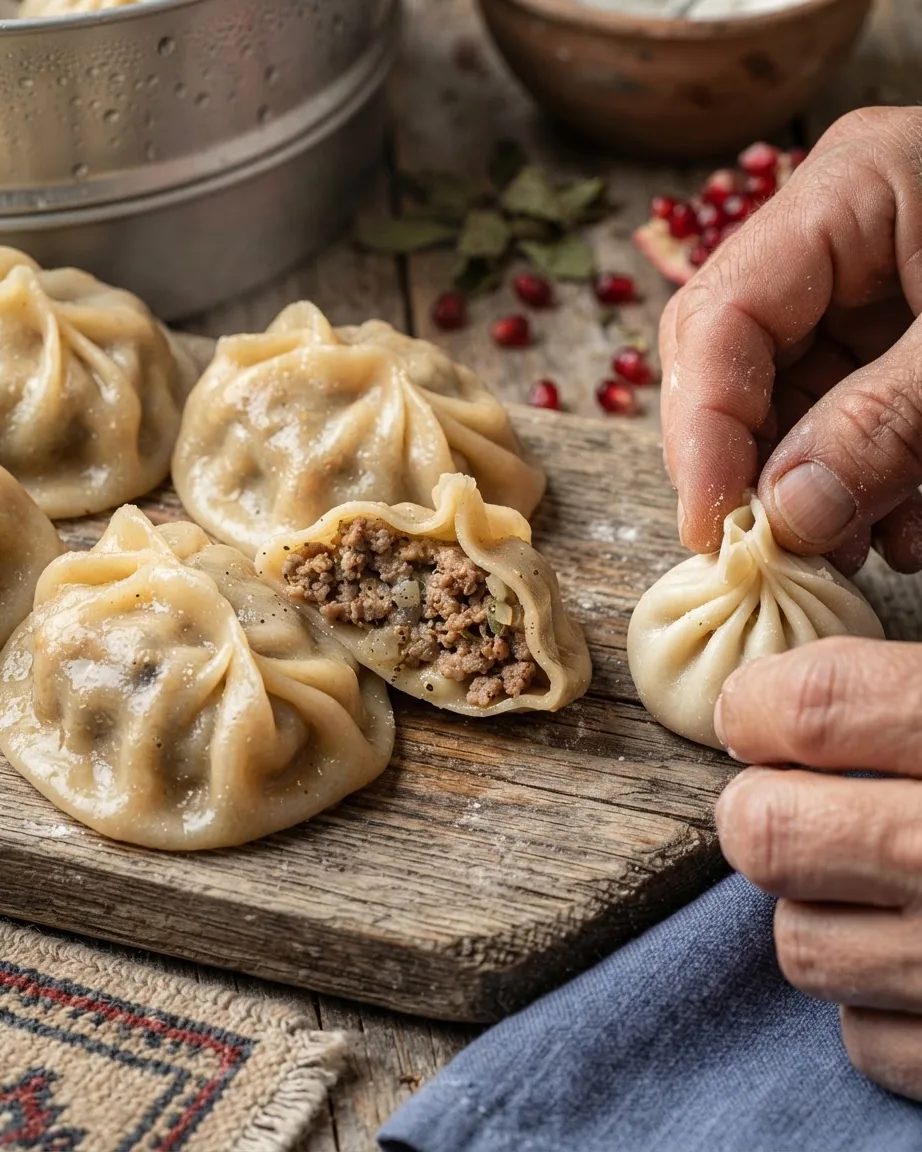
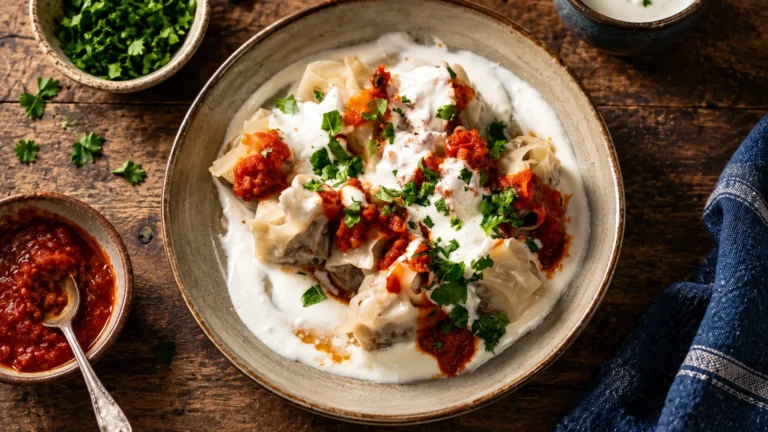
Mantu are steamed dumplings, and the timing rule here is unusual: assembly happens the day you serve, not before. Taste of the Place documents pre-packaged wonton wrappers as a shortcut in place of hand-made dough, using 40 to 50 wonton wrappers, and steams the filled dumplings until the wrappers are tender and slightly translucent, about 8 minutes. Wonton wrappers are thinner and higher-hydration than a rolled dumpling dough, so they cook fast, but they also drink up the filling’s moisture. Fill them hours ahead and the wrappers slump and tear. That is the one make-ahead line you cannot cross.
The filling is ground beef with raw onion, and the onion is not incidental: it releases moisture and sweetness during the short steam, keeping a lean beef filling from drying out. Cockburn notes that only those who ate the dish in the country 40 – 50 years ago can vouch for its true taste and presentation, a caution this desk repeats rather than papering over. If you make your own wrappers, roll them thin and pleat the top closed; the wonton shortcut skips the pleat but still needs a tight seal so steam does not open the dumpling. Steam a test dumpling first: at 8 minutes the wrapper should turn slightly see-through. For the pleating and dough-ratio logic in a neighboring tradition, see our Momo Making Recipe: The Dough Ratios, the Fillings, and the Timings Four Nepali Sources Actually Give.
The Heat Question, and Where Kabuli Pulao Actually Comes From
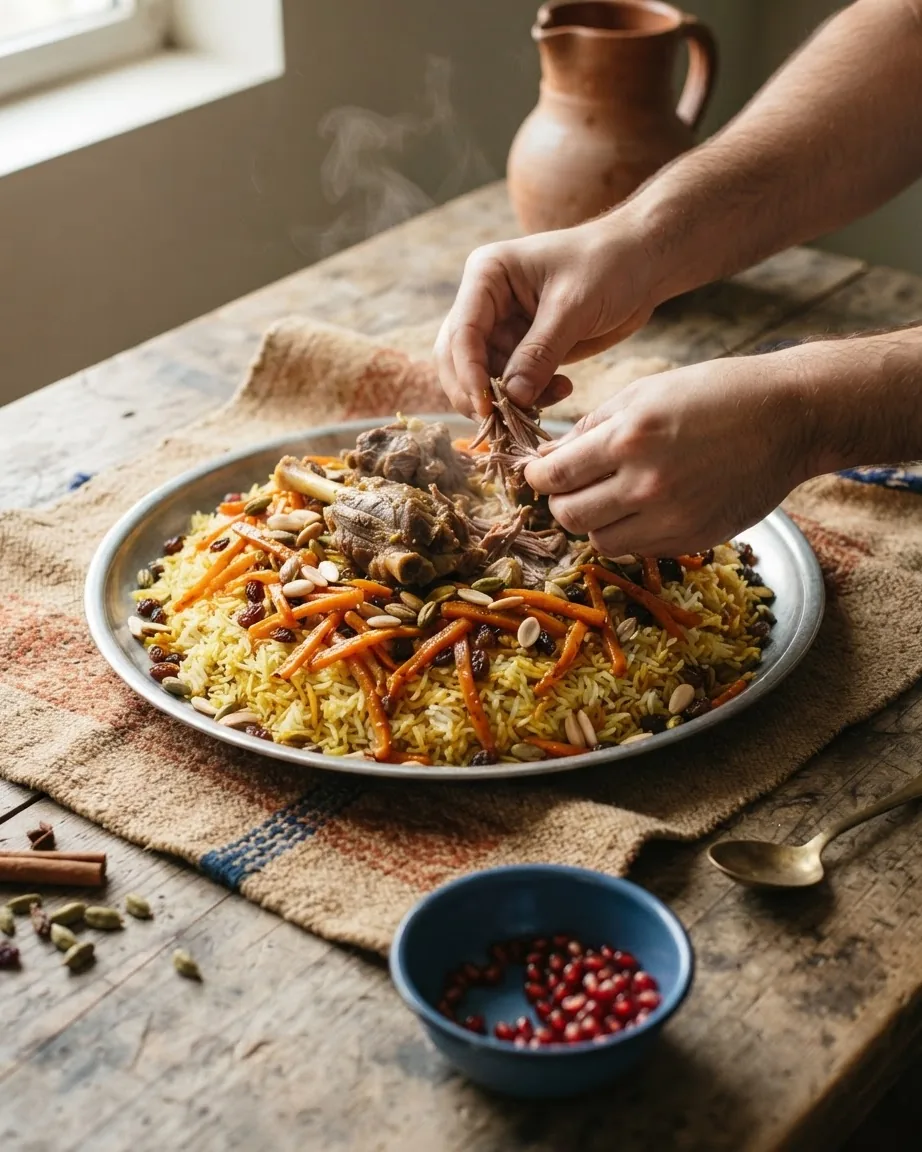
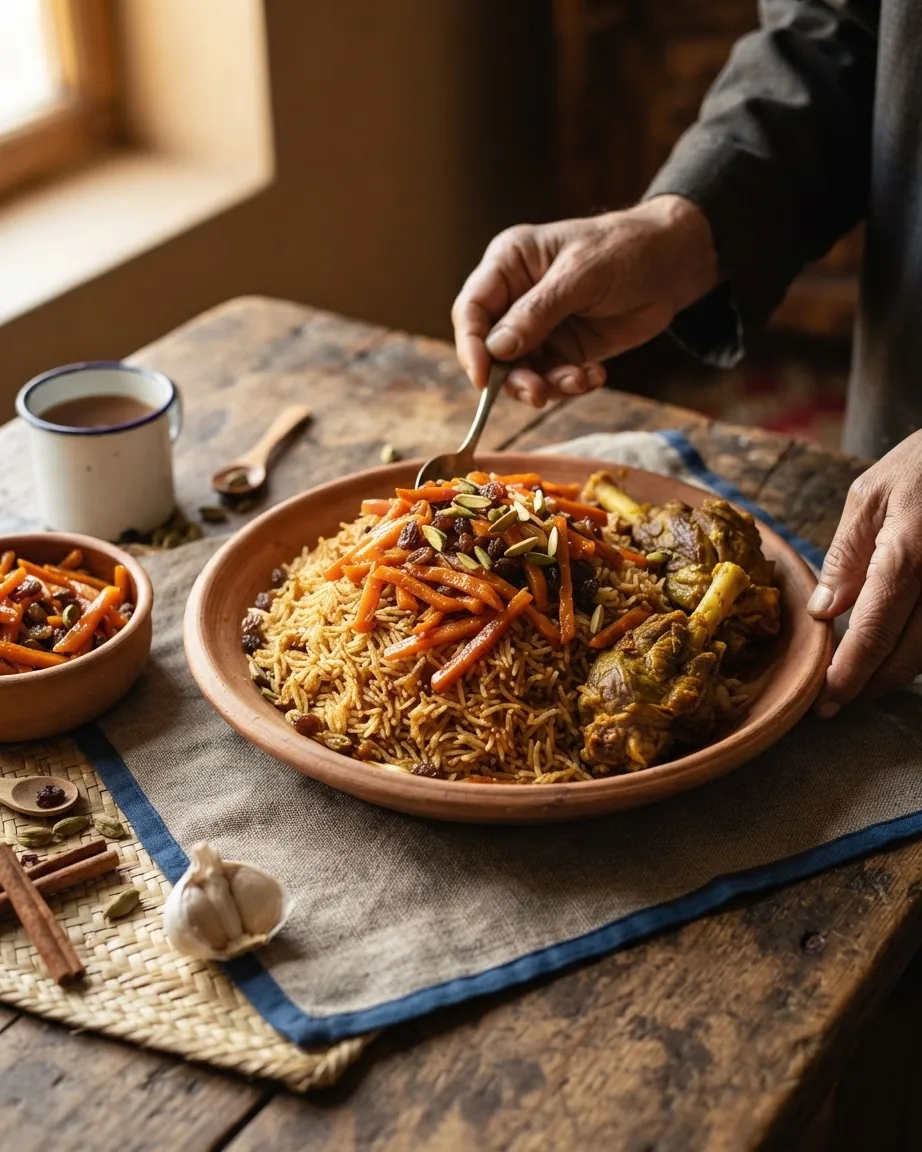
Two assumptions trip up newcomers to these recipes, and both deserve a straight answer. First, Afghan food is not built on chili heat. The traditional char masala blends carry no chili powder at all, and the warmth in a plate of pulao comes from cardamom, cinnamon, clove and cumin, not from capsaicin. The optional jalapeño in bolani is a modern, individual choice, not a fixture of the base cuisine.
Second, the name misleads. Afghan Cooks describes Kabuli pulao as the national dish, with a name that references Kabul. Wikipedia, drawing on Marsden and Saberi, states plainly that the dish did not originate in Kabul, and that the more likely place of origin is Northern Afghanistan. Both can be held at once: the name attaches the dish to the capital, while the food-history record points north.
The rice technique carries its own regional split. The Caspian Chef and Afghan Cooks parboil and then steam, the two-stage method described above. An Uzbaki version cited by Wikipedia’s Kabuli pulao entry instead boils the rice until all the liquid is absorbed, closer to a one-pot pilaf. If you want distinct, separate grains, use the parboil-and-steam route; the absorption method yields a softer, more unified rice. Neither is a mistake, but they are different dishes on the plate, and knowing which one you are cooking sets your expectations for texture.
Make-Ahead, Storage, and Building the Full Table
Meal planning across these dishes comes down to what survives being made early and what does not. The pulao components are the friendly part: browned meat and stock hold, and the assembled dish stores well. Afghan Cooks advises letting the pulao cool in a thin layer on a tray for 15 – 20 minutes before packing, so it is not sealed hot. Well-cooked rice and meat stay high-quality up to 4 days refrigerated, provided they are chilled within 2 hours of cooking. Labeled and frozen, Kabuli keeps roughly 2 – 3 months.
Mantu is the opposite. Because the wrappers absorb filling moisture, they are assembled and steamed on serving day; there is no early-assembly window that survives the fridge intact. Bolani dough can be made ahead and rested cold, then brought toward room temperature for about 45 minutes before rolling, but the filling should go in close to cooking so the bread stays crisp.
To build a full table, set the pulao at the center and surround it with cold and warm contrasts. The cold yogurt-and-dill dip from the bolani recipe doubles as a cooling sauce for the whole spread. Add bolani served warm off the pan and mantu straight from the steamer. For diners avoiding lamb, the pulao’s meat can be adjusted per the source ranges, and a vegetable-forward plate leans on bolani and the yogurt dip. This desk’s wider record of the region, including dumpling and rice traditions from neighboring kitchens, sits under Indian and South Asian recipes.
The Whole-Pot Math: Calories, the Char Masala Split, and Total Hands-On Time
The sources give per-portion and per-spice figures, but the numbers you actually plan around are the totals. Here is the arithmetic done for you, using only the figures already quoted above.
- Calories for the whole pot. The Delicious Crescent reports 431 kcal per portion across 8 portions, so a single full Kabuli pulao scales from that per-portion figure. Useful when you are deciding whether one pot feeds a gathering or how it fits a day’s eating.
- The char masala split. Afghan Cooks’ char masala is 1 Tbs each of four spices, so you finish with an even measure of cumin, black cardamom, cinnamon and clove. Scale by holding that even split.
- The rice stage. The Caspian Chef parboils 5 – 7 minutes then steams about 40, so the rice stage runs across those two windows before resting, separate from the 60-minute lamb cook.
Frequently Asked Questions
Does char masala contain chili powder?
No. The traditional four-spice blend uses no chili powder. Afghan Cooks builds it from equal parts cumin, black cardamom, cinnamon and clove, while The Delicious Crescent swaps black pepper for the cumin. The warmth is aromatic, not hot, which is why Afghan food is not a chili-forward cuisine despite the assumption.
Why does my Kabuli pulao turn out sticky?
Two causes. Unrinsed rice leaves surface starch that glues the grains together during steaming, so rinse until the water runs clear. And fully cooking the rice in the first boil, rather than parboiling 5 – 7 minutes to a firm center, leaves no room for the roughly 40-minute steam stage that finishes the grains separately.
Can I use wonton wrappers for mantu?
Yes. Taste of the Place documents 40 to 50 pre-packaged wonton wrappers as a shortcut for hand-made dough, steamed about 8 minutes until tender and slightly translucent. Seal them tightly and assemble on serving day, because the thin wrappers absorb filling moisture and slump if filled hours ahead.
How long does Kabuli pulao keep?
Afghan Cooks reports that well-cooked rice and meat stay high-quality up to 4 days refrigerated, as long as they are chilled within 2 hours of cooking. Cool the dish in a thin layer on a tray for 15 – 20 minutes before packing. Frozen and labeled, it keeps roughly 2 – 3 months.
Yeasted or no-yeast dough for bolani?
No-yeast dough, from Taste of the Place, kneads about 8 minutes and rests at least 20 minutes, staying flat and crisp. Pick Up Limes uses an instant-yeast dough rested 30 minutes that puffs slightly and rolls more forgivingly to about 20 – 22 cm. Both roll thin; the choice is texture, not authenticity.
Which Kabuli pulao rice method should a first-timer choose?
For distinct, separate grains, follow the parboil-and-steam route used by The Caspian Chef and Afghan Cooks, where the rice cooks 5 – 7 minutes then finishes in flavored steam. The Uzbaki absorption method cited by Wikipedia boils the rice until all liquid is gone and yields a softer, more unified plate. Pick the texture you want.
The Decisions That Separate a Good Plate From a Ruined One Never Involve Chili
Across all three dishes the same few decisions separate a good plate from a ruined one, and none of them involve chili. Rinse the pulao rice until clear and parboil rather than fully cook it, so the steam stage can finish the grains apart. Roll bolani thin and press the filling dry. Seal mantu tightly and steam about 8 minutes, assembling only on the day you serve. Choose your char masala formula before you shop, remembering it is aromatic, not hot. Follow the source timings named above and the dishes hold together as written.
Afghanistan Cooking Recipes: Kabuli Pulao, Bolani and Mantu, With the Timings the Sources Actually Give
Ingredients
- 2 cups basmati rice (soaked and rinsed, or Sella basmati)
- 1 ½ to 2 lbs lamb shank with bone, cut into large pieces (use 1 lb if using boneless meat)
- 1 large onion (yellow or Vidalia, quartered and sliced, 350g)
- 4 cloves garlic (grated)
- ⅓ cup cooking oil (avocado or sesame oil, plus extra)
- 2 teaspoons cumin seeds (use half shajeera, black caraway seeds, if available)
- 5 green cardamom pods
- 1 black cardamom pod
- 4 cloves
- 2 inch cinnamon stick
- 1 ½ teaspoons salt (adjust to taste)
- 1 teaspoon black pepper
- 4 cups water (you will need 3½ cups broth or stock)
- 2 cups shredded carrots (250g)
- 1 cup raisins (soaked 30 minutes, 160g)
- ½ cup raw almonds (soak and peel)
- 2 tablespoons sugar, plus 1 teaspoon sugar for sautéing carrots and raisins
- ½ teaspoon ground cardamom (for sautéing carrots and raisins)
- Ghee (for added richness)
Instructions
- Wash the rice until the water runs clear, then soak about 30 minutes. Drain and set aside. Grind the whole spices to a fine powder.
- Heat the oil in a heavy casserole over medium-high. Sauté the sliced onions with a pinch of salt about 15 minutes, until light golden brown and crispy.
- Place the lamb in the center, raise the heat to high, and sear both sides about 5 minutes. Add garlic, ground spices, salt, pepper and water; cover and cook until the meat is tender.
- In a skillet, roast the almonds until light tan and aromatic. Sauté the soaked raisins with 1 teaspoon sugar and the ground cardamom. Caramelize the 2 tablespoons sugar until brown, add ¼ cup water, and melt into a caramel liquid.
- Lift the meat out. Return 3 cups of stock to the pot, adjust salt. Parboil the rinsed rice, then drain.
- Layer the rice over the meat and stock, spoon the caramel and carrots on top, cover, and steam on low until the rice is tender. Rest a few minutes, fluff with a fork, and garnish with carrots, raisins and almonds.