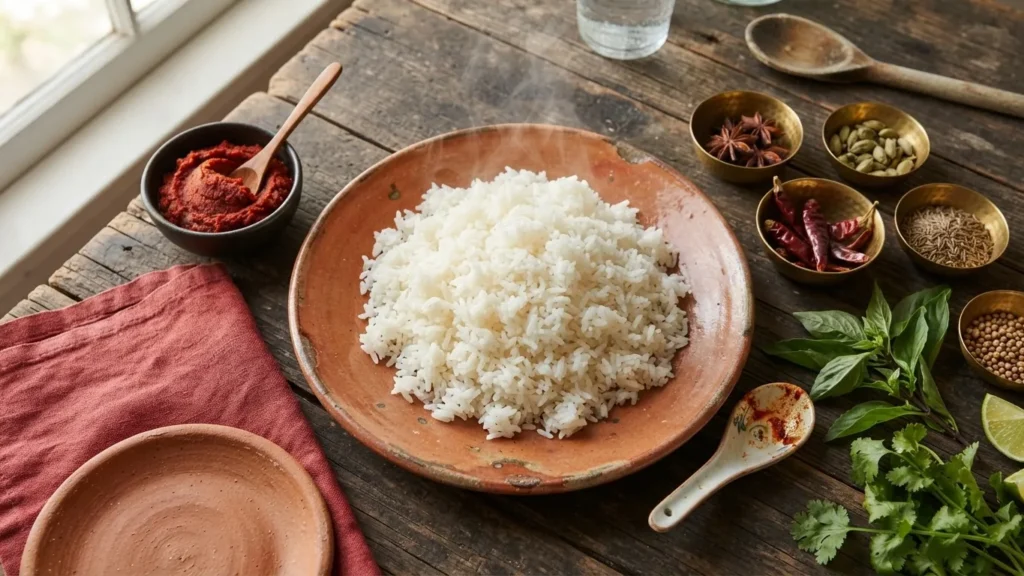
Four well-known cooking sites publish four different water ratios for the same grain. For a single cup of jasmine, RecipeTinEats calls for 1 1/4 cups water, Hot Thai Kitchen starts at 1 cup, elmundoeats uses 1 1/2 cups, and Thai Food Online prints a flat 2:1. That spread is the first thing a reader cooking Thai rice needs to understand, because the number is not a fixed constant – it moves with whether the grain was rinsed, whether it was soaked, how much water your pot loses to steam, and how old the crop is. This desk cross-references those published sources, identifies which variant each one is describing, and lays out the exact figures without smoothing over where they disagree.
Below is the short version, then the reasoning behind each choice, then a variety-by-dish map so you can pick the right grain before you buy the bag.
Quick answer: For white jasmine rice cooked by absorption, 1 1/4 cups water per 1 cup rice is the middle-ground figure; higher ratios like 1 1/2:1 or 2:1 come from methods that rinse heavily, evaporate more, or partly drain. Rinse if you dislike a gummy surface, and drop the water by 2 tablespoons when you do. Thai sticky (glutinous) rice is a separate method entirely: soak it at least 4 hours, then steam it over boiling water 25 to 30 minutes – never boil it like jasmine. “Glutinous” refers to texture, not gluten; no rice contains gluten.
Why Published Jasmine Rice Water Ratios Run From 1.25:1 to 2:1
The disagreement is real, and it is not a matter of one page being wrong. Each ratio is attached to a different method and a different set of assumptions about the grain going into the pot.
RecipeTinEats sets the low anchor: “Use just 1 1/4 cups water for every 1 cup of jasmine rice,” which its jasmine rice guide describes as less than standard white rice, the point being fluffy grains rather than a gummy clump. Hot Thai Kitchen goes lower still, advising cooks to “start with 1 cup rice to 1 cup water” and move up toward 1.25 parts water only if needed. elmundoeats runs higher, using 1 1/2 cups water to 1 cup rice with a pinch of salt. Thai Food Online prints the top of the range, telling readers to “follow a 2:1 ratio of water to cook perfectly each time.”
The ratios diverge because the methods do. A grain rinsed until the water runs clear carries residual surface water into the pot, so it needs less added liquid. A pot that simmers uncovered before the lid goes on loses more to steam, so it needs more. A larger batch loses proportionally less water than a small one. And older, drier crop drinks more than fresh-season rice. Taken in isolation, “2:1” and “1:1” seem to clash with each other; but once you factor in rinse state, how much steam escapes, and the age of the crop, all four values simply sit at different spots along a single curve. For a first go with no prior calibration – a rinsed cup of jasmine cooked by absorption – your surest opening bet is 1 1/4 cups water, tuning it up or down after you see the result.
Whether to Rinse Jasmine, and the Exact Water You Subtract Afterward
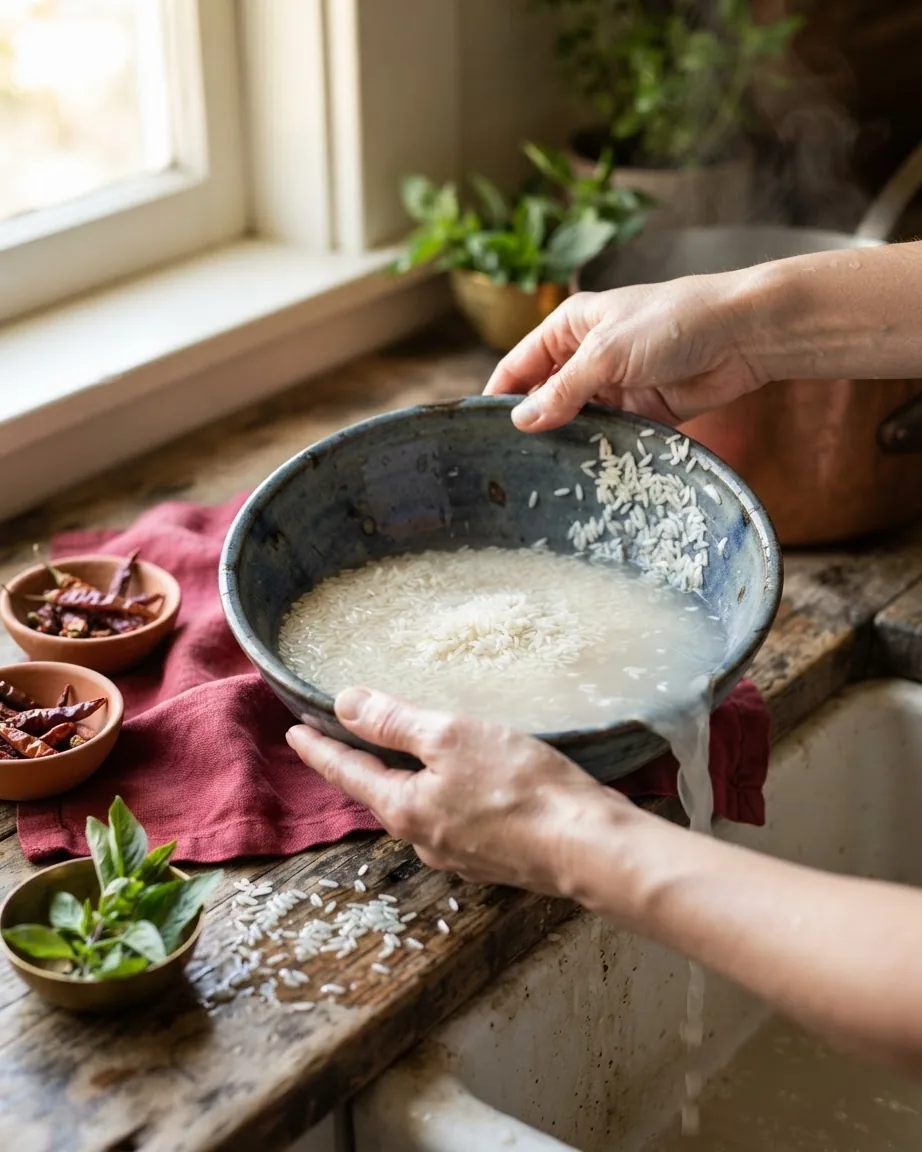
Two of the sources frame rinsing differently, and the difference is worth keeping rather than averaging away. RecipeTinEats treats it as marginal, calling the result of rinsing “a barely noticeable marginal improvement in fluffiness.” Hot Thai Kitchen treats residual surface starch as the direct cause of a bad texture: “If you don’t wash the rice, what you’ll end up with is rice that feels kind of sticky and gummy.” Both can hold at once – the surface starch matters more to a cook who wants distinct, separate grains than to one who does not mind a softer cling.
If you do rinse, the water math changes. RecipeTinEats instructs cooks to cut the water by 2 tablespoons after rinsing “to factor in the extra water that remains in the rice,” and by 3 tablespoons if you rinse and then soak for 1 hour. That subtraction is the make-or-break step people skip: a rinsed grain that gets the full unadjusted water comes out wet and slumped, and the cook blames the ratio rather than the missing correction.
The Two Jasmine Cook Timings – 12 Minutes Versus 20 – and When Each Applies
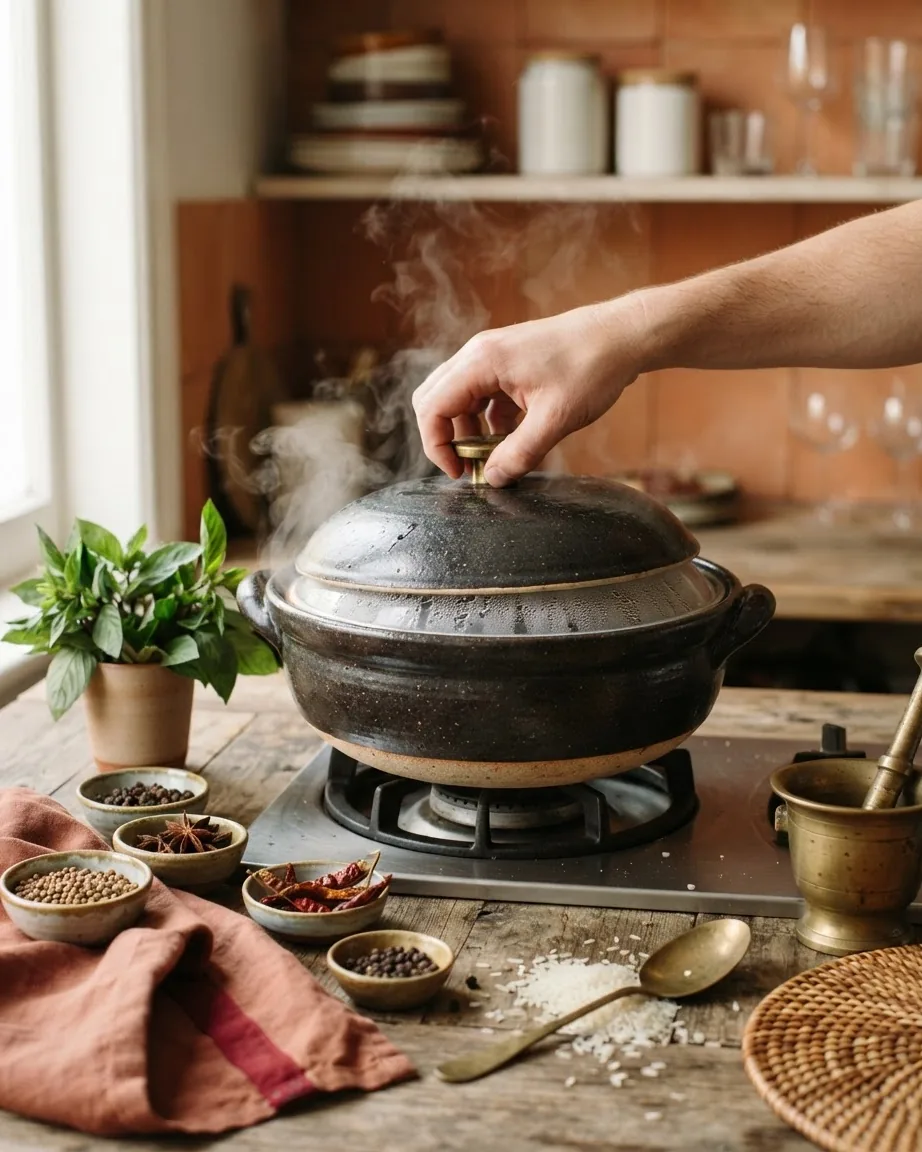
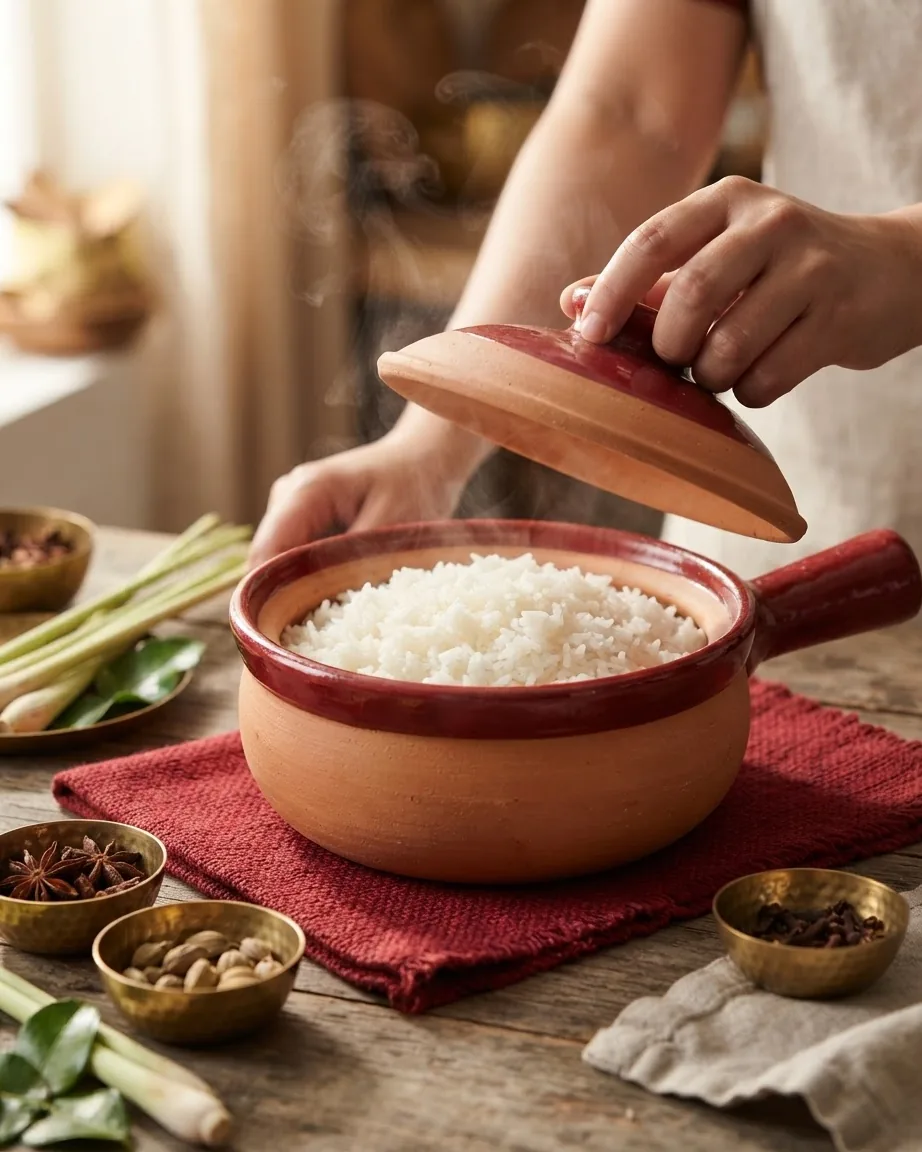
Cook time splits the same way the ratio does. With the lid off, RecipeTinEats takes the pot up to a brisk simmer, drops the heat to low, puts the lid on, and gives it 12 minutes under a strict instruction – “Do not lift lid!” – then moves the pot off the burner for a 10-minute rest before fluffing the grains apart with a fork. elmundoeats gets the water boiling before the rinsed rice goes in, holds it at the gentlest heat for 20 minutes, pulls it off, and lets it sit: “Always rest the rice with the lid on, for 10 minutes.”
Rather than a disagreement over timing that needs resolving, the 12-minute and 20-minute numbers each belong to a distinct starting condition and a distinct heat setting. When more water goes in, a longer cook time is what evaporates the surplus liquid. What both sources agree on is the 10-minute rest with the lid down. That rest is where the make-or-break happens: the grain finishes absorbing residual moisture off the direct heat and firms up, and lifting the lid early vents the steam that does that work. Skip the rest and you get grains that are done on top and wet at the bottom.
One yield figure to plan around: 1 cup of uncooked jasmine gives about 3 cups cooked, enough for 3 to 4 servings as a side. That ratio holds whether you land on the 12-minute or the 20-minute method.
Thai Sticky Rice: Soak at Least 4 Hours, Then Steam 25 to 30 Minutes – Never Boil
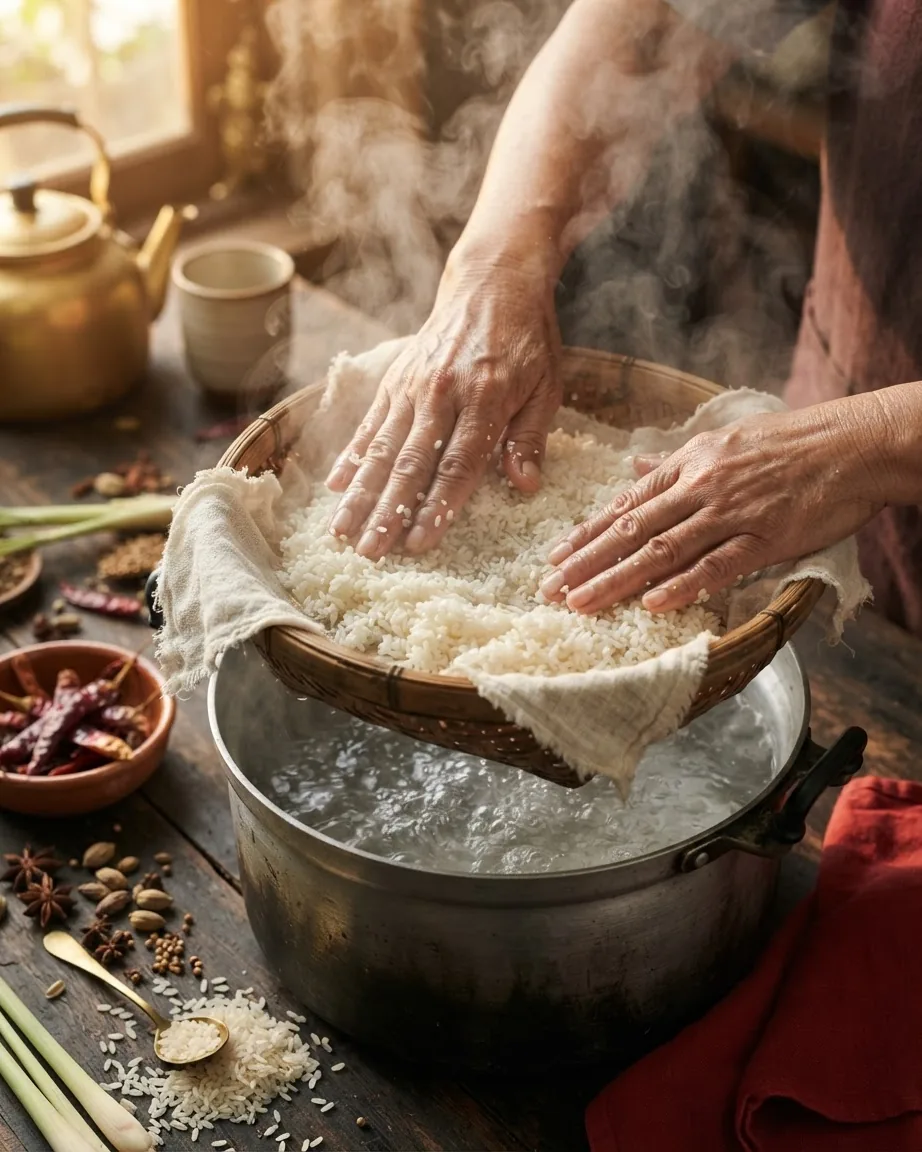
The single most common failure with Thai sticky (glutinous) rice comes from treating it like jasmine and boiling it in a pot of water. It is a different grain and a different method. Hot Thai Kitchen and Thai Food Online independently describe the same two-stage process: soak, then steam out of the water.
Thai Food Online is direct on the soak: “Always soak glutinous rice for at least an hour before cooking, to achieve the best results soak for up to 4 hours.” For the traditional Thai method, Hot Thai Kitchen pushes that window wider still – “Soak the sticky rice in room temp water for at least 4 hours and up to overnight” – and from there the grain is drained, spread into a basket lined with cloth, wrapped by folding the cloth back over it, and steamed above vigorously boiling water for 25 to 30 minutes. Soaking is the step that carries moisture right into the center of this heavy grain; skip it and steam by itself cannot reach the middle, leaving the core firm.
There is a small preparation detail that decides whether the rice releases cleanly: the traditional bamboo basket needs its own soak. As Hot Thai Kitchen puts it, “you need to soak the basket for at least 10 minutes before cooking otherwise the rice will stick.” Giving the basket that ten-minute soak decides whether the cooked rice comes away as a single clump or has to be pried out of the woven strands.
Does “Glutinous” Rice Contain Gluten?
Allergen warning
No. The name misleads readers who avoid gluten, and the reassurance is worth stating plainly. Hot Thai Kitchen is unambiguous: “there’s actually NO type of rice that contains gluten.” “Glutinous” here describes the sticky, glue-like texture the cooked grain takes on, not the protein. Anyone cooking for celiac or gluten-sensitive eaters can treat sticky rice, jasmine, black glutinous, and riceberry the same way on that one axis – the grain itself is not the risk. Any gluten in a finished dish would come from something added, such as a wheat-based soy sauce, not from the rice.
Which Thai Rice for Which Dish: A Pick-This Map
No single competitor page lays this out side by side, so here is the consolidated version drawn from Hot Thai Kitchen and Thai Food Online. Match the grain to the dish before you cook, because the wrong variety fights the recipe.
- Jasmine (hom mali): the default for curries and most everyday meals. Its soft, faintly floral grain soaks up sauce well. This is what a Thai table usually means by “rice.”
- Sticky / glutinous: eaten by hand alongside grilled and dried meats and Isaan (northeastern) dishes – not served under curry, where its density and cling work against a saucy plate.
- Black glutinous: a dessert grain, the base for coconut-milk sweet rice puddings rather than savory meals.
- Riceberry: a deep-purple grain suited to savory congee and grain salads.
- Plain long grain: the practical pick for fried rice, where you want firm, separate grains rather than the aromatic softness of prized jasmine.
That last point surprises people: the most expensive jasmine is not the best rice for fried rice. Its softness is a liability in the wok. Hot Thai Kitchen even notes restaurants reach for firmer varieties “such as sao hai rice, which is less soft and sticky” for exactly this reason. For a fuller run through the region’s grains and the dishes built on them, this site’s asian recipes section carries the wider context.
Genuine Hom Mali Jasmine: The Green Seal, and Why the Name Alone Means Nothing
Here is the buying decision most guides skip. Hot Thai Kitchen states flatly that “the word ‘jasmine rice’ is not regulated” – any long-grain rice can be labeled jasmine on a US shelf, regardless of whether it is genuine Thai hom mali. What actually certifies the real grain is a green government certification seal on the bag. The caution attached is equally important: the seal itself can be faked, so it narrows the odds rather than guaranteeing them. If you are paying a premium for authentic hom mali and the aroma matters to your dish, look for that seal; if the bag carries only the word “jasmine,” you are buying on trust in the brand alone.
Rice-Cooker Water Lines and the 180 ml Cup That Isn’t a US Cup
A quiet cause of wrong-texture rice has nothing to do with your recipe and everything to do with the cup in the box. The measuring cup that ships with rice cookers holds 180 ml, or about 3/4 of a US cup – not a full US cup. Measure with a standard cup, then fill to the machine’s water lines, and every ratio shifts.
The water lines carry a second trap. Hot Thai Kitchen points out that a Japanese rice cooker’s lines are calibrated for Japanese rice at roughly 1:1, so “if you’re cooking jasmine or basmati rice in a Japanese rice cooker, you cannot use those water lines.” The machine’s markings assume a grain that behaves differently from jasmine. One brand detail underlines how specific this gets: the Zojirushi ships an additional green cup 10 ml smaller than its standard cup, made specifically for Japanese no-rinse rice.
The old finger trick has limits too. The 1-knuckle water rule lands near a 1:1 ratio only when you are cooking at least about 1.5 measuring cups of rice; for small amounts, or for non-jasmine grains, it fails. If you cook a single cup and use the knuckle, you are guessing. As an aside from the same page, the most prized basmati – a different grain, from Punjab state – is aged in storage for around 2 years, a reminder that “premium” for rice often means old and dry, which is exactly why crop age changes how much water a grain drinks.
Why Thai Fried Rice Wants Cold, Day-Old Rice – and Traditionally Skips Soy Sauce
Freshly cooked jasmine is too moist and too soft for the wok; it clumps and steams instead of frying. Cold day-old rice from the fridge has firmed up and dried at the surface, so the grains stay separate and take on the toss-and-sear the dish depends on. This is also why the prized aromatic jasmine is not the ideal grain here – its softness is the opposite of what fried rice needs, which is where firmer varieties earn their place.
On seasoning, RecipeTinEats notes that traditional Thai fried rice leans on fish sauce and oyster sauce rather than the heavy pour of soy sauce many home cooks default to. The whole thing moves fast: it is “all cooked up in a single wok or large skillet in a matter of 5 minutes or less.” The technique cue from its Thai fried rice recipe – “stir fry for 2 minutes, adding green part of green onions halfway through, until all the rice is coated” – is about coating the firm cold grains evenly and quickly rather than cooking them soft. When slicing meat for the pan, cut “90 degrees to the direction of the fibres” to keep it tender. Serious Eats reportedly recommends a close cousin of the low ratio (1 part rice to 1.25 parts water, and 1:1.5 for brown jasmine) with a rinse-until-the-cloudiness-clears step, though that page could not be independently confirmed for this write-up.
Storing and Reheating: 5 Days for Jasmine, About 1 Day for Sticky
The two grains keep differently, and the numbers come from different sources describing different products – so keep them apart. For cooked jasmine, elmundoeats reports it “lasts in the fridge for up to 5 days and 6 months in the freezer.” Sticky rice is far less forgiving in the fridge: Hot Thai Kitchen says “you can refrigerate it but just for one day” before the texture degrades. Sticky rice freezes better than it refrigerates, and it reheats close to fresh when steamed with a little water, which restores the moisture the cold drove out. The salvage rule for sticky rice, then, is freeze rather than fridge, and re-steam rather than microwave dry.
For make-ahead planning, cooked jasmine is the base you can batch and freeze for later fried rice or curry nights, since day-old cold rice is what fried rice wants anyway – the storage step doubles as prep. A wok-ready sauce of fish sauce and oyster sauce can be mixed and held separately, so the only thing left at dinner is the fast toss. Readers building out a wider repertoire of grain-forward dishes may find the ratio logic here echoes this site’s khichdi guide, where water alone decides porridge or pilaf, and the flake-and-rinse timing notes in its poha recipe.
Frequently Asked Questions
Can I cook sticky rice in a regular rice cooker instead of steaming it?
The traditional preparation calls for soaking then steaming over boiling water, because a boiled sticky grain turns to paste rather than the distinct, chewy clumps eaten by hand. A rice cooker’s absorption cycle is built for jasmine-type grains, so it does not replicate the drier steamed texture. If you want the eaten-by-hand result, soak and steam.
My jasmine came out mushy even at 1 1/4 cups water – what went wrong?
Two likely causes beyond the ratio itself. If you rinsed and did not subtract the 2 tablespoons of water the wet grain carries in, the pot ran too wet. Or you lifted the lid or skipped the 10-minute rest off the heat, venting the steam that firms the grain. Try measuring with a true US cup, not the 180 ml cooker cup.
Is the bag labeled “jasmine” at my supermarket real Thai jasmine?
Not necessarily. The term carries no regulation, so any long-grain rice may use it. Genuine Thai hom mali is marked with a green government certification seal, though even that can be counterfeited. Where authenticity and aroma matter, buy the sealed product from a trusted brand; otherwise you are relying on the label’s word alone.
Which rice should I buy if I only make fried rice?
Plain long grain, or a firmer variety, rather than premium aromatic jasmine. Softer jasmine clumps in the wok, and the prized floral grain is wasted on a dish that wants separate, firm pieces. Cook it a day ahead and chill it, since cold, dried-out grains fry cleanly where fresh warm rice steams and sticks.