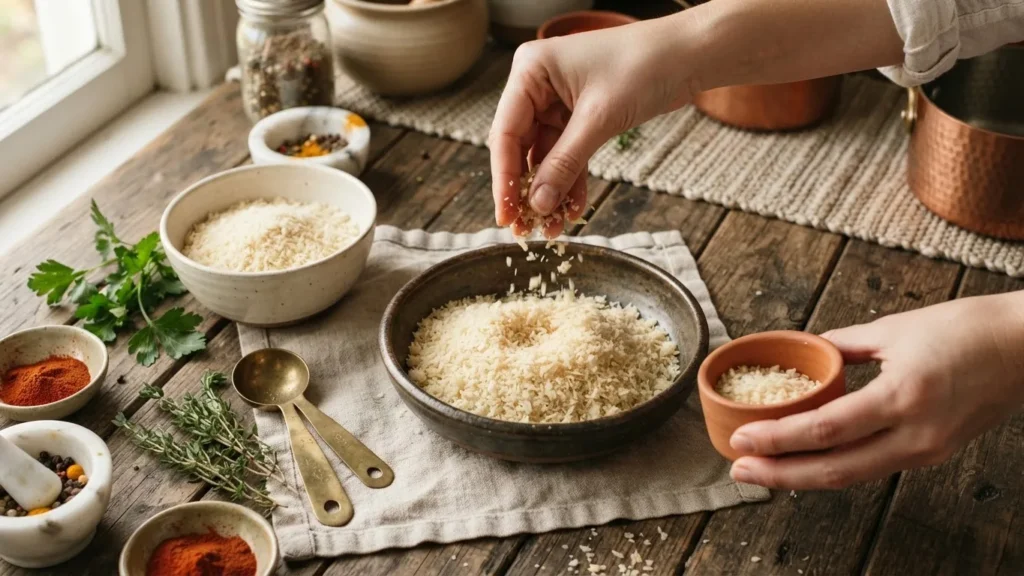
The bread that becomes panko has no crust, and that is the whole reason the crumbs behave the way they do in a pan. Merriam-Webster dates the first known English use of “panko” to 1970 and defines it as “crustless wheat bread made into crisp dry crumbs and used especially as a topping or coating for food.” Japanese bread crumbs are not a brand and not a seasoning blend; they are a style of crumb produced from a specific kind of loaf, and knowing that changes which product you buy, when a substitute will hold up, and why the coating on last night’s cutlet reheats crisp instead of greasy. This guide sorts the coating decisions you actually make at the counter, sourced from the recipe developers and reference works that document them.
Panko differs from ordinary breadcrumbs in three measurable ways: shape, oil behavior, and seasoning. Allrecipes describes panko as crustless white bread “processed into flakes and then dried,” giving it a drier, flakier consistency that absorbs less oil, so fried food comes out lighter and crunchier. Regular breadcrumbs are ground into a finer, denser crumb and are often sold pre-seasoned. You can swap them 1:1 by volume, but the texture shifts. Store panko in an airtight container at room temperature; moisture, not age, is what ruins it.
What “panko” actually means, and why it’s a style rather than a brand
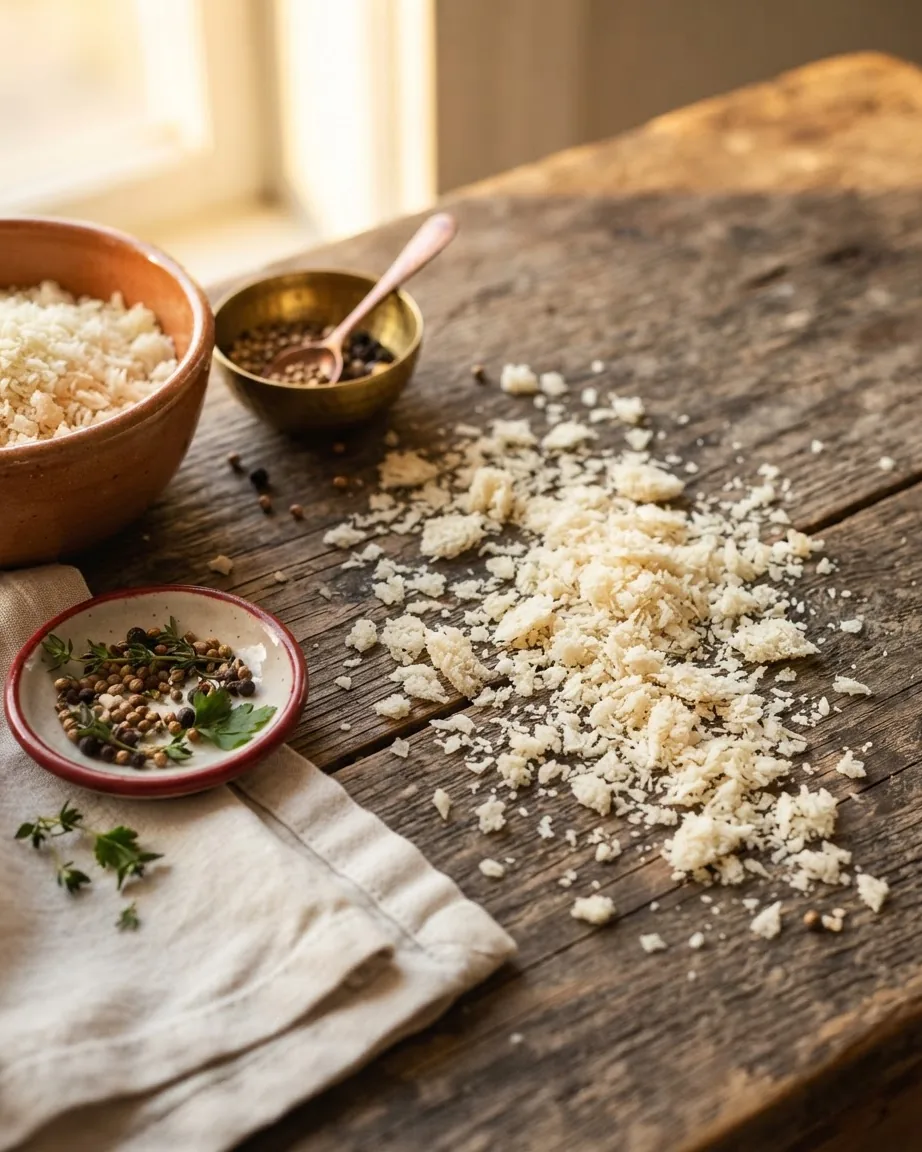
The word is Japanese. Merriam-Webster traces it to “pan,” meaning bread – itself borrowed from the Portuguese pão, going back to the Latin pānis – joined to “ko,” meaning flour or powder. So the literal sense is closer to “bread flour” or “bread powder” than to any single manufacturer. When a recipe calls for panko, it is naming a crumb style, the way “sourdough” names a bread rather than a company.
That distinction matters at the shelf. Several brands sell panko, and Kikkoman USA is among the most widely stocked in American supermarkets, but the label “panko” describes the flake, not the maker. The defining trait, repeated across sources, is the crustless loaf behind it. Merriam-Webster’s definition builds the word around exactly that: crustless wheat bread turned into crisp dry crumbs. Nothing in the meaning specifies a country of manufacture, only a method and a shape.
Panko is Japanese in origin, and the crumb sits inside a much larger set of coating and frying techniques worth reading alongside it; see our wider collection of asian recipes.
How the crustless bread behind panko is made
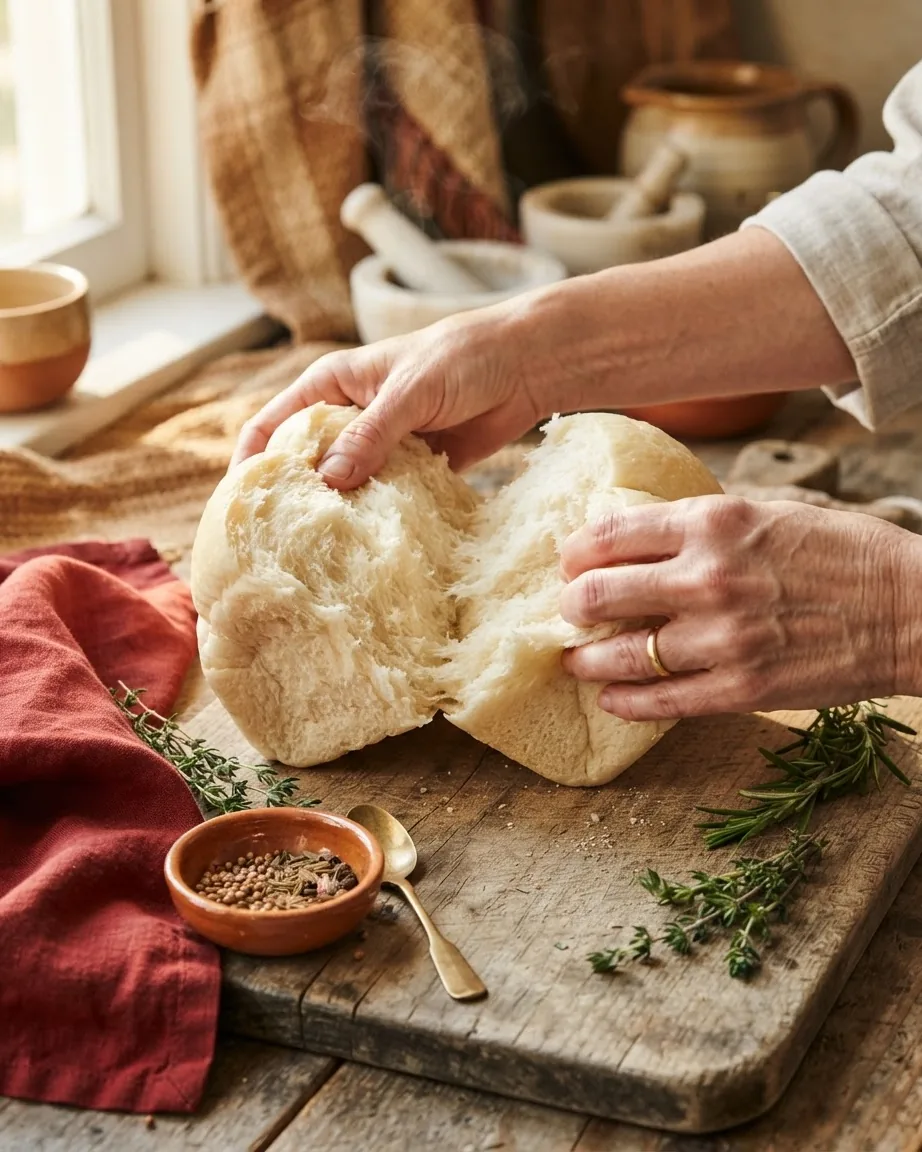
The loaf comes first, and here the published accounts describe more than one process. Baker’s Authority, in its guide to the difference between bread crumbs and panko, writes that “the bread used for panko is cooked using an electrical current, which results in a softer interior and no crust.” Wikipedia’s entry on crustless bread agrees on the mechanism, stating that panko is made from bread “produced by passing an electric current through the dough.” Cooking the dough this way heats it from within and leaves no browned exterior to grind up.
The Pioneer Woman’s homemade panko write-up describes a different industrial picture, citing reporting that Japanese panko-makers “use machines that spray unbaked bread dough directly onto heated iron sheets and bake it into shards.” These accounts are not necessarily in conflict – they may describe different equipment, different manufacturers, or different eras of production. What they share is the outcome that matters to a cook: bread with no crust, baked in a way that yields pale, flaky pieces rather than the tan, dense crumb you get from grinding an ordinary loaf.
The absence of a crust is the practical takeaway. A conventional loaf has a browned, firm exterior; grind it and you get fine, colored particles that pack tightly. The crustless method produces large, jagged flakes that stay light in color – closer to white or pale ivory – because nothing was allowed to brown during baking.
Panko vs. regular bread crumbs: texture, oil, and seasoning side by side
The two are not interchangeable in effect, only in measurement. Allrecipes lays out the contrast plainly: panko flakes are drier and flakier and “absorb less oil,” which is why fried food coated in them reads as lighter and crunchier, while regular breadcrumbs are “processed into a finer crumb than panko” and are used for breading, stuffing, topping casseroles, and binding ground meats. The finer crumb is better at holding a mixture together; the coarse flake is better at staying crisp on the outside.
Kikkoman USA points to why the crunch lasts. Because panko’s texture lets it hold less oil and coat without packing down the way other crumbs do, coated food “stay[s] crispier longer” and doesn’t turn greasy or soggy when reheated. That is the concrete reason to choose panko for anything you plan to hold, transport, or warm up the next day: a fried chicken cutlet, a baked casserole crust, an oven-finished coating. For a filler-and-binder job inside a meatball, the denser breadcrumb often does the work you actually want.
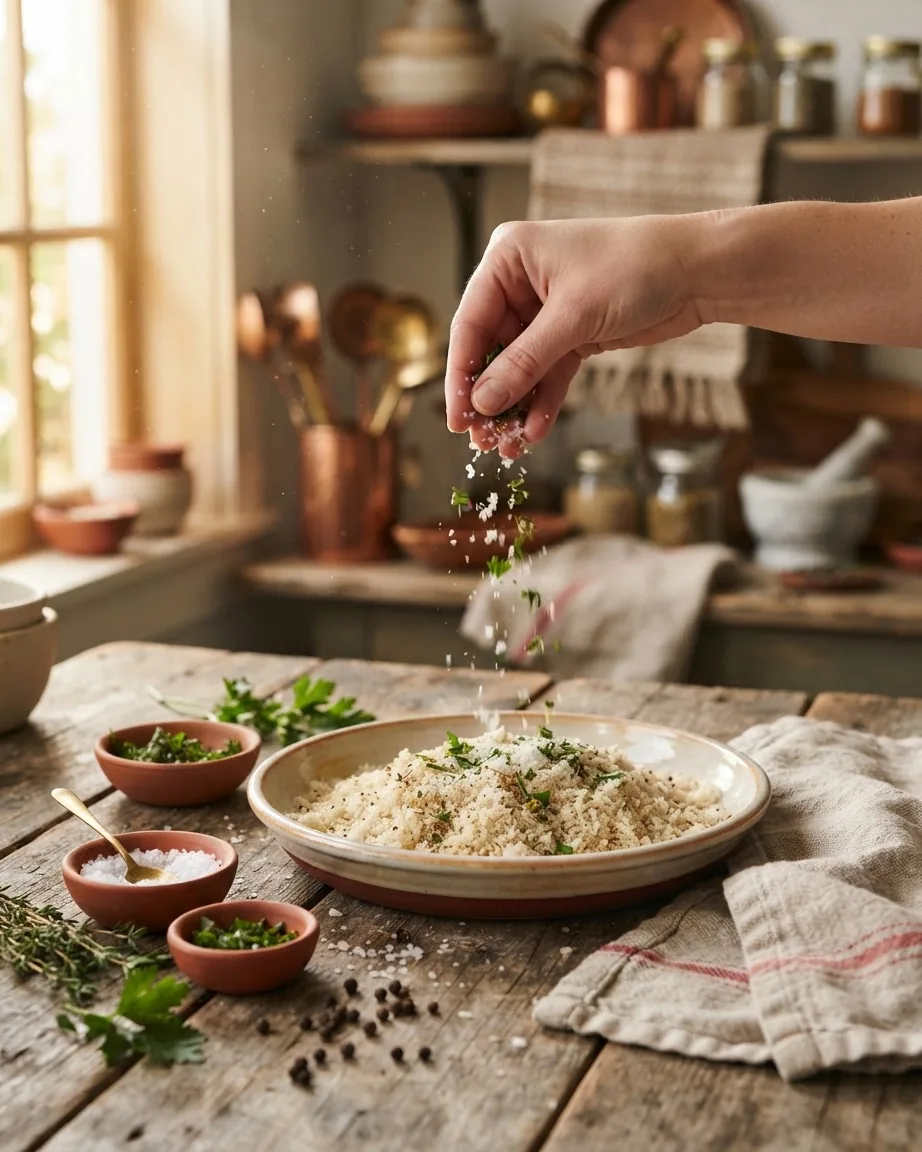
Seasoning is the other split. Baker’s Authority notes that panko is “typically sold plain,” which makes it a blank canvas but means you’ll need to season the coating yourself, while regular breadcrumbs frequently arrive pre-seasoned, Italian-style with herbs and cheese. If a recipe was written around seasoned crumbs and you reach for plain panko, the dish will taste flat unless you add the salt and herbs the recipe assumed were already there.
- Texture: panko is coarse, flaky, and crunchy; regular breadcrumbs are fine, dense, and compact.
- Oil: panko absorbs less oil, so it fries lighter and reheats without going greasy; fine crumbs soak up more.
- Seasoning: panko is usually plain and needs seasoning; regular breadcrumbs are often pre-seasoned.
- Best jobs: panko for crisp coatings and toppings you’ll reheat; fine crumbs for binding meatballs, stuffing, and dense casserole layers.
Substituting panko for bread crumbs (and the other way) without ruining the dish
Baker’s Authority gives the working rule: you can usually substitute panko and bread crumbs 1:1 by volume, but expect a change in texture. Swap panko in for fine crumbs and the result is crunchier and airier; swap fine crumbs in for panko and it comes out finer and more compact. The ratio holds; the mouthfeel does not. Decide which one your dish depends on before you pour.
Two adjustments keep a 1:1 swap honest. First, salt. If you’re replacing seasoned breadcrumbs with plain panko, add back the seasoning the original crumb carried, or the coating loses its flavor. Second, if you’re using ordinary dry breadcrumbs where a recipe wanted panko’s crunch, you can nudge them closer by toasting. Tasting Table, in its rundown of panko substitutes, advises that when standing in dry breadcrumbs you “should toast at a lower temperature (like 300 degrees F) for about six or seven minutes.” The low heat dries them and adds crispness without browning them into something bitter.
The salt caveat runs the other direction with savory swaps. Tasting Table describes panko as “neutral in flavor” with “no added salt,” so any replacement that carries its own salt – crushed crackers, pretzels – means cutting salt elsewhere in the dish to compensate. A cracker crust seasoned as if it were plain panko will taste over-salted.
Emergency substitutes and how to prep each one
- Dry bread crumbs: toast at a lower temperature to dry and crisp them before use, per Tasting Table.
- Plain unfrosted corn flakes: already crunchy, so no toasting needed; Tasting Table notes they “start out extremely crunchy.” A naturally gluten-free option.
- Crackers or pretzels: usable when crushed, but they bring salt, so reduce the salt elsewhere in the recipe.
For a plant-based coating swap and where the crumb sits in Chinese cooking, see also our Vegan Chinese Recipes.
Homemade Japanese bread crumbs: the 300°F method and what it can’t copy
You can make a passable version at home, with one honest caveat up front: the industrial crustless-loaf process is not reproducible in a home kitchen, so homemade crumbs will read as good toasted breadcrumbs rather than an exact match for store-bought panko. The Pioneer Woman’s method starts from regular sliced white bread, crusts removed, grated with the grater disc of a food processor to produce flakes instead of fine dust.
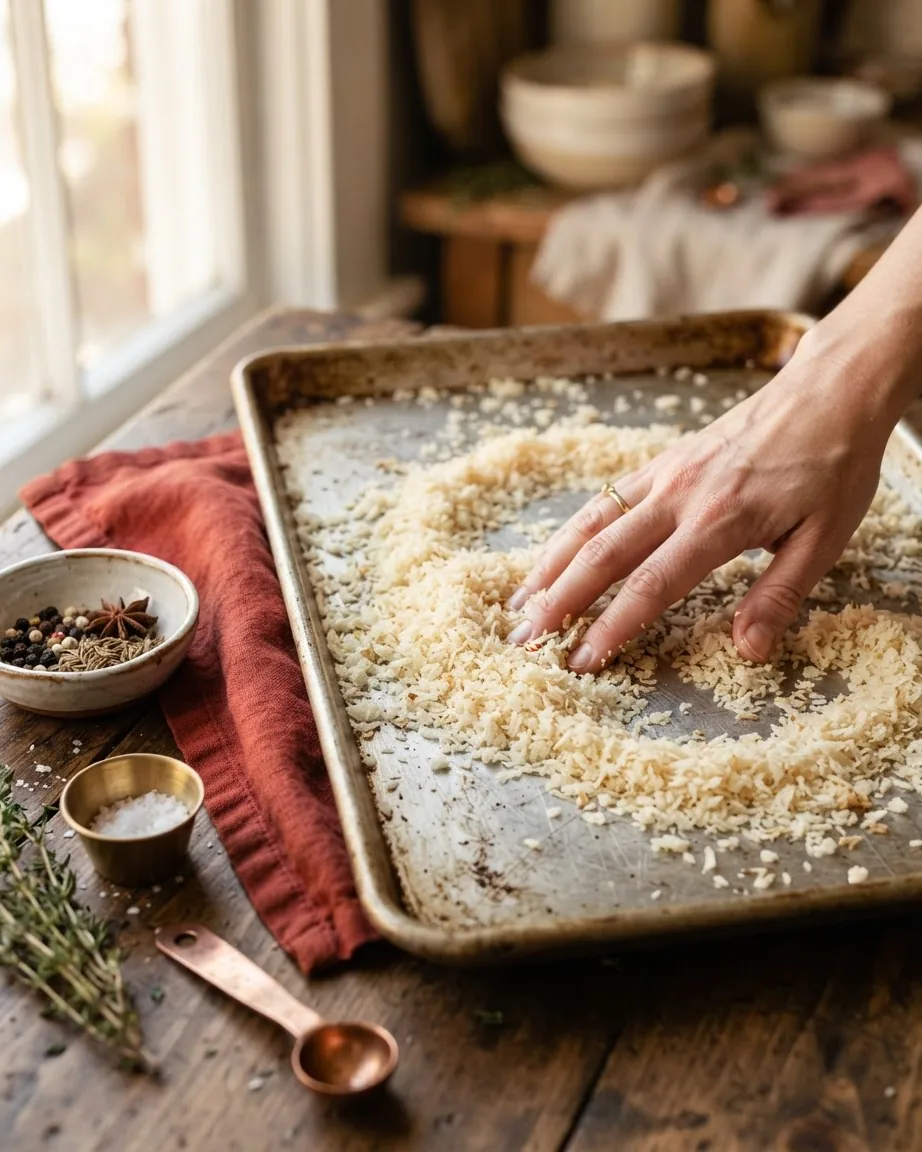
From there, the page gives a crumb-bake and a slice-bake, and the two timings differ because they are different steps, not a contradiction. For the grated crumbs, “spread the crumbs on a rimmed baking sheet and bake at 300ºF for 10 minutes, stirring every 2 minutes.” Stirring every two minutes matters: it keeps the flakes drying evenly and stops the ones at the pan’s edge from coloring while the center is still damp. The goal is dry and crispy but not browned – brown flakes mean you’ve overshot and started toward toast.
The alternate route bakes the bread first: “lay bread slices on a baking sheet and bake at 300ºF for 12 minutes, flipping the bread over halfway through the cooking time,” then grate the dried slices into flakes. Either way the oven stays low so the bread dehydrates without taking on color, which is what preserves the pale look of true panko.
Homemade panko at a glance
- Country of origin: Japan (the crumb style); this home method is adapted for a US kitchen.
- Heat level: 0 of 3 – plain, unseasoned crumbs.
- Oven temperature: low and steady so the crumbs dry without browning.
- Active time: about 10 minutes at the food processor and stovetop-adjacent prep.
- Total time: roughly 10 minutes (grated-crumb bake) to 12 minutes (slice-first bake) in the oven.
- Ingredient sourcing: sliced white bread from any regular supermarket; no specialty store required.
The gluten-free question: a dedicated product and a swap that’s already GF
Allergen warning
There are two clean paths for a gluten-free coating. Kikkoman USA makes a Gluten-Free Panko built from rice instead of wheat, described as having a crispy texture, with the label listing rice flour, pea protein, and dextrose, and stating it is free of gluten, soy, egg, and nuts.
The pantry route is corn flakes. Tasting Table points to plain, unfrosted corn flakes as a gluten-free stand-in that arrives already crunchy, so unlike dry breadcrumbs they need no toasting before you use them as breading or a topping. Check the box, though – some corn flake products list malt derived from barley, so a naturally gluten-free coating still depends on reading the specific label.
For contrast, standard wheat Kikkoman Panko lists just four ingredients: wheat flour, cane sugar, yeast, salt. That short list is worth knowing if you’re the one seasoning the coating, because there is almost nothing in the crumb itself to build flavor on.
Storing Japanese bread crumbs: moisture is the failure, not age
The instinct to refrigerate panko works against it. Eat Like No One Else, in its guide to how long panko lasts, is direct that refrigerating or freezing is unnecessary and that the real enemy is condensation: “if you get any condensation inside your container, your breadcrumbs are going to be ruined” – mushy rather than crisp. An airtight container at room temperature is the correct home. Cold storage invites the exact moisture problem you’re trying to avoid.
On shelf life, the same source notes that an unopened store package usually carries a best-by date around 9 to 12 months out, and because panko is fat-free it does not go rancid. That aligns with the Kikkoman label showing 0g total fat: without fat to oxidize, the countdown is about staying dry and crisp, not spoilage. A stale-tasting or soft panko is a texture failure from moisture, not a safety problem from time.
Homemade crumbs keep on the same logic. The Pioneer Woman’s method says to store them in a large resealable bag in the pantry for several weeks, or to freeze for longer storage – freezing being acceptable for homemade batches you won’t finish quickly, as long as the bag seals against moisture.
What a 30g serving of panko actually contributes
The numbers here are product- and database-specific, so read them as label values rather than universal facts about every panko. You can find the per-serving figures on the Kikkoman Panko product page. The gluten-free version differs on sodium because it’s a different formulation built on rice.
For carbohydrate, a database entry for panko at myfooddata reports 24g total carbohydrate per 30g serving, which the panel expresses as 9% of a daily value. Treat that figure as belonging to the specific database entry, not necessarily the same product as the branded label – the two sources use different reference items, so they aren’t strictly comparable beyond the shared 30g serving base. As a coating, panko’s contribution is mostly carbohydrate with almost no fat and modest sodium, and the sodium you ultimately eat is driven far more by what you season the coating with than by the crumb itself.
Frying and finishing: reading the crumb in the pan
Panko is often toasted in oil before it tops a dish, and there’s a documented visual cue for when it’s done. In an example usage from Merriam-Webster’s panko entry, the instruction runs: “When the oil is shimmering, add the panko and cook, stirring, until lightly browned, about 3 minutes.” Shimmering oil signals the pan is hot enough to crisp rather than steam the flakes, and “lightly browned” – not dark – is the target, reached in roughly three minutes with constant stirring so the large flakes color evenly.
This is the moment panko’s structure pays off. Because the flakes hold less oil and don’t pack down, a pan-toasted panko topping stays crunchy on a casserole through baking and reheating instead of collapsing into a greasy layer. When you’re deciding whether panko’s advantage is worth it, the test is simple: if the coating needs to survive time, transport, or a second heating, the crustless flake earns its place; for a crumb buried inside a bound mixture, a finer breadcrumb is usually the better tool.
Where panko fits across the wider table
Crisp coatings and crumb toppings turn up well beyond Japanese cooking, and the crumb-versus-binder decision recurs anywhere breading meets a bound mixture. For dishes with their own coating and topping logic, see also our Manakish and our Appalachian Recipes.
The desk’s approach here is to cross-reference how multiple published sources describe panko, identify the specific crumb style being named, and record the exact temperatures, timings, and label figures each source reports without altering the underlying methods. Where the sources diverge – as they do on how the crustless loaf is manufactured – both accounts are kept as reported rather than merged into a single tidy claim.
Panko sodium math: regular vs. gluten-free, per serving and per box
Both Kikkoman pankos print their numbers on the same 1/2-cup (30g) serving, so the labels line up for a direct comparison. The rice-based gluten-free version is a different formulation, so its sodium reads differently from the wheat original. Do the arithmetic across a full box and the gap widens into something you can actually taste in a batch of cutlets:
- Per 30g serving: the gluten-free crumb, built on rice, is a different formulation from the wheat original.
- Per full box: the per-serving difference multiplies across every serving in the package, so the gap adds up over a batch.
- Energy density (both varieties): a heaping quarter-cup coating adds up faster than the light, airy flake suggests.
Because panko is sold plain, you’ll typically add your own salt to the coating – so the starting sodium here is only the floor, not the finished dish.
Frequently asked questions about Japanese bread crumbs
Is panko a brand or a type of crumb?
It’s a style, not a company. The name combines the Japanese “pan” (bread, from Portuguese pão) with “ko” (flour or powder), so it describes a crumb, not a maker. Several manufacturers produce it; Kikkoman USA is one widely carried option. What unites every true panko is the crustless loaf it starts from.
Can I use panko and regular bread crumbs interchangeably in any recipe?
The measurement swaps 1:1 by volume, but results diverge. Coarse flakes make coatings crunchier and lighter; fine crumbs pack denser and bind better. For meatballs and stuffing, the finer crumb usually wins. For a coating you’ll reheat, the flake holds crisp. Match the crumb to whether the dish needs binding or crunch.
Do I need to toast homemade or substitute crumbs before using them?
It depends on the crumb. Ordinary dry bread crumbs benefit from a spell at a lower temperature to dry and crisp without browning. Plain unfrosted corn flakes arrive crunchy and skip toasting entirely. Homemade grated crumbs bake at 300°F for 10 minutes, stirred every 2 minutes, staying pale rather than golden.
Why did my panko turn soft in the cupboard?
Moisture, not age. Panko is fat-free, so it doesn’t go rancid, and an unopened package typically shows a best-by date 9 to 12 months out. Softness comes from condensation getting into the container, which turns the flakes mushy. Keep it in an airtight container at room temperature; skip the fridge, where condensation is more likely.
Is there a gluten-free version that actually stays crisp?
Yes, two routes. Kikkoman’s rice-based Gluten-Free Panko is built for a crispy texture and is free of gluten, soy, egg, and nuts. Plain unfrosted corn flakes are naturally gluten-free and crunchy without toasting – just confirm the box, since some brands include barley-derived malt.