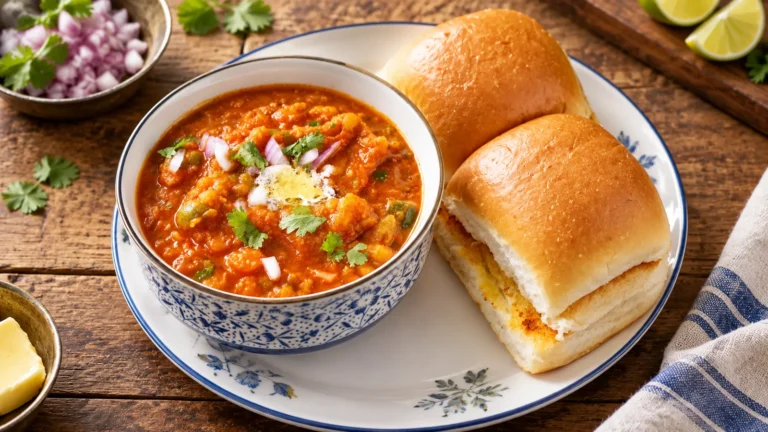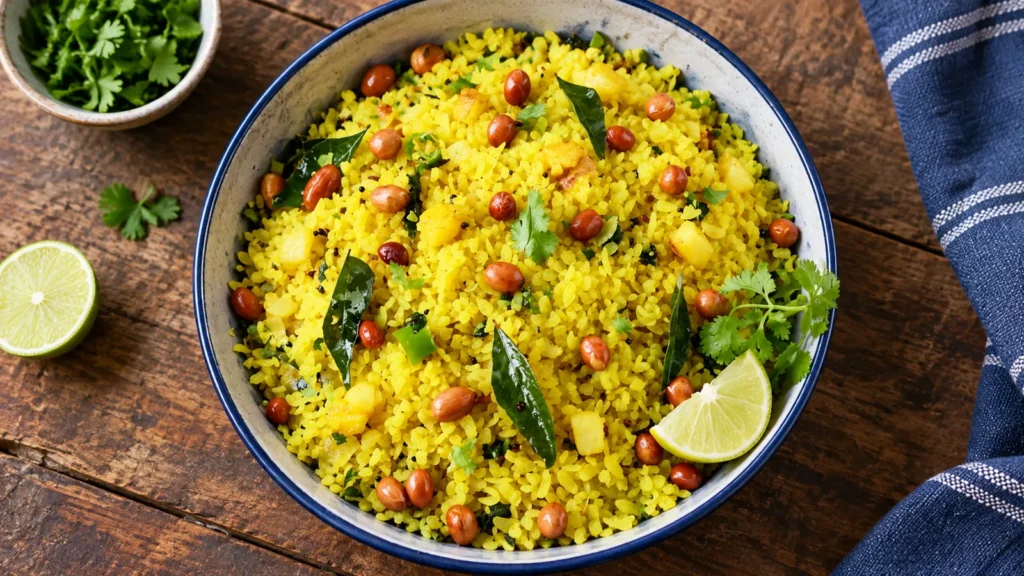
The one decision that settles whether your breakfast holds together or collapses into paste happens before any heat is involved: the thickness of the flake you buy. This poha recipe follows the western Indian street-and-home version of kanda poha (onion poha) and its potato-carrying cousin aloo poha, as recorded by several Indian recipe publishers. The AtlasPlate Recipe Desk cross-references those published versions, keeps the regional name alongside the English, and pulls the exact quantities and timings into one format without changing the underlying method.
Quick answer: Use thick or medium flattened rice, never thin. Rinse it in a colander two or three times, then let it rest so it absorbs the clinging water – roughly 5 to 7 minutes for standard flakes. It is soft when a flake breaks cleanly under thumb pressure. Cook the tempering, add onion, fold in the drained poha, then cover and steam 2 to 3 minutes on low heat. Add lemon juice off the heat. Roast peanuts separately and scatter them on last so they stay crisp. Cooked poha keeps refrigerated for 1 day.
Thick, medium, or thin: the flake that decides everything
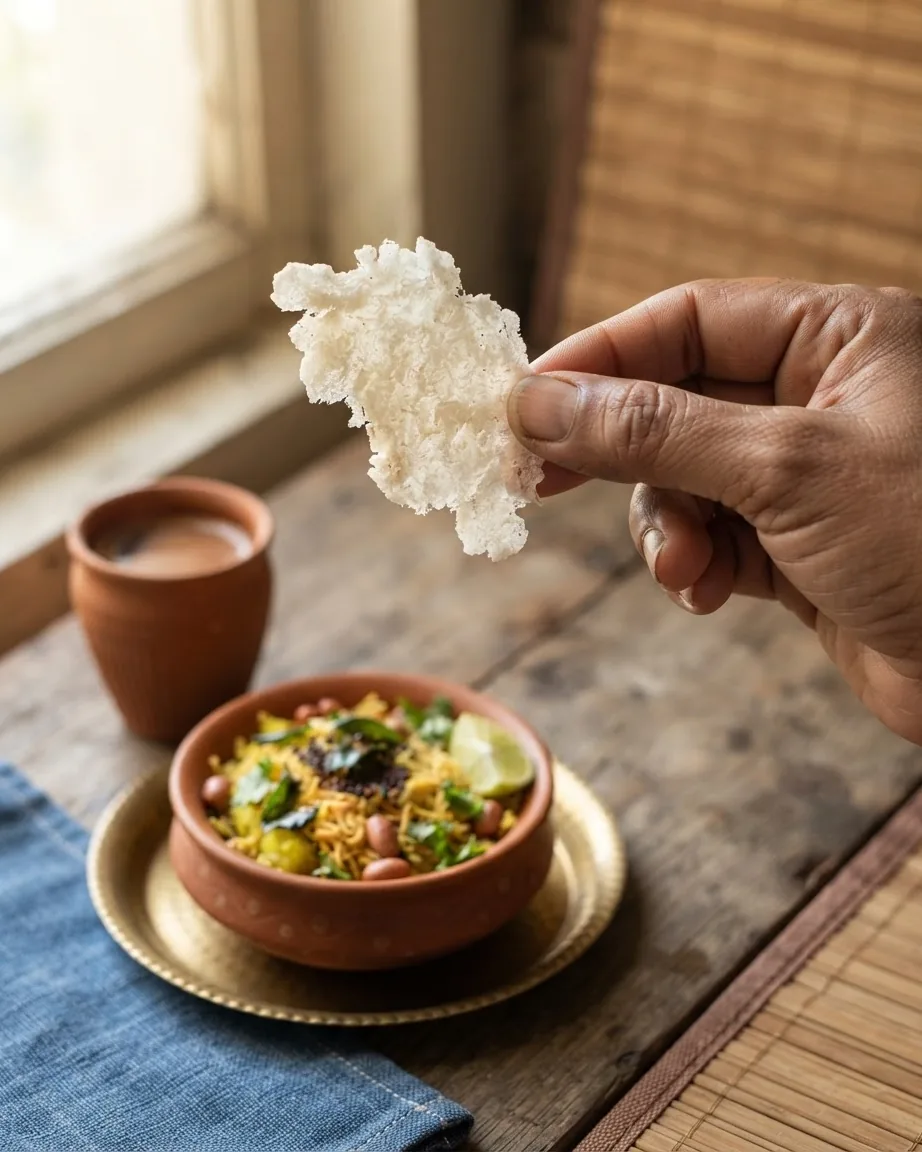
Poha is flattened rice – parboiled rice pressed into flakes – sold in more than one thickness, and the thickness is not a cosmetic detail. Swasthi’s Recipes (Indian Healthy Recipes) is direct about it: to make non-sticky poha you need thick or medium flakes, because thin flakes turn mushy after rinsing. Thin poha is meant for dry roasted mixtures and chivda, not for a rinsed, steamed breakfast.
The dish travels under different names depending on the region – pauwa, chira, aval, and avalakki – a point Veg Recipes of India notes when describing the same flattened rice across India. Whatever the shelf label says locally, the buying rule is the same: pick up a flake and check that light does not pass through it easily. If it is translucent and paper-fine, it is the thin grade and will not survive rinsing.
If you are outside India and can only find one grade at an Indian grocer, ask for “thick poha” by name. A common thin-flake substitute sold in some Western stores will still cook, but expect a softer, more porridge-like result and skip the rest step almost entirely to limit the damage.
Rinse and rest, don’t soak: the 5-to-7-minute window and why sources disagree
Poha is rinsed, not submerged. Add the flakes to a strainer, run water through two or three times, and drain completely. The flakes finish softening from the water still clinging to them, not from sitting in a bowl of it. Swasthi’s Recipes gives the test that removes the guesswork: press a flake between thumb and forefinger, and it should break easily. If it is still firm, sprinkle a little more water; if it is falling apart, you have gone too far.
How long to rest is where published sources split, and the spread is real. Swasthi’s Recipes puts softening at about 5 to 7 minutes. Veg Recipes of India rests the flakes in a colander for just 2 to 3 minutes. Times of India (Life & Style) says a strainer drains excess water and the poha should rest for 5 to 10 minutes to soften naturally. Hebbar’s Kitchen is strictest, holding the poha aside for a full 10 minutes until it turns non-sticky and soft.
Those are not four contradictions so much as one variable the sources leave implicit: flake thickness and dryness. Denser, drier flakes need the longer end; medium flakes are done sooner. Rather than trust any single clock, use the finger-press test as the real endpoint and treat the minute figures as a range to check within. Start looking at 3 minutes for medium flakes and at 7 to 10 minutes for thick ones.
Some hard, dense poha simply will not soften by rinsing. Swasthi’s Recipes handles those two ways: a short soak of 5 to 10 minutes, or a brief steam – 3 minutes for hard brown poha and 1 minute for hard white poha in a cooker. Hebbar’s Kitchen offers a middle path for stubborn flakes: sprinkle water and let them rest 5 to 10 minutes until soft and separate.
The 1-to-½ vegetable ratio that keeps texture
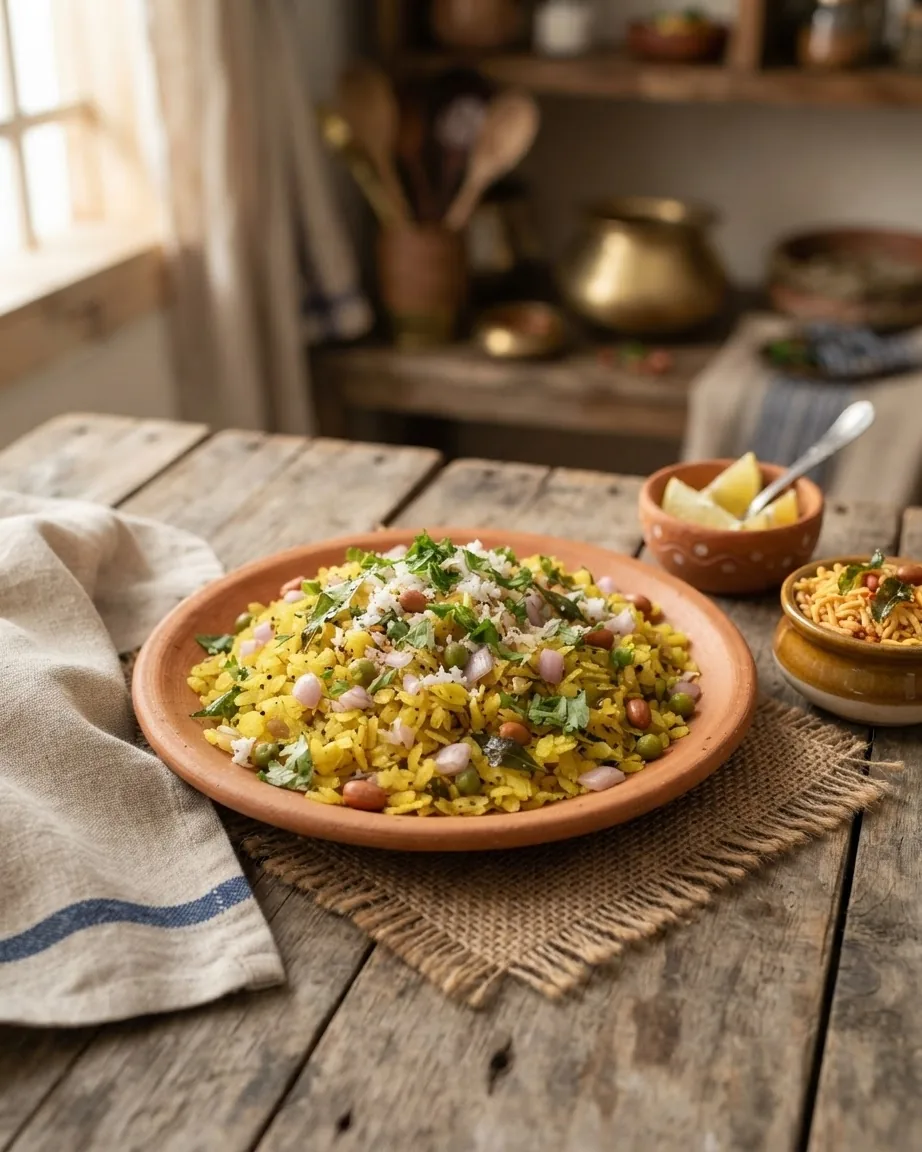
The fastest way to wreck an otherwise correct poha is to overload it with vegetables. NDTV Food sets a hard ceiling: for one cup of poha, add no more than about half a cup of vegetables, or the dish loses both texture and flavor. The flakes are the dish; the potato, peas, and onion are seasoning-weight additions, not a stir-fry the poha happens to sit in.
Potato is the usual add-in, and it has to be cut small so it finishes cooking before the flakes are folded in. Peas, if used, go in as small a proportion as the potato so the combined vegetables stay under that half-cup line.
This is the same logic behind other rice-and-legume breakfasts we’ve documented over in Indian and South Asian recipes: the base carbohydrate leads, and the extras are dosed to support it rather than crowd it out.
Medium flame, minimal stirring: the cooking rules that prevent soggy poha
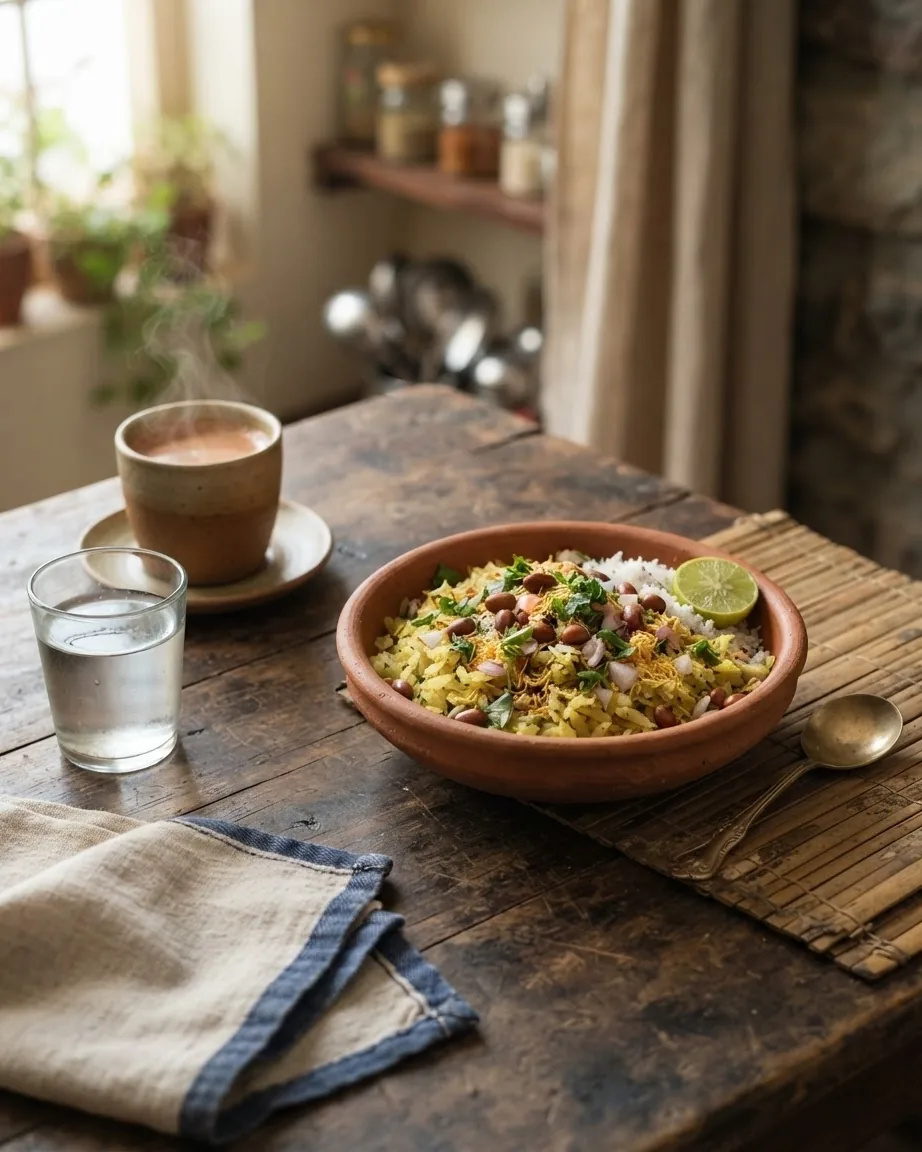
Two heat mistakes turn a good rinse into a bad breakfast. NDTV Food frames the flame narrowly: cook poha on medium, because high flame risks burning and low flame makes the dish soggy. Times of India (Life & Style) points at the other error – leaving poha on the heat too long makes it soggy and mushy, and constant stirring breaks the flakes. Poha cooks very quickly, so the instinct to keep prodding it works against you.
The finish is a short steam, not a fry. After folding in the drained flakes, Veg Recipes of India covers the pan and steams the poha 2 to 3 minutes on low heat. Cook With Manali runs it shorter, 1 to 2 minutes on the lowest heat before turning off, and taste-tests for dryness first – if the flakes feel dry, sprinkle 1 to 2 tablespoons of water over them before covering. Either way the lid does the work: trapped steam warms and separates the flakes without you stirring them apart.
Two small sequencing rules carry outsized weight. Peanuts are roasted separately in the oil until golden and crunchy, removed, and scattered on at the very end so they never sit in steam and go soft – a point Swasthi’s Recipes is explicit about. And Hebbar’s Kitchen insists lemon juice goes in only after the flame is off, so the acid keeps its fresh zing instead of dulling over heat; a pinch of sugar alongside it balances the spice and the sour.
The poha recipe, in two blocks
The recipe yields about 2 servings.
Calories, glycemic index, and the iron trick worth knowing
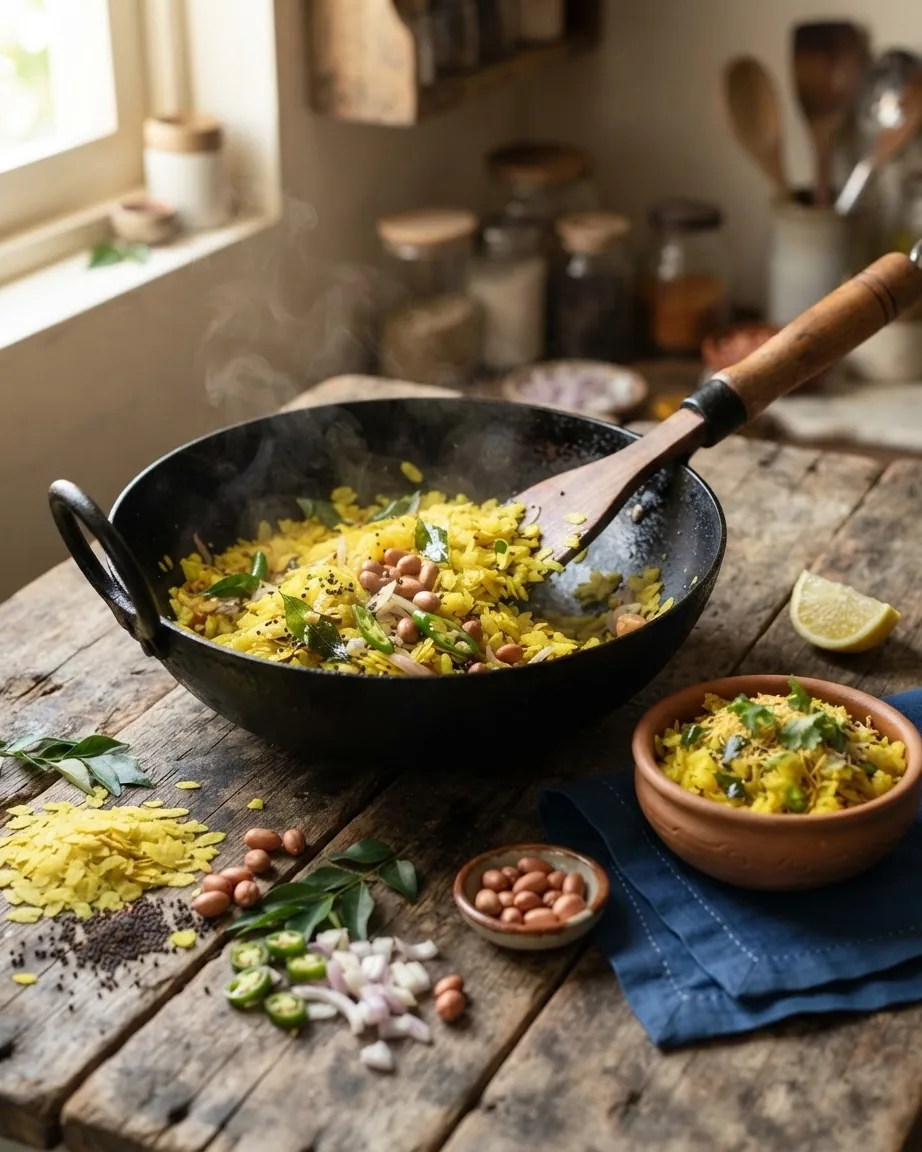
Flattened rice is naturally gluten free, per Swasthi’s Recipes; to keep the finished dish gluten free, skip the asafoetida (hing) or use a certified gluten-free one, since standard hing is often cut with wheat flour. That single swap is the only common gluten source in a basic poha.
On calories, the numbers you will encounter do not line up, and it helps to know why before you trust one. NDTV Food describes poha as a filling, weight-friendly breakfast at around 200 to 250 calories per serving. Recipe-card metadata on individual recipes runs much higher – figures like 495 and 564 kcal appear – because those count added oil, peanuts, and larger or richer serving assumptions. They are not measuring the same plate. For a rough baseline use the 200 to 250 range; for the exact dish you cooked, the recipe card that matches your ingredients is closer. For standardized per-100-gram values you can check a food composition database such as the USDA FoodData Central.
Glycemic index is where poha earns its reputation as a steadier breakfast. Apollo 24|7 cites a GI range of 38 to 64, describing it as moderate and lower than white rice, which helps blunt sudden blood sugar spikes. The color of the flake shifts this too: Veg Recipes of India notes that red poha, made from red rice, retains more fiber and iron than white poha and carries a lower glycemic index.
The lemon at the end is not only for flavor. NDTV Food points out that the iron in poha is absorbed better when paired with vitamin C, such as the lemon juice you squeeze on after the heat is off – so the finishing squeeze does double duty. For general guidance on how the body absorbs iron from plant foods, the National Institutes of Health maintains a detailed iron fact sheet. Compared with upma, NDTV Food positions poha as the lighter, easier-to-digest option, while upma is denser and higher in protein – a genuine choice rather than a ranking, depending on whether you want a light start or a heavier, protein-forward one.
Storing dry flakes and the 1-day limit on leftovers
Uncooked poha absorbs moisture readily, so Veg Recipes of India advises keeping it in an airtight container away from humid spots; a few dried neem or bay leaves in the container help deter insects during longer storage. Damp flakes clump and can turn before you get to them.
Cooked poha has a short leftover life. Veg Recipes of India is specific: refrigerate it in an airtight box and eat it within 1 day. To bring it back, sprinkle a little water over the flakes and steam or microwave briefly rather than dry-reheating, which leaves them tough. Poha does not hold the way a stew does – treat it as a same-day or next-morning dish.
You can still split the work ahead of time. Swasthi’s Recipes suggests making the tempering in advance, then cooling, covering, and refrigerating the whole pan; at serving time you rinse fresh flakes and mix and steam them into the reheated tempering. That keeps the flakes from ever sitting cooked overnight, which is what protects the texture.
How long does poha actually take?
Published times look contradictory until you separate active from total. Cook With Manali titles its version a 25-minute recipe that “comes together in 25 minutes,” counting rinsing, resting, chopping, and cooking. Hebbar’s Kitchen says poha can be cooked in under 10 minutes – that is the active cooking window once your flakes are rinsed and your vegetables are prepped. Both are accurate for what they measure. Plan for the 25-minute figure the first time and expect the 10-minute active stretch once the flakes are resting and everything is chopped. For general home food-safety practices on cooling and reheating leftovers, FoodSafety.gov lays out the four basic steps.
Frequently asked questions
Why did my poha turn mushy even with thick flakes?
Usually it is over-rinsing or over-resting. The flakes should break cleanly under thumb pressure, not fall apart. Times of India (Life & Style) adds two heat culprits: leaving poha on the flame too long, and constant stirring that breaks the flakes. Steam under a lid for only 2 to 3 minutes and fold, don’t stir.
Can I soak poha in a bowl of water instead of rinsing?
Standard thick or medium flakes should be rinsed in a strainer and rested, not submerged, or they absorb too much and go pasty. The exception is genuinely hard, dense poha: Swasthi’s Recipes short-soaks those 5 to 10 minutes, or steams hard brown poha 3 minutes and hard white poha 1 minute.
Is poha a good choice for managing blood sugar?
Its glycemic index runs 38 to 64 per Apollo 24|7 – moderate and lower than white rice – which helps limit sharp spikes. Red poha, from red rice, carries more fiber and iron and a lower GI than white. This is general information; anyone managing diabetes should confirm specifics with their own clinician.
What can I serve alongside poha?
Poha is a light breakfast on its own, finished with peanuts, sev, and lemon. If you want a fuller South Asian spread, our Dal Bhat Recipe covers the reconciled lentil-and-rice ratios, and for a comparable savory grain breakfast from another cuisine see our Gallo Pinto Recipe . Can I make poha gluten free? Flattened rice is naturally gluten free. The only common gluten source in a basic poha is standard asafoetida, which is often cut with wheat flour. Swasthi’s Recipes advises skipping the asafoetida or using a certified gluten-free version, and the dish stays gluten free. How far ahead can I prep poha? Make the tempering ahead: cool it, cover it, and refrigerate the whole pan, as Swasthi’s Recipes describes. At serving time, rinse fresh flakes and mix and steam them into the reheated tempering. Avoid keeping fully cooked poha overnight; refrigerate any cooked leftovers in an airtight box and eat within 1 day.
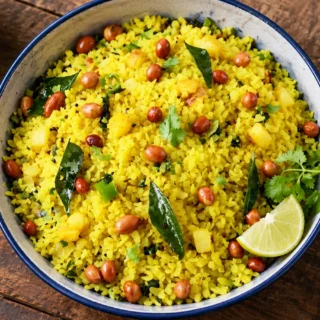
Poha Recipe: Flake Thickness, Rinse Timings, and the Ratios That Keep It From Turning Mushy
Ingredients
- 1 ½ cups poha (flattened rice; 114 grams, thick variety)
- 1 tablespoon oil (a neutral oil such as avocado, sunflower, or peanut)
- ½ teaspoon mustard seeds
- 1 ½ tablespoons raw peanuts
- 1 small red onion, chopped
- 1 green chili, chopped
- 10 to 12 curry leaves
- ½ cup potatoes, cut into ½-inch (1.3 cm) cubes
- ⅓ cup green peas (frozen, soaked in warm water 10 minutes)
- ¼ teaspoon turmeric
- ½ + ⅛ teaspoon salt (divided, adjust to taste)
- ½ teaspoon sugar (optional)
- 1 tablespoon chopped cilantro (coriander leaves), plus more to garnish
- Juice of ½ lemon
- Sev, to garnish
Instructions
- Rinse 1½ cups poha in a strainer under running water until the flakes turn soft; a flake should break cleanly when pressed between thumb and finger. Drain completely and set aside to rest while you cook the tempering.
- Heat 1 tablespoon oil in a kadai over medium heat. Add ½ teaspoon mustard seeds and let them pop.
- Add 1½ tablespoons raw peanuts and sauté 1 to 2 minutes until they start turning brown.
- Add the chopped red onion, green chili, and 10 to 12 curry leaves. Cook about 2 minutes until the onions soften.
- Add ⅓ cup soaked green peas and ½ cup potato cubes, mix, then cover and cook 4 to 5 minutes until the potato is tender.
- Stir in the turmeric and salt. Add the rinsed poha and toss gently to combine; if it feels dry, sprinkle 1 to 2 tablespoons water over the top. Cover and steam on the lowest heat 1 to 2 minutes.
- Turn off the heat. Stir in the chopped cilantro and the juice of ½ lemon. Garnish with sev and more cilantro, and serve hot.