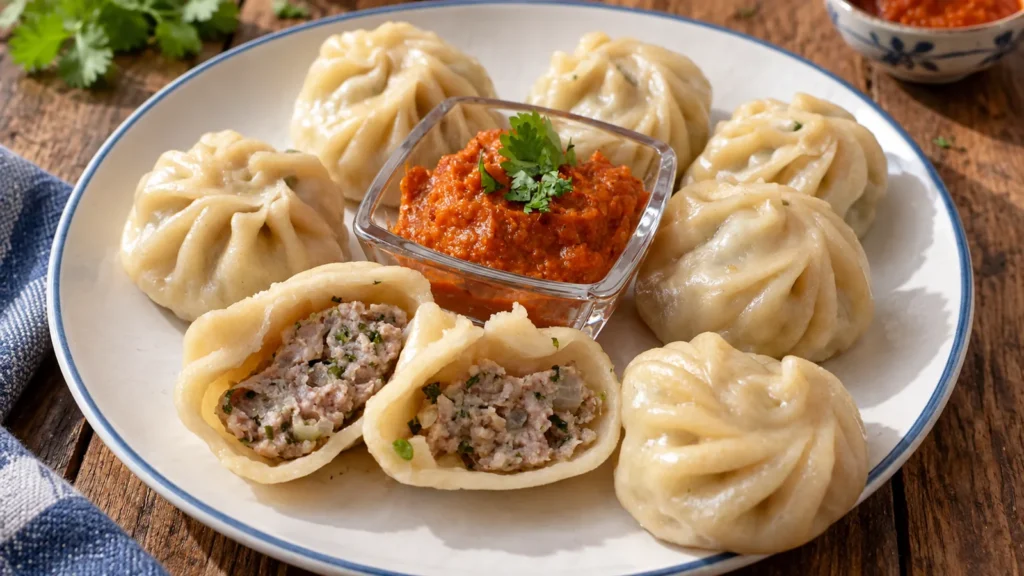
Take one published Nepali dough formula at face value and the arithmetic settles a question most recipes leave open: 300 grams of plain flour plus 150 milliliters of water yields roughly 450 grams of dough, and at 15-gram balls that is 30 wrappers, so one standard batch makes about 30 momos. That single chain of numbers is the backbone of any momo making recipe, and it also exposes the first place sources fight each other. This desk cross-references the Nepali versions transcribed by Ester kocht and SBS Food, with dough and assembly figures from Nomadic Chica, to pin down what is actually measurable and where the published guidance splits.
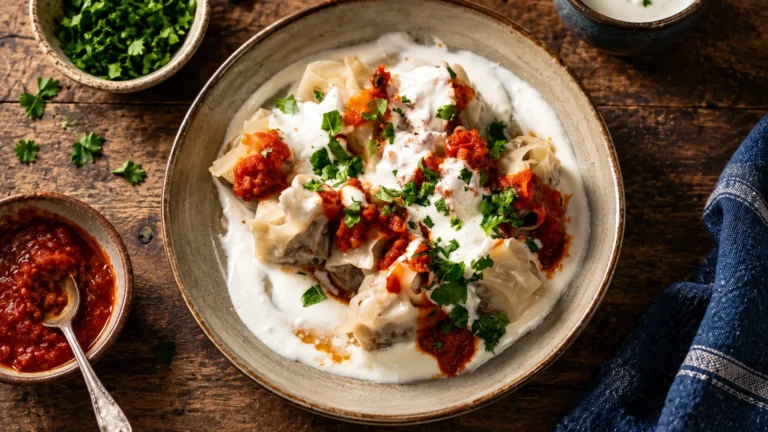
This is the steamed Nepali dumpling, called momo (मःम / मोमो) in Nepali, folded around a spiced meat or vegetable filling and eaten with a tomato-and-sesame or mustard-oil achar. The recipe below follows two regional Nepali readings: a pork version and a chicken version.
The 80-second answer: yield, hydration, and steam time
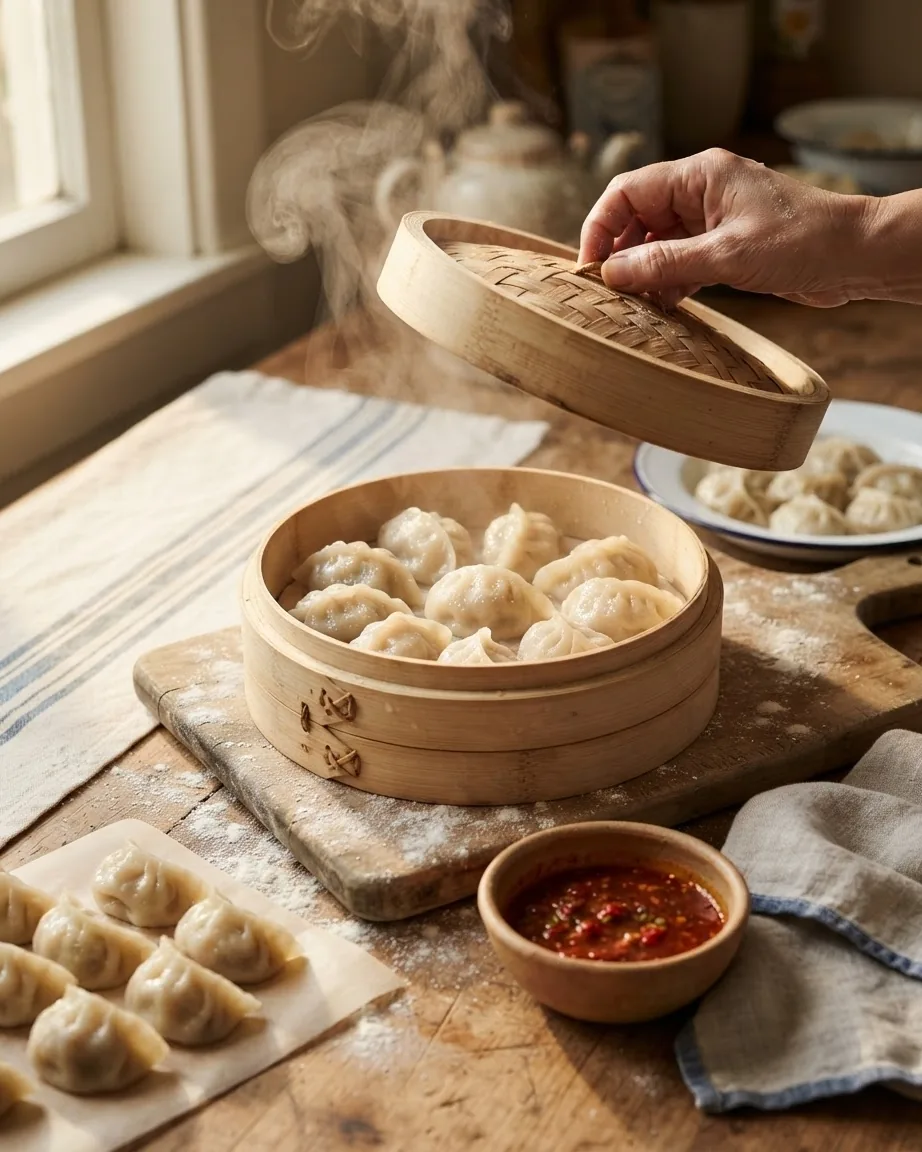
A standard Nepali momo dough is 300 g plain flour to 150 ml water, kneaded and rested before rolling, per Ester kocht. That batch weighs about 450 g and, at 15-gram balls, makes roughly 30 momos rolled to a 3-inch (7.5 cm) diameter. Fillings split by protein: 300 g ground pork with coriander, cumin and onion, or 500 g chicken mince from thigh meat for juiciness. Steam in an oiled rack 8 to 10 minutes until the wrappers turn tender. The dipping achar is a reduced tomato pickle built on mustard oil, fenugreek and Sichuan pepper (Timur).
Dough hydration: how the water-to-flour ratio changes the dough
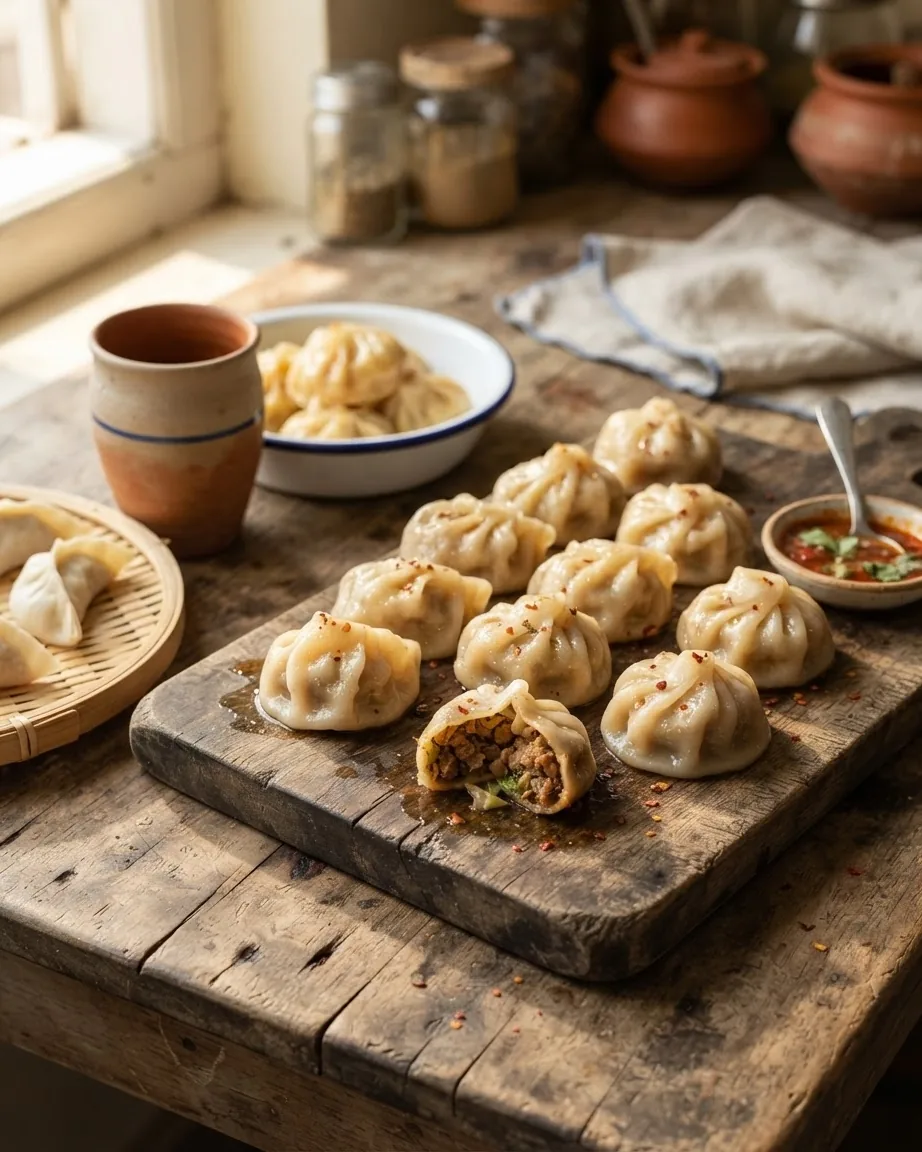
The sharpest disagreement in any momo dough is the water-to-flour ratio, and it changes how the dough behaves under your hands. Ester kocht sets 300 g plain flour against 150 ml room-temperature water, giving enough moisture for the gluten to relax into a smooth, elastic ball after a short knead.
A second published formula, from Nomadic Chica, scales up to 600 g flour with 1 tablespoon of oil and 3/4 cup of water, a stiffer, drier dough that resists smoothing out no matter how long you work it. The oil in that version softens the crumb slightly, but it does not close the gap.
For a first batch, the wetter reading is the safer choice: a well-hydrated dough rolls thin without cracking at the edges, which is where wrappers tear during folding. If you follow the drier formula, expect to knead longer and to fight the dough as you roll. A vegetable-momo dough transcribed from the Banglar Rannaghor channel sits between the two, with the warm water speeding gluten development.
Portioning and wrapper size: 15-gram balls versus the 1-inch method
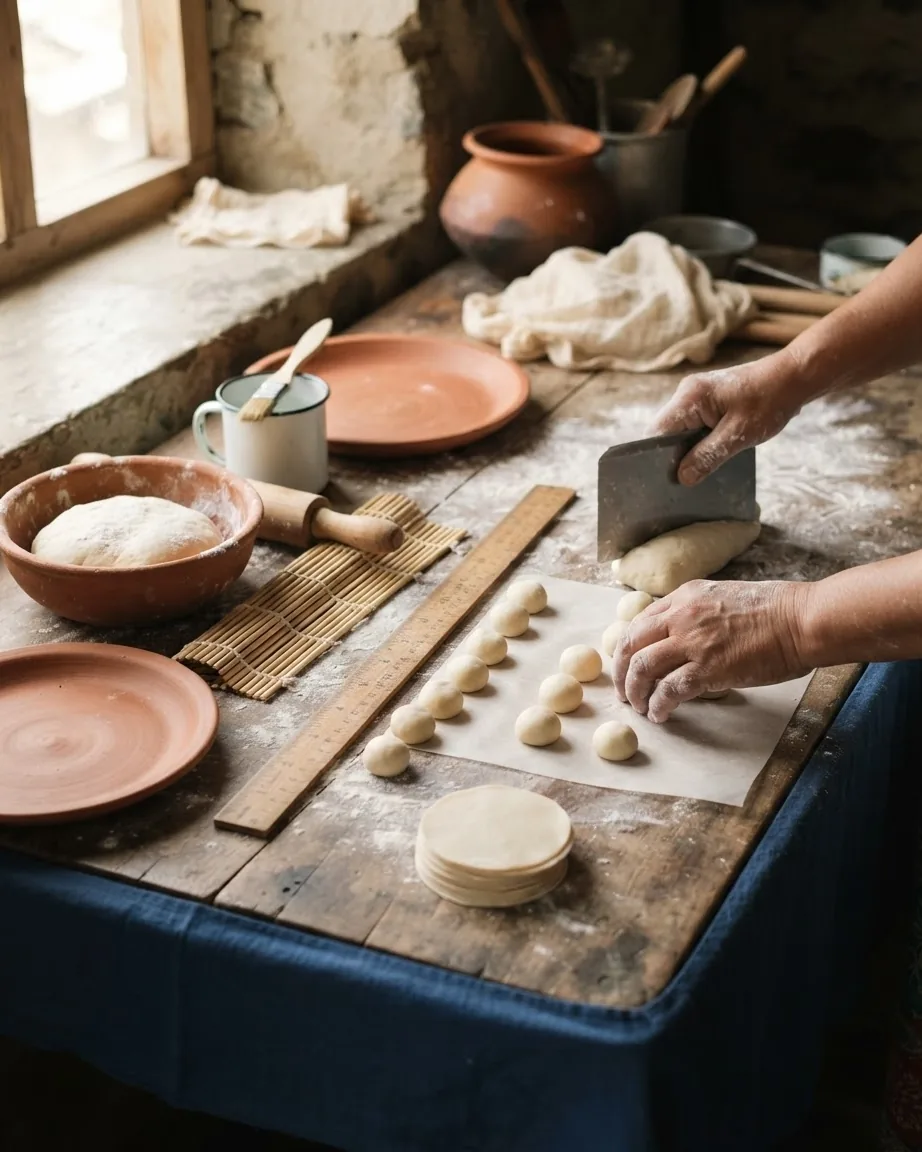
Two ways to size a wrapper appear across the sources, and they are not interchangeable. Ester kocht divides the rested dough into 15-gram balls; a scale gives you 30 near-identical wrappers from a 450-gram batch, which matters because uneven wrappers steam unevenly. Nomadic Chica works by eye instead, shaping small balls before rolling.
Both then roll out to roughly a 3-inch (7.5 cm) round, the figure Nomadic Chica gives. Keep the center slightly thicker than the rim: the middle carries the filling’s weight and the thin edge is what you pleat and seal. If you have a kitchen scale, weigh the balls – 15 grams removes the guesswork that a diameter alone cannot. Rest the portions you are not rolling under a towel so they do not skin over and crack. Detailed pleating and sealing shapes vary cook to cook and are not fixed by these sources, so seal in whatever fold holds the filling closed against the steam.
Meat filling: chicken thigh for juice, pork for the classic
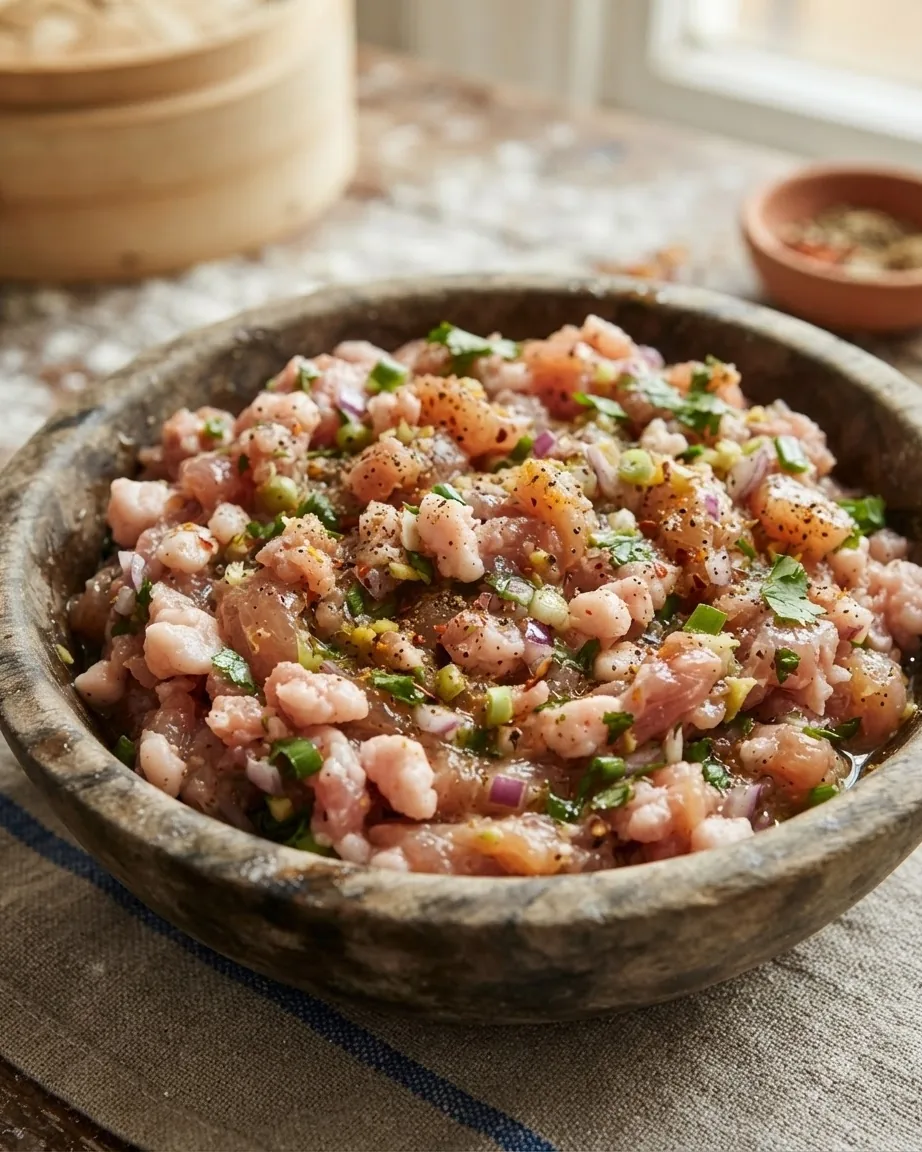
Steaming is unforgiving to lean meat – it drives out moisture with nothing to replace it, so the choice of cut decides whether the filling reads juicy or dry. For chicken momo, SBS Food specifies 500 g chicken mince using thigh meat rather than breast. Thigh carries more fat, and that fat renders into the filling during the 8-to-10-minute steam, which is the mechanism keeping it from drying out.
The pork reading from Ester kocht runs 300 g ground pork bound with finely chopped fresh coriander (about 5 tablespoons), 1 medium onion, 1 1/2 teaspoons ground cumin, 3 tablespoons sunflower oil, and 1 teaspoon salt. The instruction that the coriander and onion be chopped very fine is not cosmetic: large onion pieces release water as they cook, and that water pools inside the wrapper and weakens the seal.
The SBS chicken version layers more aromatics – 2 teaspoons each of fresh minced ginger and garlic, 1/2 teaspoon ground coriander, 1/4 teaspoon turmeric, 1/4 teaspoon ground cumin, and 1 long green chilli, finely chopped, with 2 tablespoons vegetable oil or melted butter and salt to taste. Because both fillings go into the wrapper raw and cook only by steam, the filling temperature climbs from the outside in – the reason the dumplings must sit undisturbed for the full steam rather than being opened early to check. For safe internal temperatures on poultry and pork, the U.S. figures are published by FSIS.
The achar: mustard oil, fenugreek, and a 10-minute tomato reduction
The dip is where Nepali momo separates from generic dumpling recipes, and its steps are scattered across the sources, so here they are in order. SBS Food builds a tomato pickle (achar) on 1 tablespoon mustard oil brought to medium heat, then 2 teaspoons minced garlic and 2 teaspoons minced ginger fried a few seconds until light golden, followed by 1/4 teaspoon fenugreek seed, 1 dried long red chilli finely chopped, and a pinch of Jimbu (mountain herbs).
Then 500 g ripe tomatoes go in and cook 10 minutes, stirring occasionally, until reduced and starting to thicken. Off the heat, stir through 1/4 cup chopped coriander and a pinch of ground Sichuan pepper (Timur), cover, and set aside 10 to 15 minutes to develop flavor. The Timur and Jimbu are the two ingredients that are hard to source outside the Himalayan supply chain. Substitute regular Sichuan peppercorns for Timur – you keep the numbing citrus note but lose some of Timur’s sharper grapefruit edge – and there is no close swap for Jimbu; dried chives approximate its onion-grass character without matching it, so the achar shifts in aroma when you leave it out.
Ester kocht’s alternative dip is a roasted-sesame and tomato-ketchup version: 70 g (1/2 cup) sesame seeds toasted in small batches over medium heat until lightly brown, blended with 125 g (1/2 cup) tomato ketchup, 2 tablespoons sunflower oil, 1/2 tablespoon sugar, and 1/2 small onion fried golden. Toast the sesame in small quantities – a crowded pan browns unevenly and a few scorched seeds turn the whole dip bitter.
Steaming and the 2-minute rest that stops shrinking
Steaming times land close but not identical across the sources. Ester kocht calls for exactly 10 minutes in an oiled steamer rack; SBS Food gives 8 to 10 minutes, or until the wonton wrappers turn tender. Use the sensory cue to settle it – a wrapper that has gone from matte and opaque to slightly translucent and tender is done, and thin homemade wrappers finish faster than thicker ones.
Two mechanical points decide the result. Oil the rack and leave clear space between each momo, because they expand as the dough sets and will fuse if crowded. Second, the resting step the Banglar Rannaghor channel flags: after you turn off the heat, keep the lid on and let the momos sit in the covered steamer for 2 minutes before opening. Pulling the lid immediately hits the puffed wrappers with cool air, and they deflate and shrink; the 2-minute hold lets the temperature ease down and the wrappers hold their shape.
No steamer basket is no barrier. Ester kocht’s workaround fills a medium pot one-third with water, covers it with aluminum foil, and pokes small holes through the foil with a toothpick to vent steam onto the greased surface above. Do not over-perforate the foil – too many holes collapse the steam pressure the dumplings need to cook through.
The full momo making recipe, in two blocks
These figures are transcribed from the pork version by Ester kocht, with the chicken filling and achar from SBS Food and portioning from Nomadic Chica. One dough batch yields about 30 momos.
Ingredients – dough:
- 300 g (about 2 1/2 cups) plain flour, plus extra for dusting
- 150 ml (about 2/3 cup) room-temperature water
Ingredients – pork filling:
- 300 g ground pork
- 15 g fresh coriander (about 5 tablespoons chopped), finely chopped
- 1 medium onion, finely chopped
- 1 1/2 teaspoons ground cumin
- 3 tablespoons sunflower oil
- 1 teaspoon salt
Ingredients – chicken filling (alternative):
Ingredients – tomato achar (SBS Food):
- 1 tablespoon mustard oil
- 2 teaspoons minced garlic
- 2 teaspoons minced ginger
- 1/4 teaspoon fenugreek seed
- 1 dried long red chilli, finely chopped
- 1 pinch Jimbu (mountain herbs)
- 500 g ripe tomatoes, chopped
- 1/4 cup coriander, chopped
- 1 pinch ground Sichuan pepper (Timur)
Where momo sits among the region’s staples
Momo reads as a shared street and home food across Nepal, eaten as a snack, a meal, or a party dish, which is why yield scales so freely between sources – one batch of 30 covers a family sitting or a plate for two. It belongs to the same documented corner of the region’s cooking that this desk tracks across Indian and South Asian recipes, where a dish’s identity often lives in the accompaniment as much as the main item. The same principle drives the tempering that opens a poha recipe and the layered onion base under a Doro Wat recipe – the technique in the supporting element is what fixes the dish, not the headline ingredient. For momo, that supporting element is the achar and the fine chop that keeps the filling from weeping.
Frequently Asked Questions on making momo
How many momos does one batch of dough make?
Following the Ester kocht formula, 300 g flour and 150 ml water produce about 450 g of dough. Divided into 15-gram balls, that yields roughly 30 wrappers, so one standard batch makes about 30 momos. Scale the filling to match: the 300 g pork mix comfortably fills a single batch of wrappers.
Why use chicken thigh instead of breast?
SBS Food specifies thigh meat for chicken momo because thigh carries more fat than breast. During the 8-to-10-minute steam, that fat renders into the filling and keeps it moist. Steaming adds no fat or browning of its own, so a lean breast mince tends to steam out dry inside the wrapper.
Can I skip the 2-minute rest after steaming?
Skipping it risks shrinking. The Banglar Rannaghor guidance is to leave the lid on for 2 minutes after turning off the heat. Opening immediately exposes the puffed, hot wrappers to cool air, and they can deflate. The short hold lets the temperature drop gradually so the wrappers keep their shape.
What replaces Timur and Jimbu outside Nepal?
Timur (a Himalayan Sichuan pepper) can be swapped for standard Sichuan peppercorns – you keep the numbing, citrus quality but lose some of Timur’s sharper grapefruit note. Jimbu has no close substitute; dried chives loosely stand in for its onion-grass aroma. Either swap shifts the achar’s smell, so treat both as approximations rather than equals.
How do I control moisture in a vegetable filling?
A watery filling is the main cause of a torn or unsealed wrapper, and cabbage is the usual culprit. After chopping the vegetables finely, salt them lightly and squeeze out the released liquid before mixing, so the water leaves the filling rather than pooling inside the wrapper during the steam. The Banglar Rannaghor vegetable dough pairs with this drier filling, and the lukewarm water speeds the gluten development that lets the wrapper stretch thin without cracking.
Should I make the dough and filling ahead of time?
Nomadic Chica advises starting 1 to 2 hours before eating, because both the filling and the dough benefit from resting in the fridge before you begin shaping. A chilled filling firms up and is easier to portion into the wrapper without smearing the edge you need clean to seal. A rested dough rolls thinner with less spring-back. If you are working from the drier 600 g formula, the longer rest also gives the stiff dough time to hydrate more evenly, which eases the rolling that this formula otherwise fights.
Which timings should I trust when sources disagree?
Treat the tighter numbers as starting points and let the sensory cues override the clock. For resting, the 10-minute figure from Ester kocht and the at-least-15-minute figure from Nomadic Chica are not in real conflict – the longer rest suits the stiffer dough, the shorter one suits the wetter dough. For steaming, the 10-minute reading and the 8-to-10-minute range converge on the same finish: stop when the wrapper turns tender and slightly translucent, whichever minute that lands on. Thin wrappers reach that point sooner, so a batch rolled generously thin can be done before the ten-minute mark.
The short version
Strip the momo making recipe to its load-bearing decisions and three hold up across every source consulted. Build the dough at the wetter hydration so it rolls thin without cracking. Choose the fatter cut – chicken thigh over breast – so the filling survives a steam that adds no moisture of its own, and chop the aromatics fine so they do not weep. Then respect the two rests that protect the shape: the covered rest before rolling, and the 2-minute hold in the closed steamer after the heat is off. The achar carries the flavor identity, but these mechanics are what put 30 intact momos on the plate.
Momo Making Recipe: The Dough Ratios, the Fillings, and the Timings Four Nepali Sources Actually Give
Ingredients
- 500 g chicken mince, using thigh meat
- 1/2 red onion, finely chopped
- 1/4 cup coriander, finely chopped
- 2 teaspoons fresh minced ginger
- 2 teaspoons minced garlic
- 1/2 teaspoon ground coriander
- 1/4 teaspoon turmeric
- 1/4 teaspoon ground cumin
- 1 long green chilli, finely chopped
- 2 tablespoons vegetable oil or melted butter
- Salt to taste
Instructions
- Combine the flour and water in a bowl and mix to a smooth dough. Turn onto a lightly floured surface and knead 3 minutes. Cover with a towel or bowl and rest 10 minutes (or at least 15 minutes if following the drier formula).
- Finely chop the coriander and onion. Combine the ground meat, coriander, onion, cumin, oil and salt in a bowl and mix until even. For the chicken version, mix the thigh mince with its onion, ginger, garlic, ground spices, chilli, oil and salt.
- For the achar, heat the mustard oil over medium heat; fry the garlic and ginger a few seconds until light golden, then add the fenugreek, dried chilli and Jimbu. Add the tomatoes and cook 10 minutes, stirring occasionally, until thickened. Off the heat, stir in coriander and Timur; cover and rest 10 to 15 minutes.
- Divide the rested dough into 15-gram balls (about 30). Working with one at a time and keeping the rest covered, roll each to a 3-inch (7.5 cm) round on a floured surface, leaving the center slightly thicker than the rim.
- Place about 2 teaspoons of filling in the center of each wrapper. Pleat and seal the edges closed so no filling is exposed.
- Oil the steamer rack and arrange the momos with space between each. Bring the steamer water to a boil, then steam 8 to 10 minutes, until the wrappers turn tender and slightly translucent.
- Turn off the heat and leave the lid on for 2 minutes before opening, so the wrappers do not deflate. Serve hot with the achar.