Drafted with AI language models. How this page was made
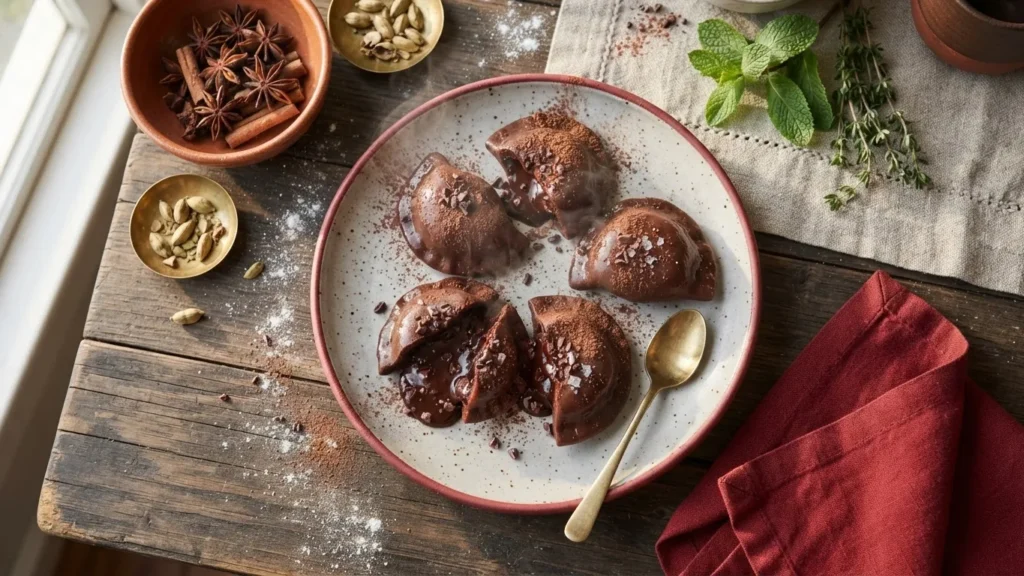
Type “chocolate dumplings” into a recipe search and you get three unrelated dishes: a steamed molten-centre dessert built like a soup dumpling, a Southern drop dumpling simmered or baked in cocoa sauce, and the Austrian Germknödel, a fist-sized yeast bun whose classic filling is plum, not chocolate. Picking the wrong one means a wrong dough, a wrong cook time, and a wrong result. This guide separates them by origin, method, and the failure each one is prone to, using the recipes published by Catherine Zhang, Simmer + Sauce, Jonathan Melendez, Caroline’s Cooking, and The Daring Gourmet.
Which chocolate dumplings you want decides everything else. The steamed dessert version wraps chilled chocolate ganache in a thin hot-water dough and cooks in 6 to 7 minutes; it is the dish inspired by Din Tai Fung’s menu item. The Southern style drops a cocoa batter into a bubbling chocolate sauce and simmers or bakes it around 20 minutes. The Austrian Germknödel is a large yeast dumpling, traditionally filled with spiced plum jam, steamed roughly 30 minutes. Chocolate inside a Germknödel is a non-traditional swap. Match the name to the method before you shop.
The steamed molten-centre chocolate dumplings (dessert xiao long bao)
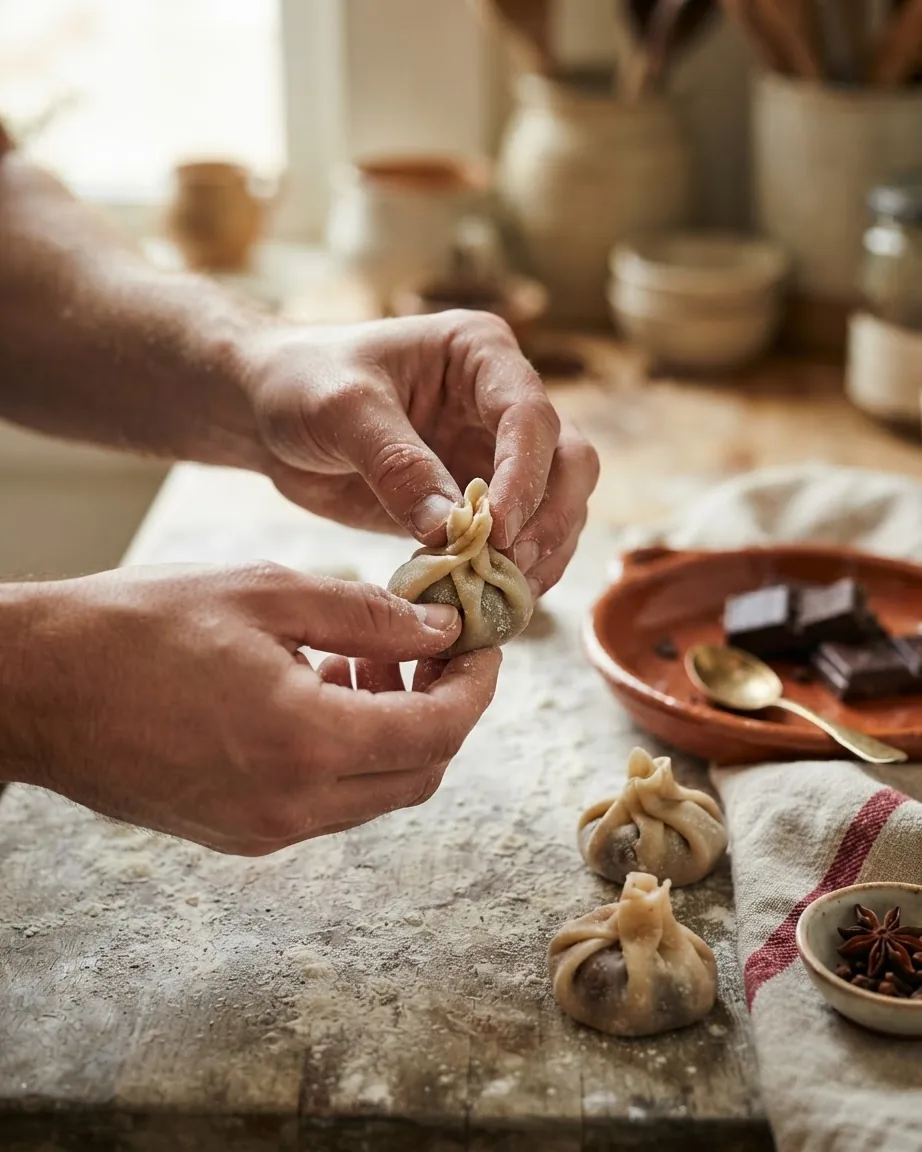
This is the newest of the three and the one most people picture: a dumpling that looks like a savory xiao long bao but breaks open to chocolate instead of soup. Pastry chef Catherine Zhang published a home version explicitly modeled on the soup-dumpling format, and Simmer + Sauce documents a Din Tai Fung copycat with precise wrapper weights. The region of reference is Chinese dim sum technique applied to dessert; neither source claims it as a traditional Chinese sweet.
The build has two parts. The filling is a chocolate ganache, chilled firm so it holds its shape during wrapping and only liquefies under steam. Simmer + Sauce directs you to chill the ganache “for at least 2 hours” in its chocolate xiao long bao method before it goes anywhere near dough. The dough is a kneaded wheat dough rested so it rolls thin without snapping back; Catherine Zhang notes resting at least 30 minutes before rolling, and Simmer + Sauce kneads about 10 minutes to a smooth, slightly tacky ball, then rests it 20 minutes.
Portioning is where this dish is won or lost. Simmer + Sauce cuts the dough into pieces of 4.8 to 5.2 grams each, weighed, not eyeballed. A wrapper that is too thin or sealed with a gap lets the molten centre escape under steam. The fixes that recur across both sources: keep the ganache cold and firm, weigh the wrappers, leave the centre of each wrapper slightly thicker than the edges, and close the pleats with no gap. Then steam 6 to 7 minutes, stopping when the skin turns translucent and the centre reads runny, per Catherine Zhang. Overshoot and the dough toughens; the chocolate does not need more than that to melt.
What the chocolate dumplings at Din Tai Fung are called, and how they are made
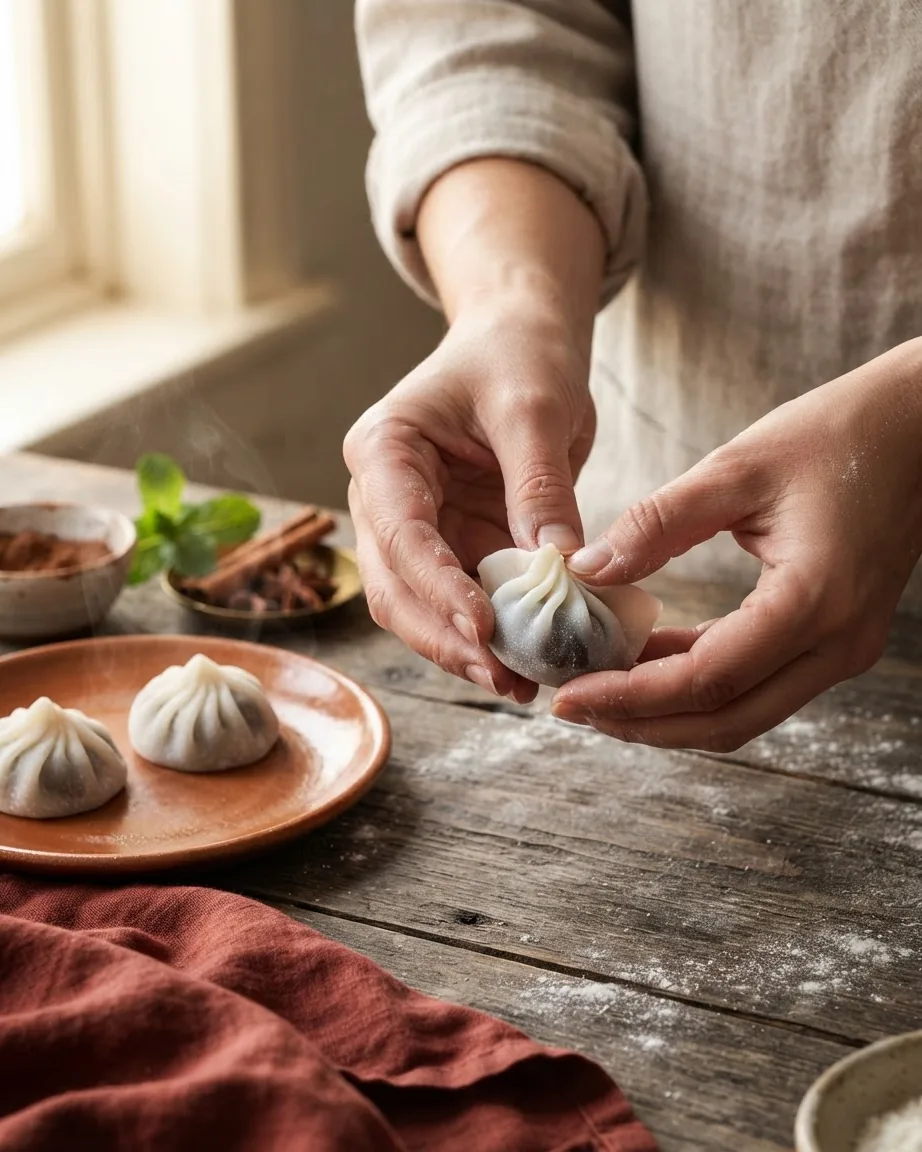
The restaurant lists the item as Chocolate & Mochi Xiao Long Bao. Din Tai Fung’s own menu describes a chocolate truffle “enveloped in a thin layer of mochi” and folded with “painstaking attention into our signature 18 folds,” on the Chocolate & Mochi Xiao Long Bao page. Two details separate the restaurant dish from the home dessert versions: the wrapper is mochi (glutinous rice), not wheat dough, and the filling is a solid chocolate truffle rather than a poured ganache.
That matters if you are deciding what to cook. The home recipes from Catherine Zhang and Simmer + Sauce use a wheat hot-water dough and a chilled ganache, which behave differently from mochi on the plate: chewier skin from mochi, a cleaner molten break from a ganache that was poured and set. If you want the restaurant’s exact texture, you are matching mochi; if you want the lava effect at home with standard pantry flour, the ganache-and-wheat route is the documented one.
Southern chocolate dumplings in cocoa sauce: the pan-size trap
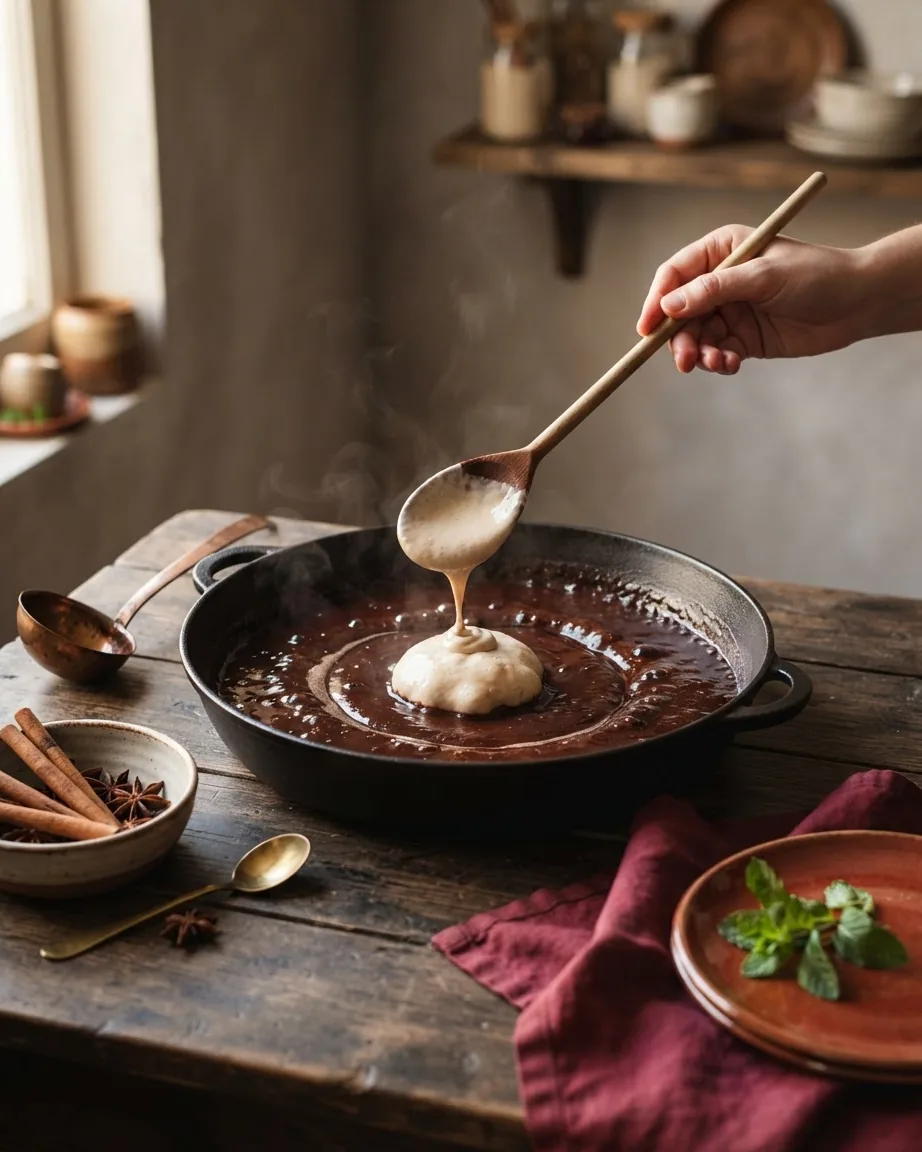
This is the American South’s version, and it bears no relation to the steamed dessert. Here, spoonfuls of a sweet cocoa batter are dropped into a hot chocolate sauce and cooked in the sauce itself. Jonathan Melendez (The Candid Appetite) bakes his in an Irish cream chocolate sauce, while Food.com’s simmered version cooks entirely on the stovetop. The dumplings come out cake-soft, half-submerged in sauce, closer to a cobbler than to anything folded.
Two routes, two timings. Melendez builds the sauce first, cooking it over medium-high heat for 3 minutes until it boils and thickens, then bakes the dumplings in it at 400°F for about 20 minutes until they puff and cook through. The Food.com stovetop method covers the skillet and gently simmers around 20 minutes instead. Both land near the same total; the oven gives a drier top, the skillet a wetter, more pudding-like finish.
The failure reviewers hit is sauce ratio and pan crowding. Drop too many spoonfuls into too small a pan and the dumplings pack together, soak up the sauce, and leave you with dense lumps and a dry bottom instead of dumplings floating in chocolate. The fix is physical, not fancy: give each spoonful room, use a pan wide enough that the sauce stays liquid around them, and resist adding more batter than the surface can hold. The balance here is sweet against the faint bitterness of cocoa; the sauce is meant to stay pourable, so err toward more sauce surface, not less.
Austrian Germknödel: why chocolate makes it a variation, not the classic
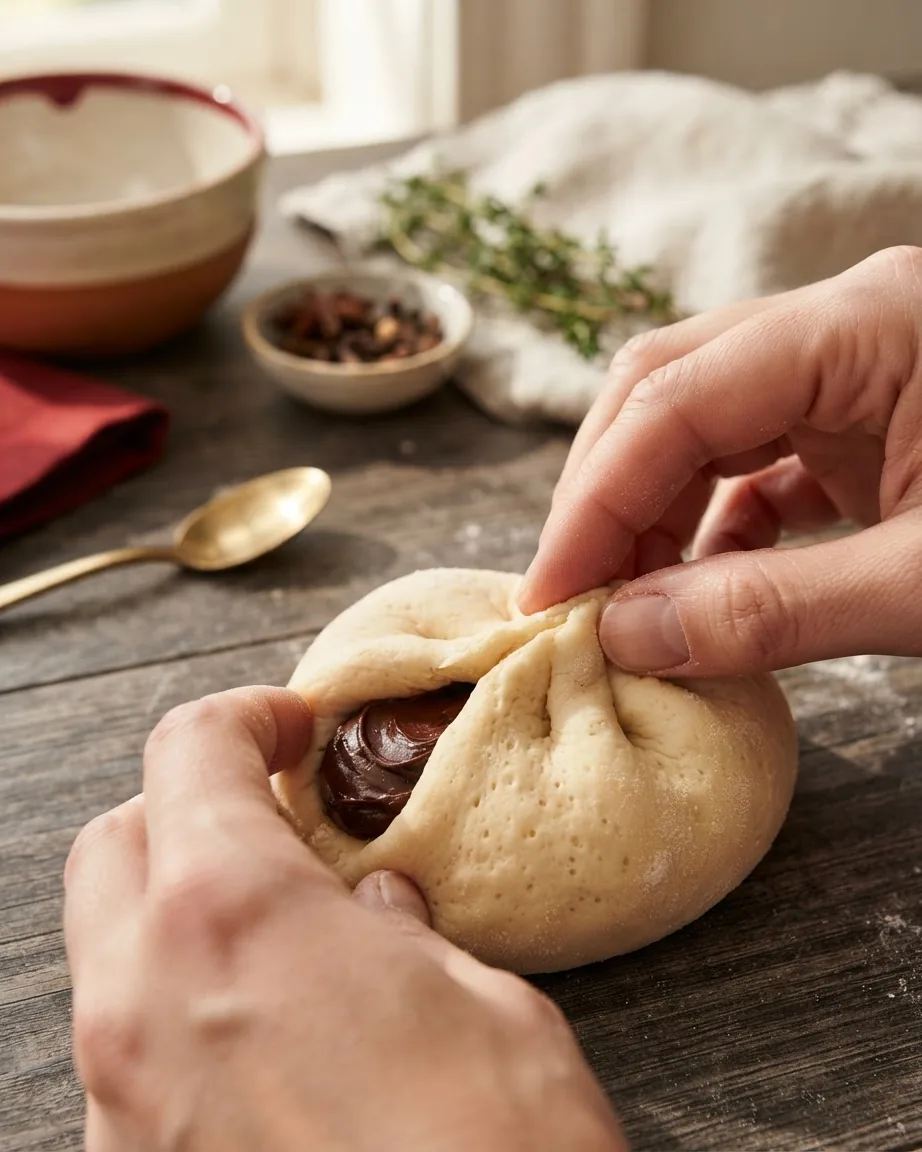
The Germknödel is a different animal entirely: a large, pillowy yeast dumpling from Austria and Bavaria, steamed and served hot under melted butter with a dusting of ground poppy seed and sugar. Wikipedia and Caroline’s Cooking both define its traditional filling as Powidl, a spiced plum jam. By that definition, a chocolate Germknödel is a filling swap, not the original dish. The dough, the proof, and the steam stay the same; only what goes inside changes.
On origin, the sources add nuance worth keeping. Wikipedia places it in Germany and Austria and notes Germ is the Austrian word for yeast, in its Germknödel entry. The Daring Gourmet’s Kimberly Killebrew traces the dumpling further back to Bohemian roots within the former Habsburg Empire. It has long been a Lenten and festival food, which fits its size: this is a filling main or a substantial dessert, not a bite.
The dough is yeast-raised and handled gently. Caroline’s Cooking kneads about 5 minutes to smooth, then lets it rise around 45 minutes until doubled; The Daring Gourmet kneads about 4 minutes and proofs 60 to 90 minutes, with a second rest of the shaped dumplings for 30 to 60 minutes until puffy. Killebrew divides the dough into pieces of about 140 grams, or 5 ounces, each, then steams them over a very low simmer for about 30 minutes.
Two things sink a Germknödel. A weak seal lets the filling leak, which also argues against overfilling when you swap in a loose chocolate rather than stiff plum butter. The second is the lid: Killebrew warns against lifting it mid-steam, because the rush of cool air collapses the risen dough. Keep the pot covered, keep the simmer low, and leave it alone. For a chocolate filling, lean toward a thicker, set chocolate so it behaves more like the plum butter the dough was built around.
Make-ahead and reheating behavior, version by version
The three dishes store and reheat on different logic, and the steam times scale with dough mass and leavening rather than with how good the method is. The thin ganache dumplings freeze well and go straight from the freezer to the steamer: Catherine Zhang’s from-frozen instruction is 10 to 12 minutes, longer than the 6 to 7 minutes for fresh because frozen chocolate and chilled dough both need time to catch up. That makes this the best batch-and-stash option of the three.
The Germknödel is best eaten fresh; if you are reheating a cooked one, Caroline’s Cooking steams it just 3 to 5 minutes to warm through, not to cook it again. The Southern cocoa-sauce dumplings are a serve-soon dessert: they keep soaking up sauce as they sit, so the texture that works hot is gone once the sauce is fully absorbed. If you need a make-ahead chocolate dumpling, the frozen steamed dessert is the one engineered for it.
The long gap between a 6-to-7-minute dessert dumpling and a 30-minute Germknödel is not a sign one method is slower or worse. A thin wrapper around warm-ready ganache needs only enough heat to set the skin and loosen the centre; a 140-gram ball of yeast dough has to cook all the way through and let its leavening finish. Judge doneness by the cue each source gives, not by a universal clock.
For more dumpling methods, see our Szechuan dumplings guide and our chocolate bread write-up, both within our wider asian recipes section.
Frozen vs Fresh: The Steam-Time Penalty for Batch-Made Dessert Dumplings
The molten-centre dessert dumplings are the make-ahead champion of the three, since they go straight from freezer to steamer. But frozen does not mean same-timer: Catherine Zhang’s instructions are 6 to 7 minutes fresh and 10 to 12 minutes from frozen. Do the subtraction and the penalty is clear, so you can set the timer right the first time instead of guessing.
- At the low end, frozen adds 4 extra minutes (10 minus 6), and at the high end it adds 5 extra minutes (12 minus 7). Budget roughly four to five more minutes per batch when steaming from the freezer.
- At the low end that means steaming 10 to 12 minutes from frozen against 6 to 7 minutes fresh, so plan on roughly two-thirds longer, not a small nudge.
This is why the frozen dumplings are safe to stash: the chilled dough and solid chocolate simply need the extra time to catch up, and knowing it is four to five minutes keeps you from pulling them while the centre is still cold.
Frequently asked questions
What are chocolate dumplings?
The name covers three unrelated dishes: a steamed dessert wrapping chilled ganache in thin dough, a Southern drop dumpling cooked in cocoa sauce, and the Austrian Germknödel, a yeast dumpling whose classic filling is spiced plum jam rather than chocolate. Identify which one you want before shopping, because the dough and cook times differ sharply.
How does Din Tai Fung make the chocolate dumplings?
The restaurant encases a chocolate truffle in a thin mochi, glutinous-rice wrapper rather than wheat dough, then pleats each piece into its signature 18 folds. Home copycats instead pour and chill a ganache, wrapping it in a kneaded wheat dough rested about 30 minutes, which gives a different, cleaner molten break than the mochi version.
Can I buy frozen chocolate dumplings?
The steamed dessert version is the one built to be frozen raw and cooked later. Rather than thawing, steam them straight from frozen for 10 to 12 minutes. The Germknödel reheats poorly from scratch but warms in a steamer in 3 to 5 minutes; the Southern cocoa-sauce type keeps absorbing its sauce and is best eaten the day it is made.