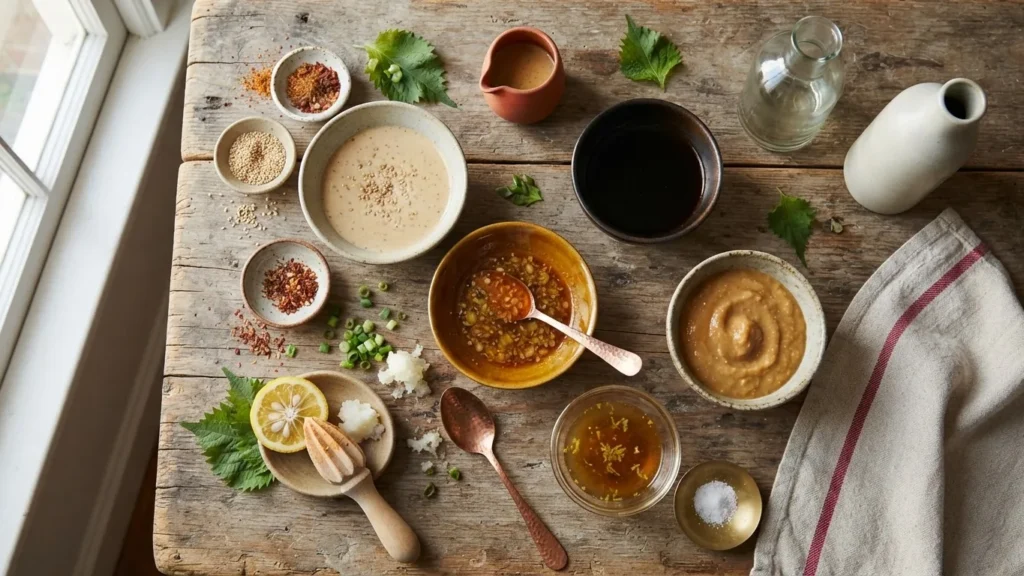
Drafted with AI language models. How this page was made
Japanese salad dressings split into five families worth knowing by name: wafu (soy-vinegar-oil), carrot-ginger (the bright orange one at steakhouses), goma or sesame (creamy, nutty), ponzu (citrus-forward), and miso. Wafu comes together in 5 minutes; a blended carrot-ginger needs under 10 minutes. The orange restaurant dressing you are chasing is almost always carrot-ginger, built from carrot, onion, and ginger. For a gluten-free sesame version, the deciding factor is which Kewpie mayonnaise you buy. Storage ranges from days to months depending on type, and one storage question (freezing carrot-ginger) is genuinely disputed between sources.
The AtlasPlate Recipe Desk compiled this guide by cross-referencing published recipes from Just One Cookbook, Pickled Plum, Sudachi Recipes, Kikkoman, and Wikipedia, extracting the exact ratios, terminology, and storage windows each one records. See our wider asian recipes for related dishes.
Wafu Dressing: The Soy-Vinegar Base and Its Chuka Variant
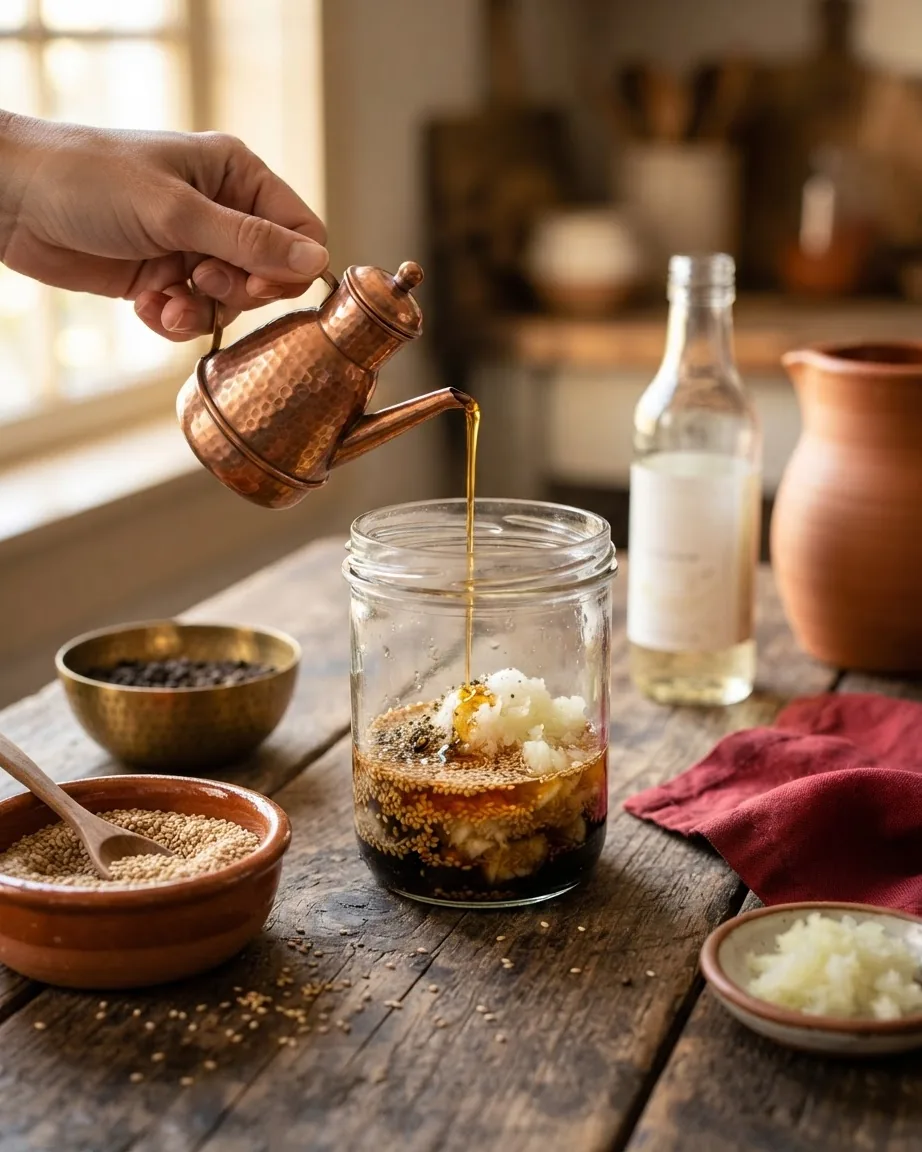
Wafu (和風, “Japanese-style”) is the everyday dressing on shredded cabbage and leafy greens. Wikipedia describes its composition this way: “The standard wafu dressing consists of a mixture of Japanese soy sauce, rice vinegar, mirin, and vegetable oil.” That is one documented formula. A widely followed alternative from Just One Cookbook (Namiko Chen) swaps the mirin for grated onion, sugar, black pepper, and toasted sesame seeds: different ingredients, same soy-vinegar-oil family, so treat both as valid variations rather than a single fixed recipe.
The Just One Cookbook version combines 1 Tbsp grated onion, 3 Tbsp each of soy sauce and unseasoned rice vinegar, 1 Tbsp sugar, ⅛ tsp black pepper, 1 tsp toasted sesame seeds, and 3 Tbsp neutral oil, shaken in a jar to about ½ cup (120 ml). The sugar is not optional seasoning: it balances the sharp onion bite and the rice-vinegar acidity. For the Chinese-style chuka variant, replace one-third of the neutral oil with toasted sesame oil, which pushes the flavor nuttier. The full recipe is published by Just One Cookbook.
Use unseasoned rice vinegar specifically. Seasoned rice vinegar already carries sugar and salt, which would double the seasoning already in the jar, and sharper vinegars overpower the soy.
Carrot-Ginger Dressing: The Orange Steakhouse Dressing, Made at Home
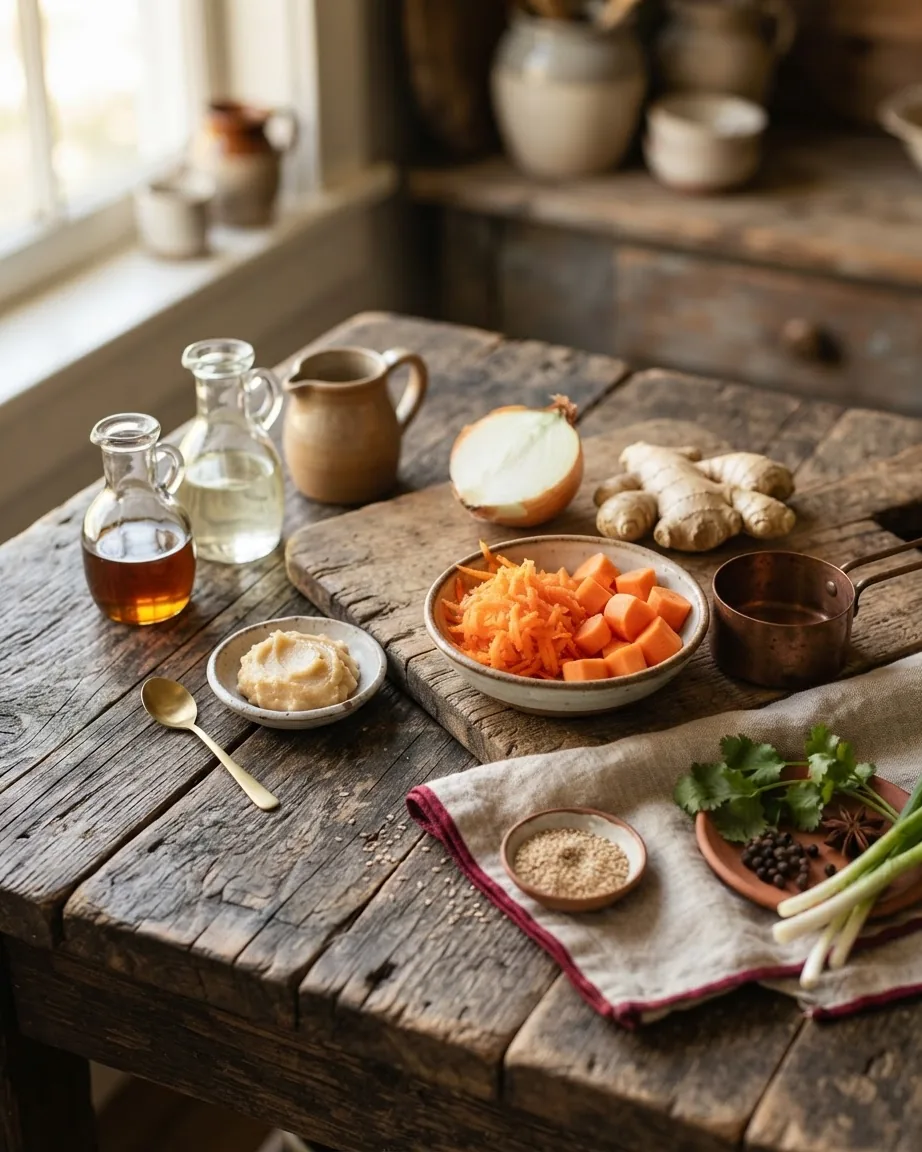
This is the thick, bright-orange dressing served over iceberg or cabbage at hibachi and teppanyaki restaurants. It is sweet, vinegar-forward, and built from blended vegetables: carrot gives it the color, onion the body, ginger the bite. Both published recipes blend smooth in under 10 minutes.
Just One Cookbook builds it from 1 carrot (4.8 oz, 135 g), a quarter yellow onion, a 1-inch knob of ginger, white miso, toasted sesame oil, rice vinegar, and neutral oil. Pickled Plum (Caroline Phelps) scales up to 7 oz carrots, 4 oz onion, soy sauce, and ¾ cup oil against ½ cup rice vinegar, yielding about 2 cups. Because the two use different units and batch sizes, a direct carrot-to-oil comparison across them is not reliable. The full recipes live at Just One Cookbook and Pickled Plum.
On shelf life, the sources agree on the headline and split on freezing:
- Refrigerated, standard: up to 1 week on both; up to 2 weeks if you remove your portion and return the jar to the fridge right away.
- Frozen: Just One Cookbook says you can freeze it up to a month. Pickled Plum advises against freezing, warning the fresh ingredients turn “mushy and unpleasant.”
This disagreement is unresolved. Freezing works if you accept a texture trade-off; skip it if a smooth, fresh blend matters to you. One serving (¼ cup) of the Pickled Plum version is 212 calories with 372 mg sodium.
Goma Dressing and the Japanese Salad Dressings a Reader Confuses Most
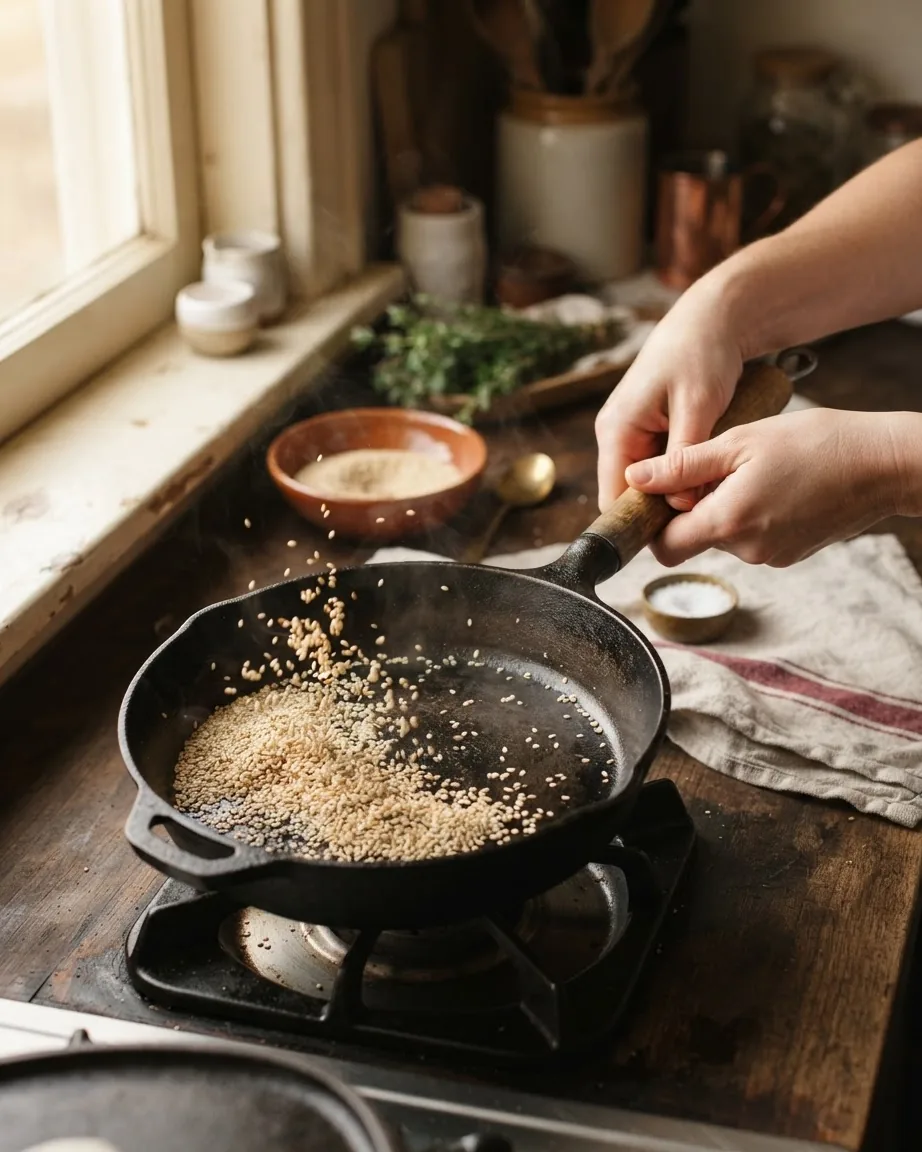
Goma (sesame) dressing is the creamy, nutty one: not to be confused with the vinaigrette-style sesame-soy dressings. The creamy texture comes from mayonnaise. Just One Cookbook builds it from six pantry items: toasted white sesame seeds, Kewpie mayonnaise, rice vinegar, sugar, soy sauce, and toasted sesame oil, using 4 Tbsp sesame seeds. Sudachi Recipes makes a small jar in about 10 minutes, enough for a couple of salads.
The make-or-break step is the sesame. Toast the seeds over medium heat about 3 minutes, shaking the pan continuously so they heat evenly, and pull the pan off the heat the moment two or three seeds pop. Sudachi Recipes is blunt about why: “Sesame goes from toasted to scorched in seconds, and scorched seeds turn the whole batch bitter.” If your dressing comes out gritty or thin, dissolve the sugar into the vinegar and soy before it meets the ground sesame, and grind the seeds while still warm into a half-paste so the mayonnaise can emulsify around them.
Creamy sesame dressing is not an old tradition. Kewpie put its roasted sesame dressing on shelves in 2000 and it reached the top of the market two years later, holding that spot in a category with more than 400 domestic manufacturers.
For gluten-free, the answer hinges entirely on your Kewpie: US-made Kewpie is certified gluten-free, while the Japanese-made version contains malt vinegar and is not. Check the label, not the brand. Full recipes are at Just One Cookbook and Sudachi Recipes.
Ponzu and Miso: The Citrus and Fermented-Soy Dressings
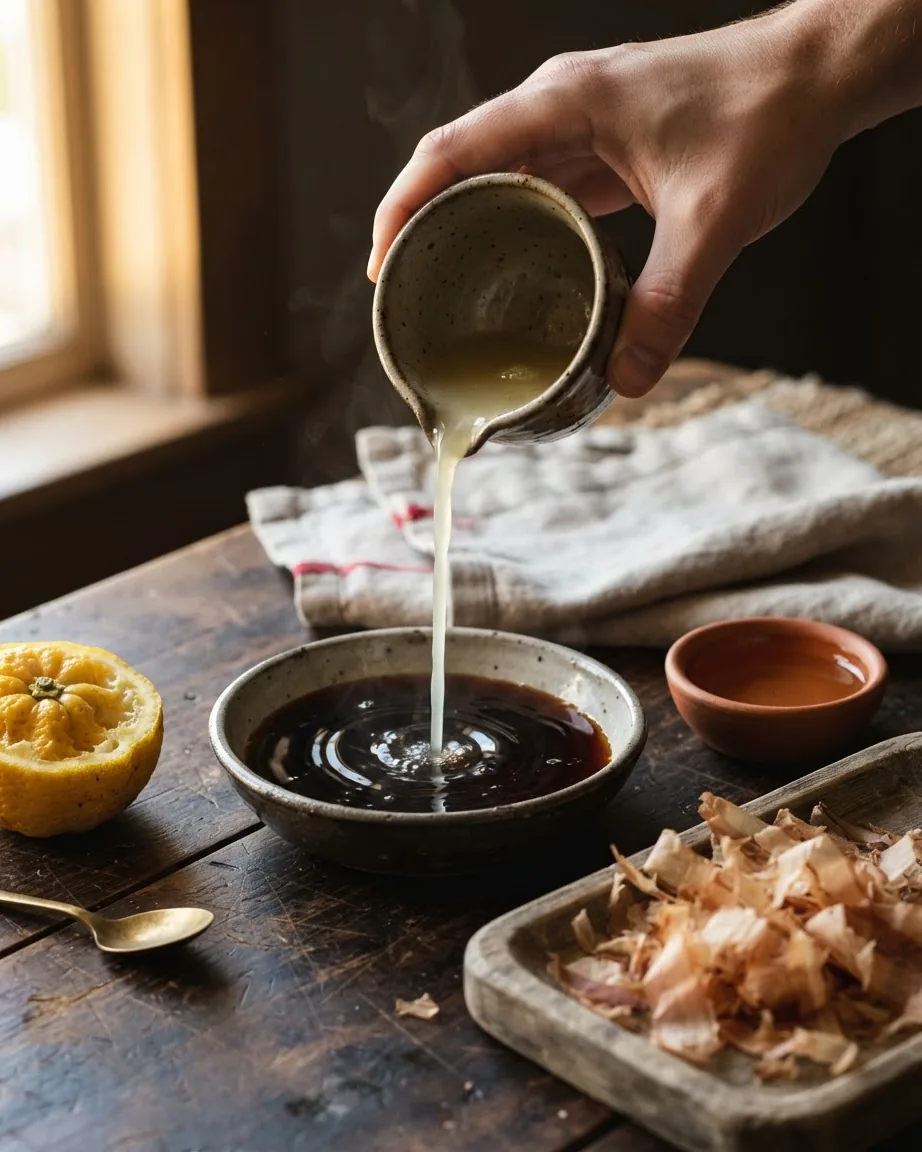
Ponzu is a light, citrus-forward dressing that doubles as a vinaigrette over greens. Kikkoman draws a terminology line most people skip: plain ponzu is the citrus base, while the brown bottle mixing citrus with soy is more accurately “ponzu soy sauce.” Kikkoman notes the distinction is not clearly recognized in modern Japan and the terms are used interchangeably, so do not correct a menu over it. Homemade ponzu combines soy sauce, 100% citrus juice, vinegar, and dashi ingredients like katsuobushi. Once opened, refrigerate it and use within 2 to 4 months, following each product label.
Miso dressing adds fermented-soybean paste for savory depth; white miso also appears inside the carrot-ginger blend above. Both ponzu and miso dressings are dairy-free by default. For the official ponzu definition and ingredients, see Kikkoman.
Make-Ahead, Resting, and Fixing a Separated Jar
These dressings are make-ahead by design. Freshly mixed tastes sharper; a rest in the fridge mellows and melds it. Just One Cookbook’s sesame dressing wants at least 20 minutes chilling so flavors settle; Sudachi suggests 15 to 30 minutes. A rest is a quality choice, not a safety step.
Here is the desk’s cross-source storage table, built only from the recipes read: a comparison no single published page lays out in one place. Note the serving sizes differ, so the two calorie figures are not comparable to each other:
| Dressing | Refrigerated life | Calories (stated serving) |
|---|---|---|
| Wafu (JOC) | 7-10 days | 71 kcal per 1 Tbsp |
| Carrot-ginger (Pickled Plum) | up to 2 weeks | 212 kcal per ¼ cup |
| Goma / sesame (JOC) | up to 1 week | not stated |
| Ponzu, opened (Kikkoman) | 2-4 months | not stated |
A jar that goes solid or separates in the fridge is not spoiled: that is the oil setting. Let it sit at room temperature 5 to 10 minutes, or microwave it very briefly, about 15 to 20 seconds, then shake it again. For related finishing ideas, see our salad topping ideas guide, and for a sesame-oil method elsewhere, our scallion noodles guide.
Where to Buy Japanese Ginger Salad Dressing and Its Ingredients
If you would rather buy than blend, the bottled carrot-ginger dressing sold at US supermarkets sits in the salad-dressing aisle, often labeled “ginger” or “Asian ginger.” For restaurant-grade flavor, an Asian grocery or the international section carries bottled Japanese dressings alongside the ingredients to make your own. The core ingredients are easy to source: unseasoned rice vinegar, soy sauce, and toasted sesame oil are regular-supermarket items; white miso and Kewpie mayonnaise are reliably stocked at Asian groceries or online.
Making it yourself is the surest route to the steakhouse taste, and it is fast: Pickled Plum delivers “Bold restaurant-style flavor in under 10 minutes” from whole carrot, onion, and ginger. Watch the Kewpie label when gluten-free matters: the US and Japanese formulas differ, as noted above.
Wafu vs. Carrot-Ginger: Same ¼-Cup Pour, Very Different Numbers
The published nutrition is quoted on mismatched servings (wafu per tablespoon, Pickled Plum’s carrot-ginger per ¼ cup), so no source lets you compare them head to head. Put wafu on the same ¼-cup basis (4 Tbsp) and the thin soy dressing turns out to be the heavier one:
- Sodium, per ¼ cup: wafu 1,648 mg (71 kcal figure aside, that’s 412 mg × 4) vs. carrot-ginger 372 mg (roughly four and a half times as much salt for the same pour).
- Calories, per ¼ cup: wafu 284 kcal (71 kcal × 4) vs. carrot-ginger 212 kcal.
One caveat worth keeping: wafu is a loose vinaigrette you’d normally use by the tablespoon, while a steakhouse plate really does get a ¼-cup ladle of the thick carrot-ginger. Pour for pour wafu is saltier, but you typically use far less of it, so the gap on a real plate is smaller than the ¼-cup math alone suggests.
Frequently Asked Questions
What is the salad dressing at hibachi?
It is carrot-ginger dressing: the thick, orange, sweet-and-tangy blend of carrot, onion, ginger, and vinegar poured over iceberg or cabbage. A homemade batch keeps refrigerated up to 2 weeks when you return the jar promptly after each use, and a quarter-cup pour runs about 212 calories.
What is the orange salad dressing used in japanese restaurants?
The orange tint comes from blended raw carrot in the carrot-ginger dressing. Both published versions purée smooth in under 10 minutes; the Pickled Plum batch yields roughly 2 cups from 7 oz of carrots, so one blend covers many salads.
Is japanese ginger dressing keto friendly?
Not strictly. The documented recipes include added sugar, and a ¼-cup serving of the Pickled Plum version carries 212 calories with 372 mg sodium: sugar and sodium that push it outside a tight keto count. You could reduce the sugar, but the published ratios are not low-carb as written.
How to make asian sesame salad dressing?
Toast 4 Tbsp white sesame seeds about 3 minutes, pulling the pan the instant two seeds pop so they do not scorch, then grind them warm and whisk with Kewpie mayonnaise, rice vinegar, sugar, soy sauce, and sesame oil. Chill at least 20 minutes before serving.
Where can i buy japanese ginger salad dressing?
Supermarket dressing aisles carry bottled “ginger” or “Asian ginger” versions; Asian groceries and online stock both bottled dressings and the ingredients to blend your own in under 10 minutes. If you need gluten-free, buy US-made Kewpie rather than the Japanese formula, which contains malt vinegar.