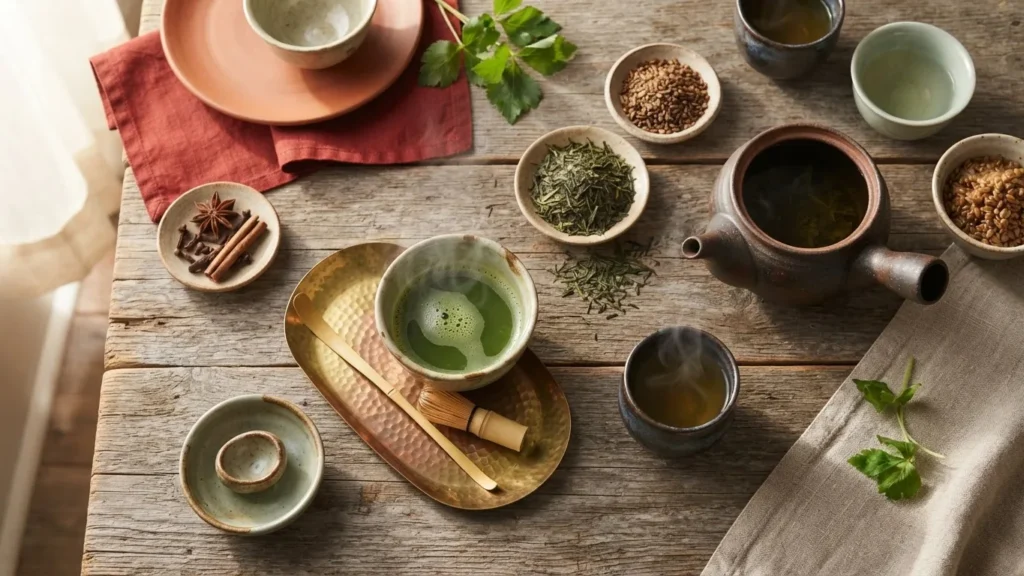
Most of the tea bags sold in the United States labeled “sencha” do not contain sencha. Tealife, the Singapore-based Japanese tea company behind the pedia entry The 5 Types of Japanese Green Tea, states that most commercial tea bags sold as sencha actually hold konacha – the fine leaf particles that break off during production – because those fragments extract quickly in bag format. That single detail reorganizes how the aisle reads. Across Japanese teas, the same base leaf gets shaded, roasted, powdered, or blended into names that sound unrelated, and knowing which transformation produced a tea tells you how to brew it and whether it is worth the price. This guide pulls together what those published authorities agree on, and where they do not.
The water temperature is the one lever that carries across every tea here, and it rests on chemistry any home cook can use. What follows separates the real decisions – which grade, which temperature, which caffeine or gluten constraint – from the marketing.
Quick answer: what Japanese teas actually are, and how to brew them
Japanese teas are mostly steamed green teas built from one base leaf. Shading before harvest raises umami and lowers astringency, producing the premium ladder of kabusecha, gyokuro, and matcha. Brewing hinges on temperature: ITO EN reports that astringency compounds (catechins) extract above 80°C, while flavor compounds (theanine) release near 50°C. So standard sencha goes at 80 – 90°C for about 30 seconds, gyokuro at 50°C for about 120 seconds, and aromatic hojicha or genmaicha near 100°C. For cooking, culinary-grade matcha is the intended choice. Lower-caffeine true teas include kukicha, genmaicha, and bancha.
The shading ladder: why kabusecha, gyokuro, and matcha climb in price
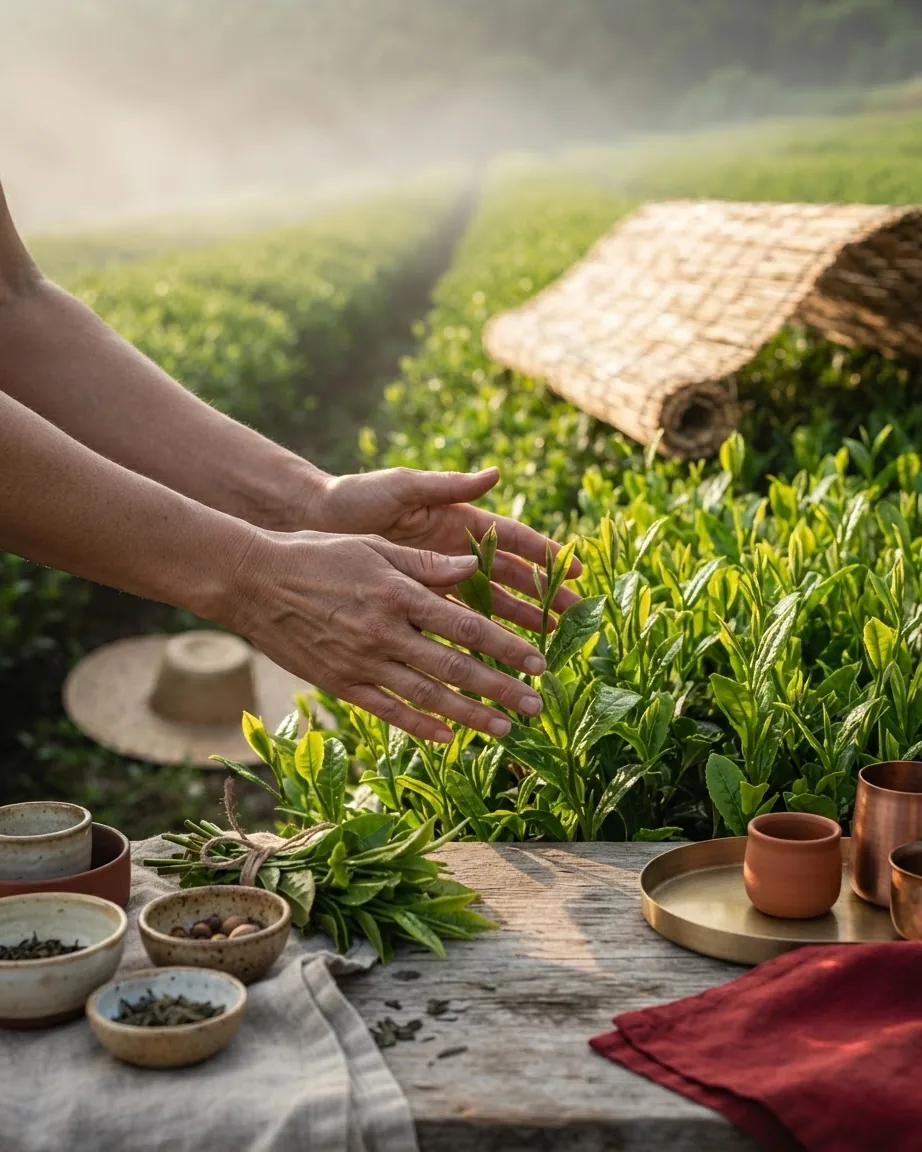
Shading is the mechanism that separates everyday green tea from the expensive top of the range, and it works through one change in the plant. When growers cover the bushes before harvest, the leaves build up more amino acids, which read on the palate as umami and sweetness, while astringency falls. Tealife puts it plainly: longer shading means more umami and less astringency, and a higher price.
The duration is the variable that defines each tea. Tealife places kabusecha at one to two weeks of shade, which lifts umami while keeping some of standard sencha’s brightness, and puts gyokuro at around three weeks for a deep, concentrated, low-astringency cup. Matcha comes from leaves shaded the same stretch as gyokuro, then stone-ground into powder. Sugimoto Tea Company, in its Japanese Tea Varieties reference, describes matcha as made from leaves shaded 2 to 3 weeks before the first harvest, then steamed, deveined, destemmed, and dried without rolling before grinding. The Global Japanese Tea Association gives tencha – the unrolled leaf that becomes matcha – a shade period of 4 weeks before harvest.
Those numbers do not perfectly agree, and that is worth stating rather than smoothing over. The figures sit in overlapping ranges, but they describe different teas under different conditions – kabusecha, gyokuro, matcha, and tencha are not one product with a single correct shade time. Treat the durations as approximate growing windows, not fixed specifications. What stays consistent across all the sources is the direction: more shade, more umami, less astringency, lower yield, higher price.
The flavor change has support from a controlled study, with one caveat about scope. The International Journal of Molecular Sciences, published through PMC at NIH, reports that experimental shading increased theanine and caffeine contents while decreasing catechin (epicatechin and epigallocatechin) contents. That study examined Fuding white tea plants under artificial shade in China, not Japanese gyokuro grown under tana canopies, so it confirms the qualitative direction – theanine up, caffeine up, catechins down – rather than any absolute number for a Japanese field.
Sencha vs. kabusecha vs. gyokuro vs. matcha: the dividing lines
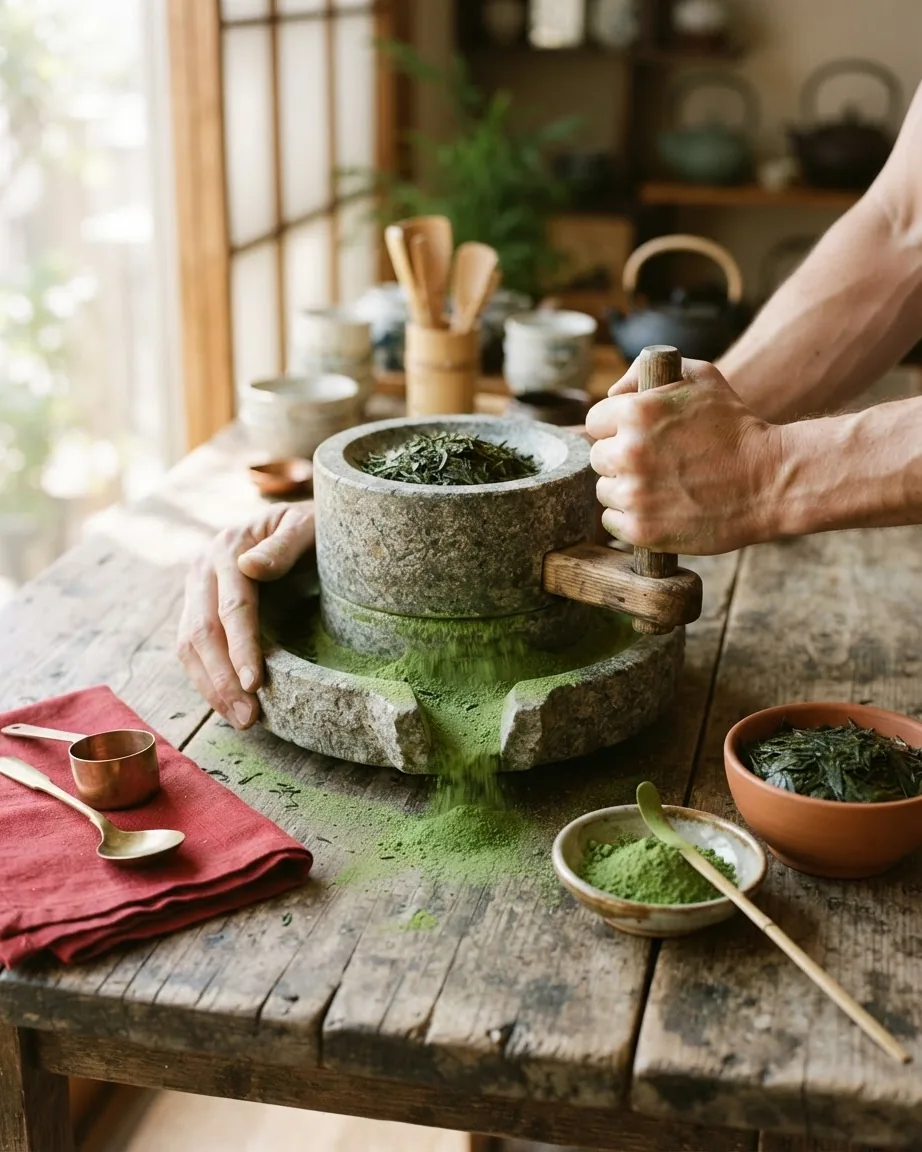
These four names describe one base leaf at four points on the shading ladder, plus one difference in form at the top. Sencha is the sun-grown baseline, unshaded, steamed, rolled into needles – more than half of Japan’s tea production falls in its family. Kabusecha is sencha’s leaf given one to two weeks of shade. Gyokuro gets about three weeks.
Gyokuro and matcha are the pair most often confused, because both start from leaves shaded roughly three weeks. The split is form and consumption. Gyokuro remains a loose-leaf tea infused in water and then discarded, while matcha is the same style of leaf stone-ground into a powder that dissolves and is drunk whole. The production step that makes matcha possible is that the leaves are dried without rolling, which is why they can be ground to a fine powder rather than brewed. If you want to taste the shaded leaf in a cup, buy gyokuro; if you want to consume the whole leaf, buy matcha.
The anti-bitterness rule: catechins above 80°C, theanine near 50°C
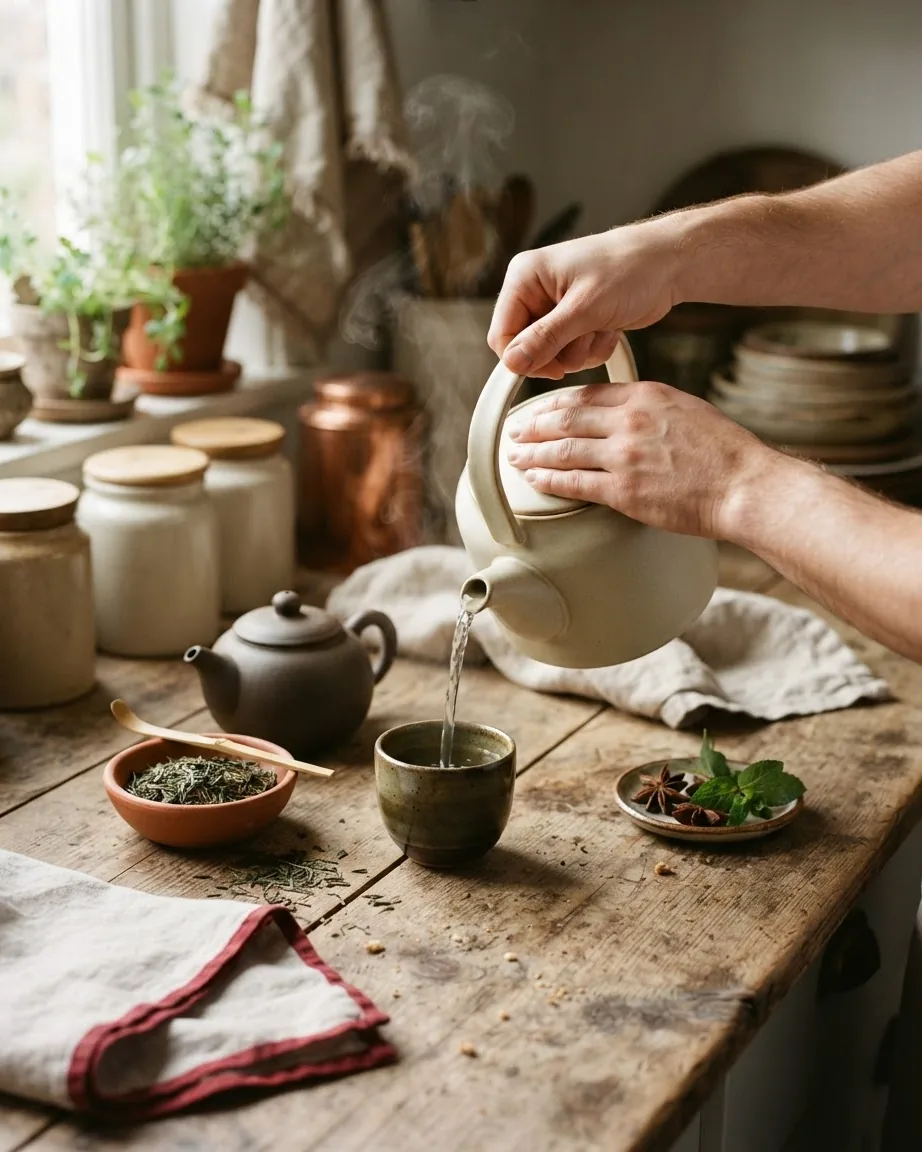
One rule transfers to every tea in this guide, and it comes from how tea compounds dissolve at different temperatures. ITO EN, in its guide How to Prepare the Perfect Cup of Japanese Green Tea, states that the astringency components (catechins) are drawn out at temperatures over 80 degrees C, while the flavor components (amino acids, theanine) require a lower temperature of around 50 degrees C to dissolve. Hotter water pulls bitterness; cooler water favors sweetness and umami. That is the whole mechanism, and it dictates every temperature below.
From ITO EN’s own preparation table, standard sencha brews with 4.0 g of leaf, 80 – 90°C water, and 200 ml for about 30 seconds. Gyokuro brews with 6.0 g of leaf, 50°C water, and only 100 ml for about 120 seconds. Bancha takes 4.0 g, 95°C, and 200 ml for about 30 seconds. Read side by side, the premium tea uses more leaf in half the water at a far lower temperature for four times the steep – the opposite of brute force.
ITO EN also gives a preference dial inside sencha itself. For a cup that is not very astringent, it recommends around 70 degrees C; for drinkers who want sencha astringent, water over 80 degrees C. byFood lands on the gentler end, recommending sencha at around 70°C/158°F for one minute and gyokuro at around 55°C/130°F for 2 – 3 minutes.
Two more rules from ITO EN close the loop. Aromatic teas such as hojicha and genmaicha should be brewed in boiling water or water close to 100°C, because heat is what releases their roasted and toasty aromas rather than bitterness. And when you pour just-boiled water into a cup first to cool it, the temperature falls 10 degrees after being put into a cup – a usable way to hit a target without a thermometer. One point on water itself, which most tea lists skip: ITO EN recommends soft water that is very slightly acidic, and says hard water high in calcium or magnesium should be avoided.
Why Japanese teas reward low-temperature brewing
Senbird Tea, in its gyokuro guide, warns that brewing gyokuro at sencha’s high temperature and large water volume produces a bitter, astringent cup. That is the catechin rule running in reverse: the shaded leaf holds concentrated amino acids you paid for, and scalding water buries them under extracted astringency. The more you spent on shade, the cooler and slower you brew.
One base tea in disguise: hojicha, genmaicha, konacha, and tencha
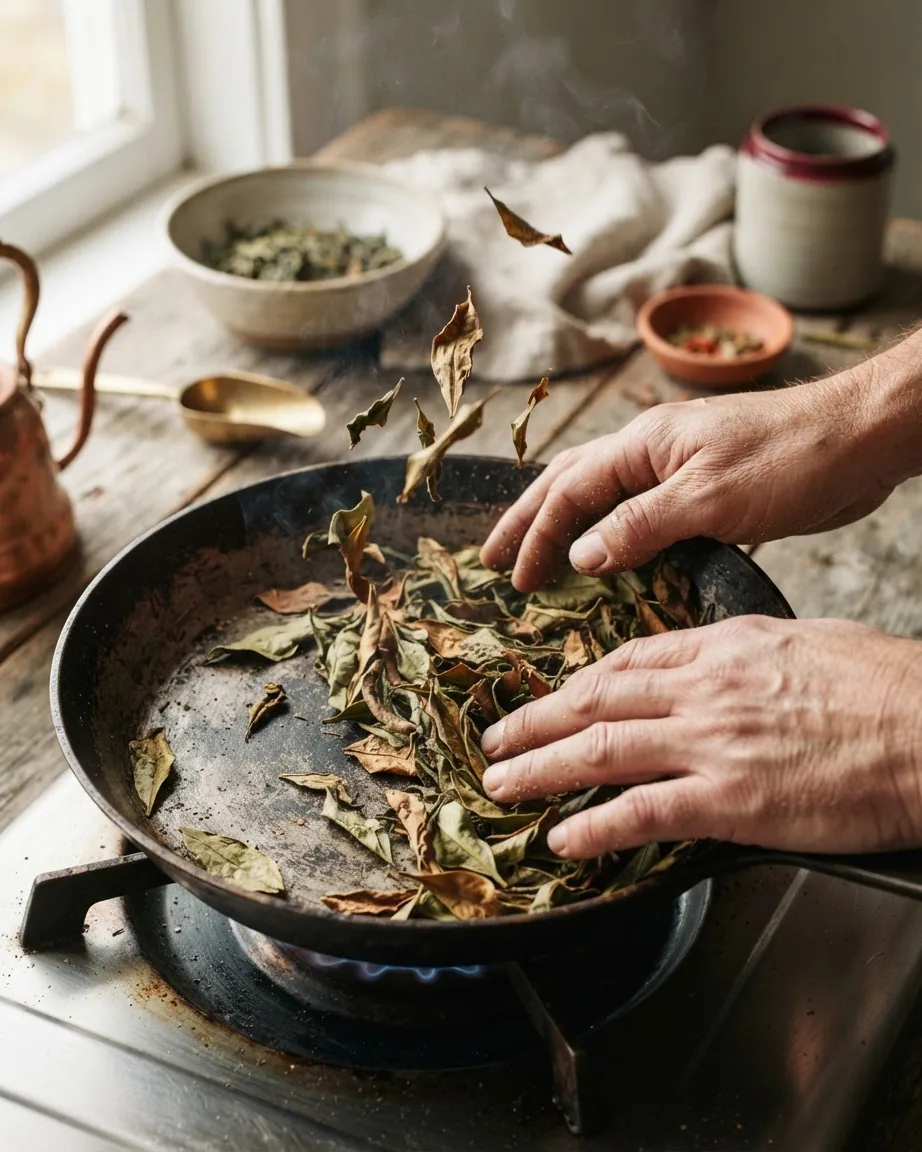
Four teas that look distinct on a shelf are the sencha base transformed, and recognizing this changes what you buy and how you brew it. Hojicha is a finished green tea – usually sencha or kukicha – roasted at high temperature until brown; it stays classified as green tea because no oxidation occurred during production. Genmaicha is sencha blended with roasted brown rice kernels, giving a toasty aroma that softens the grassy base. Konacha is the fine leaf fragments left from sencha production, which infuse rather than dissolve because they are not ground as finely as matcha. Tencha is the unrolled, shaded leaf that gets stone-ground into matcha.
This explains the tea-bag swap worth knowing. Most commercial tea bags sold as sencha actually contain konacha. If you want full-leaf sencha character, buy loose leaf; if you reach for a sencha tea bag, it is likely konacha – best brewed in just-boiled water for about 30 seconds and infused no more than twice before it turns too astringent.
Rescuing stale sencha into hojicha at home
The disguise points to a zero-waste move. Old sencha that has sat too long and lost some of its freshness can be roasted at home to become hojicha. Because hojicha is simply roasted green tea, dry-roasting faded leaves in a pan until they brown and smell nutty converts a tea you would otherwise discard into a warm, low-astringency one. Brew that homemade hojicha near 100°C, as ITO EN specifies for aromatic teas, since the roast aroma is the point.
Caffeine and gluten: a buyer’s guide for constraint drinkers
Allergen warning
If you are cutting caffeine or avoiding gluten, the choice runs along two lines: lower-caffeine true teas versus caffeine-free herbal infusions, and whether the infusion is a grain that carries gluten. Several Japanese teas, described below by byFood in Different Types of Japanese Tea: A Beginner’s Guide, are naturally lower in caffeine while still being real tea from the Camellia sinensis plant.
- Kukicha (twig tea): made from the young twigs and stems separated from the leaves during production, which makes it naturally low in caffeine.
- Genmaicha: naturally lower in caffeine because it contains less actual tea – the roasted rice displaces some leaf.
- Bancha: made with older leaves picked later in the harvest, giving a more robust flavor and lower caffeine.
- Sobacha (buckwheat): this roasted-buckwheat infusion is entirely caffeine-free, since it contains no tea leaf at all.
- Mugicha (barley): a caffeine-free herbal infusion – but not gluten-free, because it is made from barley.
The practical line: if you need caffeine-free, sobacha and mugicha both qualify, but only sobacha is safe for a gluten-free household. If you need lower caffeine but want actual tea, kukicha, genmaicha, or bancha are the picks. The directional caffeine gap among true teas is real – Senbird states roughly 120 to 140 mg of caffeine per cup of gyokuro compared to 30 to 50 mg per cup of sencha, because shading raises caffeine along with theanine. Treat those per-cup numbers as directional only: “a cup” is not standardized across vendors, since leaf dose, water volume, temperature, and steep time all shift the result, so the figures show the ranking, not a value you can bank.
Ceremonial vs. culinary matcha: which grade to cook with
For baking and recipes, the answer runs against the instinct to buy the most expensive tin. For recipes like matcha cookies, cake, or ice cream, culinary matcha is the way to go. Ceremonial grade is milled for delicate flavor meant to be whisked and drunk on its own; folded into batter with sugar, butter, and heat, that nuance is lost and the finer grind wasted. Culinary matcha is formulated to hold its color and bitterness against competing ingredients, which is exactly what a dessert needs. If a recipe simply says “matcha,” reach for culinary grade and save the ceremonial tin for a bowl of tea. Related guide: Japanese mango ice cream.
Where Japanese teas grow, and what each region’s style means
Region shapes what reaches your cup, and two prefectures dominate the supply. Senbird Tea, in Japanese Tea Regions, reports that Japan produces approximately 80,000 metric tons of tea annually across more than 20 prefectures. Shizuoka accounts for about 36% of production and Kagoshima about 33%, so roughly two-thirds of Japanese tea comes from two places.
Style follows geography. Senbird places the origin of fukamushi (deep-steamed) sencha in Shizuoka, where leaves are steamed 2 – 3 times longer than standard sencha; that longer steam breaks the leaf down more, producing a richer, more full-bodied cup with less astringency. If you see “fukamushi” on a label, expect a deeper, less grassy brew and a cloudier liquor than ordinary sencha. Uji in Kyoto, though a small share of volume, is the historic home of matcha and gyokuro, while Kagoshima’s warm climate yields sweeter, less astringent teas. Knowing the region lets you predict the cup before you buy.
A short history: sencha’s late arrival in 1738
For a tea that now leads Japanese consumption, sencha is surprisingly modern. The Global Japanese Tea Association, in its Japanese Tea Kinds reference, states that despite being the most consumed tea in Japan today, sencha was only created in 1738. Powdered tea in the matcha style had existed in Japan for centuries before that, carried over from Chinese practice, so the steamed-and-rolled loose leaf most people now picture as “Japanese green tea” is the newer arrival, not the ancient one.
The association attributes the creation of sencha to Nagatani Souen, a tea manufacturer in Uji, who it says went through 15 years of trials before arriving at the process still used today. That method – steam the fresh leaf to stop oxidation, then roll and dry it into needles – became the template that the whole sencha family, and by extension the shaded teas built on it, now follows.
Other regional forms carry their own long steaming traditions. The association notes that to become kyobancha, tea leaves need to be steamed for a long time, usually about 30 minutes – far longer than the seconds-long infusions of the finished tea, and a reminder that “bancha” covers several distinct products rather than one.
Make-ahead and the cook’s toolkit for Japanese teas
Because these are infusions rather than cooked dishes, the make-ahead work is about readiness and form, and a few concrete actions set you up before you brew. The published preparation details are pulled together here; the full recipes live with the sources named throughout.
- Pre-roast a hojicha supply: turn faded sencha or kukicha into hojicha by home-roasting, following Tealife’s note, so stale leaf becomes a ready aromatic tea rather than waste.
- Keep culinary matcha for the kitchen: stock culinary grade for baking and reserve ceremonial grade for whisked bowls, so you never cook with the wrong tin.
- Cool water by the 10-degree rule: ITO EN notes temperature falls 10 degrees after water is poured into a cup, letting you hit gyokuro’s 50°C or sencha’s gentler 70°C without a thermometer.
- Match the pour to the leaf: hold sencha near 80 – 90°C and 200 ml, drop gyokuro to 50°C and 100 ml, and bring hojicha and genmaicha close to 100°C, all from ITO EN’s table and guidance.
- Buy loose leaf for sencha character: since most sencha tea bags contain konacha, choose loose leaf when you want full-leaf flavor, or a bag when you want the fast konacha brew.
The wider topic, with other dishes from the region, sits in our asian recipes section, and for a crumb project alongside your tea, see also our Japanese bread crumbs (panko) guide.
Leaf-to-Water Ratio: Why Gyokuro Brews 3× More Concentrated Than Sencha
The ITO EN preparation table gives you everything needed to see, in one number, why gyokuro delivers a denser cup than sencha – and it’s not just the lower temperature. Divide the leaf weight by the water volume for each tea and the gap is exact rather than impressionistic.
- Standard sencha: 4.0 g in 200 ml = 0.02 g of leaf per ml.
- Standard gyokuro: 6.0 g in 100 ml = 0.06 g of leaf per ml – three times the leaf density of sencha.
- On top of that concentration, gyokuro steeps for 120 seconds versus sencha’s 30 seconds: a 4× longer extraction.
Read together, these turn the “premium tea, gentle brew” advice into a measurable recipe: gyokuro packs 3× more leaf per ml of water and holds it 4× longer, but at 50°C instead of 80 – 90°C. The cooler water is what keeps that triple-dense leaf from turning bitter – more leaf, less water, far more time, far less heat.
Frequently asked questions about Japanese teas
How much caffeine does gyokuro have compared with sencha?
The estimates run roughly 120 – 140 mg per cup for gyokuro against 30 – 50 mg for sencha, since shading raises caffeine. Read these as a ranking, not a fixed dose: no vendor agrees on cup size, leaf weight, or steep length, so your actual cup can land well outside those windows depending on how you brew it.
Can I use ceremonial matcha in baking if it’s all I have?
You can, but you lose what you paid for. Culinary matcha is the grade intended for cookies, cake, and ice cream. Ceremonial grade’s delicate flavor and finer grind are built to be whisked and drunk solo; mixed into sweetened, heated batter, that subtlety disappears while the price does not. Save it for a bowl of tea.
Why did my gyokuro turn out bitter?
Almost always the water was too hot or too plentiful. Brewing gyokuro at sencha’s high temperature and large volume yields a bitter, astringent cup. The ITO EN table calls for just 100 ml at 50°C over 6.0 g of leaf for about 120 seconds. Also check your water: soft, slightly acidic water helps, while hard, mineral-heavy water does not.
Is any Japanese tea both caffeine-free and gluten-free?
Sobacha fits both. It is a roasted-buckwheat infusion that is entirely caffeine-free, and buckwheat carries no gluten despite the name. Mugicha is also caffeine-free but made from barley, which makes it not gluten-free. So for a caffeine-free, gluten-free household, choose sobacha over mugicha.
What temperature should I brew hojicha and genmaicha at?
Near boiling. Aromatic teas such as hojicha and genmaicha call for boiling water or water close to 100°C, which is the opposite of the cool, slow approach gyokuro needs. The heat releases their roasted, toasty aromas; the low-temperature anti-bitterness rule applies to the shaded green teas, not these roasted and blended ones.