Drafted with AI language models. How this page was made
Drop the baking powder from a pancake batter and add nothing in its place, and the pancakes cook up flat, often dense. An easy pancake recipe no baking powder still rises if you do one of three things: use self-rising flour, which already holds a raising agent; pair baking soda with an acid such as lemon juice or white vinegar; or whip the egg whites to a meringue and fold them back in. Baking soda on its own, with no acid, barely lifts, so it is not a substitute by itself. That single condition is where most swaps fail.
The fastest easy pancake recipe no baking powder is the self-rising flour route: whisk 2 eggs with milk, stir in self-rising flour, and fry, just three core ingredients. No self-rising flour on hand? You can swap in 2¼ cups (280 g) all-purpose flour, but that means adding 3 teaspoons of baking powder back, which cancels the goal. For a lift with zero baking powder, combine baking soda with 1 tablespoon of lemon juice or vinegar, or beat the whites separately and fold them in. All three skip baking powder; only the last two skip chemical leavening altogether.
Three batters that rise without baking powder
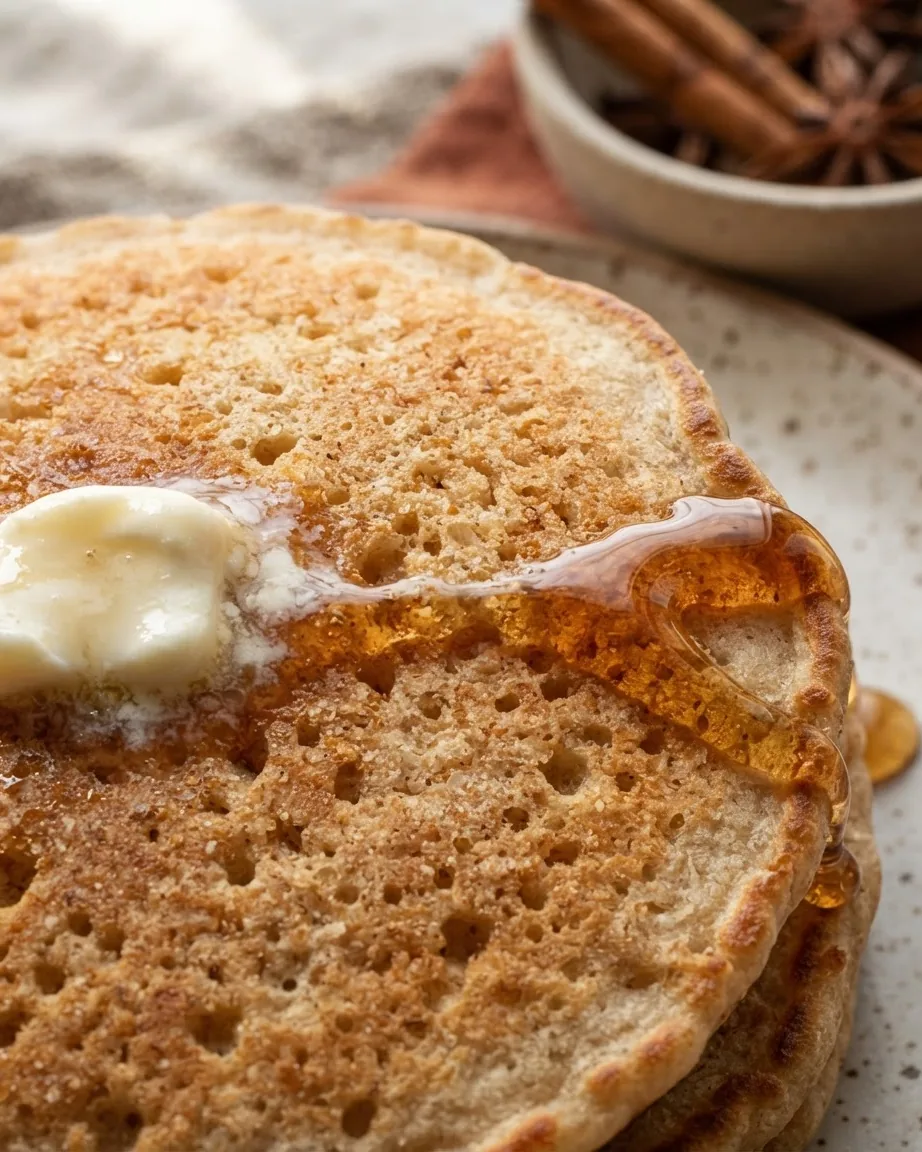
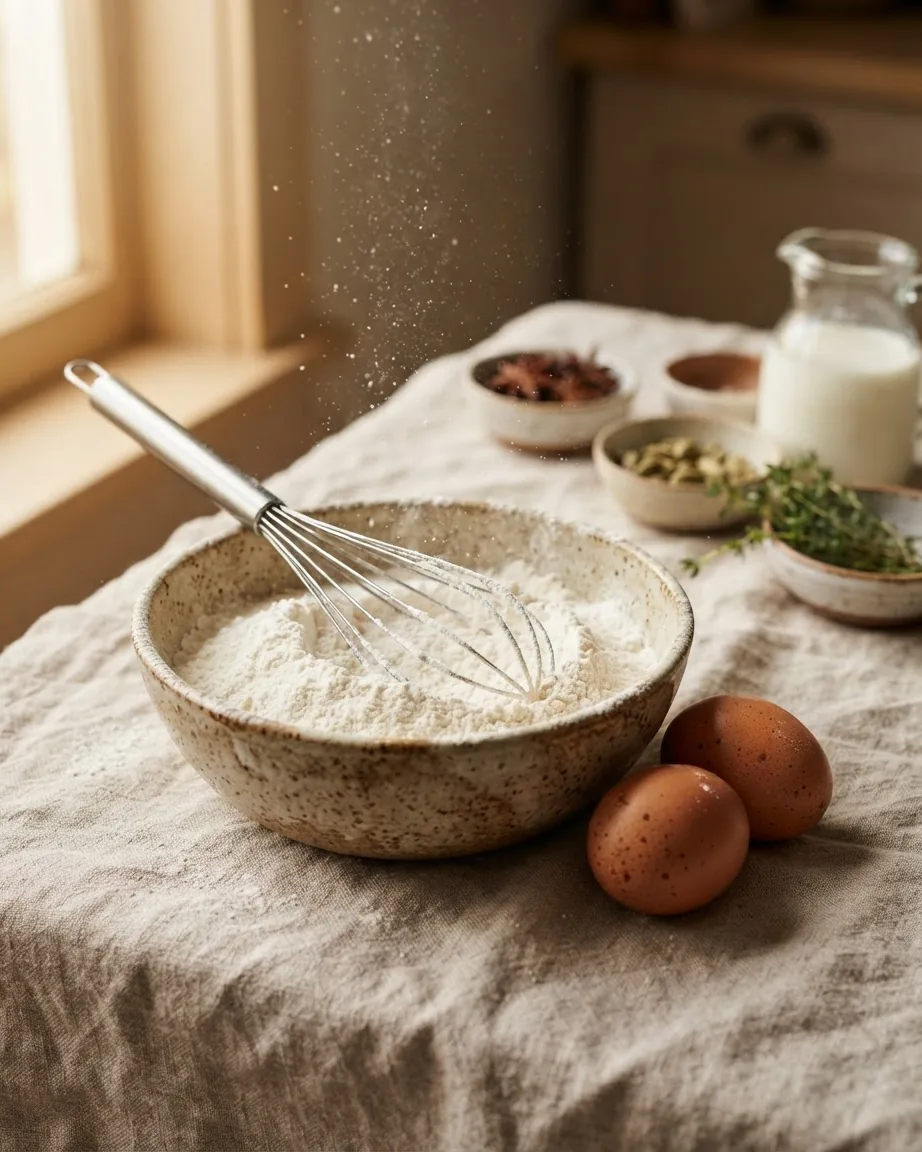
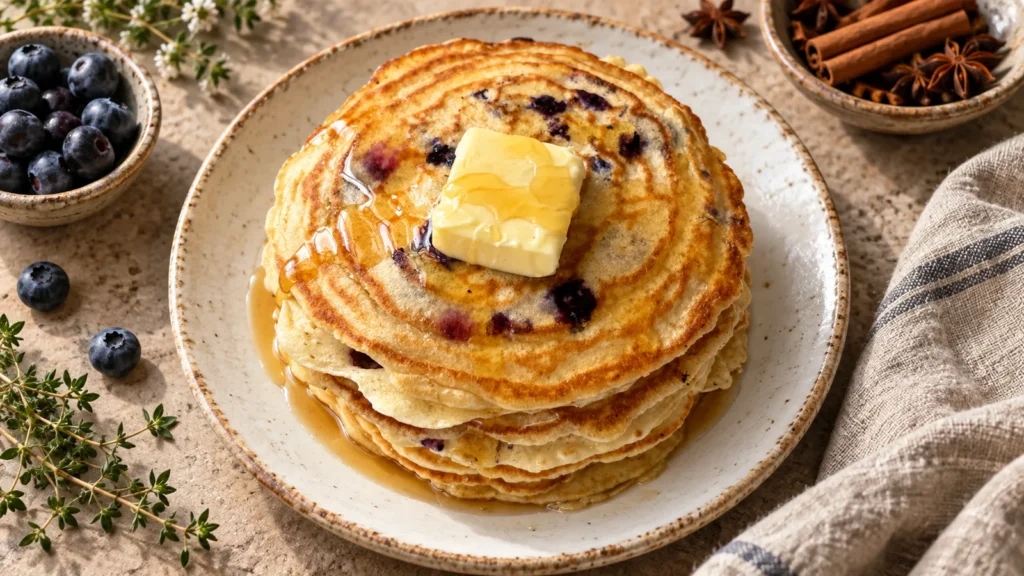
The routes split by what does the lifting. A self-rising flour batter leans on the raising agent milled into the flour. A baking soda batter needs an acid to fizz. A soufflé batter gets its height from air beaten into the whites. A fourth batter, yogurt with no leavening at all, stays denser on purpose.
| Method | What lifts it | Make-ahead | Texture |
|---|---|---|---|
| Self-rising flour | Built-in raising agent | Batter can rest overnight, refrigerated | Fluffy, close to a standard stack |
| Baking soda + acid | Gas from the acid-base reaction | Cook promptly; stored batter loses lift | Fluffy |
| Whipped egg whites (soufflé) | Air folded in as meringue | Cook immediately; the foam wilts | Tallest, most airy |
| Yogurt, no leavening | Nothing; relies on the batter itself | Batter can sit | Denser, slightly chewy if not overmixed |
The easiest version, and the one closest to a plain stack, uses self-rising flour. Below is that batter, the self-rising recipe published by Desert Island Dishes (Margie Nomura), scaled to make 8 pancakes. Self-rising flour sits in the baking aisle of any US supermarket; superfine (caster) sugar is there too, or blitz granulated sugar fine.
- 2 large eggs
- 2¼ cups (9¾ oz) self-rising flour
- 1-2 tablespoons superfine (caster) sugar, optional
- Butter, for the pan and for serving
- Maple syrup, to serve
- Blueberries or chocolate chips, optional
For the soufflé route instead, the whipped-egg-white version from Baker Bettie uses 3 large eggs separated, 1 cup (120 g) all-purpose flour and ¼ teaspoon kosher salt, with the whites beaten to stiff peaks and folded into the yolk batter.
Easy pancake recipe no baking powder, step by step
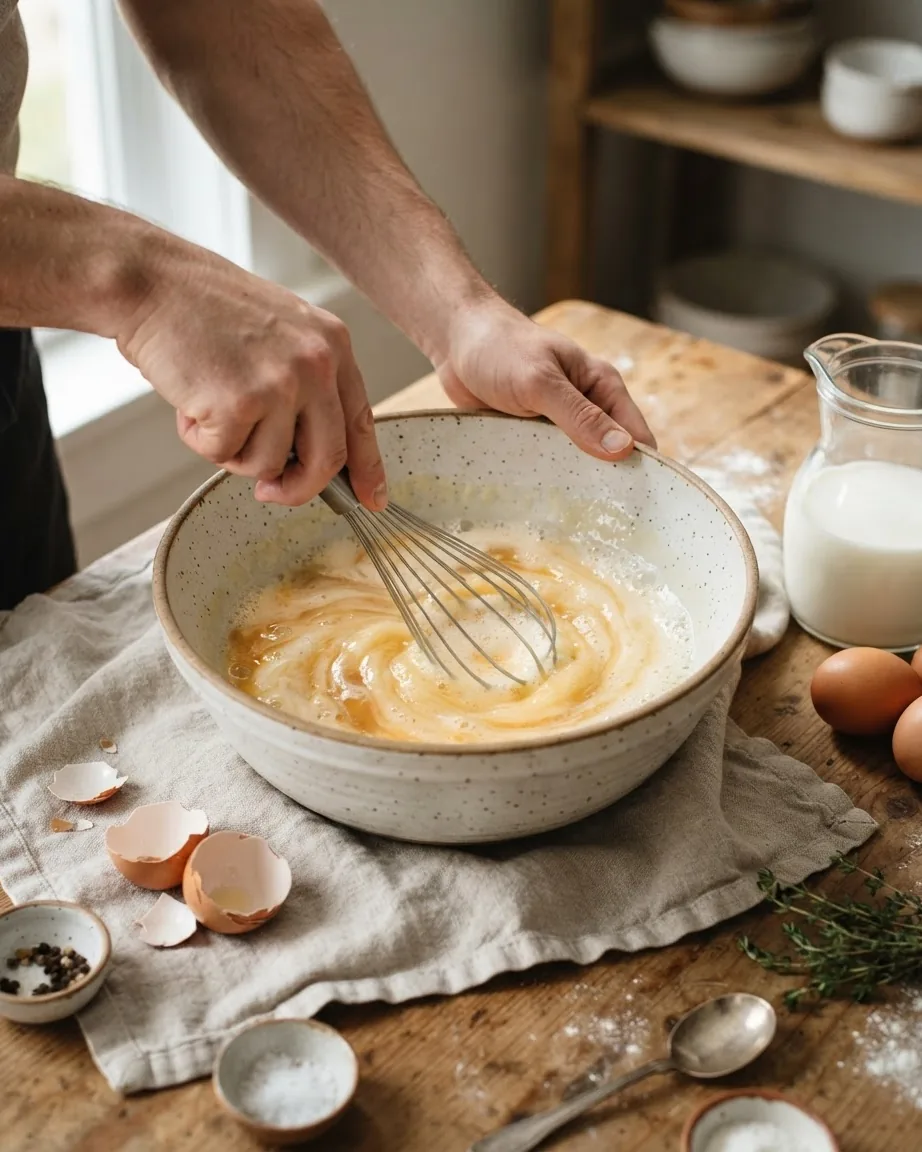
These steps cook the self-rising batter above. Makes 8 pancakes.
- Whisk the eggs and milk in a large bowl until fully combined.
- Add the self-rising flour and the optional sugar, and whisk just to a smooth batter, leaving a few small lumps, so you don’t overwork the gluten and toughen the crumb.
- Set a nonstick pan or griddle over medium heat and wipe it with a little butter; let it heat until a drop of batter sizzles.
- Spoon about 2 tablespoons of batter per pancake into the pan; if adding blueberries or chocolate chips, drop them on now, before the top sets.
- Cook undisturbed until the edges look set and bubbles form and break across the top.
- Flip once and cook until the second side is golden.
- Serve hot with butter and maple syrup, holding finished pancakes in a warm oven while you cook the rest.
Flip timing is where pancakes tear: wait until bubbles rise and pop and the edges look dry, not wet, then turn each one a single time. The second side needs less time; pull them when both faces are golden and the center springs back.
For the baking-soda route, cook timing runs similar. Laura Fuentes writes that her no-baking-powder pancakes cook on an electric griddle set between 300 and 350F, and that “They take about 2 minutes per side to cook”, roughly 2 minutes to the point where the edges define and bubbles form.
The soufflé route fails in three predictable ways. Fix them before you start:
- Any yolk or fat in the whites stops them whipping to stiff peaks; separate into a clean, dry bowl.
- A whipped batter wilts if it sits, so fold and cook it right away rather than letting the bowl wait.
- Cold eggs trap less air and bake up denser; Diane Goodman’s soufflé-style recipe at Food Faith Fitness suggests letting eggs sit out about 30 minutes first.
One comparison worth laying side by side: the tested recipes don’t agree on storage or on how to count calories, so here are both figures with their basis.
| What | One source | Another source | Why they differ |
|---|---|---|---|
| Fridge life | Up to 5 days (Baker Bettie) | Up to 3 days (Food Faith Fitness) | Different ingredients and safety margins |
| Freezer life | 2 months (Baker Bettie) | 3 months (Food Faith Fitness) | Same split in margins |
| Calories | 181 kcal per pancake (Desert Island Dishes) | 264 kcal per 3 pancakes (Laura Fuentes) | Different portion basis; not directly comparable |
Because a leavened or whipped batter loses strength as it waits, cook first and freeze the pancakes, not the batter. To reheat, Baker Bettie’s guidance is a 350°F (175°C) oven: about 4 minutes for thawed pancakes, 6 to 8 for frozen. The self-rising batter is the exception that holds overnight in the fridge before cooking. See also our Mexican meal prep guide, and for the morning table, our Cuban breakfast notes.
Whole-Batch Nutrition for the Self-Rising Pancakes
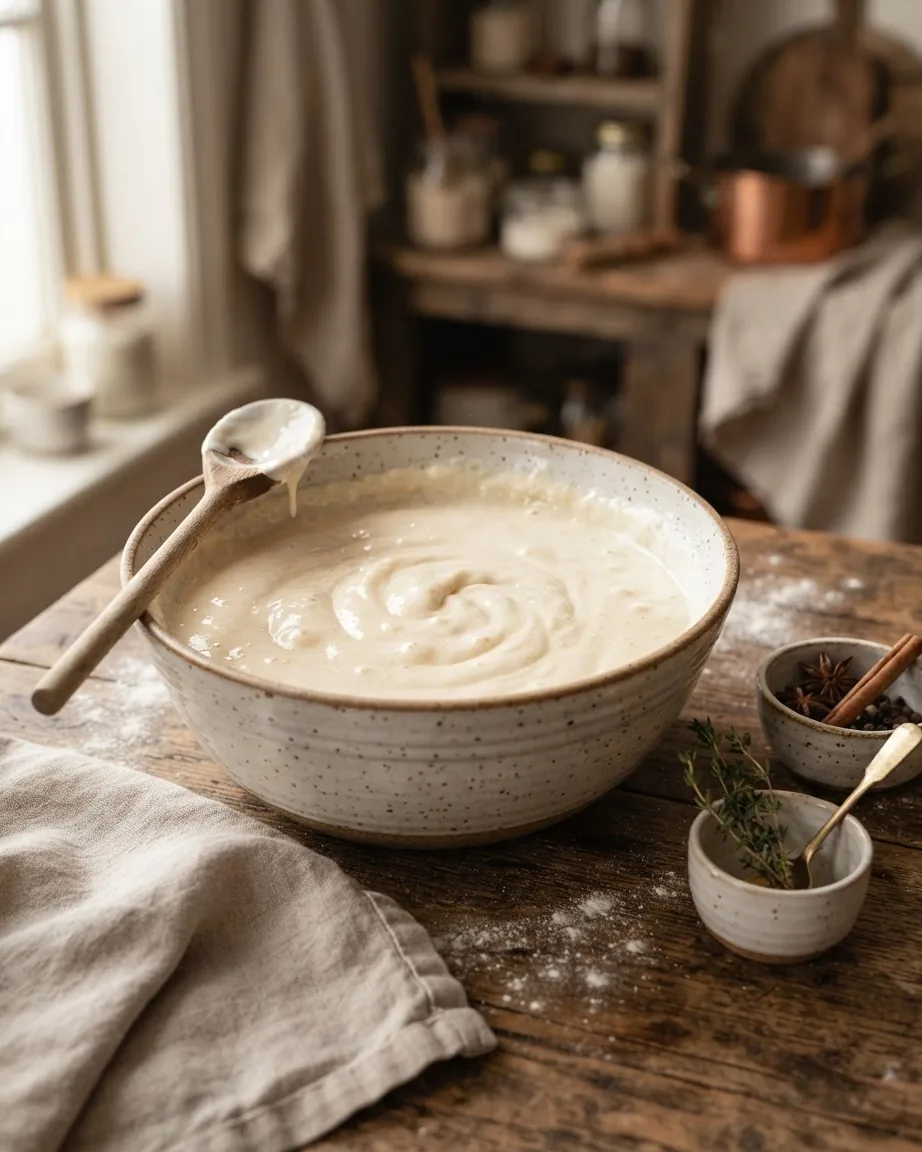
Every source lists this recipe per pancake, at 181 kcal with 30 g carbohydrate, 7 g protein and 3 g fat. Multiply by the yield of 8 pancakes and you get the figures for the whole bowl of batter, so you can split them however you actually serve:
- Calories: 181 x 8 = 1,448 kcal total
- Carbohydrate: 30 g x 8 = 240 g total
- Protein: 7 g x 8 = 56 g total
- Fat: 3 g x 8 = 24 g total
Frequently Asked Questions
What can I use for pancakes if I don’t have baking powder?
Three working swaps. Keep self-rising flour and it carries its own raising agent, so no extra leavener goes in. Otherwise, baking soda does nothing unless paired with an acid, about 1 tablespoon of lemon juice or vinegar, or you can leave out chemical leavening and fold in beaten egg whites. Plain flour with nothing added gives a thin, crepe-like result.
How to make a 3 ingredient pancake?
The self-rising route is already three core ingredients: eggs, milk and self-rising flour, with butter only for the pan. Beat the eggs with the milk, stir the flour through until barely smooth, and fry. Counted per pancake, this version lands at 181 kcal with 30 g of carbohydrate, so it eats like an ordinary stack.
Can I make a 3-ingredient pancake without flour?
Not with these recipes. Every three-ingredient version here leans on self-rising flour, about 2¼ cups, for structure; the flour is what sets the pancake. Remove it and the egg-and-milk base alone won’t hold a cake shape, cooking closer to a thin omelet. A flour-free pancake would need a different recipe built around a binder these sources don’t use.