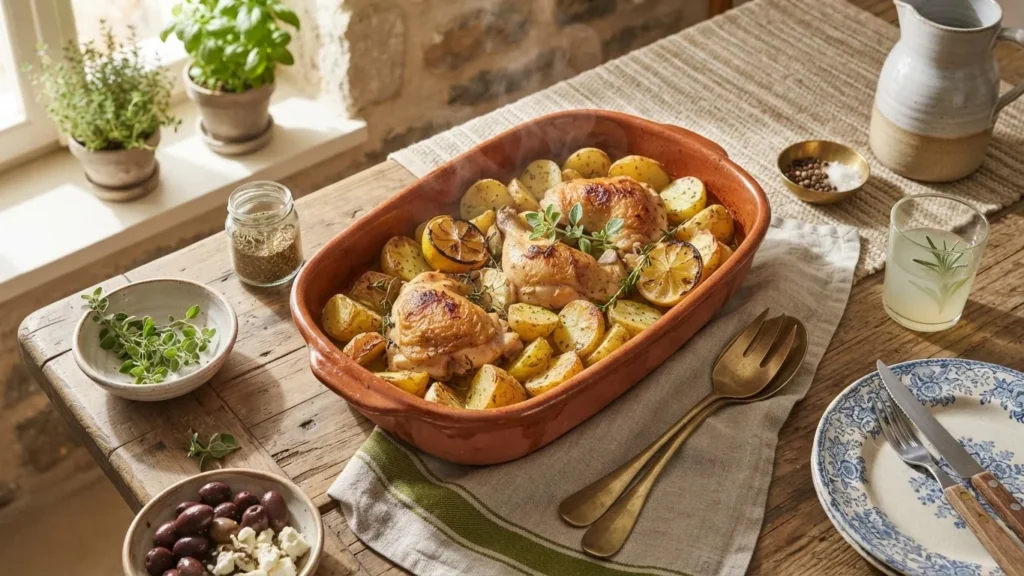
The same Greek name, kotopoulo lemonato, sits on two dishes that do opposite things to a potato. One is an oven roast that dries the surface of the potato wedges and browns them; the other is a covered one-pot braise that keeps the chicken moist and lets the potatoes drink the pan liquid instead of crisping. Their times and temperatures do not transfer between methods, which is where most greek chicken and potatoes attempts go wrong: a cook reads one source for the flavor base and another for the timing, and ends up with hard potatoes under a chicken that is already done. This guide separates the two methods, fixes the doneness target to the cut you are actually cooking, and consolidates the crisping tricks that sit scattered across the Greek recipe sites that publish full versions.
The flavor base is the constant across both. Dried oregano combined with lemon and olive oil is the defining seasoning of the dish; Olive Tomato calls lemon, olive oil and oregano the three ingredients Greek meats are built on.
Quick answer: Greek chicken and potatoes exists as a crispy oven roast and a soft one-pot braise, and the cut decides your doneness number. Mixed and bone-in pieces are safe at 165°F (74°C); bone-in skin-on thighs are roasted to at least 185°F; a whole bird goes to 180°F (82°C). Oven temperatures run from 350°F covered to 425°F, depending on whether the dish is covered, uncovered, or staged. If the chicken finishes before the potatoes soften, pull the chicken, raise the oven to 425°F, and return the potatoes until tender. Rest the dish 10 to 15 minutes before serving.
Where kotopoulo lemonato comes from, and what the name actually covers
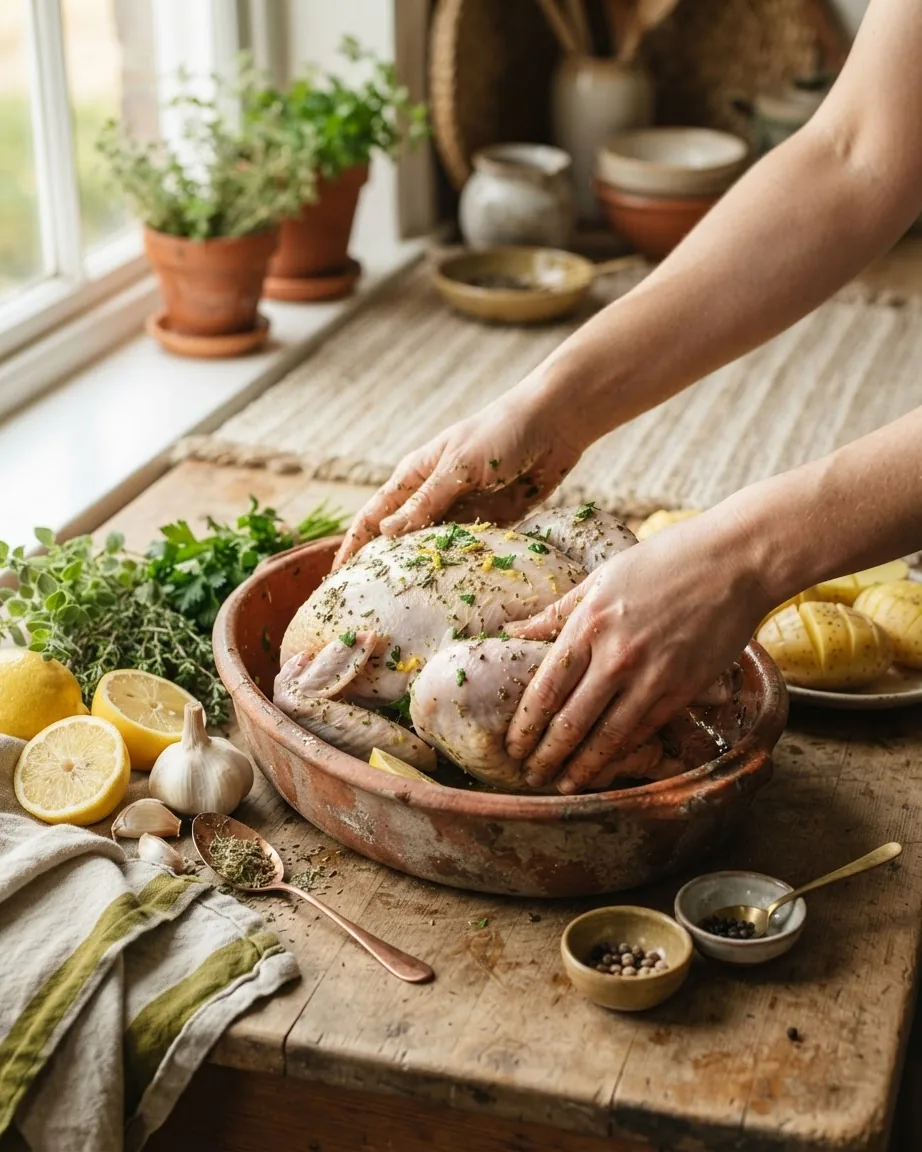
The dish is Greek, and the name kotopoulo lemonato translates roughly to “lemony chicken.” It belongs to the everyday home-cooking tradition of mainland Greece rather than to any single region’s festive table, and it travels under several English headings on the recipe sites that publish it: Greek lemon chicken and potatoes, Greek chicken and potato dinner, and roast chicken with Greek-style potatoes. The constant is the acid-and-herb treatment, not a fixed cut or a fixed vessel.
Written Greek-language and Greek-diaspora cooking sites carry the fullest accounts. The Greek Foodie, whose author was born in Greece, documents what it calls the authentic method: two distinct seasoning blends, a herb-forward marinade for the chicken and a separate lemon-garlic mixture for the potatoes, rather than one marinade poured over everything. Mia Kouppa, a Greek family recipe site, publishes a whole-chicken version built from a parent’s kitchen practice. Olive Tomato is written by Elena Paravantes, MS, RD, a registered dietitian and Mediterranean-diet specialist who, by her own site’s account, has been active as a clinician, consultant, author and lecturer for 20 years. Together these sources place the dish squarely in the Mediterranean-Europe home-cooking tradition this desk documents, alongside other staples in our european recipes section.
Because the name is shared and the methods are not, the first decision a cook makes is not what to buy but which version to build. That choice sets every number that follows.
Crispy oven roast or soft one-pot braise: choosing before you cook
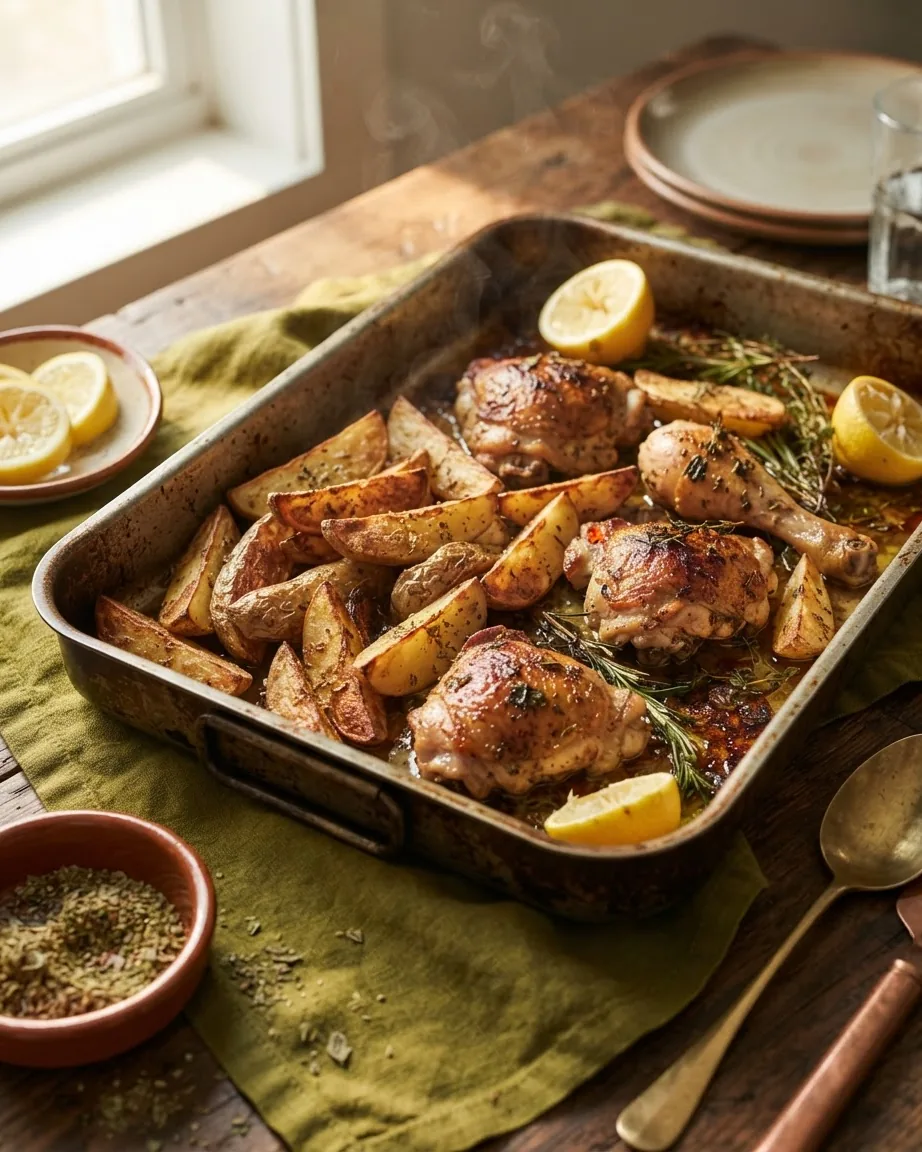
The split is physical, not stylistic. The oven roast exposes the potato surface to dry heat and browns it; the braise keeps everything under liquid and softens it. My Greek Dish is direct about the cost of cooking the potatoes in the same pan as the chicken: the main drawback is that the potatoes are not as crispy as when baked on their own. You trade crispness for the flavor the chicken drippings give them. If maximum crisp is the goal, the potatoes want their own pan.
The braise moves in the other direction on purpose. The one-pot version produces a moister chicken with the meat coming off the bone, and soft potatoes that soak up the juices rather than crisp ones. Nothing in that method is trying to brown a potato. If you want a sauce-soaked, fall-apart dinner, the covered pot is the right tool; if you want edges and color, it is the wrong one.
A practical way to choose:
- Pick the oven roast if you want browned, firmer potato wedges and crisped skin, and you are willing to manage the chicken-versus-potato timing yourself.
- Pick the one-pot braise if you want the chicken as moist as possible and the potatoes soft, and you would rather not watch two doneness targets at once.
Those are different dinners that happen to share a name. Decide which one you are making, then read only that method’s numbers below.
The doneness temperature for greek chicken and potatoes, cut by cut
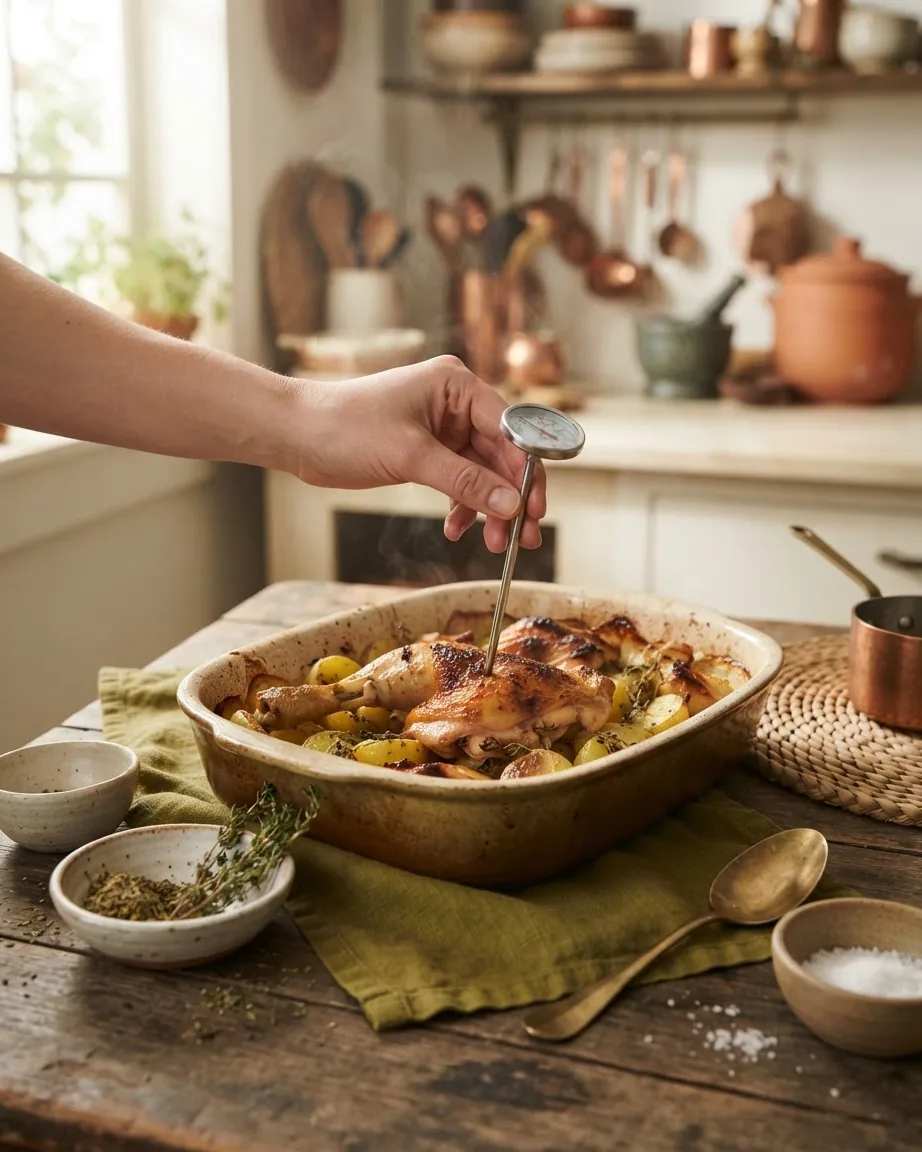
There is no single finish temperature for this dish, and the sources do not pretend there is. The number depends on the cut, and the targets are not interchangeable. The federal safe-minimum for chicken is the floor; the higher numbers are deliberate choices for specific cuts.
The safe minimum is settled. The safe temperature for chicken is 165°F / 74°C, and that figure governs mixed and bone-in pieces; The Mediterranean Dish uses the same target, calling for the chicken to read 165°F on an instant-read thermometer. Allrecipes, in its 425°F thigh-piece version attributed to Chef John, also checks for 165°F near the bone.
Thighs are pushed further on purpose. Sip and Feast roasts bone-in skin-on thighs until the chicken reaches at least 185°F internally. That is well above the safe minimum, and it is intentional: the connective tissue in dark meat breaks down and renders at the higher temperature, which is why a thigh pulled at 165°F can still read as tough or slightly rubbery while one taken to 185°F does not.
A whole bird lands in between, at the joint: the whole-chicken roast is taken to an internal temperature of 180°F (82°C), measured at the thigh. Reading the numbers against each other:
- Mixed or bone-in pieces: 165°F (74°C) – The Greek Foodie, Allrecipes, The Mediterranean Dish.
- Bone-in skin-on thighs: at least 185°F – Sip and Feast.
- Whole chicken: 180°F (82°C) at the thigh – Mia Kouppa.
The practical rule: check the thickest piece near but not touching the bone, and target the number that matches your cut, not the lowest number you have read somewhere else.
Oven temperature and time, matched to covered, uncovered, or staged
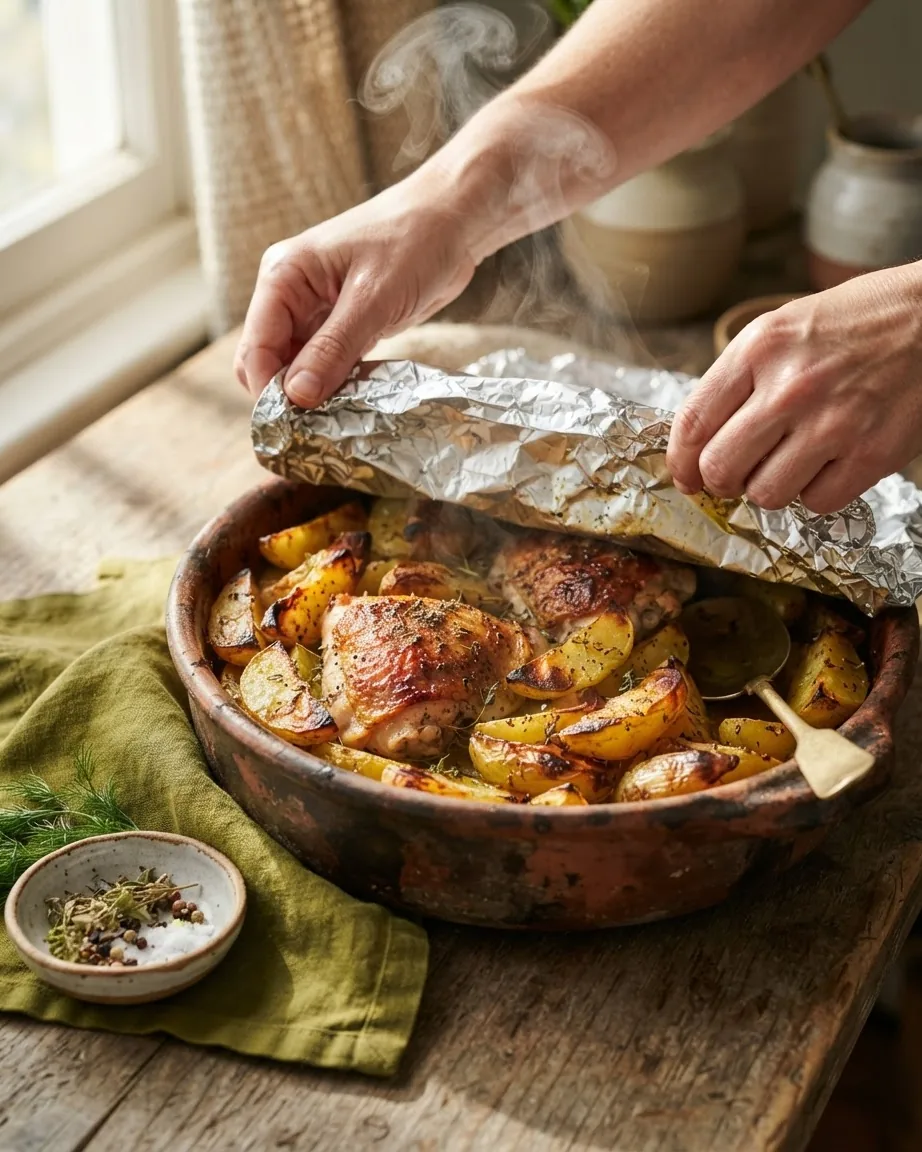
Every published oven version uses a different temperature, and the spread is not disagreement – it tracks whether the dish is covered, left uncovered, or run in two stages. Lining them up:
- My Greek Dish – covered, then uncovered: cover with foil and bake at 180C / 350F for 60 to 75 minutes in total, removing the foil 50 minutes in. At that point it also tops the chicken with feta, then bakes another 15 to 20 minutes until the chicken is colored and crisp on the outside.
- The Greek Foodie – covered, then uncovered: bake covered with foil for 45 minutes, then remove the foil and bake an additional 30 to 45 minutes.
- The Mediterranean Dish – uncovered throughout: preheat to 375°F and bake the uncovered dish 45 to 60 minutes, until the potatoes are tender and the chicken reads 165°F. Depending on the size of your chicken pieces and potato wedges, you may need an extra 20 minutes.
- Mia Kouppa – whole bird: preheat to 400°F, then continue baking for an additional 30 minutes until the chicken reaches 180°F (82°C).
- Allrecipes – hot: preheat to 425 degrees F (220 degrees C) for the thigh-piece roast.
- Sip and Feast – two-stage: bake 10 minutes, then turn the heat down to 375°F and continue 45 to 55 minutes, or until the chicken reaches at least 185°F internally.
The covering decision is what you are really choosing. Foil traps steam, which keeps the chicken moist and softens the potatoes but delays browning – which is why My Greek Dish and The Greek Foodie both pull the foil for a final uncovered stretch to let color and crisp develop. An uncovered bake like The Mediterranean Dish’s browns from the start but needs a hotter environment or more time to get the potatoes tender. The two-stage approach uses the opening 10 minutes of high heat to kick-start the surface, then drops to a gentler temperature to finish the thighs to 185°F without scorching.
Match the temperature to the method you picked. Do not, for instance, run an uncovered dish at the 350°F that was written for a covered one, or the potatoes will stall.
The stovetop one-pot braise, and why it skips the breast
The braise never sees an oven. The chicken goes into a pot with the lemon-oil-oregano base; you cover the pot and simmer the chicken for about 45 minutes, then add the potatoes, spreading them among the pieces of chicken, and continue to cook for another 15 to 20 minutes until the potatoes are soft. The sequence matters: the potatoes go in late so they finish soft but intact rather than disintegrating over the full simmer.
This is also the method with the firmest ingredient rule. Skinless boneless chicken breast is advised against, because the skin fat and flavor are needed for the sauce – without skin you get neither the flavor nor the fat. In a braise there is no dry-heat browning to build flavor, so the rendered skin fat and the collagen from bone-in dark meat are doing that work instead. A skinless breast gives you neither, and the sauce goes thin and flat. Bone-in, skin-on pieces are the default for both the braise and the roast for the same reason.
Yukon Gold or russet, and why cooks pick differently
Potato variety is a genuine split between recipes, not a mistake. Most of the Greek sources specify Yukon Gold or another yellow-fleshed potato, which holds its shape in the pan liquid and gives a creamier interior. Allrecipes, by contrast, uses russet, a drier, starchier potato that takes browning and crisping more readily under high heat. Neither is wrong; they suit different ends.
If you are building the braise or a moderate covered roast, a waxy-to-medium yellow potato like Yukon Gold survives the liquid without turning to mush. If you are running the hot, uncovered or broiled route and you want crisp edges, russet’s lower moisture works in your favor. In a US supermarket both sit in the same bin aisle; Yukon Gold and other yellow-fleshed potatoes are sold by name, and russets are the large brown-skinned baking potatoes. No specialty store is needed for either.
Getting potatoes crisp when they share a pan with the chicken
The crisping techniques are spread across different sites, and none of the pages this desk read carries all of them together. Consolidated, here is the toolkit for pushing potato crispness up without moving the potatoes to their own pan:
- Semolina dusting: sprinkling the potatoes with 1 tsp semolina gives crispier results. The gritty coating gives the surface more area to brown and dry out.
- Starch soak or rinse: soaking the cut potatoes in cold water, or giving them a quick rinse, removes some of the surface starch before roasting. Less surface starch means less gumminess and a cleaner crisp.
- Final broil: tossing the potatoes in the pan juices at the end and placing the pan under the broiler crisps them in about 3 minutes. Watch them – the broiler goes from brown to burnt quickly.
- Uncovered final phase: on any covered roast, pulling the foil for the last stretch lets trapped steam escape so the surface can dry and color, which is exactly what the covered-then-uncovered roasts do in their final 15 to 45 minutes.
Used together, these attack the same problem from both sides: they remove moisture before cooking and drive it off at the end. Even so, the earlier warning holds – potatoes sharing the chicken’s pan will not match ones roasted alone. The toolkit narrows the gap; it does not erase it.
The potato-rescue fix when the chicken is done first
The most common failure is timing, not technique: the chicken hits temperature while the potatoes are still firm. Both sources that address it give the same move, which is to separate the two and finish the potatoes hotter.
One version: if the chicken is done before the potatoes, remove the chicken, raise the oven temperature to 425°F, and return the potatoes to the oven until tender and brown. The Mediterranean Dish gives the same fix with a duration attached – if the potatoes are not fully cooked, raise the oven to 425°F and cook another 15 to 20 minutes. Pulling the chicken does double duty: it stops the meat overcooking while it rests, and it frees the oven to run hot on the potatoes alone. This is also the moment the resting clock starts, which the next section covers.
The pan drippings are the sauce, not a byproduct
The liquid that collects in the pan is the intended sauce, not something to drain away. The juices that pool there, infused with lemon, garlic, chicken drippings and herbs, are not a byproduct – they are the sauce. In practice that means straining the pan liquid and spooning it back over the chicken and potatoes rather than discarding it.
The acid base behind that sauce varies slightly by recipe. My Greek Dish builds its liquid from lemon juice, white wine vinegar, olive oil, chopped garlic and peppercorns, so the vinegar is sharpening the acidity alongside the lemon. Mia Kouppa uses a blend of olive oil and vegetable oil rather than all olive oil, which helps lighten the flavor a little. These are small levers: more vinegar for sharpness, a cut oil blend for a milder, less grassy result.
Marinating, resting, and the raw-chicken rule
Three handling steps carry specific numbers, and skipping any of them changes the result or the safety of the dish.
Temper before cooking. Take the chicken from the refrigerator 30 minutes before cooking, so it is not going into the oven fridge-cold.
Marinate with time to spare. Place the seasoned chicken in the fridge for at least 2 hours before roasting, giving the lemon, oil and herbs time to penetrate rather than just coat the surface.
Rest before cutting. Let the chicken sit lightly tented with foil for 10 to 15 minutes before serving, so the chicken and potatoes reabsorb the pan juices. The whole-bird roast calls for the same 10 to 15 minute rest. Carving straight out of the oven spills those juices onto the board instead of back into the meat.
Do not wash the raw chicken. Only one of the Greek sites raises this, and it is worth repeating: the raw bird should not be washed before cooking. Rinsing raw chicken under a tap sprays bacteria across the sink and surrounding surfaces without making the meat safer; the heat of cooking is what makes it safe. The two-marinade method – the herb blend on the chicken, the lemon-garlic mix on the potatoes – also means less handling of the bare raw bird, since the seasoning goes on deliberately rather than in a rinse-and-pat routine.
For another lemon-and-oil-forward table from the same part of the map, see also our Mediterranean rice guide; and for a different acid-driven technique, our homemade baklava write-up.
What the nutrition figures actually say, and why they do not compare
Two of the published recipes carry per-serving nutrition, and they are not measuring the same dish, so lining them up side by side would mislead. State each on its own terms.
The Greek Foodie reports 581 kcal per serving at 6 servings for its classic version. The Allrecipes thigh version – built on 4 pounds of thighs and portioned at 4 servings – reports 1139 calories and 1866 mg of sodium per serving. The gap between 581 and 1139 is mostly a difference in portion math and fat content, not a verdict on either recipe: four large servings of skin-on thighs will always read heavier per plate than six servings of a leaner build. Treat each number as belonging to its own recipe and portion size, and recheck the label on whatever version you actually cook.
Storing and reheating the leftovers
One source states the storage limits for this dish. Leftover baked Greek lemon chicken keeps up to 4 days refrigerated. For longer holding, it freezes up to 3 months. The reserved pan sauce is worth saving separately if you can – it carries the lemon-garlic-herb flavor that reheated meat tends to lose, and a spoonful over the reheated plate restores most of what dried out.
When reheating from frozen, the potatoes fare worst; they were already the less-crisp element from sharing the chicken’s pan, and freezing softens them further. A short pass under a hot broiler, the same roughly 3-minute crisping move used at the end of the original cook, brings back some of the edge the fridge or freezer took off.
How far past the 165°F safe minimum each cut is pushed
The three finish temperatures in this guide are not three opinions about the same cut – they are three different targets, and doing the subtraction shows how far apart they really are. Starting from the 165°F safe minimum that governs mixed and bone-in pieces, here is where the other cuts land.
- Bone-in skin-on thighs run 20°F hotter: 185°F − 165°F = 20°F above the safe floor. Those 20 degrees are the window in which dark-meat connective tissue breaks down, which is why a thigh pulled at the safe minimum can still read rubbery.
- A whole bird runs 15°F hotter: 180°F − 165°F = 15°F above the floor, measured at the thigh joint.
- Thighs go 5°F past even the whole bird: 185°F − 180°F = 5°F, so the isolated thigh is the hottest target of all.
The full spread from the lowest to the highest target is 20°F (185°F − 165°F). Reading one source’s number for another cut can therefore leave you up to 20 degrees off – the difference between a safe but chewy thigh and one that is actually tender.
Frequently asked questions
Can I make this with boneless skinless chicken breast?
For the braise, it is advised against: without the rendered fat from the skin, the sauce loses body and flavor. Breast also dries out fast once past 165°F (74°C), with no collagen to buy you a margin the way a thigh has at 185°F. If breast is all you have, cut it large, pull it the moment it hits temperature, and lean harder on the strained pan sauce.
Why did my potatoes come out hard while the chicken was perfect?
Dense wedges and a cooler covered bake leave the interior firm before the meat finishes. The fix is to lift the cooked chicken out, push the oven up to 425°F, and give the potatoes alone another 15 to 20 minutes until a fork slides in cleanly. Soaking the cut potatoes in cold water beforehand and dusting them with semolina both speed browning on later attempts.
Is there any heat or spice in this dish?
No. Across every version the sources publish, the seasoning runs to lemon, olive oil, dried oregano, garlic and black peppercorns, with white wine vinegar in some. There is no chili component, so on a 0-to-3 scale the dish sits at 0. The sharpness people notice comes from the lemon and vinegar acidity, not from capsaicin.
Do I really need an instant-read thermometer?
For this dish, yes, because the correct finish temperature changes with the cut – 165°F (74°C) for mixed pieces, 180°F (82°C) for a whole bird, at least 185°F for thighs. Visual cues alone cannot distinguish a thigh that is merely safe from one that has rendered enough to turn tender. The probe is how you hit the number your specific cut actually needs.