Hete bliksem, whose name translates as “hot lightning,” is not a stamppot at all: it is a mash of potatoes and apples built on a ratio of one part potato to two parts apples, according to Will Fly for Food. That single detail sorts out most of the confusion around netherlands recipes, because the country’s mashed mains all look alike on the plate while following different rules underneath. This desk cross-references Dutch dishes across published regional sources, identifies the specific variant on offer, and pulls the exact ingredient lists, local names, and set-or-soak timings into one format without changing the underlying method.
Below, the mash taxonomy, one bavarois recipe you can build from the page, the reconciliation of a cream measurement two source passages disagree on, and the honest labelling of which “Dutch” dishes came from somewhere else.
Quick answer. Dutch mashed mains split three ways: generic stamppot is potato plus one seasonal vegetable; hutspot is specifically potato, carrot, and onion; hete bliksem is potato and apple at one part potato to two parts apple. Among the sweets, mandarijnenbavarois is set with gelatin – 10 grams of powder, or 5 sheets – and needs about six hours in the mold, better overnight. Several dishes sold as Dutch are adopted: appeltaart traces to the UK, bavarois to the Bavaria/Central Europe region. Only hollandse nieuwe haring carries EU protection among these.
Stamppot, hutspot, and hete bliksem: three mashes, three rules
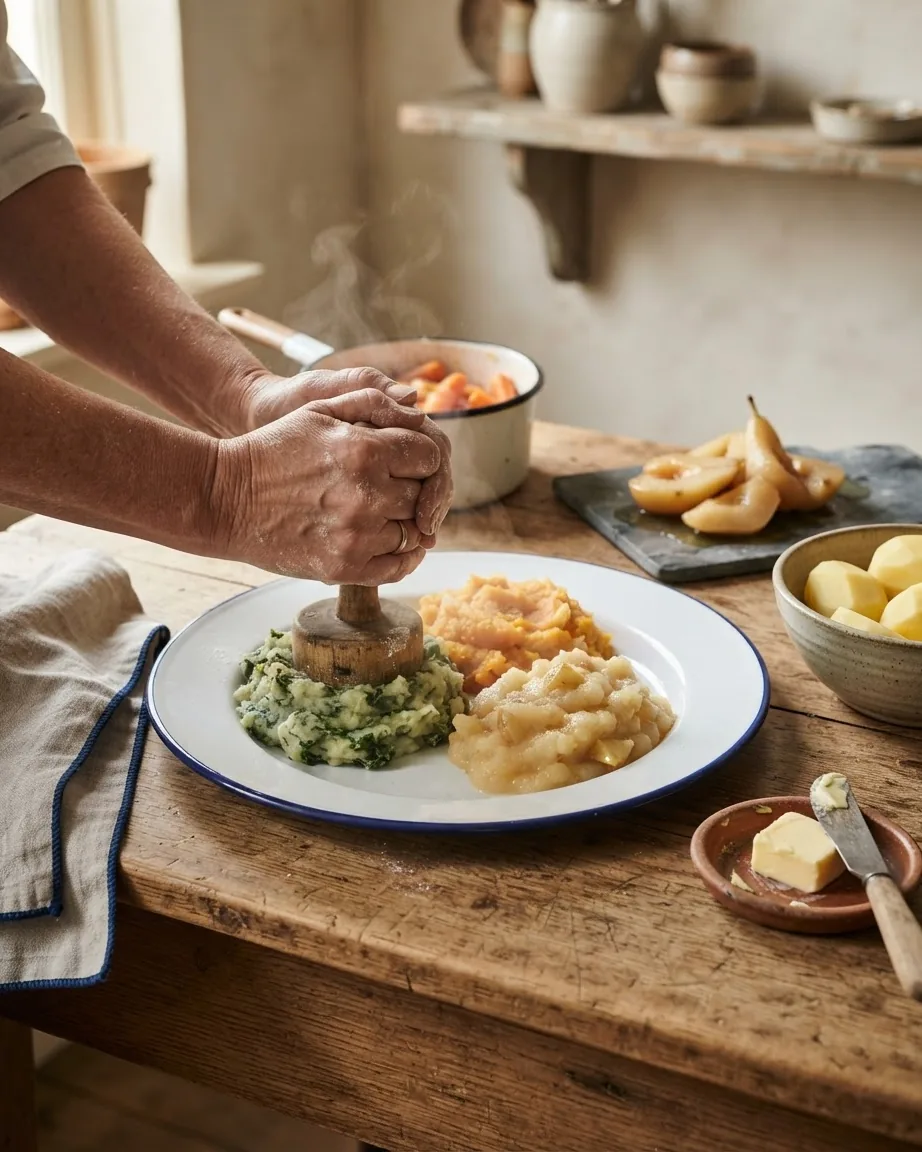
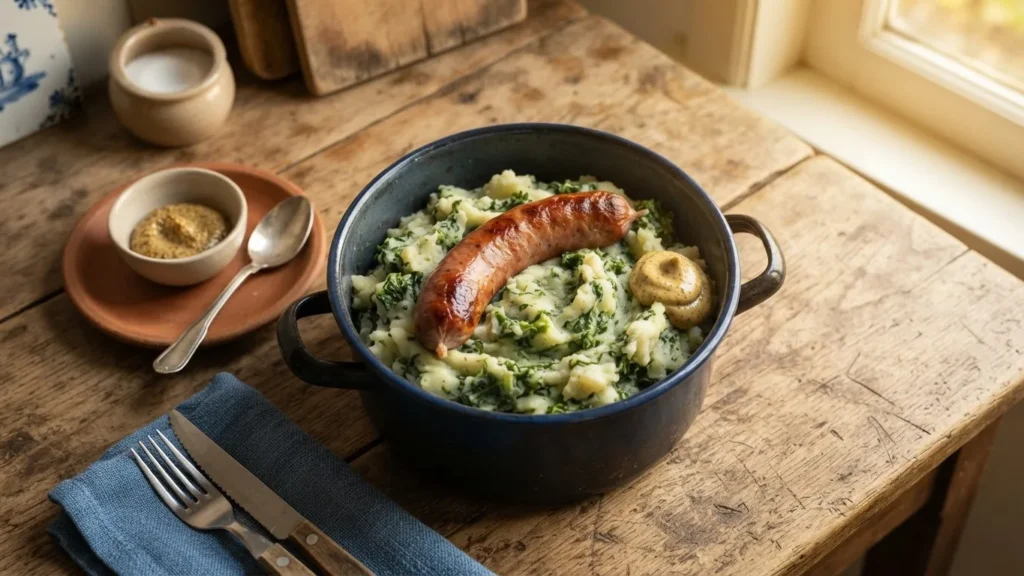
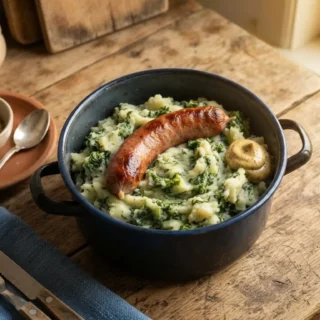
The word stamppot is generic. It describes potatoes mashed together with one seasonal vegetable – kale for boerenkool stamppot, sauerkraut (zuurkool) for the sauerkraut version, endive (andijvie) for another. Naming the vegetable is what specifies the dish. If a menu simply says “stamppot,” it is telling you the method, not the contents.
Hutspot is a named subset with a fixed trio: potato, carrot, and onion, mashed together. It is not a free seasonal swap; the carrot and onion are the definition. Calling any carrot-carrying mash a hutspot flattens a distinction the Dutch keep.
Hete bliksem sits apart from the vegetable stamppots entirely. Will Fly for Food records it as a mash of potatoes and apples – sweet-and-savory rather than savory – built at one part potato to two parts apples. That two-to-one lean toward apple is why it reads as a different plate from a kale stamppot, and why it belongs in its own category rather than as a stamppot flavor.
These mashes usually arrive with rookworst, the smoked sausage some sources spell rookwurst; the spelling shifts between publishers but the sausage is the same. For the wider set of dishes from this part of the map, this desk keeps a running index under European recipes.
Mandarijnenbavarois: the ingredient block for a 6-hour set
Mandarijnenbavarois is a mandarin-orange bavarian cream, set with gelatin and lightened with whipped cream. A typical version sets in a mold in about six hours, though overnight is better – gelatin continues to firm as it chills, so the longer rest gives a cleaner unmolding rather than a slumping one.
The ingredients below come from that published recipe. See the next section before you commit to a total cream quantity, because two passages of the same source give different numbers and this desk resolves them there.
Yield: the recipe fills one mold or 6 to 8 glasses or bowls. Total mold set time: about six hours, better overnight.
The cream measurement two passages disagree on – and how to read it
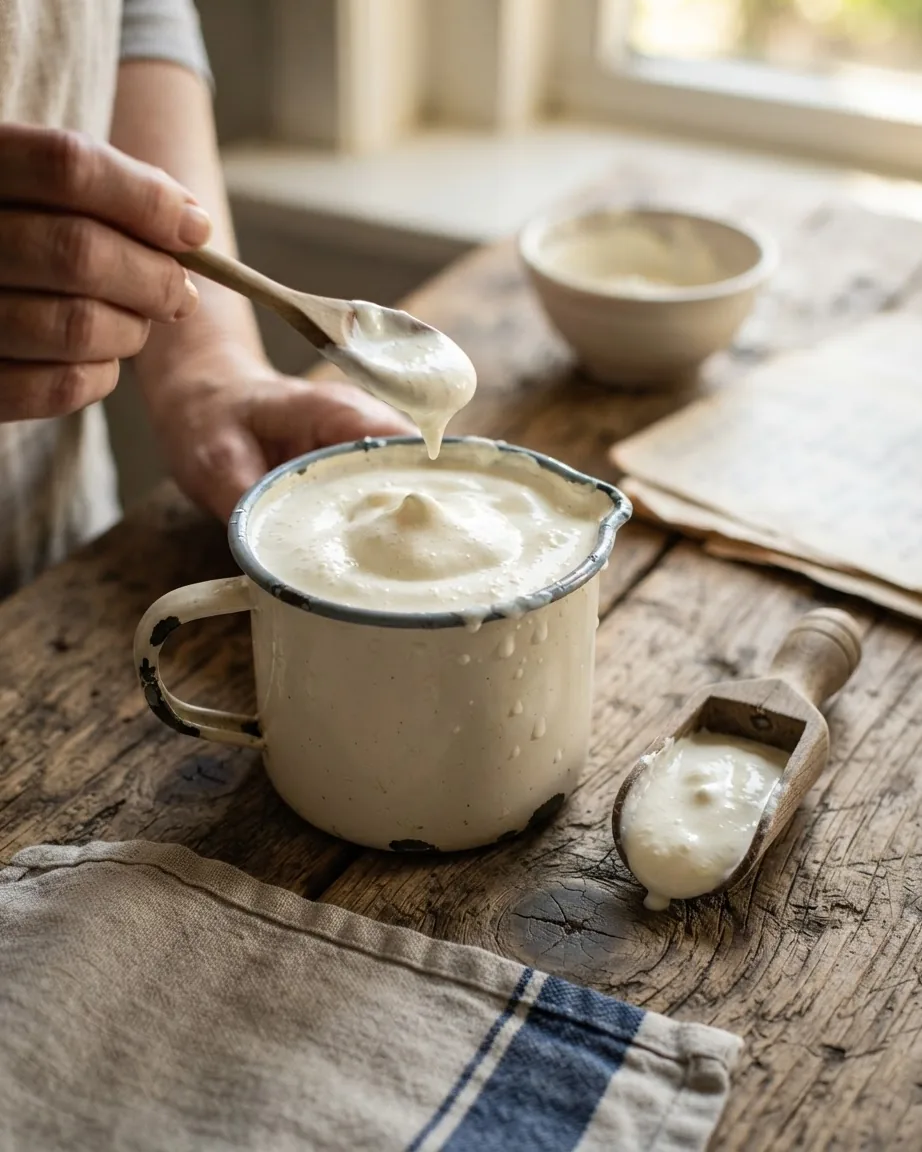
The mandarijnenbavarois recipe carries a genuine internal conflict, and it changes how much cream you buy. One passage of the recipe states the dish uses 3.5 cups (850 ml) whipping cream. The step-by-step method in the same recipe, however, adds cream to the pan and later whips more, so the working total that the steps name comes out lower than the headline figure.
Those two figures – the headline versus the total the steps name – do not match. This desk does not invent a third number to split the difference. For a cook building the dish from the steps, the executable quantities are the ones the steps name: the warmed base pour, then 250 ml whipped. Buy to the 850 ml figure if you want the source’s stated margin; you will simply have a little cream left over. The steps, not the summary line, are what you can actually follow at the counter.
The gelatin figure carries no such conflict: 10 grams of powder, or 5 sheets, across the recipe.
Which “Dutch” sweets and dishes were adopted, not invented
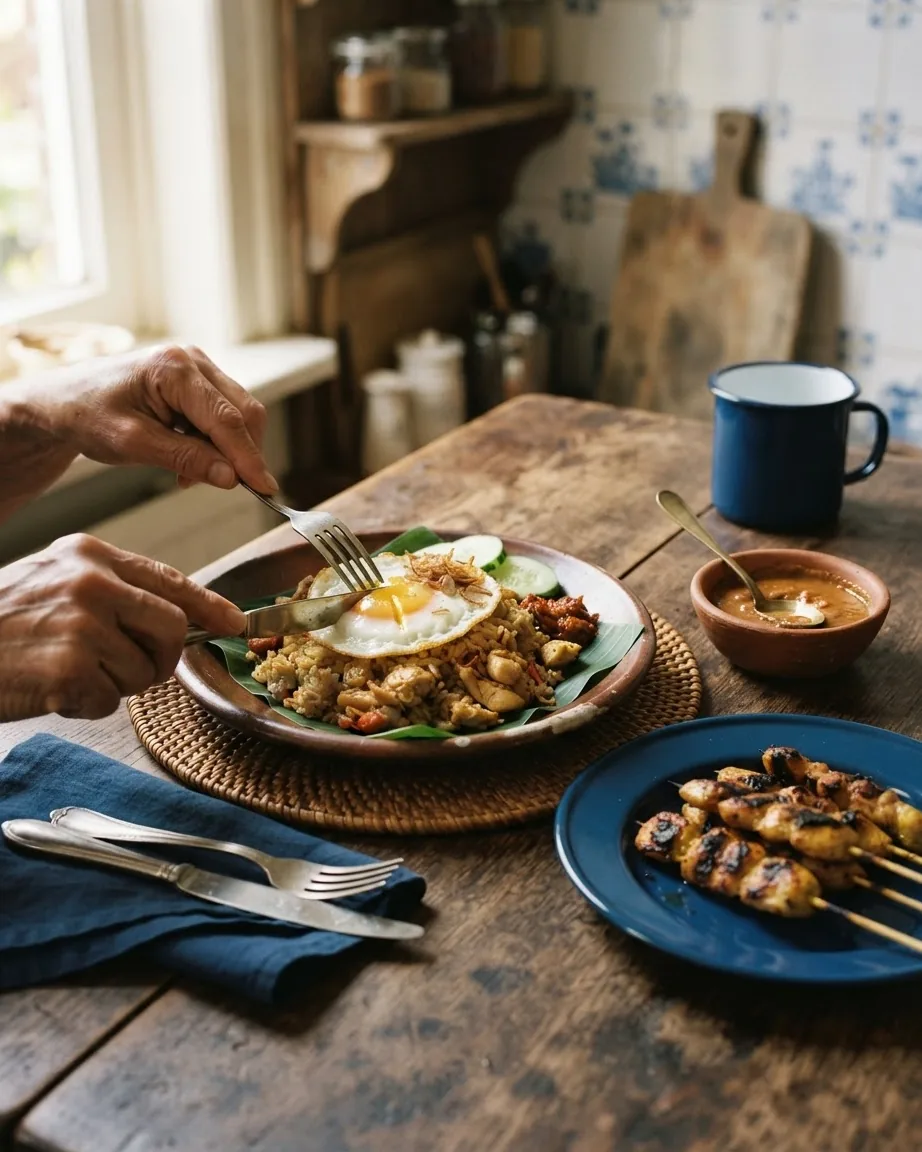
A recurring problem with netherlands recipes is that several dishes sold as national ones came from elsewhere, and the sources themselves say so even while filing them under “Dutch.” Bavarois – the cream above – points to the Bavaria and Central Europe region by name, not to the Netherlands. Appeltaart, the apple tart many treat as a Dutch signature, most likely traces to the UK. A large share of what appears on Dutch tables, from the Indonesian dishes to certain Central European desserts, is adopted rather than native.
This matters for a cook who wants the authentic thing: knowing a dish is adopted tells you to look for the source cuisine’s method, not a Dutch “original” that may not exist. If British baking is where a tart’s lineage actually sits, the rub-in versus all-in decisions of that tradition apply – the same fork in the road documented in this desk’s authentic English scone recipe, where cold fat rubbed into flour behaves differently from an all-in mix.
Not everything is borrowed. Arnhemse meisjes – “girls from Arnhem” – are crisp sugar cookies that Will Fly for Food dates to a bakery in Arnhem that first made them in 1829 for the birth of the baker’s daughter. That is a specific, local origin, not an adopted one.
Hollandse nieuwe haring, oliebollen, and the seasonal calendar
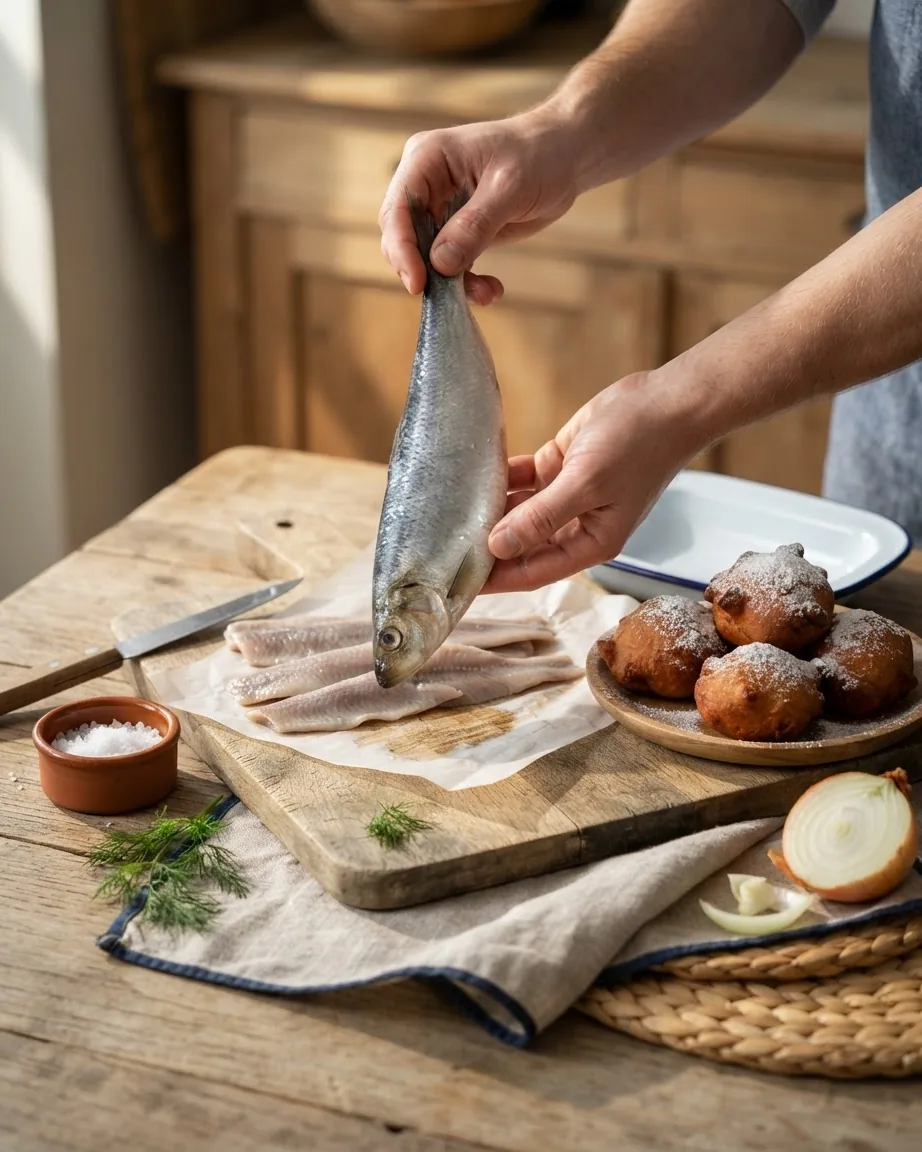
Some of these dishes are pinned to a date or a season, and cooking them off-calendar is the common mistake. Oliebollen – deep-fried dough balls – are a New Year’s item, not a year-round snack. Erwtensoep, also called snert, is a thick winter pea soup; it is built to be a cold-weather staple rather than a summer dish. Bitterballen, the crumbed ragout balls, are party and bar snacks – an occasion food, not a meal.
Hollandse nieuwe haring is the one item here that carries EU protection. What the sources do not settle is the exact category – whether it is a Traditional Speciality Guaranteed tied to processing method, or a geographical indication tied to place. This desk will not assign it a category the sources do not confirm; the protection is real, its legal label unverified here.
For cooks who track ingredients that vanish off-season, the herring is the clearest case among Dutch foods: “nieuwe” means the new catch, a window rather than a year-round supply.
How this desk reconciles Dutch recipes across sources
The method behind these entries is cross-referencing rather than tasting. When The Flavor Vortex, Simone’s Kitchen, Will Fly for Food, and The Dutch Table describe the same dish, this desk lines up the ingredient lists and timings, keeps the Dutch name beside the English, and flags where two passages of a single source disagree – as with the mismatched cream totals above – instead of quietly picking one.
That reconciliation is the same discipline this desk applies to other multi-source dishes, whether a New Mexico pork braise or a soup with two rival broths, a discipline this desk has held to for 15 years. Readers who want to see the method on a different cuisine can compare the reconciliation in the carne adovada recipe or the two-version breakdown in the Three Sisters soup recipe. The rule is constant: the executable quantity wins over the summary line, and adopted dishes are labelled as adopted.
The Cream Math: How Much You Actually Use vs. What You Buy
The mandarijnenbavarois recipe lists 850 ml of whipping cream in its headline, but the executable steps only ever name two pours: the warmed base and the reserved cream whipped to stiff peaks. Do the arithmetic before you shop and the gap becomes concrete rather than confusing.
- What the steps consume: the warmed base pour plus the whipped reserve is what actually goes into the dessert.
- Leftover if you buy the headline amount: buying to the 850 ml headline leaves a little cream sitting unused. Buy to that figure only if you want the margin (handy for the whipped-cream decoration on top); otherwise a smaller purchase covers the build.
- Cream per portion: the cream the steps name divides across the yield’s glasses rather than the higher headline total.
The gelatin carries no such conflict: 10 grams of powder (or 5 sheets) is the figure throughout, so it does not scale with the cream decision.
FAQ
Is hutspot the same as stamppot?
No. Stamppot is the general method – mashed potato with one seasonal vegetable, named for whichever vegetable it uses. Hutspot is a specific named version fixed to potato, carrot, and onion. Every hutspot is a mash, but a kale or endive stamppot is not a hutspot, because the carrot-and-onion pairing is what defines the latter.
How long does mandarijnenbavarois take to set?
A typical version sets in a mold in about six hours, with overnight recommended for a firmer result. Gelatin keeps tightening as it chills, so the longer rest gives a cleaner unmold. Plan a full day ahead if you want the mold to release in one clean piece rather than slumping when turned out.
Why do sources call bavarois and appeltaart Dutch if they came from elsewhere?
Both are adopted rather than invented in the Netherlands. Bavarois points by name to the Bavaria and Central Europe region; appeltaart most likely traces to the UK. Sources file them under “Dutch” because they became fixtures of the cuisine, but for an authentic method you should follow the source tradition, not a Dutch “original.”
What is hete bliksem made of?
Hete bliksem, meaning “hot lightning,” is a mash of potatoes and apples, distinct from the vegetable stamppots. Will Fly for Food gives the ratio as one part potato to two parts apples, which makes it lean sweet-and-savory rather than savory. It is usually served with the smoked sausage some sources spell rookworst and others rookwurst.
Which Dutch dish is EU-protected?
Among the dishes covered here, hollandse nieuwe haring is the one noted as EU-protected. The available sources do not confirm whether that protection is a Traditional Speciality Guaranteed based on processing method or a geographical indication tied to place, so this desk records the protection without assigning it a specific legal category.
Are bitterballen a meal or a snack?
Bitterballen – the crumbed ragout balls – are party and bar snacks, an occasion food rather than a main course. They sit in the same deep-fried street-and-party group as the frikandel, the kapsalon, and patatje oorlog. Treat them as something you put out for guests or order alongside a drink, not as the center of a plate.
When are oliebollen eaten?
Oliebollen are deep-fried dough balls tied to New Year’s, not a year-round snack. Cooking them off-calendar is the common mistake. They sit among the traditional Dutch baked sweets alongside items like Arnhemse meisjes, the Bossche bol, boterkoek, and rijstevlaai, but the oliebol specifically belongs to the turn of the year.
What goes into a stamppot besides potato?
One seasonal vegetable, and the vegetable names the dish: kale for boerenkool stamppot, sauerkraut for the zuurkool version, endive for the andijvie one. The method is always mashed potato plus that single vegetable. It usually arrives with rookworst, the smoked sausage, whichever way a given publisher spells it.
The short version for a cook standing at the counter
Sort the mashes first: stamppot is potato plus one named seasonal vegetable, hutspot is the fixed potato-carrot-onion trio, and hete bliksem is potato and apple at one part potato to two parts apple. For the bavarois, follow the steps rather than the headline – the warmed base pour, 250 ml whipped, 10 grams of gelatin or 5 sheets, about six hours to set and better overnight. Label the borrowed dishes as borrowed: bavarois from the Bavaria and Central Europe region, appeltaart most likely from the UK, and a large share of the wider table adopted from Indonesian and Central European cooking. Keep the Dutch name beside the English, and where a single source disagrees with itself, take the quantity the steps actually name.
This is a sensitive area only in the sense that food origins get argued over; nothing here is settled by taste. It is settled by which source says what, and by which number you can actually cook from.
Netherlands Recipes: The Mash Variants, the Set Times, and Which Dishes Were Adopted
Ingredients
- 3 teaspoons (10 grams) gelatin powder, or 5 sheets
- 2 cups (500 ml) whipping cream, for the warmed fruit-and-cream base
- 1 cup (250 ml) whipping cream, reserved to whip into stiff peaks
Instructions
- Bloom the gelatin: soften the 10 grams of powder (or 5 sheets) in cold water so it hydrates fully before it hits warm liquid – undissolved gelatin sets in streaks.
- Warm the base cream: pour 2 cups (500 ml) whipping cream into a small pan, add the sugar, and heat while stirring only until the sugar dissolves. Do not let it boil.
- Combine with the fruit and the bloomed gelatin, then stir until the gelatin is fully melted into the warm mixture.
- Cool the mixture to room temperature before folding in any whipped cream – adding cold whipped cream to hot base deflates it and can seize the gelatin unevenly.
- Whip the reserved 1 cup (250 ml) cream to stiff peaks and flavor it with powdered sugar.
- Fold the whipped cream gently into the room-temperature fruit-and-cream base to keep the air in.
- Pour into a mold (about 5 cups / 1200 ml) rinsed in cold water, or portion into 6 to 8 glasses.
- Chill about six hours, or overnight for a firmer, cleaner unmold.