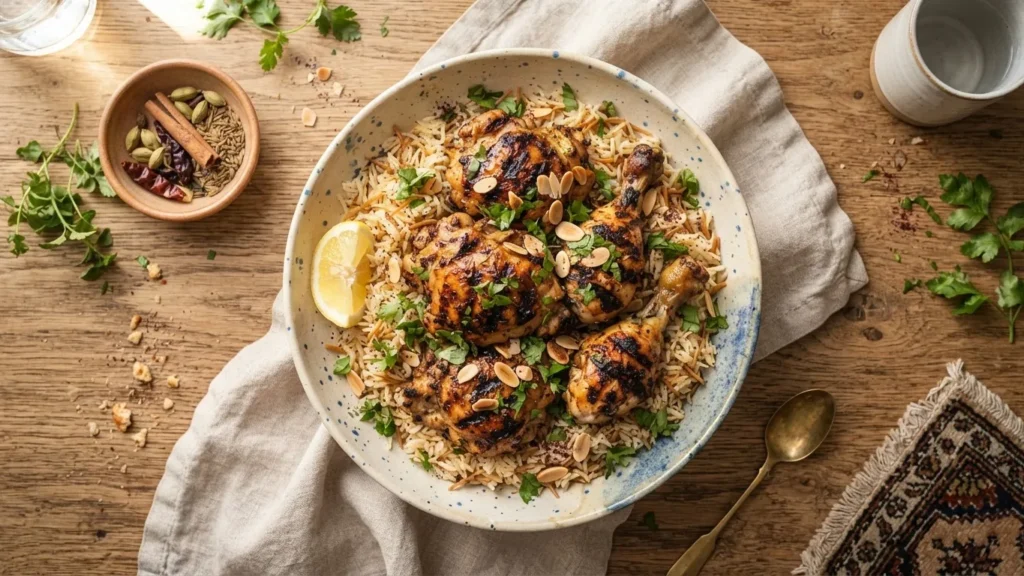
Four published recipes for the same plate do not agree on when the chicken is done. One directs you to pull it at 160° Fahrenheit; three others, along with the federal standard, hold at 165°F. That single ten-degree gap is where most of the confusion around grilled chicken and rice lives, and it is the first thing worth settling before you light anything. Everything after that – the marinating time, the choice between breast and thigh, the trick to cooking the grain so the pot does not turn gummy – flows from a handful of numbers that the sources either confirm or quietly disagree on.
The AtlasPlate Recipe Desk assembled this guide from the grilled chicken and rice recipes published by Easy Healthy Recipes, How Sweet Eats, Eat the Gains, and Cooked & Loved, then cross-checked them against the safe poultry handling guidance from USDA FoodSafety.gov and the USDA Food Safety and Inspection Service.
Quick answer: For grilled chicken and rice, cook chicken to an internal temperature of 165°F (74°C), the USDA safe minimum for all poultry cuts; one popular recipe stops at 160°F, below that line. Grill boneless pieces roughly 5 to 8 minutes per side, checking the thickest part. Marinate from 30 minutes up to 24 hours for flavor, never exceeding 2 days refrigerated. For the rice, rinse until the water runs clear, toast, simmer covered 15 to 20 minutes, then rest covered 5 to 10 minutes before fluffing. No grill? Oven at 400°F or air fryer both work.
The 160°F vs 165°F doneness conflict, settled
Here is the disagreement in plain terms. The Easy Healthy Recipes version instructs you to cook the chicken until it “reaches internal temperature of 160° Fahrenheit.” The versions from How Sweet Eats, Eat the Gains, and Cooked & Loved all stop at 165°F (Cooked & Loved writes it as 165°F / 75°C). USDA FoodSafety.gov sets the figure that decides it: 165°F (74°C) is the safe minimum internal temperature for all poultry – whole bird, breasts, legs, thighs, wings, and ground poultry alike.
So one widely followed recipe directs a pull temperature five degrees below the federal safe minimum. Worth noting: that same Easy Healthy Recipes page is internally inconsistent – its recipe notes elsewhere reference a range of “160°-165° F” and add that if the juices run pink when sliced, the chicken goes back on the grill. The notes clearly treat 160°F as a floor rather than a target.
The resolution is not a compromise. Cook to 165°F. The USDA Food Safety and Inspection Service repeats the same number in its own guidance, instructing cooks to “cook to a safe internal temperature of 165 degrees F.” If you prefer a margin, FSIS notes that cooks “may choose to cook poultry to higher temperatures” for personal preference – but 165°F is the line below which you should not stop. Carryover heat during the rest adds a little more, which is one reason the resting step is not optional.
Grill time and temperature, by cut and by recipe
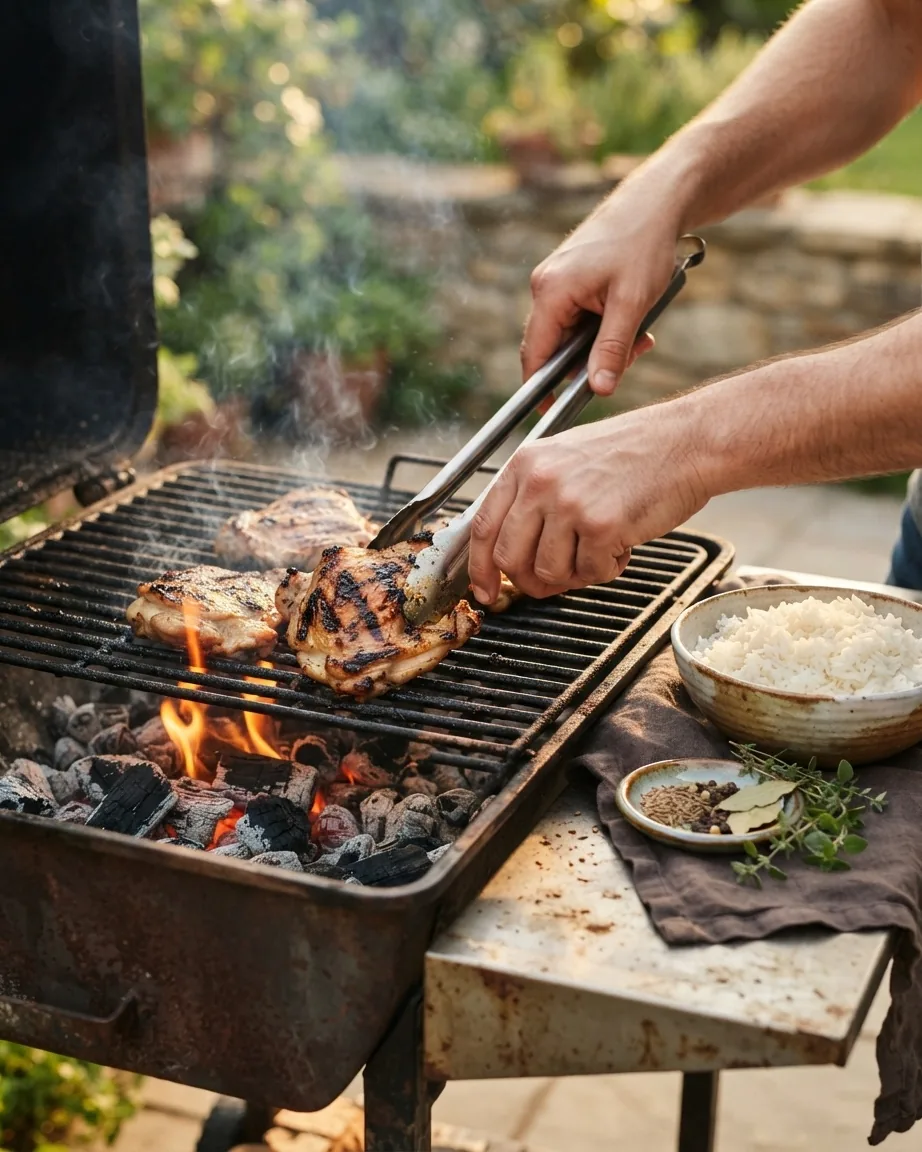
None of the sources use time alone as the finish signal, and neither should you – thickness decides everything. The published numbers give you a reliable window to work inside while the thermometer makes the final call.
For boneless breasts, How Sweet Eats preheats the grill to high for at least 10 minutes, then grills “5 to 6 minutes per side, or until the internal temperature reaches 165 degrees F.” The Easy Healthy Recipes approach runs a medium-high grill, defined as 375° to 450° Fahrenheit, cooking the first side 6 to 8 minutes, then flipping, reducing to medium, and cooking 6 to 7 minutes more.
For boneless thighs, Eat the Gains uses a two-zone method that is worth copying: grill 6 to 8 minutes over direct medium-high heat (400 to 450 degrees), then flip and move the pieces to indirect heat – off the direct flame – for another 5 to 10 minutes depending on thickness, until 165 degrees. Moving to indirect heat matters because thighs carry more fat and connective tissue than breasts; they need longer at a gentler heat to finish through without the outside scorching. Cooked in a skillet rather than on a grill, thighs land in the same neighborhood at “about 6 – 7 minutes per side.”
Breast or thigh: which cut to grill
Both cuts finish at the same 165°F, but they punish mistakes differently. The Cooked & Loved bowls are built on boneless skinless thighs, and on whether breast can stand in, the answer is plain: yes, but “don’t overcook – it dries out faster than thighs.” That is the whole decision in one line. Thighs carry more fat, so they stay forgiving if you overshoot by a minute; a breast turns dry fast once it climbs past the target. If you are grilling breasts, pull them the instant the thermometer reads 165°F. If you tend to wander from the grill, thighs are the safer cut.
One prep step is flagged for breasts specifically: if they are thick or uneven, pound them to an even thickness first, so the thin end is not leather by the time the thick end is safe.
Marinate duration: flavor window vs the safety ceiling
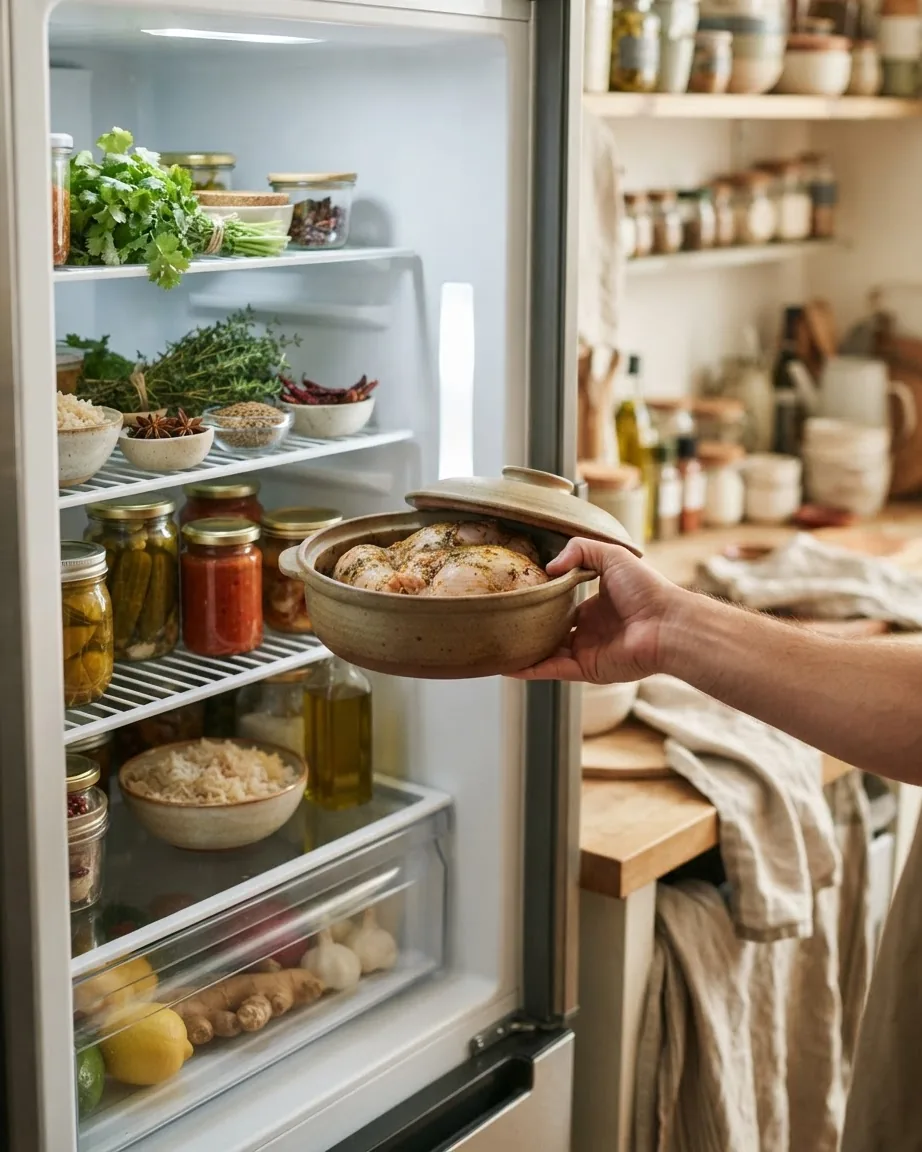
The common mistake is mixing up two separate clocks that are at work in this step. One clock is flavor preference. The other is a hard safety ceiling, and only the USDA sets that one.
The flavor windows differ by recipe. How Sweet Eats marinates “at least 30 minutes or up to 2 hours.” Eat the Gains goes “at least 30 minutes, up to 24 hours.” The Easy Healthy Recipes page is, again, internally split: its recipe card says “at least 1 hour, but no more than 24 hours,” while its own tip line recommends “1-2 hours minimum, and no more than 24 hours.” Rather than true contradictions, these reflect preference – each cook setting their own bounds on how much marinade flavor they are after.
The ceiling is separate and firm. The USDA Food Safety and Inspection Service states that poultry can be refrigerated for up to 2 days in a marinade. That is a food-safety limit, not a flavor suggestion, and it sits above every recipe’s window – so following any of the recipe timings keeps you well inside it. Always marinate covered, in the refrigerator, never on the counter.
There is also a texture ceiling that has nothing to do with time. FSIS explains that the acid in a marinade breaks poultry tissue down, which tenderizes and helps the meat hold liquid – but “too much vinegar or hot sauce in a marinade can have the opposite effect, causing the meat to be stringy and tough.” In other words, let a very acidic marinade run the whole 24 hours and it may backfire on you. If your marinade leans heavily on lemon juice, vinegar, or hot sauce, favor the shorter end of the window.
The raw-marinade rule the recipes skip
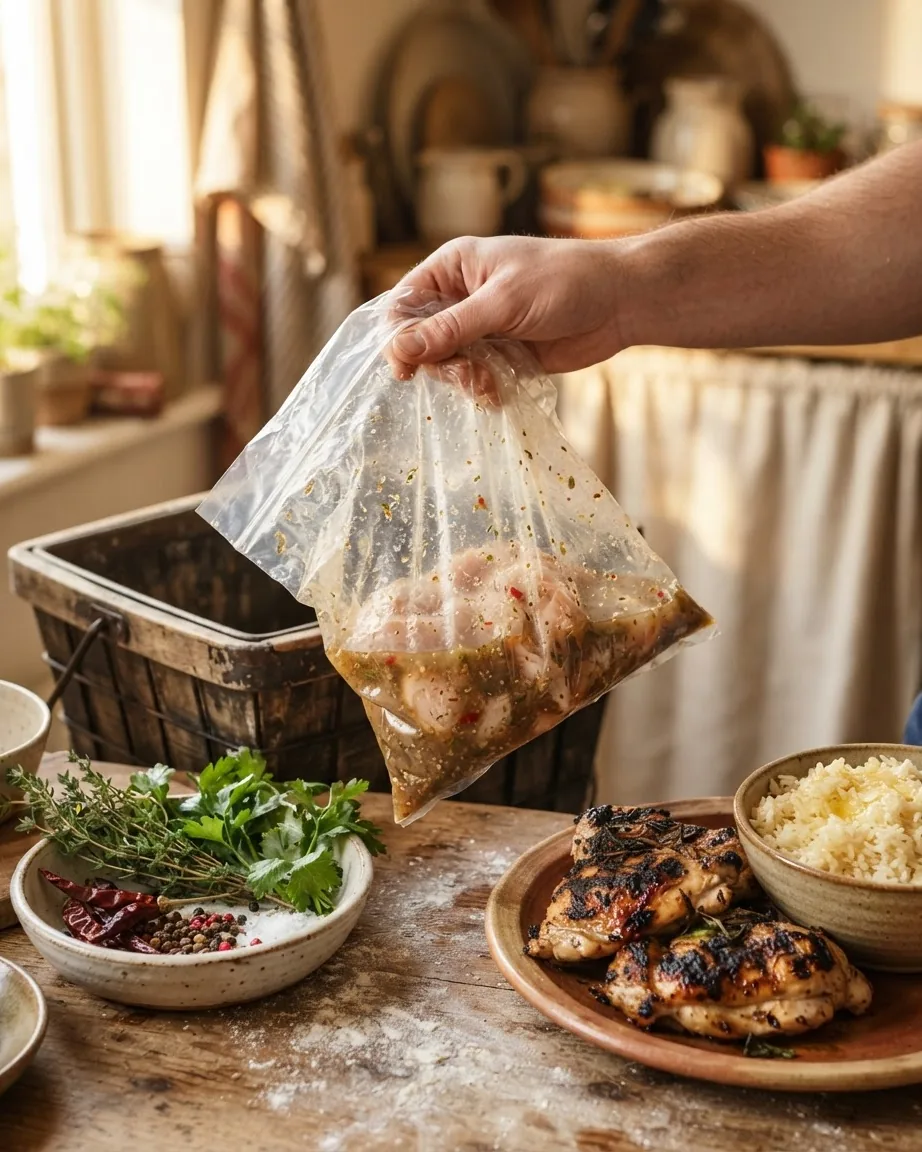
Because the recipe pages leave this out of their assembly instructions, it is the gap most worth closing. The USDA Food Safety and Inspection Service is explicit: “Do not use marinade from raw poultry as a sauce unless it is boiled first to destroy bacteria.” Raw-chicken marinade is contaminated by definition. If you want to spoon it over the finished plate or baste with it late in cooking, bring it to a full boil first. Otherwise discard it. FSIS also recommends marinating in food-grade plastic bags you can throw away afterward, which sidesteps the cleanup and cross-contamination problem entirely.
Rice that fluffs instead of clumping
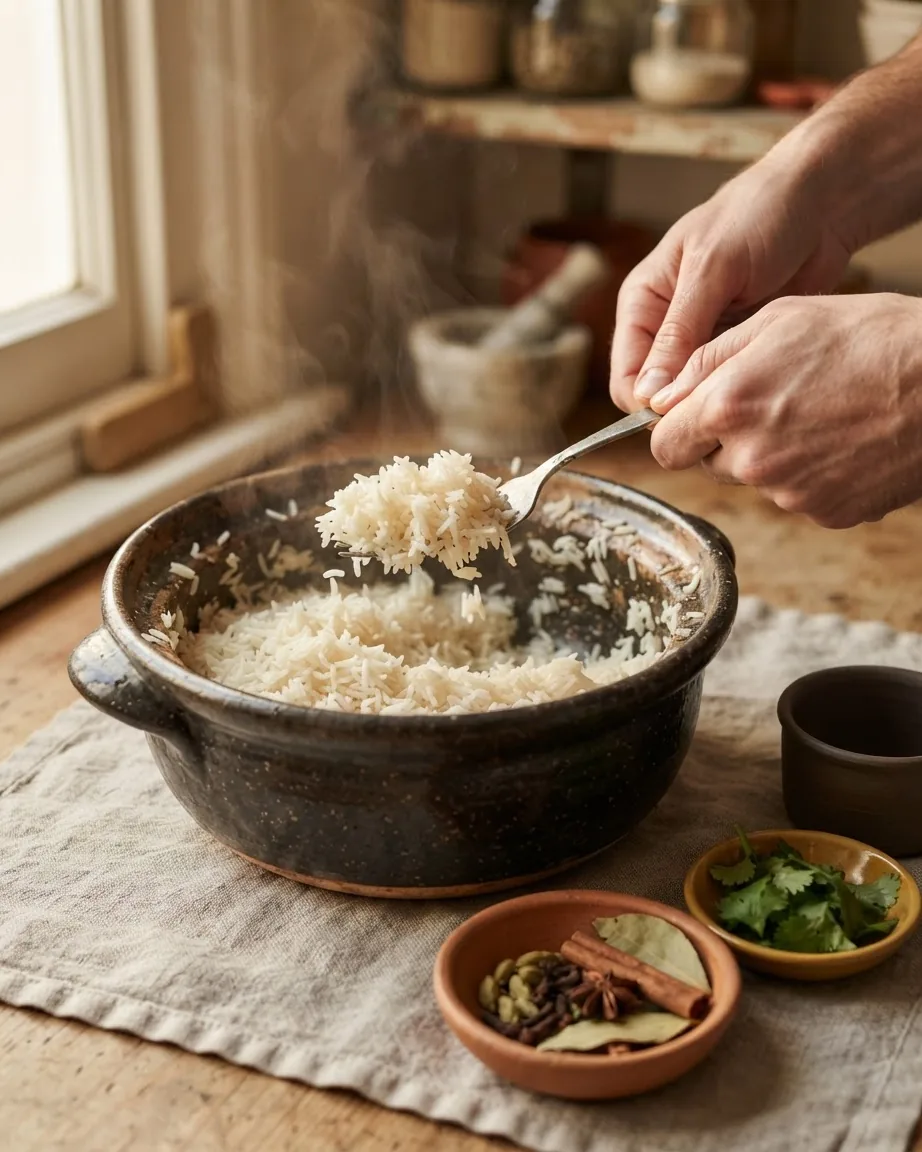
Gummy rice comes from two mistakes the sources agree on how to avoid: skipping the rinse, and disturbing the pot while it cooks. The published methods line up on a four-move sequence – rinse, toast, simmer undisturbed, then rest and fluff.
Rinsing washes off surface starch that otherwise glues the grains together. Eat the Gains directs you to “place rice in a fine mesh strainer and rinse for 1-2 minutes until the water runs clear.” The Easy Healthy Recipes method rinses the same way, then adds a toasting step: the rinsed rice goes into oil and butter with the dry seasonings and cooks 2 minutes, stirring constantly, before any liquid. Toasting firms the outside of each grain so it holds its shape through the simmer.
Then the liquid, then stillness. The Easy Healthy Recipes method brings 1 cup of rice and 2 cups of chicken broth to a boil, drops the heat to low, covers, and simmers 20 minutes without lifting the lid. For coconut rice made with full-fat coconut milk, Eat the Gains gives a useful doneness fork: simmer 15 to 20 minutes, where “15 minutes will be more al dente and creamier, 20 minutes will be softer and the liquid fully absorbed.” The Cooked & Loved version brackets white rice at 15 to 20 minutes as well.
The rest is what most home cooks skip, and it is where fluffiness is won. One method takes the pot off the heat and lets the rice “rest, covered, for about 5 minutes,” then fluffs with a fork; another rests its rice 10 minutes, covered, before fluffing. The rest lets residual steam finish the grains evenly and firm them up, so a fork separates them cleanly instead of smearing them. Fluff only after the rest, never during the simmer.
If the water-ratio question for a specific grain is what’s tripping you up, see also our Thai rice guide.
No grill? Oven, air fryer, and Instant Pot numbers
Two of the four recipe pages offer no-grill paths, which covers apartment cooks and bad-weather days. The numbers are specific enough to follow without a grill at all.
For the oven, Eat the Gains roasts chicken at 400°F on a parchment-lined baking sheet for 35 to 45 minutes until cooked through. A fast air-fryer alternative is to “Air fry at 400°F / 200°C for 15 minutes, flipping halfway.” Both still finish at the same 165°F internal target – the appliance changes, the safe number does not.
For the grain, the Instant Pot path pressure-cooks rice with coconut milk and salt: seal the valve, set to manual high pressure for 3 minutes, then let the pressure release naturally for 10 to 15 minutes before venting any remainder. That natural release functions as the rice’s rest period, which is why you do not quick-release it the moment the timer ends.
Storage and freezing, component by component
“Lasts for days” is too vague to act on, and the sources are more precise than that – the catch being that the grain spoils faster than the chicken. The most granular guidance is to “Store chicken, rice, and sauces separately in the fridge for up to 4 days (rice for 2 days).” Note the split – rice is held to just 2 days, which is half of what the chicken gets. Eat the Gains stores each component separately in tightly sealed glass and gives the whole set 4 to 5 days refrigerated.
For the freezer, both sources that address it agree the protein and grain freeze fine. One freezes the chicken and rice but warns against freezing the fresh salsa “as the texture will change”; the other likewise freezes chicken and most sauces but keeps its cilantro-based sauce fresh. The rule of thumb: starches and cooked protein freeze; anything with raw cucumber, tomato, or fresh herbs turns watery and should stay fresh.
Store components separately rather than pre-assembled, so you can reheat the chicken and rice without cooking the cold toppings. For reheating, one approach microwaves chicken and rice 1 to 2 minutes until warmed through. Separately, USDA FoodSafety.gov lists 165°F as the reheating target for leftovers.
What the nutrition numbers actually compare
You will see per-serving calorie figures attached to these recipes, and it is easy to read them side by side as if they measured the same plate. They do not. One single serving is listed at 605 kcal with 54g protein and 1073mg sodium – that is grilled breast over seasoned broth-cooked rice, nothing else. Another bowl is listed at 631 kcal with 39.1g protein, 53.2g carbs, and 29.2g fat – but that plate includes coconut rice, mango salsa, romaine, and avocado on top of the thighs.
Different dishes, different serving definitions. The 26-calorie gap between them is meaningless as a comparison: one is a bare chicken-and-rice plate, the other a fully loaded bowl with added fat from coconut milk and avocado. Use each number only against the exact recipe it came from. The 1073mg sodium figure on the breast plate is the one worth watching if you track salt – much of it rides in on the broth and soy-based marinade, both of which you can dial back.
Turning one plate into a bowl
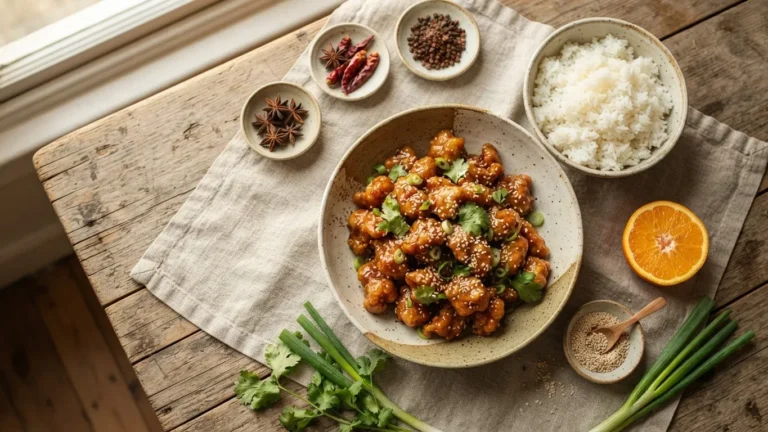
Three of the four sources treat grilled chicken and rice not as a plate but as a build – a base of chicken and rice that different toppings turn into different meals. One layers coconut rice, grilled thighs, mango-cucumber salsa, romaine, and avocado. Another keeps the same chicken and rice and swaps only the sauce, offering a Tex-Mex cilantro lime, a peanut honey soy, and a creamy peri peri – one base, three meals. A third dresses its bowls with a cilantro lime dressing.
The practical takeaway: cook the two components to the numbers above, then decide the identity of the dish at assembly rather than at the grill. That is what makes this worth meal-prepping – the base holds for days, and a different sauce reads as a different dinner. Readers chasing a specific restaurant-style build may want our halal chicken over rice guide. To see the complete quantities and ingredient lists behind each version covered here, head to the source pages at Easy Healthy Recipes, How Sweet Eats, Eat the Gains, and Cooked & Loved.
The rice-to-liquid ratio, and how to scale it
The Easy Healthy Recipes method holds the broth to rice at a fixed relationship, which is what lets you scale the pot without guessing: keep that same relationship and the simmer behaves the same way at any size. Doubling or tripling for a meal-prep batch works as long as you scale the broth by the same factor as the rice, which keeps the absorption right so the grain still fluffs instead of turning gummy; the toast, simmer-covered, and rest steps stay unchanged. For the exact cups-per-batch amounts, see the full recipe on the Easy Healthy Recipes page.
Frequently asked questions
Can I cook the chicken to 160°F if I rest it afterward?
The federal safe minimum is 165°F, and that is the figure to hit on the thermometer, not a goal you reach only through carryover. While resting does raise the internal reading a few degrees, pulling at exactly 160°F banks on carryover you cannot guarantee, especially with thin or small pieces. Pull at 165°F; rest for carryover above that if you want more margin.
Why does my rice turn out sticky even when I follow the timing?
Timing is only one of four variables. Sticky, clumped grains usually trace to an un-rinsed start – surface starch acts like glue – or to stirring and lid-lifting mid-simmer, which releases more starch and vents the steam. Rinse until the water runs clear, leave the pot sealed while it cooks, and fluff only after the covered rest. Skip any of those and timing alone will not save it.
Is this dish spicy?
The base of grilled chicken and rice carries no heat on its own. Any heat depends on the marinade and sauces you choose, which vary from recipe to recipe. Build it with milder seasonings and the plate stays mild.
Can I save the leftover marinade to brush on while grilling?
Only if you boil it first. Marinade that has touched raw chicken carries bacteria, and USDA guidance is to bring it to a full boil before any use as a basting liquid or sauce. If you want a glaze near the end of cooking, set aside a clean portion before the chicken ever goes in, or boil the used marinade hard before it touches cooked meat. When in doubt, discard it.
How far ahead can I marinate without hurting the texture?
The safety ceiling is 2 days refrigerated, but texture can fail before that if the marinade is acidic. Excess vinegar, lemon, or hot sauce over a long soak breaks the tissue down too far and leaves the meat stringy. For acid-heavy marinades, keep it to a few hours; reserve the full day-plus soak for milder, oil-and-herb mixtures that tenderize gently rather than aggressively. Food safety figures above are drawn from USDA FoodSafety.gov and the USDA Food Safety and Inspection Service; cooking times and the recipe-specific methods are drawn from the pages published by Easy Healthy Recipes, How Sweet Eats, Eat the Gains, and Cooked & Loved, where the full ingredient lists and quantities appear.