Drafted with AI language models. How this page was made
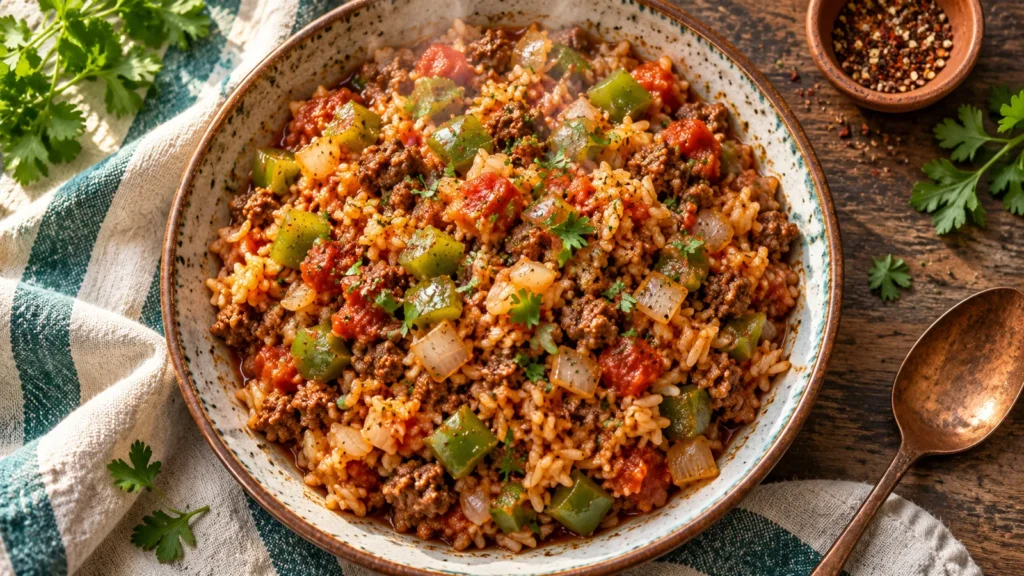
Texas hash is ground beef, uncooked rice, diced tomatoes and chili powder cooked together in a single pan until the rice turns tender in the tomato liquid. The one decision that breaks it: do not fix the water as a single number. Canned tomatoes carry different amounts of liquid by brand, so a cook who follows “1 cup water” blindly lands on either crunchy rice or soup. Add liquid in stages and judge by the rice, not the cup. This texas hash recipe follows the stovetop quantities published by A Family Feast and gives the baked route from Tastes of Lizzy T separately, because the two use different rice-to-liquid ratios that cannot be averaged.
The short version (stovetop, serves 4, about 30 minutes):
- Brown 1 pound of ground beef with onion, pepper, garlic and chili powder, cooking the meat until it reaches 160°F internally.
- Drain the fat from the skillet.
- Stir in ½ cup raw long grain rice and the diced tomatoes with their juice.
- Add water a quarter cup at a time rather than all at once, cover, and simmer about 20 minutes until the rice is tender, adding a little more water if it runs dry before the rice cooks through.
- Top with shredded cheddar.
The name “hash” means chopped; the dish is a mid-century American casserole, not a documented regional Texan tradition.
On the meat, published guidance splits. A Family Feast calls for 80/20 ground beef and is firm that you must drain the fat before the rice goes in; in its words, “it’s very important to drain any excess fat from the skillet once you’ve cooked the ground beef”, or the finished dish turns greasy. Tastes of Lizzy T instead specifies 85% lean beef “so there is not a lot of excess fat,” and notes ground turkey works too. Both are defensible: 80/20 carries more flavor and demands the draining step; 85% lean skips most of it. The University of Illinois Extension version goes further still, calling for extra-lean beef or turkey as a budget, lower-fat option.
A couple of swaps and additions are sourced. Dry mustard and Worcestershire sauce are pantry staples; if you want the chopped-vegetable casserole feel, Just A Pinch adds a chopped celery stalk and dried parsley to the beef-rice-tomato base. For the cheese, cheddar is standard, though 12 Tomatoes lists Monterey Jack as an equal option. Rice stays long grain and white across the stovetop versions; the instant-rice exception is covered below under timing. For a wider look at one-pan beef dishes in this cuisine, see our latin american recipes section. Those partial to loose, separate grains may also compare the oil-first technique used for Brazilian rice.
The One-Pan Beef and Rice Casserole That Feeds Four From a Pound
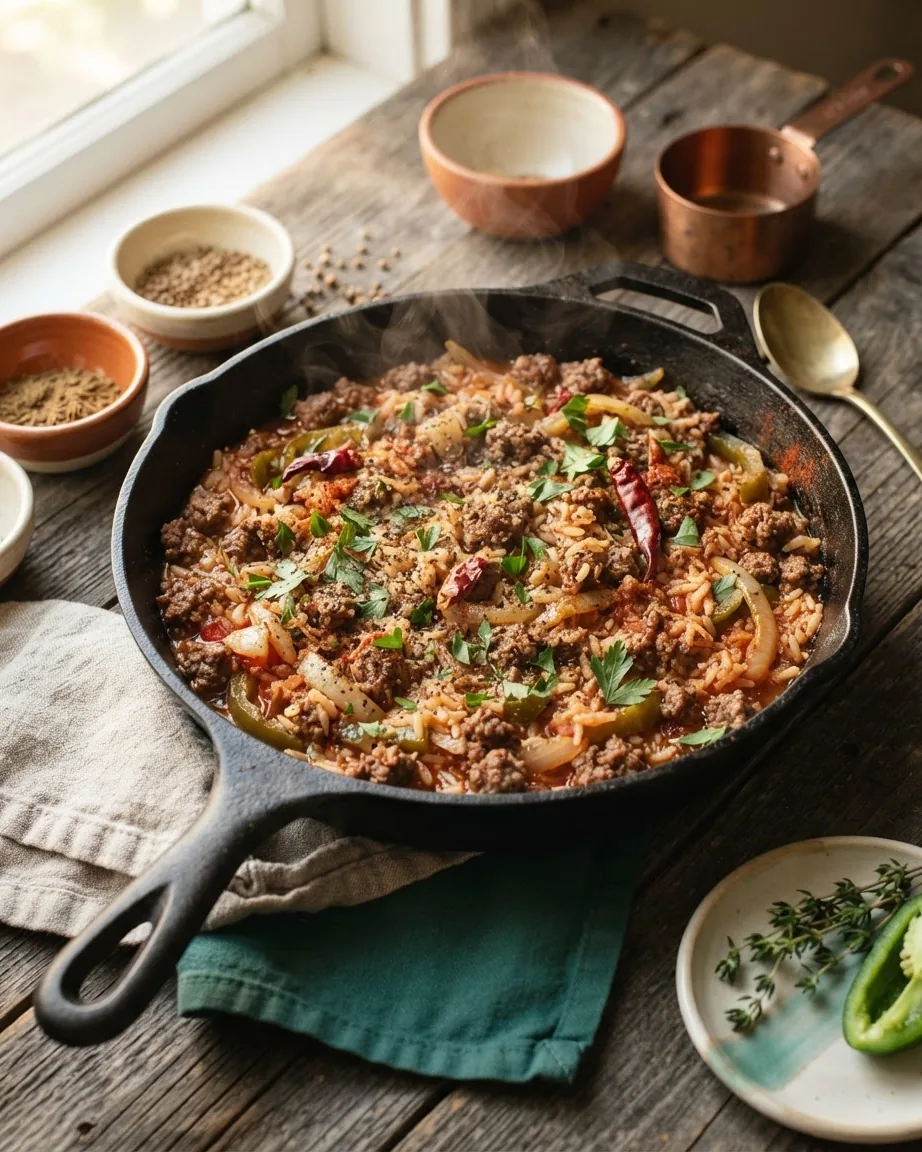
Origin first, because it changes what you expect from the dish. “Texas hash” is not a documented regional Texan recipe with a traceable local history. “Hash” simply means chopped, from the French hacher, the same root behind corned beef hash and roast beef hash. The lineage A Family Feast relays is a reader’s account that “an old Betty Crocker Cookbook from the 1960s included a Texas Hash recipe that was baked”: an anecdote, not verified history, and it points to a mid-century American cookbook rather than a Texas kitchen.
What makes it a weeknight workhorse is the economy: one pound of ground beef stretched with ½ cup of raw rice and a can of tomatoes feeds 4 from a single skillet. The rice cooks in the same pan as the meat, absorbing tomato juice and seasoning as it swells, so there is no separate pot and no second drain. It belongs to the same family of American skillet suppers (beef, starch, tomato, done in half an hour) that earn their place by cost per serving, not by provenance.
How to check it: the rice should be soft all the way through, not chalky at the center, and the mixture moist but not soupy. If it is still wet at 20 minutes, cook a few minutes uncovered. If the rice is underdone but the pan is dry, add a splash more water and cover again.
Stovetop or oven: a sourced decision box
This is the one comparison no single page lays out side by side, built from the published times. Use it to pick your route before you start, because the rice ratio is tied to the method.
| Route / source | Rice & liquid | Cook time & temp |
|---|---|---|
| Stovetop (A Family Feast) | ½ cup rice + tomatoes + water added incrementally | ~20 min simmer, covered |
| Baked (Tastes of Lizzy T) | ½ cup rice + 2 cups tomatoes, no added water | 35-45 min at 375°F |
| Budget (Illinois Extension) | 1 cup rice + 14.5 oz can + 2 cups water | ~20 min simmer, covered |
Choose stovetop when you want it fast and want to adjust liquid as you go. Choose baked when you would rather walk away: Tastes of Lizzy T browns the beef first, then bakes covered 35-45 minutes at 375°F; Just A Pinch bakes a 9×13 assembly covered for 30 minutes at 375°F. Note the rice ratios differ by route and are not interchangeable: the baked version relies on tomato juice alone to hydrate ½ cup of rice, while the Extension version adds 2 cups of water to 1 cup of rice.
Old Fashioned Texas Hash, Baked the Way the 1960s Cookbook Did
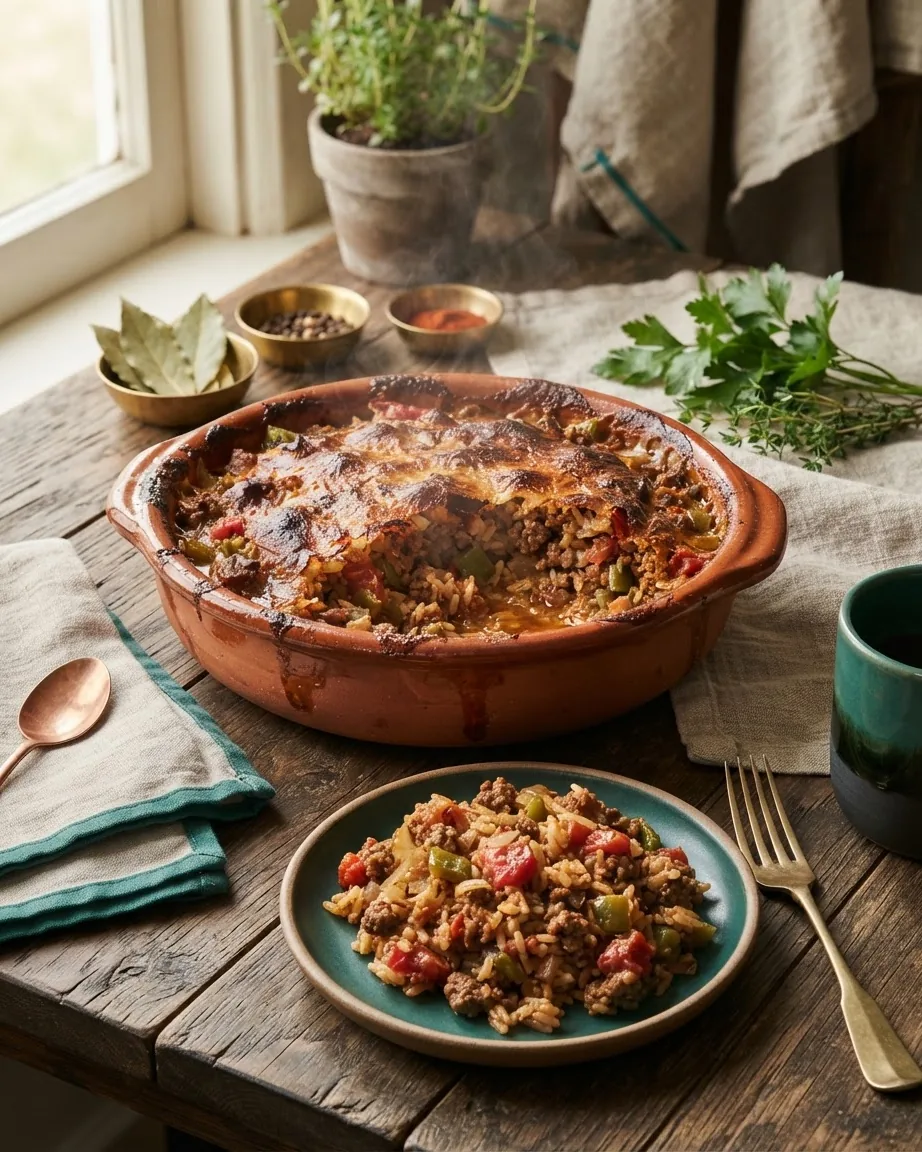
The older form of this dish is baked, not simmered, which matches the Betty Crocker-era anecdote. Brown the seasoned beef, onion and pepper in a skillet; stir in the raw rice and tomatoes; transfer to a covered baking dish and bake at 375°F for 35 to 45 minutes until the rice is tender, per Tastes of Lizzy T. Just A Pinch runs a shorter 30-minute bake at the same 375°F in a 9×13 dish, and folds in a chopped celery stalk and dried parsley for a more old-style casserole texture.
The baked method’s defining constraint: no added water. The ½ cup of rice hydrates on tomato juice alone, which is why the baked ratio uses more tomato (2 cups with juice) than the stovetop version. If you try to bake the stovetop quantities, the rice runs dry. Keep each ratio bound to its own method.
Texas Hash With Ground Beef and Rice: Getting the Grain Right
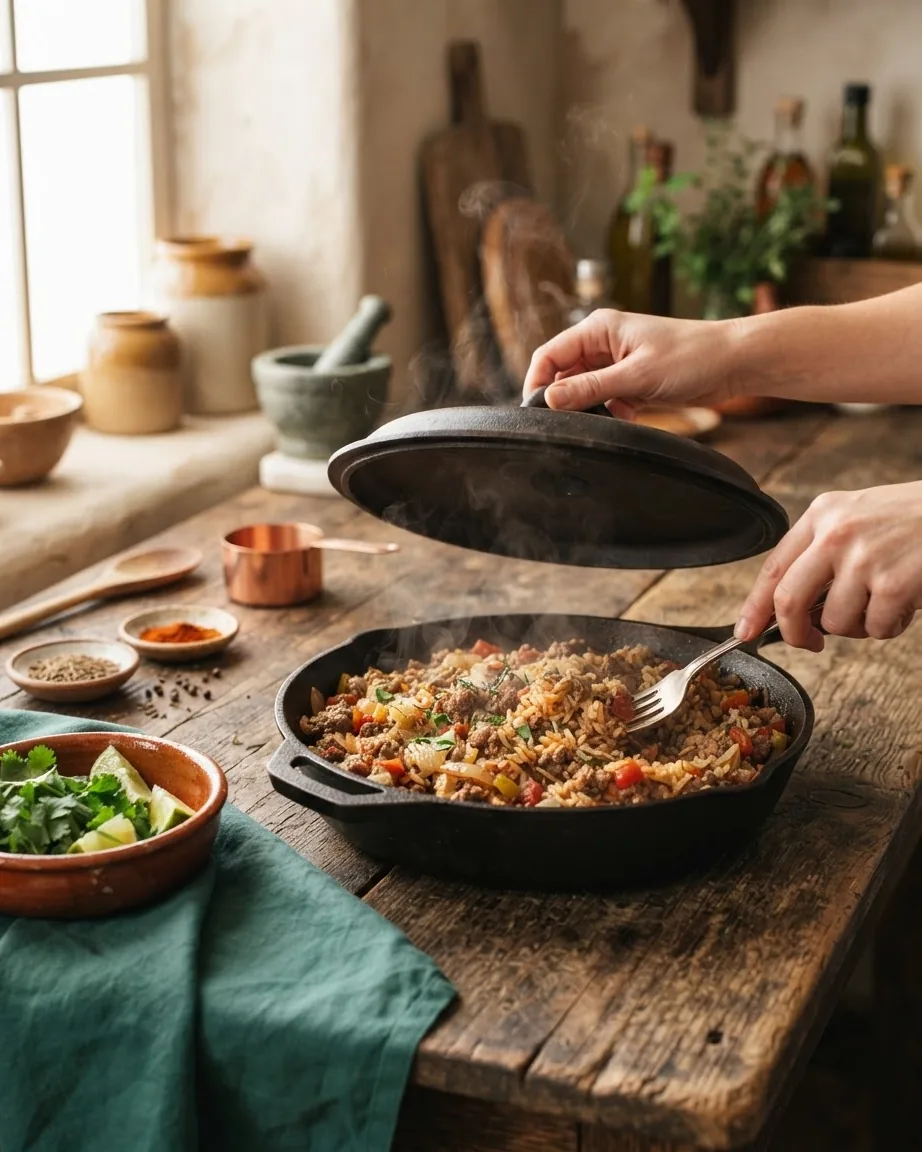
The beef-and-rice version is the core dish, and its single failure point is rice texture. Here is why rice comes out crunchy or mushy, and how to fix it mid-cook. Crunchy rice means too little liquid reached it: common when the canned tomatoes you used were on the drier side, since brands vary in packed liquid. Add ¼ cup water, re-cover, and give it another 5 minutes. Mushy rice means too much liquid or too long covered: uncover and cook a few minutes to drive off the excess, since uncovered time is what controls final dryness.
12 Tomatoes handles the grain slightly differently on the stovetop: add the rice and tomato paste together and cook 3 minutes first, then add tomatoes, water and Worcestershire and simmer 20 minutes covered before removing the lid and fluffing with a fork at the 20-minute mark. That brief dry toast before the liquid helps the grains stay separate rather than clumping. Whichever route you pick, the sensory cue is the same: soft through the center, moist but not soupy.
Texas Hash With Noodles and Other Swaps That Change the Result
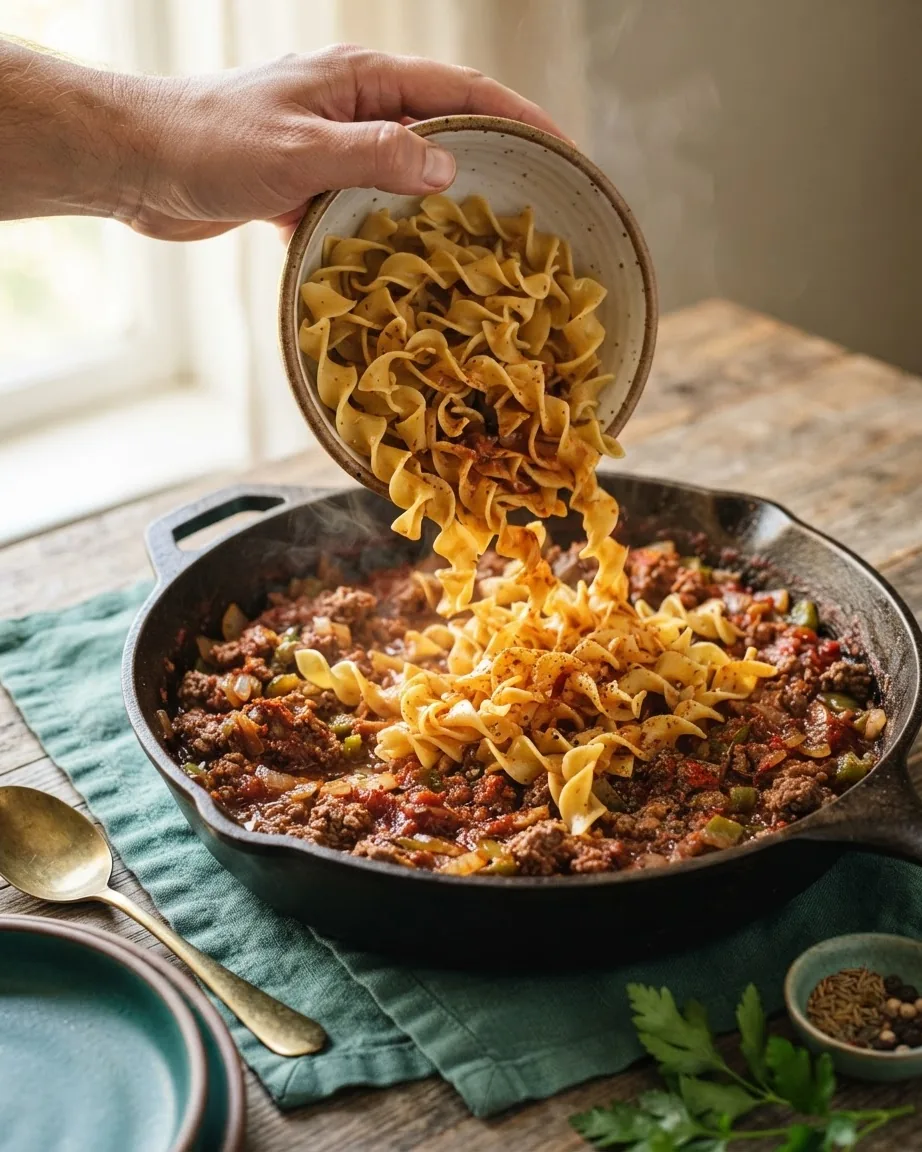
Some cooks make this with egg noodles instead of rice: a Western or American “hash” style built on pasta rather than grain. The published sources here are rice-based, so treat noodles as a documented swap in spirit rather than a timed instruction: egg noodles cook far faster than raw rice and absorb less liquid, so you would cut the simmer short and reduce added water to avoid a sticky, overcooked tangle. Because none of the cited sources specify a noodle timing, cook the noodles to package direction and fold them into the drained, seasoned beef-and-tomato base at the end rather than simmering them from raw in the pan.
Other sourced changes and their effects: for more heat, use more than 1 teaspoon of chili powder per Tastes of Lizzy T, or add jalapeños early with the onion. To stretch the pan, add celery, carrots or fresh tomatoes with the vegetables. For instant rice, the Extension version allows instant or regular, but timing shifts: a reader reported adding instant rice about 10 minutes into the simmer rather than at the start, so it does not overcook into paste.
Storage, Safety and When to Call a Professional
General guidance: cook the ground beef until it reaches 160°F internally before the dish is considered done; this is the Illinois Extension food-safety instruction, checked with an instant-read thermometer in the thickest part of the meat. Store leftovers in a covered, airtight container in the refrigerator for up to 3 days (A Family Feast and Tastes of Lizzy T agree on this window). Freezing is generally discouraged because the cooked rice tends to turn mushy on thaw.
Some situations need a clinician rather than a cook:
- Vomiting, diarrhea, cramping or fever after eating beef that may have been undercooked or left out too long: stop eating it and contact a doctor or urgent care, since this can signal foodborne illness, not something a cook can judge by looking.
- Hives, swelling of the lips or throat, or difficulty breathing after eating (a possible allergic reaction to beef, dairy in the cheese, or wheat in the Worcestershire sauce): seek emergency medical care immediately (a recipe site is not a substitute for a clinician).
- Uncertainty about whether leftovers held past the 3-day fridge window are safe: when in doubt, discard rather than reheat, and raise persistent food-safety questions with a clinician or public-health resource.
What One Serving Actually Costs You in Grams and Calories
Texas hash earns its reputation as a weeknight workhorse by stretching a little meat across four plates, and the printed quantities let you see exactly how thin that stretch is before you cook. Dividing the stovetop ingredient set (1 pound / 450 g beef, ½ cup / 95 g raw rice, one 14.5 oz / 410 g can of tomatoes, 1 cup / 115 g cheddar) across the stated 4 servings shows what lands on each plate, and the rice-to-beef ratio shows why a single pound feeds a family.
- Per serving: about 112.5 g ground beef, 23.75 g raw rice, 102.5 g diced tomatoes with juice, and 28.75 g shredded cheddar.
- The stretch: the ½ cup of raw rice is only about 21% of the beef by weight (95 g against 450 g), yet it swells in the tomato liquid to carry the dish (that absorption is what turns one pound into four servings).
For calories, the baked Tastes of Lizzy T version is reported at 366 kcal and 27 g protein per 1-cup serving.
Texas Hash FAQ
What is Texas hash?
It is a one-pan American skillet casserole of ground beef, uncooked long grain rice and canned diced tomatoes, seasoned with chili powder and simmered until the rice turns tender, often baked at 375°F instead. Despite the name, it traces to a mid-century American cookbook rather than a documented Texan tradition; “hash” means chopped.
What is in Texas hash?
Beyond the beef-rice-tomato base, the published versions add onion, green bell pepper, garlic, dry mustard and Worcestershire sauce, finished with cheddar. Just A Pinch also folds in a chopped celery stalk and dried parsley. The Illinois Extension budget version strips it to beef, a 14.5 oz can of tomatoes, 1 cup rice, water, chili powder and pepper.
How to make cowboy hash?
Cowboy hash follows the same one-pan logic: brown seasoned ground beef, drain the fat, then simmer with rice and tomatoes until tender in about 20 minutes. For a heartier, spicier pan, push the chili powder past 1 teaspoon and add jalapeños with the onion. Cook the meat to 160°F before serving.
Is there a Betty Crocker recipe for Texas Hash?
A reader relayed to A Family Feast that a 1960s Betty Crocker cookbook carried a baked Texas Hash. That account is an anecdote, not verified history, but it matches the oven method: bake covered at 375°F for roughly 30 to 45 minutes until the rice is soft.
What to serve with Texas hash?
Because it already combines meat, starch and vegetables, it needs little beside it. A sprinkle of shredded cheddar on each portion is standard; one baked cup serving runs about 366 kcal with 27 g protein, so a green salad or simple vegetable balances the plate without doubling the starch.
How to make hillbilly hash?
Treat it as the same stretch-a-pound skillet: brown beef, drain, add rice and tomatoes, simmer covered about 20 minutes. Bulk it up cheaply with celery, carrots or fresh tomatoes folded in with the onion, following the same vegetable additions the published casseroles use.