Drafted with AI language models. How this page was made
Nearly every savory Haitian dish starts from one jar: epis, a blended seasoning base of parsley, thyme, garlic, peppers, and acid. Make it once and the rest of these Haitian food recipes come together fast. The reader decisions below are concrete: which griot method to pick by the time you have (long herb-water boil versus a short braise in the marinade), which oil temperature to fry at, and how long each component keeps. Figures come from Savory Thoughts, The Foreign Fork, Love For Haitian Food, the Smithsonian Magazine, and UNESCO. This desk aggregates and formats regional recipes from these published sources; it does not present a single definitive version.
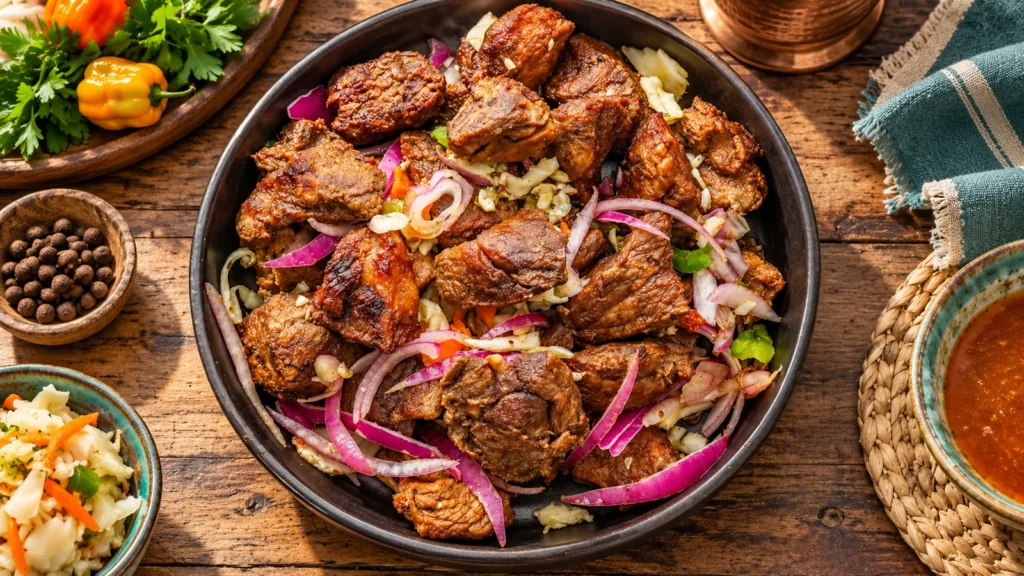
The quick answer. Haitian cooking builds a plate from four parts that balance each other: griot (fried pork, the rich center), diri kole ak pwa nwa (rice and black beans, the starch), pikliz (vinegar-pickled cabbage, the acid cut), and fried plantains. Epis is the shared flavor base, keeping about 4 weeks in the fridge and up to 3 months frozen. Griot is boiled 60-90 minutes then fried; pikliz keeps up to 6 months. Soup joumou, the January 1 independence dish, was inscribed by UNESCO in 2021.
Epis: The Haitian Seasoning Base That Speeds Every Other Recipe
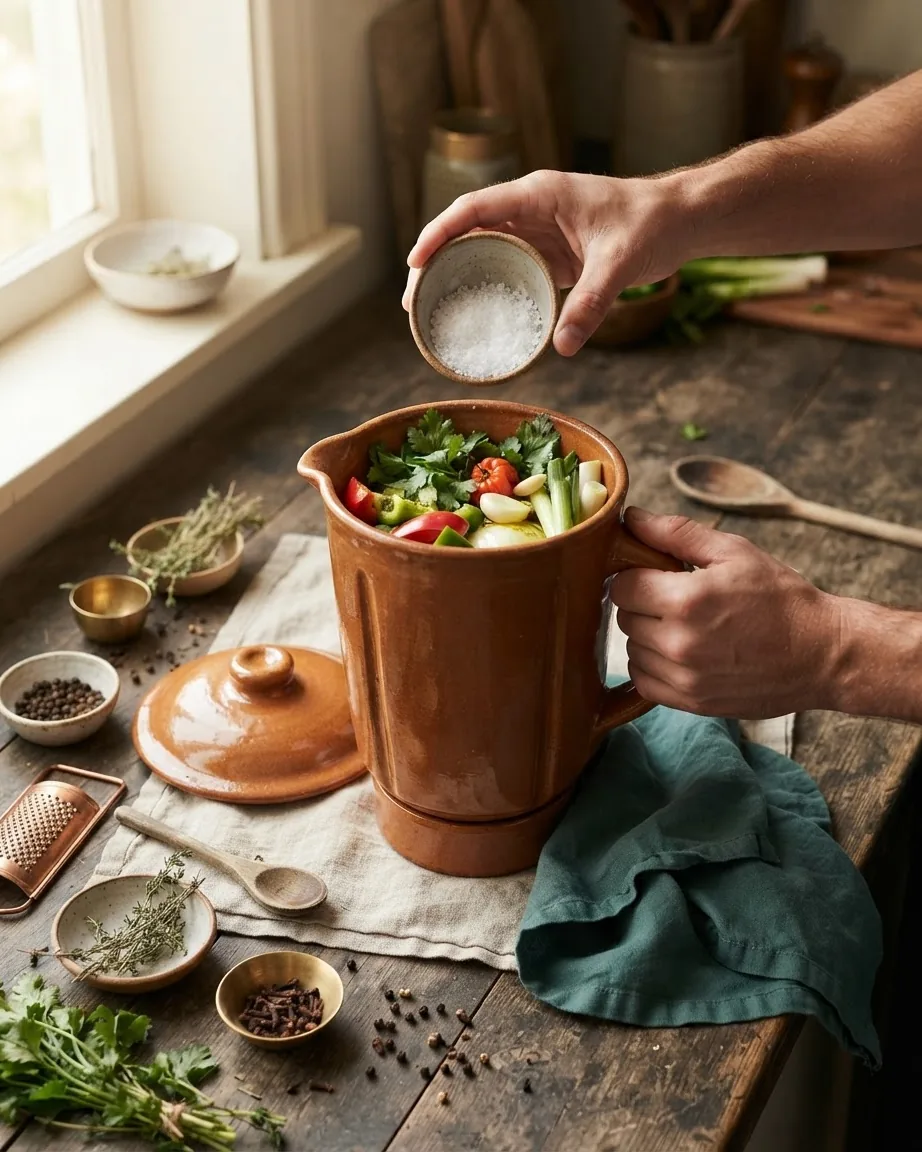
Epis is a blended wet seasoning from the Caribbean family of latin american recipes. Savory Thoughts blends it like pesto, not a liquid, then jars it. The acid (apple cider vinegar) is what lets it hold.
Ingredients (from Savory Thoughts, yield 76 servings):
- 1/2 cup fresh parsley, chopped
- 10 sprigs thyme
- 1 tbsp whole cloves
- 10 cloves garlic
- 1 cup bell peppers and onions
- 1 cup green onions
- 2 tbsp basil
- 2 tsp salt and pepper
- 2 tsp cayenne pepper
- 1 cup (240 ml) olive oil
- 1/3 cup apple cider vinegar
- 1/4 cup vegetable bouillon base paste
Steps (active 20 minutes, total 30 minutes):
- Combine all ingredients in a blender or food processor.
- Pulse to a chunky pesto texture; do not liquify, or the base loses the flecks that flavor a sauce.
- Spoon into a 16 oz jar and refrigerate.
Store it clean: no dirty spoon, keep it airtight, and do not leave it on the counter longer than 10 minutes before returning it to the fridge. Freezing in ice cube trays gives you single-dish portions. Find parsley, thyme, and bell peppers in any supermarket; whole cloves and a bouillon base sit in the spice and soup aisles. For the premade route, Caribbean and African groceries carry jarred epis.
Epis-Rubbed Steelhead Trout
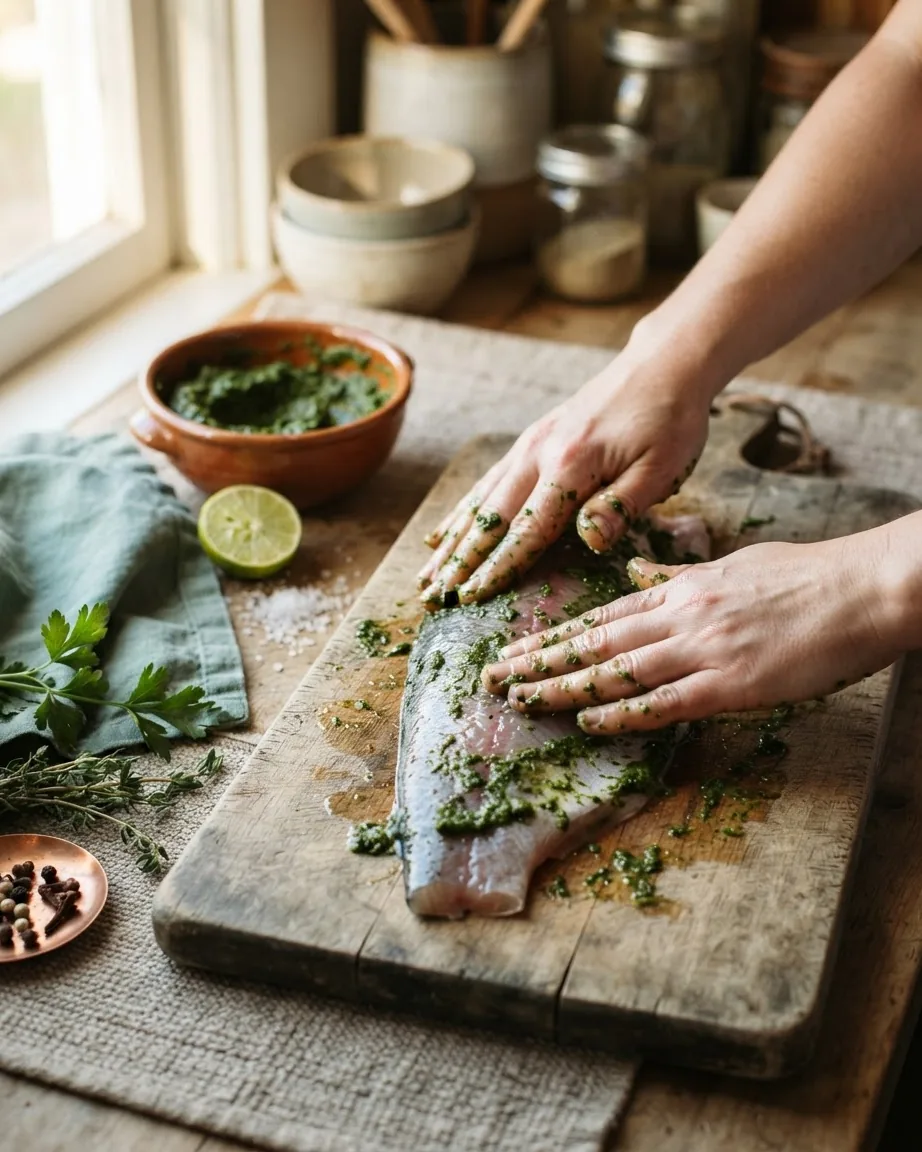
A quick weeknight use for the jar: rub a steelhead trout fillet with epis, a squeeze of lime, and salt, then roast or pan-sear skin-side down until the flesh flakes. The vinegar and herbs in the base season the fish without a separate marinade, which is the meal-planning payoff of keeping epis on hand.
Cleaning the Meat the Haitian Way: Why Citrus and Vinegar Come First
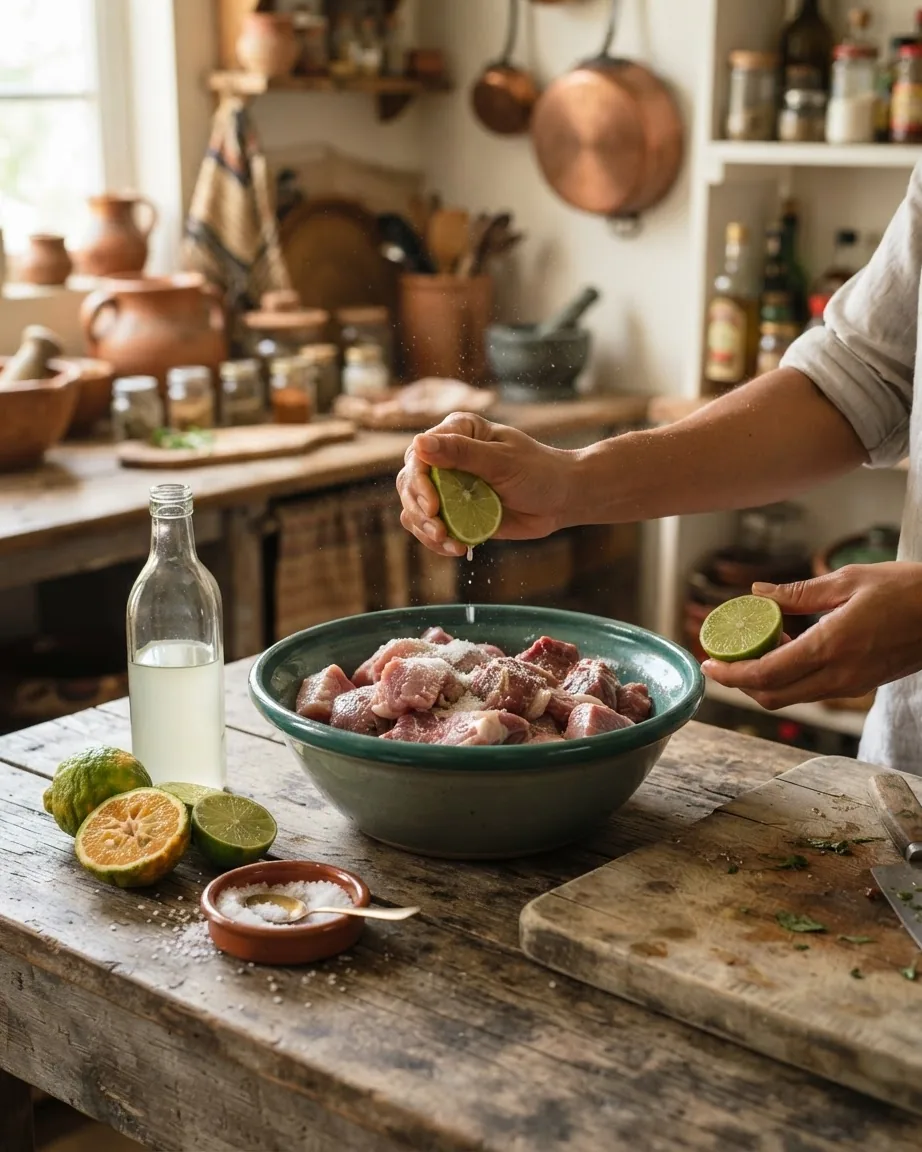
Before Haitian cooks season pork, beef, goat, or fish, they clean it with citrus and vinegar. This is not an optional rinse. The Foreign Fork’s griot method pours white vinegar, salt, and lime juice over the pork, then reserves the spent lime halves and rubs each piece on the cut flesh “making sure to really get the meat covered in the citrus,” per The Foreign Fork. The meat then rests before the vinegar and salt are rinsed off.
Two things happen. The acid is an early flavoring step, pushing citrus and tang into the surface before any dry seasoning. It also strips the slick film and odor from raw meat, which matters for goat and pork especially. Sour orange is the traditional citrus; lime or a lime-and-vinegar mix is the common U.S. substitute, since Seville-type sour oranges are seasonal and usually found only at Latin and Caribbean markets.
The sequence, for any cut:
- Coat the meat with vinegar, salt, and the juice of cut limes or sour orange.
- Rub each piece with the spent citrus halves until fully covered.
- Rest, covered, in the fridge.
- Rinse off the vinegar and salt before seasoning with epis.
Haitian Pork Griot
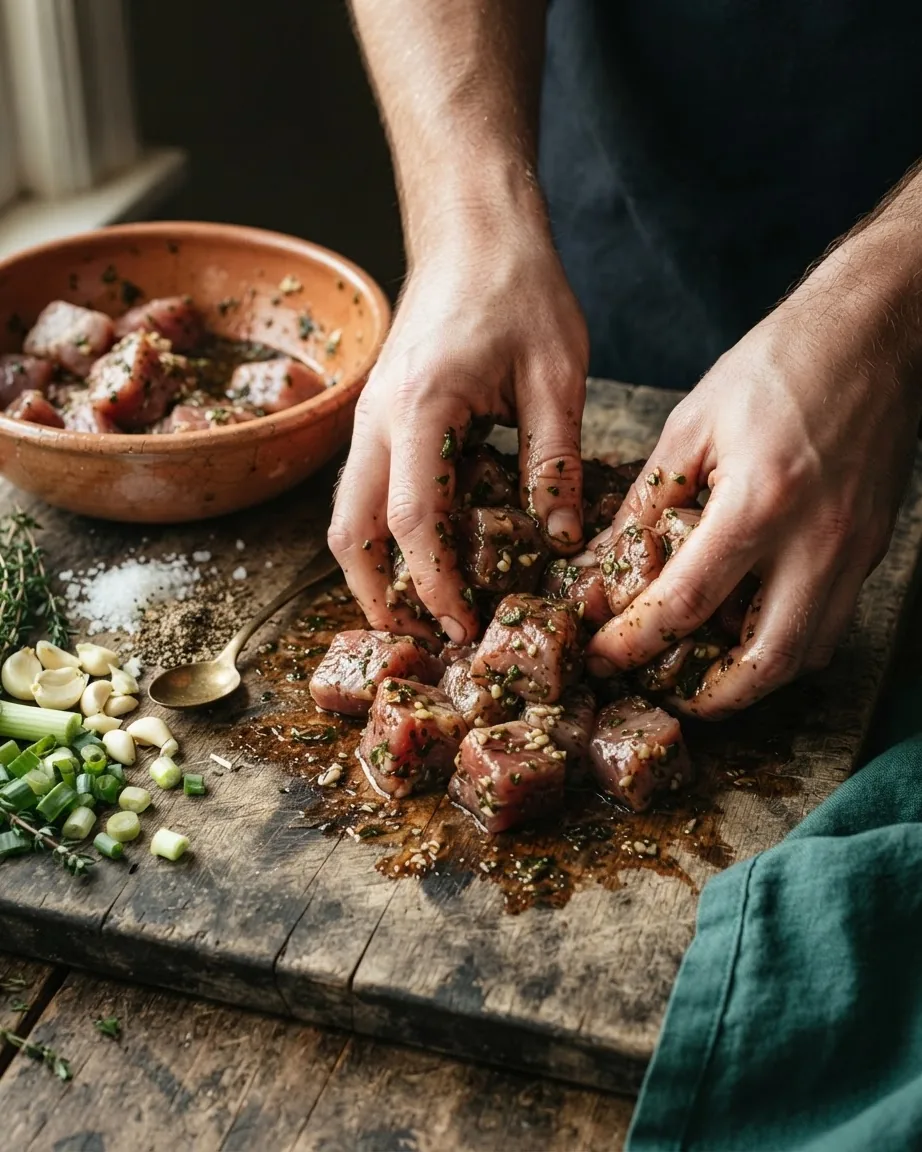
Griot is cubed pork shoulder, cleaned with citrus, seasoned with epis and garlic, cooked until fork-tender, then fried crisp. The Foreign Fork uses 2 lb (0.9 kg) and braises in its own marinade. Both finish in hot oil for the crust. Serve with pikliz and fried plantains.
Boil or Braise: The Two Griot Methods, Side by Side
This is the one choice that changes your griot. The sources attest two distinct pre-fry methods, and they are not interchangeable step for step. Below is a comparison this desk assembled from both published recipes so you can pick by time and texture.
| Parameter | Savory Thoughts (boil) | Foreign Fork (braise) |
|---|---|---|
| Pre-fry method | Boil in water with basil and thyme | Cook in its own marinade |
| Pre-fry time | 60-90 minutes | ~5 min high, then ~10 min medium |
| Fry temperature | About 375°F (191°C) | 360°F (182°C) |
| Texture outcome | Looser, cleaner pork flavor | Denser, marinade-glazed |
| Prep / total time | 45 min / 195 min | 20 min / 220 min |
The sources list different frying temperatures, and both are published as valid: the lower end runs gentler and more forgiving; the higher end crisps faster.
The soggy-griot failure chain. Three linked mistakes make griot greasy instead of crisp: boiling past fork-tender so the cubes fall apart, frying wet meat that drops the oil temperature, and crowding the pot. Fix all three: pull the pork while it still holds its shape, rest it on a rack to dry, and fry in batches, letting the oil return to temperature between them.
Griot ingredients (Savory Thoughts, yield 8 servings):
- 18 garlic cloves, smashed
- 1/2 cup Jacmel seasoning
- 1 tbsp kosher salt
- 1/2 tbsp cayenne pepper
- 2 habanero peppers, smashed with the garlic
- 1/4 cup white wine vinegar
- 1/4 cup Worcestershire sauce
- Juice of 2 lemons
- 4 basil leaves and 3 thyme sprigs (to boil with the meat)
- 1 quart (0.95 L) vegetable oil for frying
Steps:
- Clean the pork with vinegar and lemon, then rinse.
- Combine garlic, Jacmel seasoning, salt, cayenne, smashed habanero, and Worcestershire; coat the pork and marinate.
- Boil with basil and thyme 60-90 minutes until fork-tender but still holding shape.
- Rest on a rack to dry off moisture.
- Fry in batches until golden and crisp.
Pikliz: The Acid That Cuts the Richness, and What Is Actually in It
Pikliz is shredded cabbage and Scotch bonnet pickled in vinegar; its job on the plate is to cut griot’s fat with sharp heat. Savory Thoughts, whose cook notes a Haitian coleslaw recipe lost after 30 years, keeps it simple. A common misconception is that bell peppers, onions, and cucumbers belong in it. They are optional add-ins, not the traditional core, which is cabbage, carrot, Scotch bonnet, and vinegar.
Pikliz keeps up to 6 months refrigerated in an airtight container; top up the vinegar as the liquid level drops so the vegetables stay submerged and the acid keeps preserving them. Handle the peppers with care: Scotch bonnet and habanero oils burn skin and eyes, so wear gloves and avoid touching your face. For another sharp finisher to keep in the fridge, see our regional salad finishers notes.
Soup Joumou: The Freedom Soup of January 1
Soup joumou is a squash-based soup with meat, vegetables, plantains, and pasta, eaten on January 1 as Haiti’s first meal of the year. UNESCO inscribed it on the Representative List of Intangible Cultural Heritage in 2021. The Smithsonian Magazine and chef Nadege Fleurimond marinate the beef in epis, lime, and seasoned salt at least 30 minutes, preferably overnight, and cook the squash separately until fork-tender, about 25 minutes, before puréeing.
Poulet en sauce (poul nan sos) is cleaned chicken seasoned with epis, browned, then simmered in a tomato-onion-pepper sauce until the meat pulls from the bone and the sauce thickens.
Akra (Crispy Taro Root Fritters) with Caviar and Remoulade
Akra are grated malanga (taro root) fritters, seasoned with epis, garlic, and Scotch bonnet, then spooned into hot oil and fried until the edges brown and crisp. The restaurant plating here pairs them with caviar and a remoulade, but the street version stands alone as a snack. Find malanga at Latin and Caribbean markets; the frying temperature matches the range used for griot.
Diri ak Sos Pwa (Haitian Rice with Bean Sauce)
Here the beans and rice stay separate: white rice is topped with a pourable bean sauce (sos pwa) rather than cooked together. The sauce is simmered beans blended smooth with garlic, epis, and often coconut milk, then ladled over the rice. It is the lighter cousin of diri kole, where the two cook as one pot. See the combined version below.
Poul Nan Sos (Haitian Chicken in Sauce)
Poul nan sos is Haiti’s everyday braised chicken: cleaned with citrus and vinegar, seasoned with epis, seared for color, then stewed in a sauce of tomato, onion, bell pepper, and Scotch bonnet until tender. It belongs on the same plate as diri kole and pikliz.
Ingredients:
- Chicken pieces (thighs, legs, or a cut-up whole bird)
- Lime or sour orange and vinegar, for cleaning
- 1/4-1/2 cup epis
- 1 onion and 1 bell pepper, sliced
- Tomato paste or crushed tomato
- 1 Scotch bonnet, left whole
- Bouillon, salt, and a neutral oil for searing
Steps:
- Clean the chicken with citrus and vinegar; rinse.
- Season with epis, salt, and bouillon; rest at least 30 minutes.
- Sear the pieces in hot oil until browned, which builds the fond that deepens the sauce.
- Add onion, bell pepper, tomato, and the whole Scotch bonnet; do not burst it unless you want full heat.
- Add water to partly cover; simmer until the chicken is tender and the sauce thickens.
- Remove the pepper before serving.
Diri Kole ak Pwa Nwa: Haitian Rice and Black Beans in One Pot
Diri kole cooks rice and black beans together, often with coconut milk and epis. Love For Haitian Food cooked the beans in an Instant Pot in 25 minutes, or about 35 minutes once you add 10 minutes for the pot to come to pressure. After the beans, the assembled dish takes roughly 20-30 minutes to finish.
Steps (finishing stage):
- Cook the black beans until soft (Instant Pot, 25 minutes); reserve the cooking liquid.
- Sauté epis, garlic, and seasoning; add the beans and their liquid plus water or coconut milk.
- Stir in rinsed rice and taste for salt.
- Once most of the water evaporates, lower the heat, cover, and cook 20 minutes without lifting the lid, so the rice steams evenly.
Instant Pot note: the 25-minute bean figure is the pressure-cook window only; budget the extra 10 minutes for pressurization.
The Complete Haitian Food Menu and How the Parts Fit
A full Haitian plate is built so no element repeats another’s job. Assemble it by role:
- Richness: griot or poul nan sos, the fried or braised protein center.
- Starch: diri kole ak pwa nwa or white rice with sos pwa.
- Acid and heat: pikliz, which cuts the fat of the protein.
- Sweet-starchy contrast: fried plantains (bannann peze).
- Celebration: soup joumou, reserved for January 1.
Epis ties the whole menu together, which is why making it ahead (4 weeks fridge, 3 months freezer) shortens every other recipe to assembly.
How to Make Griot, Step by Step
The full griot sequence combines the earlier blocks into one workflow: clean, season, cook, dry, fry. It is seasoned with 1/2 cup epis, bouillon cubes, and seasoned salt, with parsley, thyme, and a habanero tied in, and marinated two hours or overnight. The pork then cooks in its own marinade (about 5 minutes on high, then roughly 10 minutes on medium until fork-tender), rests, and fries at 360°F (182°C) one to two minutes per batch until golden. The marinade thickens as it reduces; discard the herb bundle and pepper before frying.
What Haitians Eat: Everyday Meals and Influences
Haitian cuisine draws on West African, French, Taíno, and Spanish cooking, built on rice, beans, root vegetables (malanga, yam), plantains, meat, and fish, seasoned with epis and Scotch bonnet. Food & Wine’s roundup of core dishes places griot, rice and beans, and pikliz at the center of the everyday table. Everyday meals lean on diri kole, poul nan sos, legim (a stewed vegetable dish), and stewed fish or beef; soup joumou marks January 1.
Handling Hot Peppers and Meat Safely
Two hazards in these recipes need attention, and they are separate from any medical judgment.
- Capsaicin burns from Scotch bonnet or habanero in pikliz and griot. Sign: stinging, redness on skin or in the eyes after contact. Action: rinse the skin, flush the eyes with water, and if burning in the eyes persists or vision is affected, see a clinician or urgent care rather than waiting it out.
- Undercooked pork or chicken. Sign: pink juices or soft, raw-feeling meat after cooking. Action: cook until fork-tender and no longer pink before frying; when in doubt, use a thermometer. If someone develops fever, vomiting, or diarrhea after a meal, that points to possible foodborne illness and warrants a clinician, not a guess at home.
- Allergic reaction to shellfish (in some akra or sauce versions) or other ingredients. Sign: hives, swelling, or trouble breathing. Action: stop eating; breathing difficulty or facial swelling is an emergency, call emergency services.
Storage limits above (epis 4 weeks fridge, pikliz 6 months) assume airtight containers and clean utensils; discard anything with off smells or mold.
The Scale-and-Store Math for a Haitian Plate
The recipes quote their quantities at fixed yields, so the numbers you actually need, like pork per guest or how far one epis batch stretches, only appear once you divide them out. Here is that arithmetic worked from the figures already in the recipes above.
How much pork to buy. The griot recipe uses bone-in pork shoulder to make 8 servings. Since this is bone-in weight, that figure already accounts for the trim and bone you are paying for but not plating.
Why the epis batch is the real time-saver. One batch yields 76 servings from 20 minutes of active prep. Spread across the yield, that is (20 × 60) ÷ 76 = roughly 16 seconds of hands-on work per seasoned serving, which is the meal-planning payoff of making it once and jarring it.
What is in the jar. The batch goes into a 16 oz jar and includes 1 cup (240 ml) of olive oil. At 8 fluid ounces per cup, that is 8 ÷ 16 = 50% of the jar’s volume accounted for by oil alone, before the herbs and vinegar, so expect a thick, oil-rich pesto rather than a pourable liquid.
- Epis prep per serving: (20 min × 60) ÷ 76 servings = ~16 seconds of active work each.
- Oil share of the jar: 1 cup (8 oz) ÷ 16 oz jar = 50% oil by volume.
- Make-ahead window: fridge keeps epis ~4 weeks; freezer keeps it ~3 months (~12 weeks), about 8 extra weeks, so a frozen batch outlasts a refrigerated one roughly threefold.
Frequently Asked Questions
What is griot haitian food?
Griot is cubed pork shoulder cleaned with citrus, marinated in epis and garlic, cooked until fork-tender, then deep-fried crisp. Savory Thoughts boils it 60-90 minutes first, while The Foreign Fork braises the meat in its own marinade, about 10 minutes on medium heat. Both finish by frying and serving it with pikliz and plantains.
What is pikliz haitian food?
Pikliz is a vinegar-pickled relish of shredded cabbage, carrot, and Scotch bonnet that adds sharp, hot acidity to a plate. Bell peppers, onions, and cucumbers are optional, not traditional. Kept airtight and topped with vinegar as the level drops, it lasts up to 6 months refrigerated.
What is lalo haitian food?
Lalo is a stewed dish built on jute leaves, usually cooked with meat or seafood, epis, and Scotch bonnet. Like griot and poul nan sos, it starts from the same seasoning base, which keeps about 4 weeks in the fridge, so a made-ahead jar cuts the prep considerably.
How to make haitian hot chocolate recipe?
Haitian hot chocolate (chokola cho) melts grated local cocoa into milk or water with cinnamon, star anise, and sometimes nutmeg, simmered and often thickened. It is a holiday drink rather than a daily one, served alongside bread on mornings near January 1, Haiti’s Independence Day.
Is haitian food healthy?
Many staples are vegetable- and legume-forward, such as diri kole and legim, while fried griot and akra are richer. Pikliz adds vegetables with little fat and keeps 6 months. Balance comes from the plate structure itself: a fried protein paired with beans, rice, and an acidic vegetable condiment. Nutrition here is general information, not medical or dietary advice. For a personal health plan, consult a registered dietitian or clinician.