The single choice that changes this dish more than any spice is what you do to the squash: puree it and the soup goes thick and creamy, dice it and you get a clear broth with vegetables you can see. Every 3 sisters soup recipe worth following commits to one or the other, and the two versions the AtlasPlate Recipe Desk cross-referenced disagree on exactly this point. One thickens with a whole pre-baked squash; the other keeps the broth thin and leaves the squash in cubes. The dish takes its name from corn, beans, and squash – the three crops the Haudenosaunee grew together – and this article gives you both cooking paths with the amounts each source actually published.
Quick answer: Three Sisters Soup combines corn, beans, and squash, the three staple crops of Haudenosaunee agriculture. Two published versions differ in texture. The First Nations Development Institute version purees one pre-baked butternut or acorn squash into 4 cups of stock for a creamy soup, using both ½ cup corn kernels and ½ cup hominy. The Food Hero version from Oregon State University keeps 2 cups diced squash in 3½ cups low-sodium broth for a clear, chunky soup. Choose puree for a smooth soup, diced for a lighter one.
Why “Three Sisters” – the Haudenosaunee crops and the science under the name
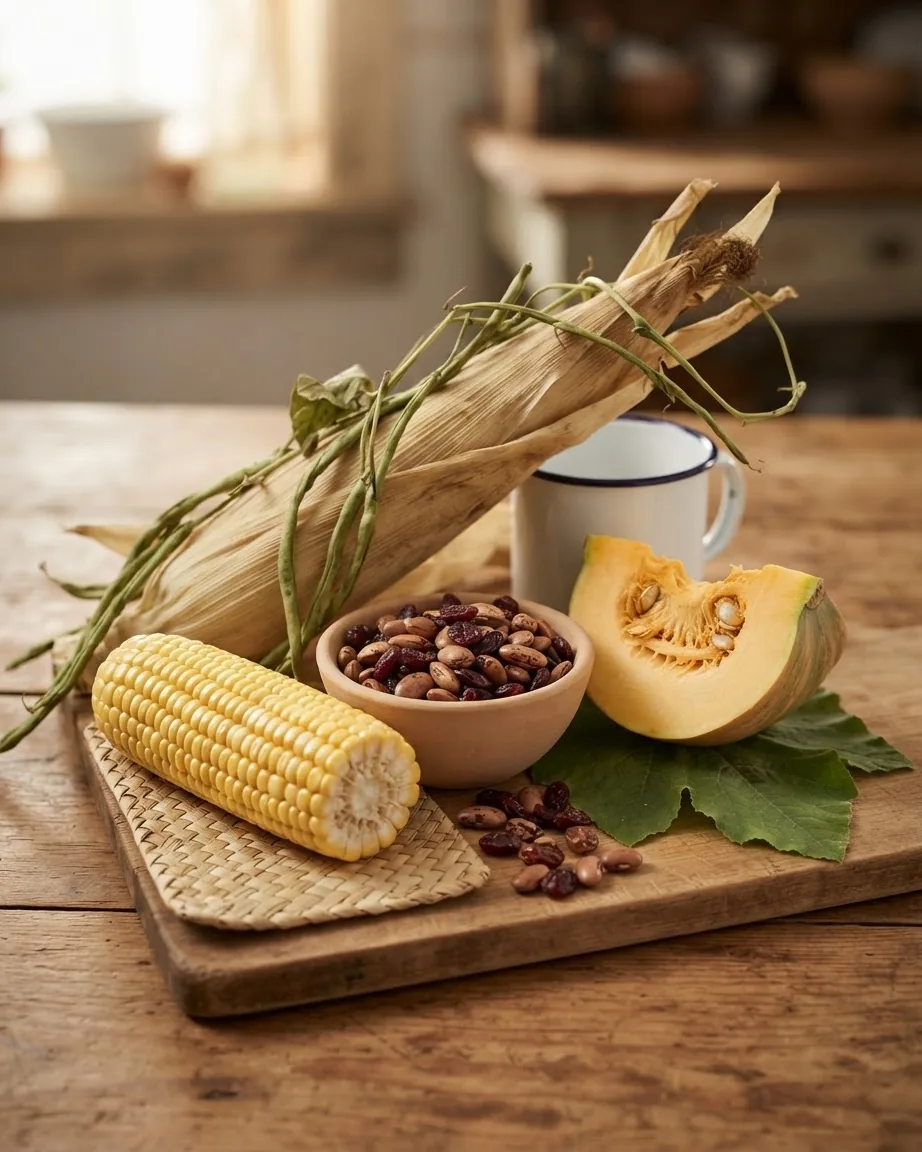
The name is not decorative. It refers to squash, corn, and beans, the three crops that Indigenous farmers in the northeast planted in the same mound. According to Wikipedia’s entry on Three Sisters agriculture, the method works because each plant does something for the other two: the cornstalk gives the climbing beans a trellis, the beans fix nitrogen in their root nodules and steady the corn against high winds, and the broad squash leaves shade the ground and hold moisture in the soil.
That physical partnership carries into the bowl. Corn supplies starch, beans supply protein, and squash supplies the soft, sweet body – a combination that stands on its own without meat. The story attached to the crops is Haudenosaunee: Seeds of Diversity, a seed-conservation and agricultural-education organization, records that in Haudenosaunee legend the Three Sisters are the granddaughters of Sky Woman. The dish belongs to that tradition, and the recipe the First Nations Development Institute publishes is the version this desk treats as the reference point for the creamy method.
The two published 3 sisters soup recipes, and what separates them
The Recipe Desk worked from two structured sources, and they part ways on more than texture. The First Nations Development Institute recipe uses butter, chicken or vegetable stock, curry powder, ground coriander, crushed red pepper, and – the detail that defines it – a whole squash pre-baked and pureed, plus both fresh corn kernels and hominy. It reads as a smoother, spiced soup.
The Food Hero recipe from Oregon State University Extension takes a plainer, weeknight route: vegetable oil instead of butter, cumin and black pepper for seasoning, added carrot and canned diced tomatoes, and squash left in cubes. Its broth stays clear. Neither source is more “authentic” than the other; one is a Native nonprofit’s kitchen version and the other a university extension’s, and they answer different needs.
The liquid base problem, and how each recipe resolves it
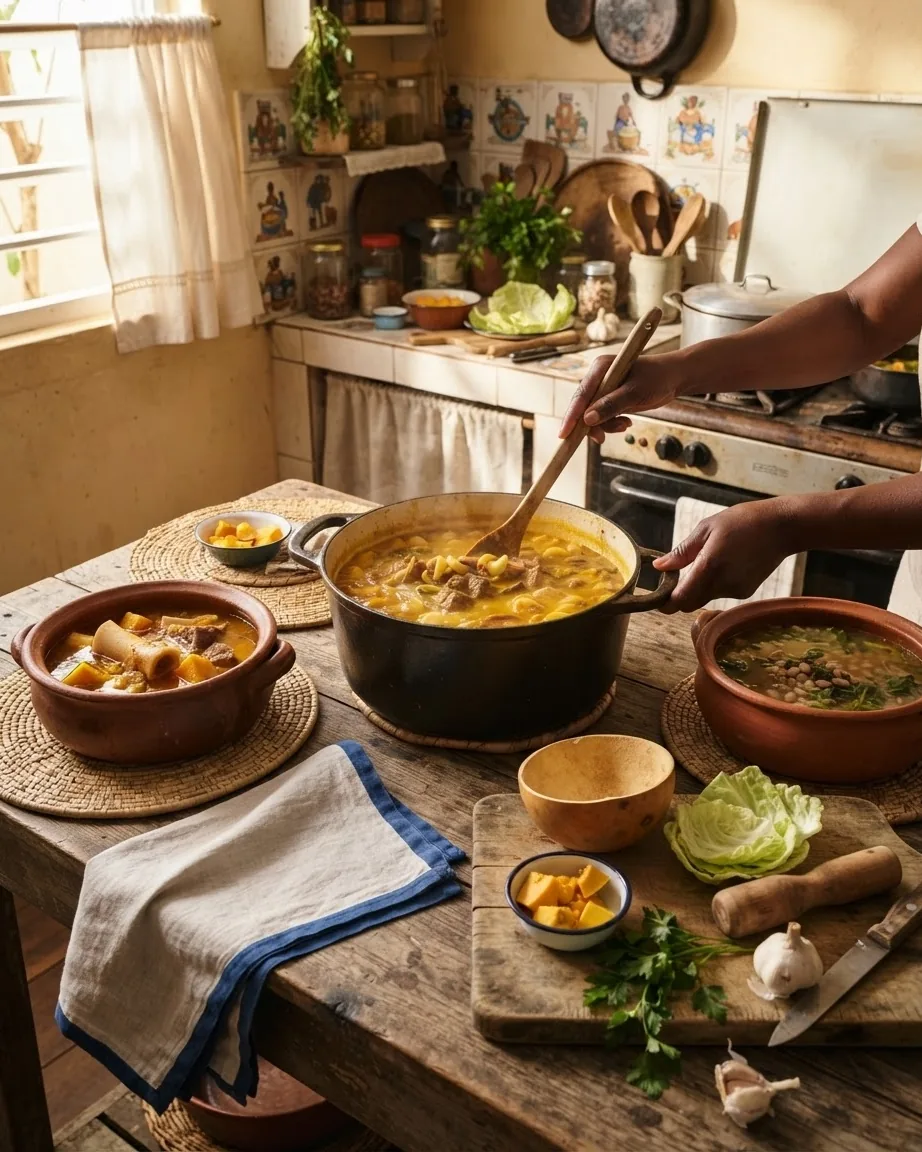
Some published descriptions of this soup leave out the one thing you cannot cook without: how much liquid, and what kind. Both sources here settle it plainly. The First Nations Development Institute recipe calls for 4 cups of chicken or vegetable stock. The Food Hero recipe calls for 3½ cups of low-sodium broth of any type. That half-cup difference matters less than it looks, because the FNDI version then thickens with pureed squash while Food Hero adds a 15-ounce can of diced tomatoes and keeps the squash whole – so the finished FNDI soup is denser per cup of liquid, and the Food Hero soup thinner and more brothy.
If you want a fuller-bodied clear soup, use the lower end of the range; if you prefer it soupier, add stock a quarter-cup at a time until it pours the way you want. Neither source specifies water as a base on its own.

Ingredients: the clear-broth version (Food Hero, Oregon State University)
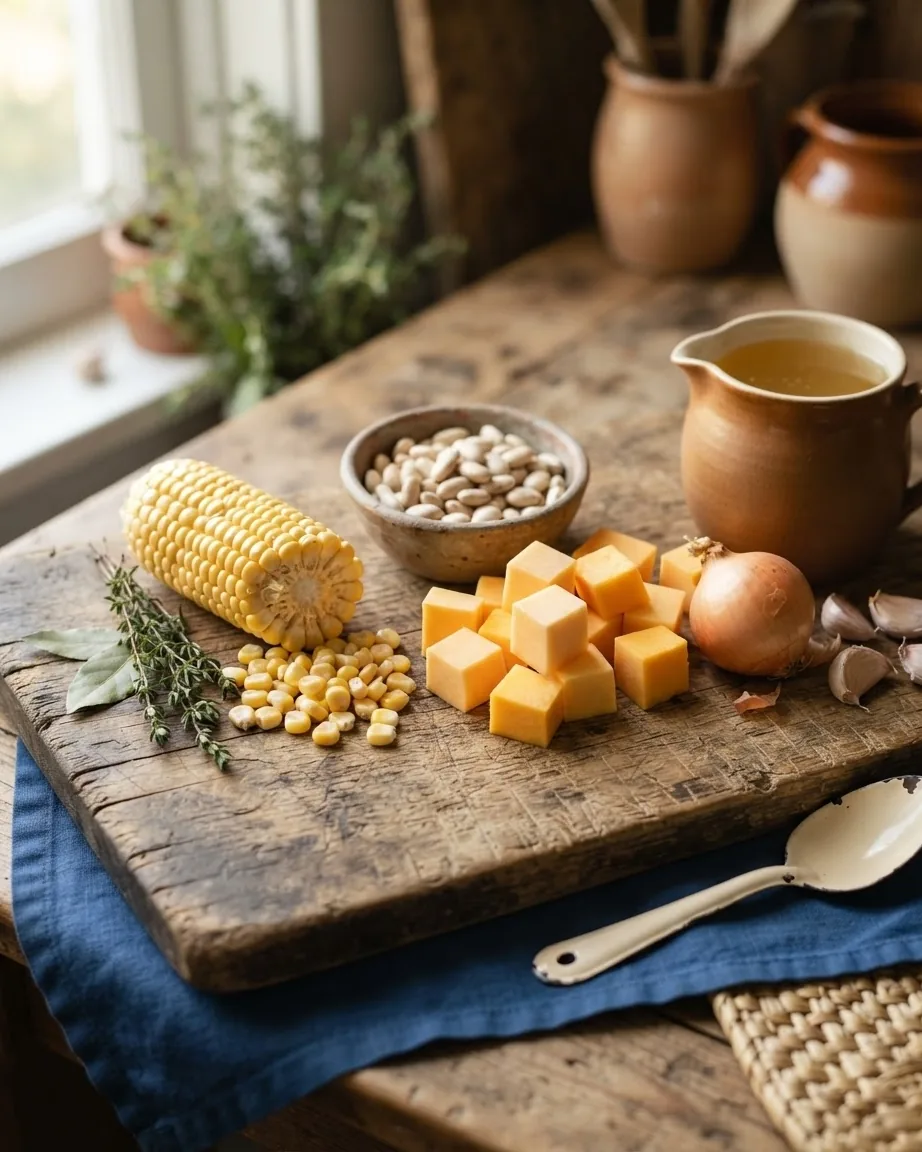
This is the diced-squash path – lighter, chunkier. Canned or frozen components are given as the source lists them.
- 1½ tablespoons vegetable oil
- ¾ cup diced carrot
- 1 cup chopped onion
- 4 cloves garlic, minced, or 1 teaspoon garlic powder
- 2 cups diced squash (summer or winter, fresh or frozen)
- 1½ cups corn (fresh or frozen), or a 15-ounce can, drained and rinsed
- 1½ cups cooked beans (any type), or a 15-ounce can, drained and rinsed
- 1 can (15 ounces) diced tomatoes, or 2 cups diced fresh
- 3½ cups low-sodium broth (any type)
- 1 teaspoon cumin
- ¼ teaspoon black pepper
Steps: the clear-broth version
- Wash your hands with soap and water, and rinse or scrub the fresh vegetables under running water before you cut them.
- Heat the 1½ tablespoons oil in a large pot over medium heat. Add the carrot and onion and cook until the onions begin to brown a little, about 8 to 10 minutes. That light browning builds the base flavor for a broth that has no butter to fall back on.
- Add the garlic, squash, and corn; stir another 3 to 4 minutes.
- Add the beans, tomatoes, broth, cumin, and black pepper.
- Bring to a boil, then turn the heat down to a simmer until all the vegetables are tender to taste – 15 to 30 minutes, depending on whether you used fresh or frozen.
- Refrigerate any leftovers within 2 hours.
Squash: pureed versus diced, and what each does to the pot
This is where the two recipes genuinely conflict, and the conflict is the useful part. The First Nations Development Institute uses one whole butternut or acorn squash, pre-baked and pureed, and stirs it in at the end. Winter squash is starchy and, blended, it acts as a thickener – the soup turns opaque and spoonable, and you taste the squash as the background of everything. Food Hero instead uses 2 cups of diced squash, which can be summer or winter, fresh or frozen, and simmers it whole in the broth. Nothing gets blended, so the liquid stays clear and the squash reads as distinct bites.
Decide by what you want on the spoon. If you’re after a smooth, curry-spiced soup you can serve with a yogurt swirl, follow the puree method and bake the squash ahead – that pre-baking step is why the FNDI method adds the squash last and only warms it for 5 minutes. If you want a fast, brothy vegetable soup with texture, dice it and skip the oven entirely. You can also split the difference: puree half the squash for body and dice the rest for bite, though neither source instructs this.
Which beans, and how Indigenous growers chose them
The recipes are loose on bean type on purpose. The First Nations Development Institute version specifies 1 cup of cooked white beans; Food Hero allows 1½ cups of any cooked bean, or a drained and rinsed 15-ounce can. Both work because the “bean” in Three Sisters is defined by how it grows, not by a single cultivar – it is a climbing, pole-type bean that uses the corn as its trellis, as the companion-planting method describes.
In practice, Indigenous communities favored climbing common beans and, in the drier Southwest, tepary beans, which tolerate heat and little water. For the soup, that history matters less than cook time and texture: a soft white bean melts slightly into the FNDI puree, while a firmer bean holds its shape in the Food Hero broth. If you’re substituting a canned bean for dried, expect a softer result and less bean flavor in the liquid, since canned beans have already given up their starch to the can.
Turning the soup into a stew: garnishes and meat
Both published recipes are meatless, and both stay complete that way – corn, beans, and squash cover starch, protein, and body between them. The First Nations Development Institute finishes its bowl with chives and a spoonful of plain yogurt, which cuts the curry and coriander and adds a cool contrast to the warm soup.
If you’d rather build it into a heartier one-pot meal, cooking creators have shown the soup adapted as a stew with ground meat, using ground beef, chicken, turkey, or elk. That version pushes it toward the kind of spiced, meat-forward cooking you see in a New Mexico red chile pork, though it moves the dish away from the vegetable base both source recipes intend. Brown any ground meat before the vegetables go in, and drain the fat so the broth doesn’t turn greasy. Neither published source gives a meat quantity, so start with about half a pound per pot and adjust.
Storing it safely and reheating without splitting the puree
The clear-broth version carries the only food-safety instruction either source publishes: refrigerate leftovers within 2 hours of cooking. That window applies to the creamy version too, since both are cooked, bean-based soups held at room temperature after the pot comes off the heat.
For general guidance on how long cooked leftovers keep and at what fridge temperature, the food-safety guidance at FoodSafety.gov’s cold food storage charts is the reference the desk points to. When you reheat the pureed FNDI soup, bring it up gently and stir – a thick squash puree scorches on the bottom of the pot faster than a thin broth does, the same reason it goes in last during cooking. The clear Food Hero soup reheats more forgivingly and can take a splash of extra broth if it has tightened up overnight.
How this desk assembled the recipe, and where it sits
The AtlasPlate Recipe Desk cross-references regional recipes across published sources, names the variant being presented, and pulls exact ingredient lines, local terms, and timings into one format without changing the underlying method. Here that meant transcribing the creamy version from the First Nations Development Institute and the clear version from Food Hero exactly as each published them, then flagging where they disagree rather than blending them into one invented recipe.
Three Sisters Soup sits alongside the other regional dishes documented in American regional recipes, and readers who like following a single sourced version through to the plate may also want the Kabuli Pulao recipe with the soak counted, which handles timing the same careful way. What this desk does not claim is to have cooked or sampled either version, or to speak for the Haudenosaunee whose crops and legend the dish carries – only to have transcribed two named sources faithfully.
Frequently asked questions
Is Three Sisters Soup a real Indigenous recipe?
The three crops – corn, beans, and squash – are the foundation of Haudenosaunee agriculture, and the legend naming them the granddaughters of Sky Woman is Haudenosaunee. The creamy soup version here is published by the First Nations Development Institute, a Native American nonprofit. Individual soup recipes are modern kitchen adaptations of that ancient crop trio.
How long does Three Sisters Soup take to make?
The First Nations Development Institute creamy version needs extra time because the squash must be baked and pureed beforehand.
Do I have to use hominy?
Only the First Nations Development Institute version calls for it, using ½ cup cooked hominy alongside ½ cup yellow corn kernels for two corn textures. The Food Hero version uses only 1½ cups of plain corn. Hominy adds a chewier, nixtamalized corn bite; leaving it out and using regular corn is fine and keeps the soup closer to the clear-broth style.
Can I make it vegetarian or vegan?
Both published versions are already meatless. For fully vegan, use vegetable stock rather than chicken in the creamy recipe, swap the butter for oil, and skip the yogurt garnish or use a plant-based one. The Food Hero version needs only a low-sodium vegetable broth to be vegan as written, since it uses oil rather than butter. Which squash should I use? The First Nations Development Institute version specifies one butternut or acorn squash, pre-baked and pureed, because winter squash is starchy enough to thicken the broth once blended. The Food Hero version is looser, allowing 2 cups of diced squash that can be summer or winter, fresh or frozen, since it stays in cubes and is not asked to thicken anything. Match the squash to the method: a starchy winter squash for the puree, whatever you have on hand for the diced clear-broth soup. What can I use instead of white beans? The Food Hero version already permits any cooked bean, or a drained and rinsed 15-ounce can, so a substitution there needs no adjustment. In the creamy First Nations Development Institute version, the 1 cup of cooked white beans can be swapped for another soft-cooked bean; expect a firmer bean to hold its shape rather than melting into the puree. Because the Three Sisters bean is defined by its climbing habit rather than one cultivar, no single type is required for the soup to be correct.

Three Sisters Soup: The Creamy and Clear-Broth Versions, With the Quantities Both Sources Give
Ingredients
- 3 tablespoons butter
- 4 cups chicken or vegetable stock
- 1 cup onion, diced
- 1 clove garlic, minced
- 1 butternut or acorn squash, pre-baked and pureed
- 1 teaspoon curry powder
- ½ teaspoon salt
- ½ cup yellow corn kernels
- ¼ teaspoon ground coriander
- ½ cup hominy, cooked
- 1 cup white beans, cooked
- ⅛ teaspoon crushed red pepper
Instructions
- Melt the 3 tablespoons butter in a large saucepan over medium-high heat.
- Add the diced onion and minced garlic; cook 3 to 5 minutes until tender. Softening them first draws out sweetness before any liquid goes in.
- Stir in the curry powder, salt, ground coriander, and crushed red pepper; cook 1 minute. Blooming the spices in fat is what carries their flavor through the whole pot rather than leaving it flat on top.
- Pour in the 4 cups stock and add the corn kernels, hominy, and white beans; bring to a boil.
- Reduce heat to low and cook, stirring occasionally, 15 to 20 minutes to develop the flavors.
- Stir in the pureed squash and cook 5 minutes, until heated through. Adding it late keeps the puree from scorching on the bottom during the long simmer.
- Serve warm, garnished with chives and plain yogurt.