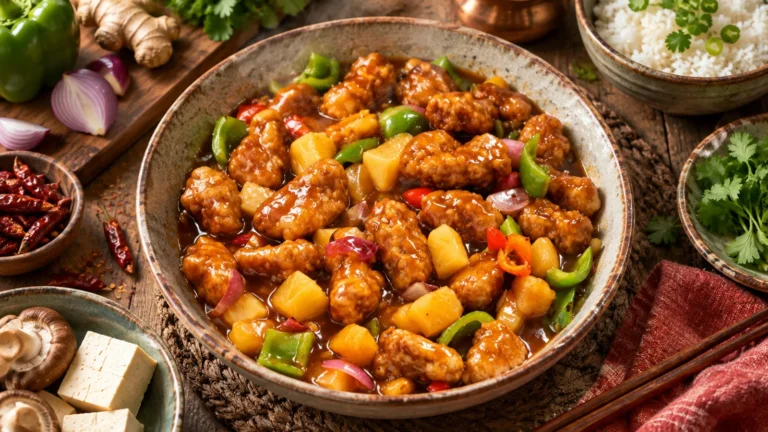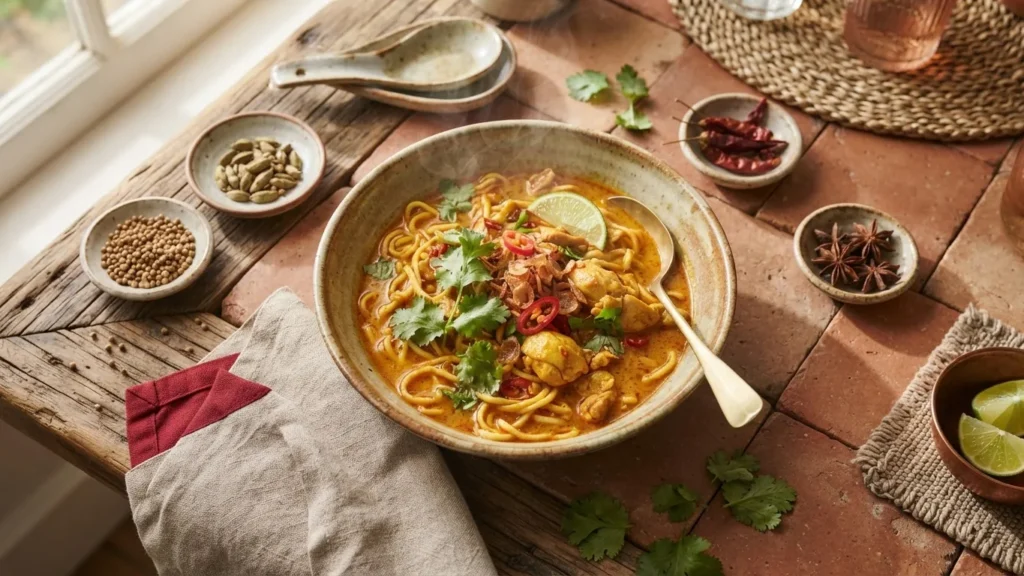
The words on the menu stay the same, but the bowl in front of you can be one of at least three unrelated dishes: a quick coconut sauce tossed through noodles, a Northern Thai soup called khao soi built on a curry paste closer to massaman than to red curry, or a Japanese roux dish where the gravy is thick, mild, and sweet. Curry noodles is a name, not a recipe. Choosing which one you actually want, before you buy paste or noodles, saves the most common wasted trip and the most common disappointing result. This guide, assembled by the AtlasPlate Recipe Desk from published sources, sorts the families apart and hands you the numbers each source gives.
Our method here is aggregation: we cross-reference the recipes of Myriad Recipes, Eat With Clarity, Pinch of Yum, Eat the Gains, Hot Thai Kitchen, and Just One Cookbook, name the specific variant each one documents, and pull the timings, temperatures, and handling cues into one place without changing the underlying method any of them teaches.
Which dish do you mean? Three families share the label “curry noodles.” A quick tossed version cooks a coconut sauce from either pantry spices or red curry paste and coats noodles in it, ready in roughly 15 to 40 minutes depending on the recipe. Khao soi is a Northern Thai coconut curry noodle soup with wheat egg noodles, crispy fried noodles on top, and a from-scratch paste. Curry udon uses Japanese curry roux, thicker and sweeter than either. They are not substitutes for one another. Pick by texture wanted (tossed, soupy, or stew-thick) and how much paste work you will do.
The Curry Noodles Decision Frame: Tossed Sauce, Khao Soi, or Curry Udon
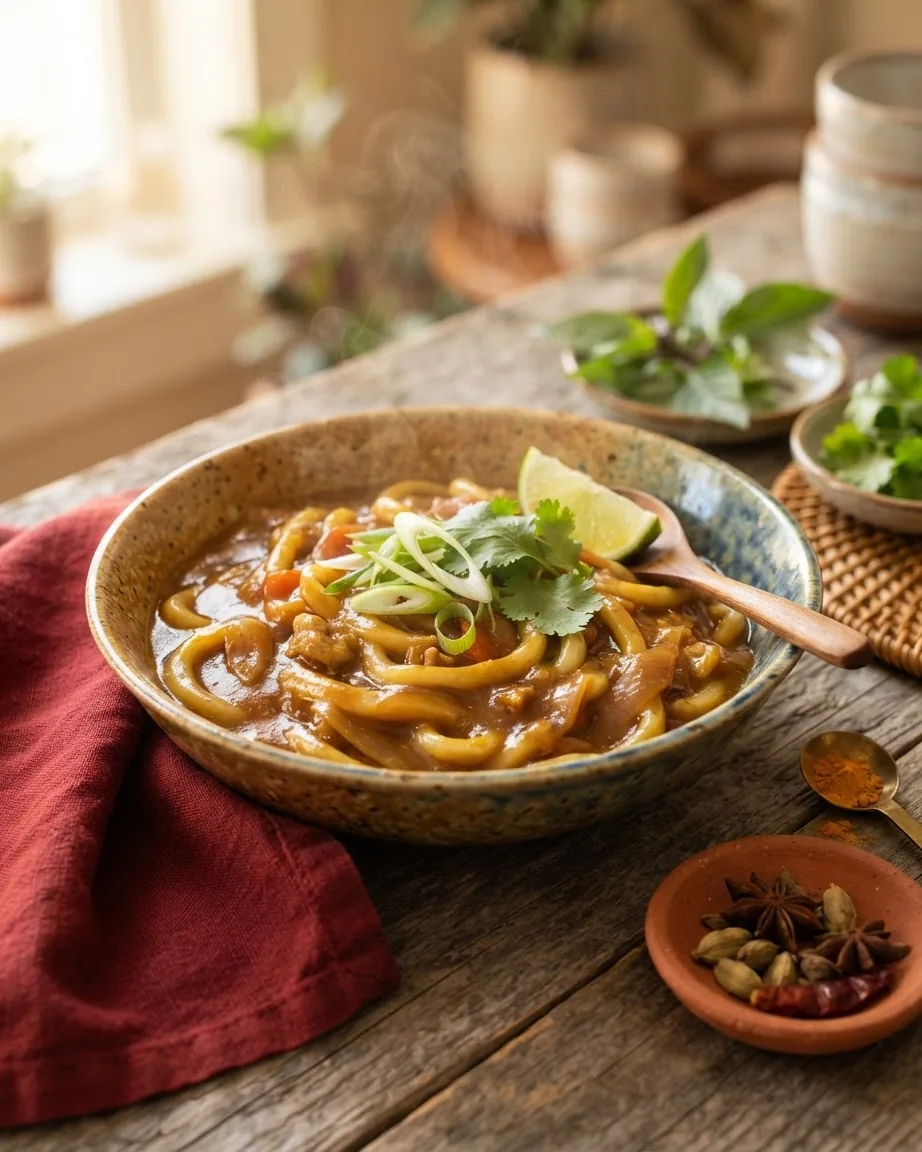
Start with the texture you want in the bowl, because that single choice sends you down three different shopping lists.
If you want noodles coated in a sauce with little standing liquid, you want the tossed family. Myriad Recipes builds its one-pot version from pantry spices, tomato paste, coconut milk, and chicken broth, no curry paste required, and says it comes together in less than 25 minutes. Eat With Clarity’s vegan take is faster still, described as ready in just 15 minutes. Pinch of Yum’s coconut bowl runs under 30 minutes, and Eat the Gains’ chicken-and-vegetable version takes about 40 minutes because it has more moving parts. All four land in the same category: sauce clinging to noodles, not soup.
If you want a bowl of soup you drink as much as you eat, you want khao soi. It is a different project. The curry is built from a paste made from scratch, the broth simmers, and it carries a crown of crispy deep-fried noodles. Hot Thai Kitchen (Pailin Chongchitnant) simmers the drumsticks gently for 40 minutes until fork tender, which tells you this is not a weeknight toss.
If you want something thick and stew-like, mild and a little sweet, you want curry udon. Just One Cookbook (Namiko Chen) describes Japanese curry as thicker, milder, and sweeter, with a stew-like consistency, and the dish comes together in under 30 minutes once you have the roux.
Use this to commit before shopping:
- Tossed coconut curry noodles – sauce-coated, 15 to 40 minutes, pantry spices or red curry paste, any long noodle. Weeknight default.
- Khao soi – coconut curry soup, from-scratch paste, wheat egg noodles plus fried noodle topping, a 40-minute simmer for the meat. A weekend build.
- Curry udon – thick sweet-mild roux gravy over udon, under 30 minutes, needs Japanese curry roux and the right udon.
The rest of this guide follows that split. If you want the wider set, see our asian recipes section.
Curry Base: Pantry Spices, Red Curry Paste, Khao Soi Paste, or Japanese Roux
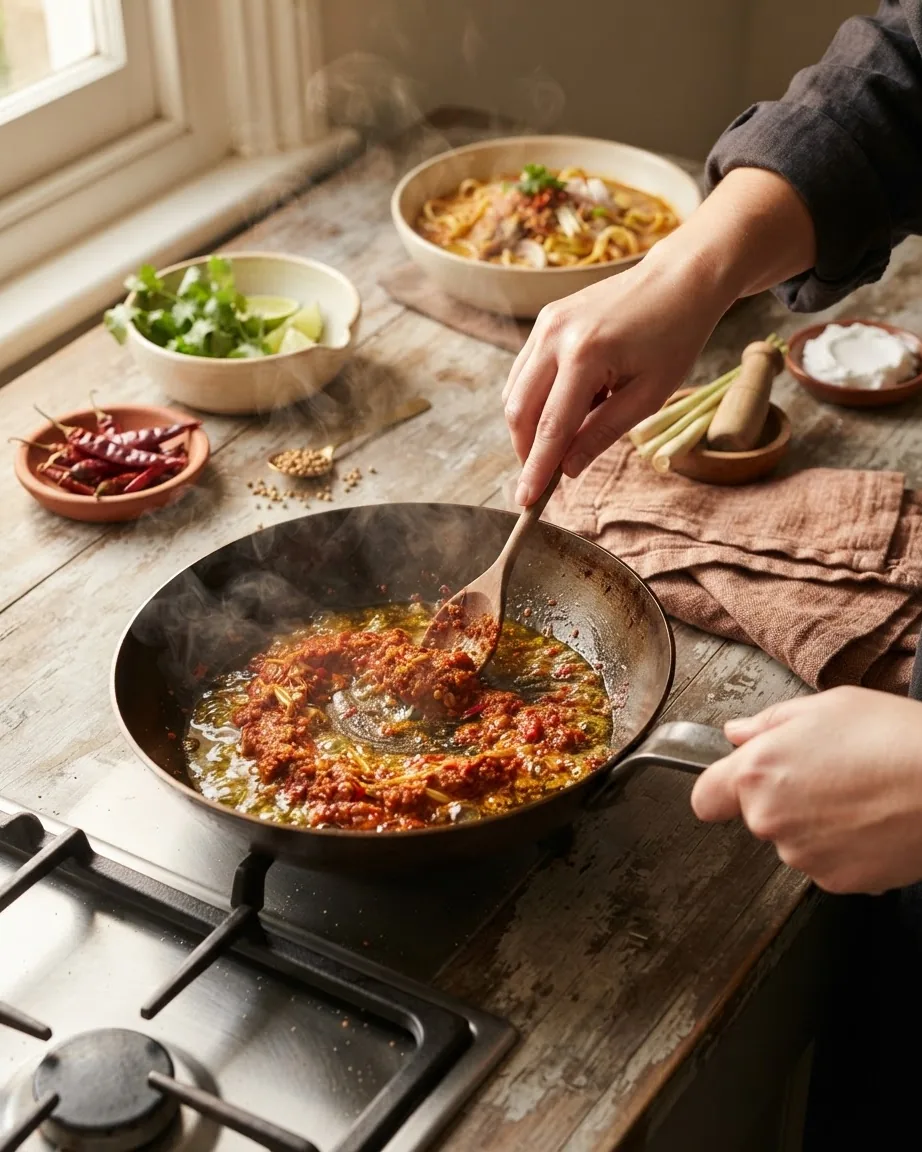
The base decides both the flavor and how much work you sign up for. Four distinct routes exist here, and swapping one for another does not work.
Pantry spices (no paste). Myriad Recipes shows you can build a coconut curry noodle sauce from a few pantry spices, tomato paste, coconut milk, and chicken broth, with no jarred paste at all. If you keep cumin, turmeric, and chili on the shelf, this is the route that needs no special shopping trip. It leans warm and dry-spiced rather than the herbal profile a Thai paste gives.
Red curry paste (shortcut). The fastest flavored route. Pinch of Yum’s method fries the red curry paste for 1 minute first, then adds coconut milk, sugar, fish sauce, and soy sauce and simmers to thicken. Frying the paste before the liquid goes in is the make-or-break step: it blooms the aromatics in fat so the curry tastes cooked rather than raw. On heat, Eat With Clarity notes that red curry is usually hotter than green curry, but that the actual heat depends on the brand of paste you buy, so the jar, not the color, sets your spice level.
Curry powder blend. If a recipe calls for curry powder rather than paste, Eat the Gains describes the typical blend as coriander, cumin, turmeric, ginger, fenugreek, and red chili powder. That is a dry-spice profile, closer to the pantry route than to a Thai paste, and worth knowing so you do not treat the two as swaps.
Khao soi paste (from scratch only). Here is the trap. Hot Thai Kitchen states plainly that you cannot buy a store-bought curry paste for khao soi. The paste is made from scratch, and its defining spice is black cardamom (tsaoko) – Pailin Chongchitnant calls it “the spice that will make this curry truly unique.” Green cardamom is not a stand-in; it is a different flavor entirely. If a shortcut recipe hands you a jar of “red curry paste” and calls the result khao soi, it is making a different dish.
Japanese curry roux (block). Curry udon uses a roux, usually a store-bought block, dissolved into dashi-based soup. Just One Cookbook’s whole flavor identity here – thicker, milder, sweeter – comes from that roux, so this base is not something you improvise from Thai ingredients.
The Sweet-Salty-Sour-Spicy Balance in Thai Curry Noodles
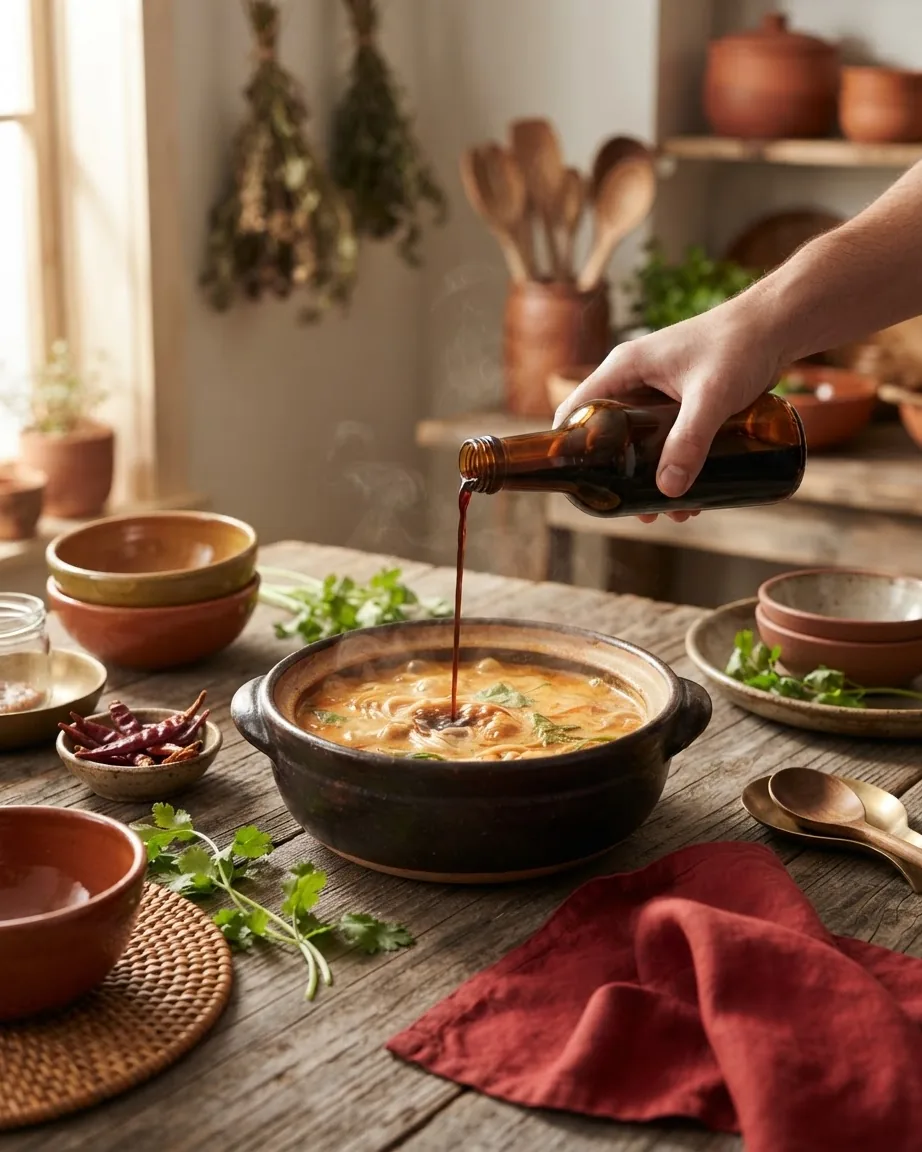
A Thai-style coconut curry sauce is not seasoned by salt alone. It is tuned across four tastes, and each one comes from a specific ingredient you can add or hold back.
In Pinch of Yum’s Bangkok-style bowl, after the paste is fried, the sauce takes coconut milk for richness, sugar for sweet, fish sauce for salty and savory depth, and soy sauce for a second salty note. The sour and fresh edge arrives at the bowl, from lime. Sweetness balances the chili so the heat reads as warmth rather than harshness; the fish sauce keeps the coconut from tasting flat.
Khao soi handles balance differently, and this is the part most home versions miss. The condiments served alongside – pickled mustard greens, sliced shallots, and lime – are not garnish. Hot Thai Kitchen states they are necessary for “gae lien,” the job of cutting through the richness of the fatty coconut broth. The sour of the pickles and lime and the sharp raw shallot are what make a heavy bowl keep tasting good to the last spoonful. Leave them off and the soup turns one-note.
To make the Thai coconut version vegetarian or vegan, the fish sauce is the pivot: Pinch of Yum’s guidance is to omit it or use a vegan alternative, and Eat With Clarity’s version replaces that salt with more soy sauce. Do that and you have removed the savory-salty anchor, so taste and add soy in small steps to rebuild it rather than dumping it in at once.
For a khao soi without meat, Hot Thai Kitchen suggests swapping the water for a good vegetable stock, then using mushrooms and tofu and simmering for 15-20 minutes rather than the 40-minute drumstick simmer.
Coconut Milk and Why Your Sauce Runs Watery
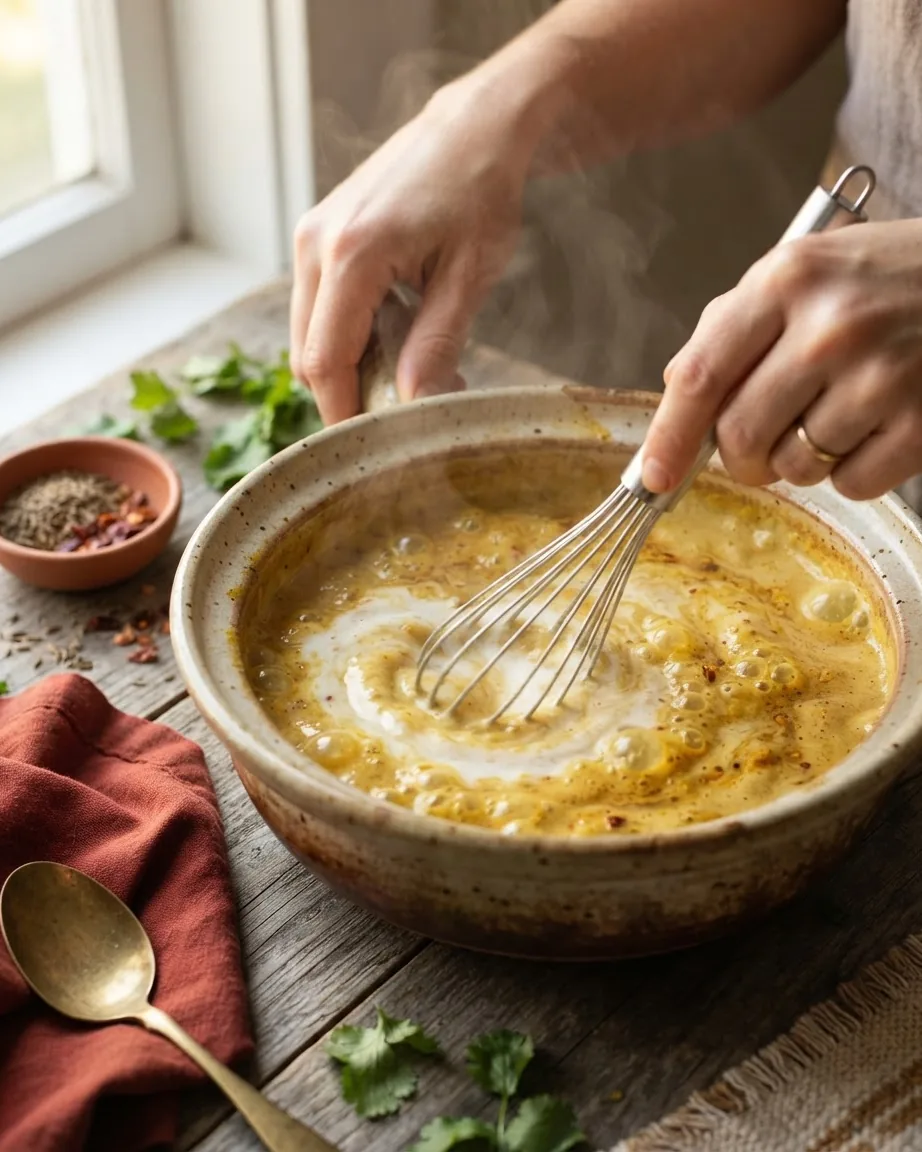
The most common thin-sauce complaint traces back to one carton on the shelf that should have been a can.
Eat With Clarity is direct about it: use canned full-fat coconut milk, not coconut milk from a carton, because the carton kind will not be creamy the way canned is. The carton product is a diluted beverage; the can is the concentrated cooking ingredient. This is the swap that quietly ruins more coconut curry sauces than any spice mistake.
If you want to cut richness, Eat the Gains notes you can use lite coconut milk, but the dish will not be as rich and creamy. That is a deliberate tradeoff, not a failure – just know you are trading body for lightness.
To thicken a sauce that is still loose, Eat With Clarity’s method brings the sauce to a boil, whisks in cornstarch, then reduces the heat to low and simmers for 2-3 minutes. The boil-then-simmer order matters: cornstarch needs to reach a boil to set, then a low simmer to finish without breaking. For khao soi’s thinner broth, Hot Thai Kitchen adds ½ cup (120 ml) of the coconut milk and brings it to a boil over medium heat as one step in building the soup, a reminder that khao soi is meant to stay looser than a tossed sauce – the Wikipedia entry notes its curry resembles yellow or massaman curry but of a thinner consistency.
Noodle Handling: Rice, Udon, Ramen, Soba, and Egg Noodles
A wide range of long noodles works for the tossed family. Eat the Gains lists udon, rice, ramen, soba, and egg noodles as all workable, and says spaghetti or linguine will do if that is what you have. But each noodle has a handling rule, and getting it wrong is what turns curry noodles gluey or dry.
Rice noodles are the ones people overcook. Eat the Gains cooks them only to just al dente and rinses them cold, because they go back into the pan later and finish there – cook them fully at the boil and they turn to mush in the sauce. Two published shortcuts skip boiling: Pinch of Yum soaks rice noodles in cold water for at least 20 minutes or so, started right away, so they need only minutes in the skillet; a separate approach softens rice noodles by soaking for 25 minutes while the sauce comes together. Both preserve texture better than a hard boil.
Udon for curry udon has a quality rule. Just One Cookbook recommends frozen udon labeled “Sanuki” or dried udon over refrigerated udon, because the frozen and dried kinds hold a better texture. The recipe calls for 1 lb (500 g) of frozen or parboiled udon noodles. Refrigerated udon is the convenient one on most shelves, and it is the one to skip if you can.
Wheat egg noodles are what define khao soi: it is a Northern Thai noodle soup built on wheat-based egg noodles in a coconut milk curry broth, with a portion of the same noodles deep-fried until crisp and piled on top for contrast.
The other gluey-sauce fix is portioning the sauce. Eat With Clarity warns that the sauce looks generous at first but the noodles absorb it as it sits – so a dish that seemed perfectly saucy can dry out on the plate. Adding only part of the sauce first, then more as needed, keeps you from over-saucing something that will thicken on its own.
Khao Soi: Northern Thai Origin, Why It Is Never Pork, and the Yellow-Curry Truth
Khao soi is where the biggest misconception lives. Many people picture red curry poured over noodles. That is not what it is.
Its roots are Chinese-Muslim, specifically Yunnanese, and that origin decides the meat. Hot Thai Kitchen explains that khao soi is not usually made with pork, despite pork being the most common meat in Thailand, precisely because of that Muslim influence – it is commonly chicken or beef instead. So if you see a “pork khao soi” claiming tradition, the provenance is off.
The paste is not the red curry most cooks reach for. As noted above, the Wikipedia entry on khao soi places its curry closer to yellow or massaman curry, only thinner, and Hot Thai Kitchen’s defining spice is black cardamom, which no red curry paste carries. Between the from-scratch-only paste, the black cardamom, and the yellow/massaman base, this is a genuinely different curry, not a shortcut over noodles.
There is also a naming trap worth flagging: the Wikipedia entry records that “Lao khao soi” is a completely different, unrelated dish – a clear-broth soup with hand-sliced rice noodles and a tomato-pork sauce, with no connection to the famous coconut version. Same two words, unrelated food. If a recipe promises “khao soi” and produces a clear tomato broth, it is not a failed coconut version; it is the Lao dish.
Build order, from Hot Thai Kitchen: the coconut milk goes in and comes to a boil over medium heat, then the drumsticks simmer gently for 40 minutes until fork tender. The crispy fried noodles and the pickled mustard greens, shallots, and lime finish the bowl. For a dish this close to Ethiopian long-simmered stews in ambition, see also our Ethiopian wat guide. Hot Thai Kitchen publishes the full khao soi recipe with the paste breakdown.
Curry Udon: Melting the Roux Without Scorching or Lumps
Curry udon is the most forgiving of the three families on flavor and the least forgiving on one technical step: dissolving the roux.
Just One Cookbook is specific about the failure mode. As curry roux melts, it sinks to the bottom of the pot and can burn before it fully dissolves. The fix is counterintuitive – turn off the heat, or drop it to the lowest setting, while the roux dissolves, then bring the heat back once it is smooth. Add roux to a hard-boiling pot and you get scorched gravy at the bottom and lumps floating on top. Off the heat, it melts evenly.
The flavor identity comes from the roux itself: Japanese curry is thicker, milder, and sweeter than Indian or Thai curries, with a stew-like consistency, which is why curry udon coats the noodles like gravy rather than clinging like a Thai sauce. Pair that with the frozen Sanuki or dried udon noted earlier, and the dish is ready in under 30 minutes. Just One Cookbook publishes the full curry udon method.
This is a different balance question from the Thai bowls – no fish sauce, no lime crown, just dashi, roux, and udon. If you like the idea of one number quietly deciding a dish’s whole texture, our Khichdi recipe sits in similar territory.
Storage and Freezing: The Answer Depends on Your Noodle
There is no single freezing rule for curry noodles, and treating it as if there were is how people ruin a batch. The noodle decides.
Rice-noodle versions do not freeze. Eat With Clarity does not recommend freezing them, because the rice noodles fall apart completely once defrosted. There is no workaround for this – the starch structure that makes them tender fresh is the same one that collapses after a freeze-thaw.
Ramen-style and ground-beef versions do freeze. Myriad Recipes places its ground-beef coconut curry noodles (made with ramen noodles) in airtight containers in the freezer for up to 3 months, and keeps them refrigerated for up to 3 days. Wheat-based ramen holds its structure through freezing in a way rice noodles cannot.
Reheating is where you recover texture either way. Myriad Recipes reheats leftovers with a splash of added liquid – about 2 to 3 tablespoons of milk, coconut milk, or chicken broth added to the container, lid left slightly ajar. The extra liquid loosens sauce that thickened and was absorbed in the fridge, since, as noted above, the noodles keep drinking the sauce as they sit.
- Rice noodles: do not freeze; eat fresh.
- Ramen / wheat noodles: up to 3 months frozen, up to 3 days refrigerated.
- Any leftover: reheat with 2 to 3 tablespoons of added liquid, lid ajar.
Make-Ahead Bases and Nutrition Numbers That Do Not Compare
Two practical points close this out: what you can prep ahead, and why you should ignore any single “calories in curry noodles” figure.
On make-ahead, the base is the part that keeps. A pantry-spice or paste-fried coconut sauce can be built first while noodles soak in parallel – Pinch of Yum starts the rice-noodle soak right away so it runs during the 3-to-5-minute shallot-and-ginger fry, and a separate soak-25-minutes-while-you-make-the-sauce approach uses the same overlap. For khao soi, the from-scratch paste is the true make-ahead component, since it carries the black cardamom and the yellow/massaman profile that no jar supplies. For curry udon, the dashi-and-roux gravy is the base you can hold and reheat, dropping in fresh udon at serving.
On nutrition, the published per-serving figures belong to four different dishes and cannot be lined up against each other. Eat the Gains lists its chicken-and-vegetable red curry noodles at 654 kcal with 34.3 g protein and 830 mg sodium, at 36% of the sodium daily value. Myriad Recipes’ ground-beef version is far richer at 787 kcal per serving with 70 g fat, of which 45 g is saturated. Eat With Clarity’s vegan bowl comes to about 440 kcal with 7 g protein. Just One Cookbook’s pork curry udon is about 522 kcal with 1046 mg sodium. Different proteins, different serving definitions – one source’s “1 bowl” is another’s quarter-recipe – so no single number represents the category. Match the figure to the exact dish you are cooking.
A note on sourcing: these values are as published by each site and reflect that recipe’s own ingredients and serving size, not an independent measurement.
Same Name, Nearly Double the Calories: The Four Bowls Side by Side
Because “curry noodles” is a name and not a recipe, the four versions our sources document land at very different weights per serving – and the menu word tells you none of it. Lining up the published per-serving figures shows the true spread before you commit to a bowl.
- Vegan Thai red curry noodles (Eat With Clarity) – 440 kcal per bowl, the lightest of the four.
- Curry udon, pork (Just One Cookbook) – 522 kcal per serving.
- Chicken-and-vegetable red curry noodles (Eat the Gains) – 654 kcal per serving.
- Ground-beef coconut curry noodles (Myriad Recipes) – 787 kcal per serving, the heaviest.
The math a reader would actually run: the heaviest bowl carries 347 kcal more than the lightest (787 − 440), which makes it about 1.79× the calories of the vegan version for what the menu calls the same thing. Even the two mid-range bowls differ by 132 kcal (654 − 522).
Frequently Asked Questions
Can I use green curry paste instead of red for tossed curry noodles?
You can, and it changes the heat profile. Published guidance holds that a red paste generally brings more fire than green, though the jar’s brand ultimately decides. Swapping to green tends toward a milder, more herbal bowl. Taste as you go and adjust the sugar and salt, since a different paste shifts the whole balance, not just the burn.
Why did my curry noodles turn out dry an hour after cooking?
The noodles kept drinking the sauce. Wheat and rice noodles both continue absorbing liquid after they leave the pan, so a plate that looked generous goes tight as it stands. Revive it with a splash of coconut milk or broth stirred through, and next time hold back part of the sauce until just before serving.
Is khao soi gluten-free?
Traditionally no. It is built on wheat-based egg noodles, both in the broth and in the crispy fried topping, so it carries gluten from the noodles alone. Swapping in a gluten-free noodle changes the dish’s defining texture and its signature crisp garnish. If you need gluten-free, a rice-noodle coconut curry bowl is a closer fit to work with than an altered khao soi.
What is the quickest curry noodle dish for a weeknight?
Among the documented recipes, a vegan Thai red curry version clocks in at roughly a quarter-hour, faster than the pantry-spice one-pot at just under 25 minutes, the Bangkok bowl under 30, and the chicken-and-vegetable build near 40. Curry udon also lands under half an hour once the roux is on hand. Speed tracks with skipping a from-scratch paste.
Can I make curry udon ahead for lunches?
Hold the gravy and the noodles separately. The dashi-and-roux base reheats well, but udon left sitting in hot broth softens past its best. Store the gravy on its own, then warm it and add freshly cooked or reheated noodles at serving. The published guidance also favors frozen Sanuki or dried udon over refrigerated for texture that survives a reheat.