Drafted with AI language models. How this page was made
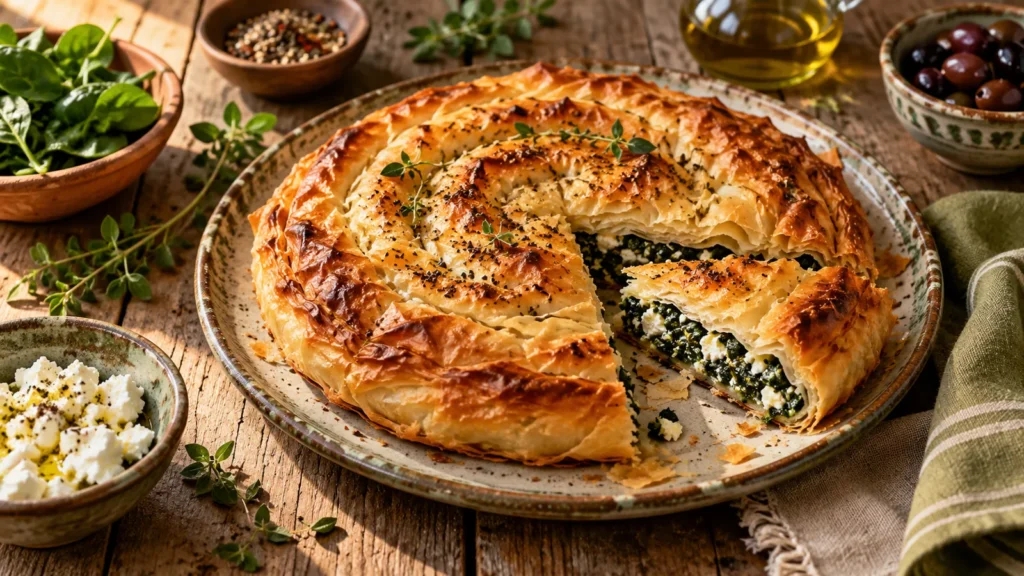
When a recipe calls for spinach and feta pastry, it points to three different dishes: Greek spanakopita in phyllo, Turkish börek in phyllo with a yogurt-milk wash, and quick puff-pastry puffs or rolls built from a softer, laminated dough. They are not interchangeable in texture, and the single decision that wrecks any of them is the same: water left in the spinach. The sections below separate the three by origin, dough, and bake, so you can pick before you shop.
The short answer: spinach and feta pastry splits into spanakopita (phyllo sheets, feta-only filling, bakes low and long), börek (phyllo or yufka brushed with a yogurt-milk-egg mix, same family but softer), and puff-pastry versions (pre-laminated dough, a cheese blend, fastest to assemble). Phyllo and puff pastry are built differently and are not swappable without changing the result, though a spinach pie can legitimately use either. Whichever you choose, squeeze or cook out the spinach liquid first, or the base turns soggy.
What goes into the filling, and why the cheese rule changes by dish
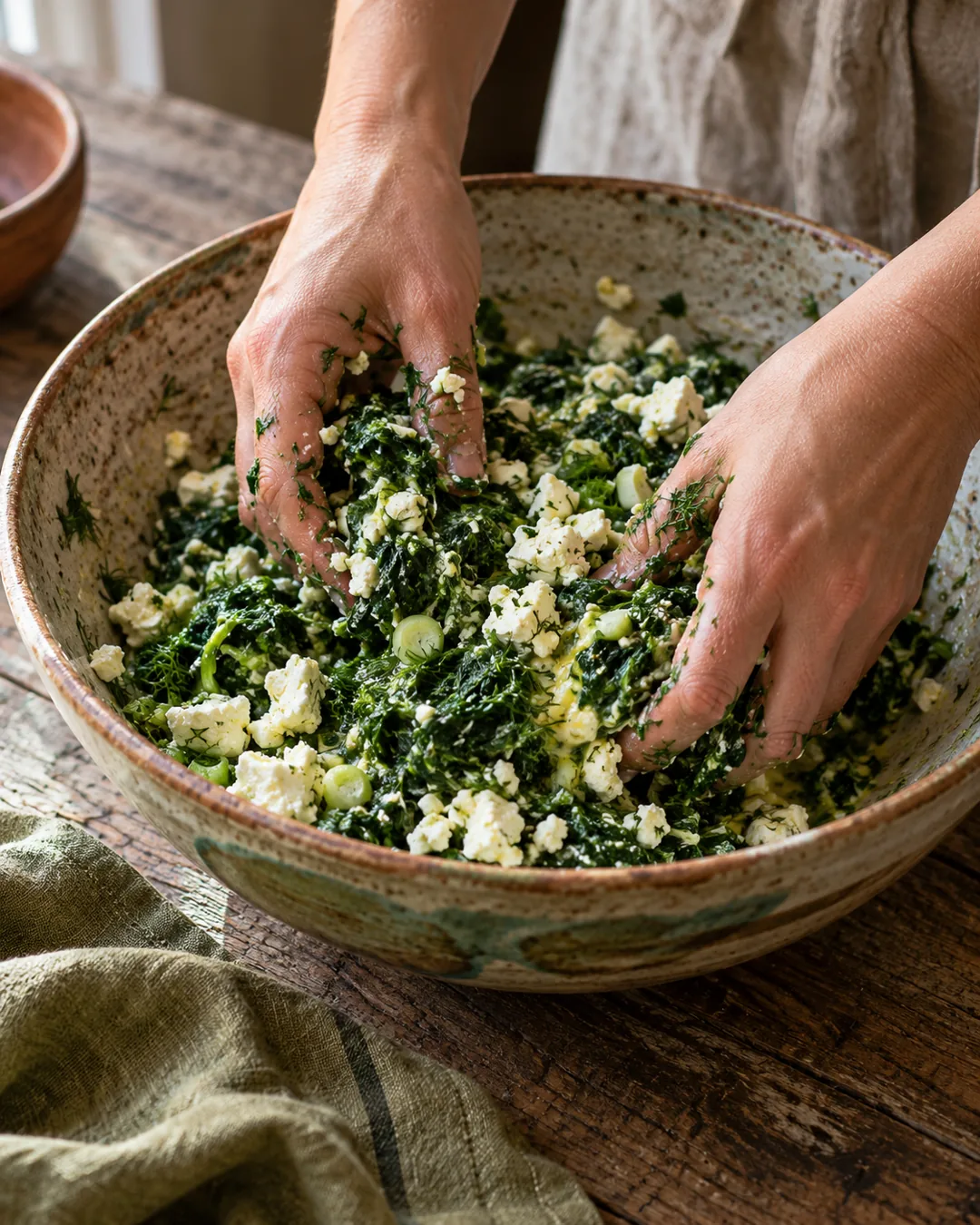
Greek spanakopita originates in Greece as a savory spinach pie, and its filling is deliberately narrow: spinach, eggs, herbs, and feta. The Mediterranean Dish is firm that the cheese is not negotiable, writing that you should “only use quality feta cheese, no other cheese qualifies for spanakopita” (The Mediterranean Dish). Dill is the herb most associated with it, and egg binds the mixture.
The puff-pastry version loosens that rule on purpose. Recipes such as the one from Gimme Delicious build the filling as a blend (feta plus cream cheese, with mozzarella or parmesan) which melts and holds together inside the softer dough rather than crumbling out. A broader encyclopedic definition of savory spinach pie allows other white cheeses, including kefalotiri, under the wider family of the dish. These are not competing claims about one recipe; they are different dishes, so the cheese policy is a condition of which one you are making, not a mistake to correct.
Herbs and aromatics track the tradition: dill and scallion or onion for the Greek style, onion softened in the pan for börek. Feta itself is a brined cheese and contains no egg; the egg in these recipes comes from the binder or the wash, not the cheese.
Puff pastry with spinach and feta: the fast route
If you want the quickest path, puff pastry is it. The dough is sold pre-laminated and frozen, so there is no sheet-by-sheet layering. Published versions wrap a spinach-cheese blend in squares or roll it into a log and slice it into coins: EatingWell’s method rolls the pastry into a log around the feta and spinach, then cuts it crosswise into twelve one-inch coins. The trade-off is texture: puff gives a buttery rise, not the shattering layers of phyllo.
Draining the spinach: the step that decides sog
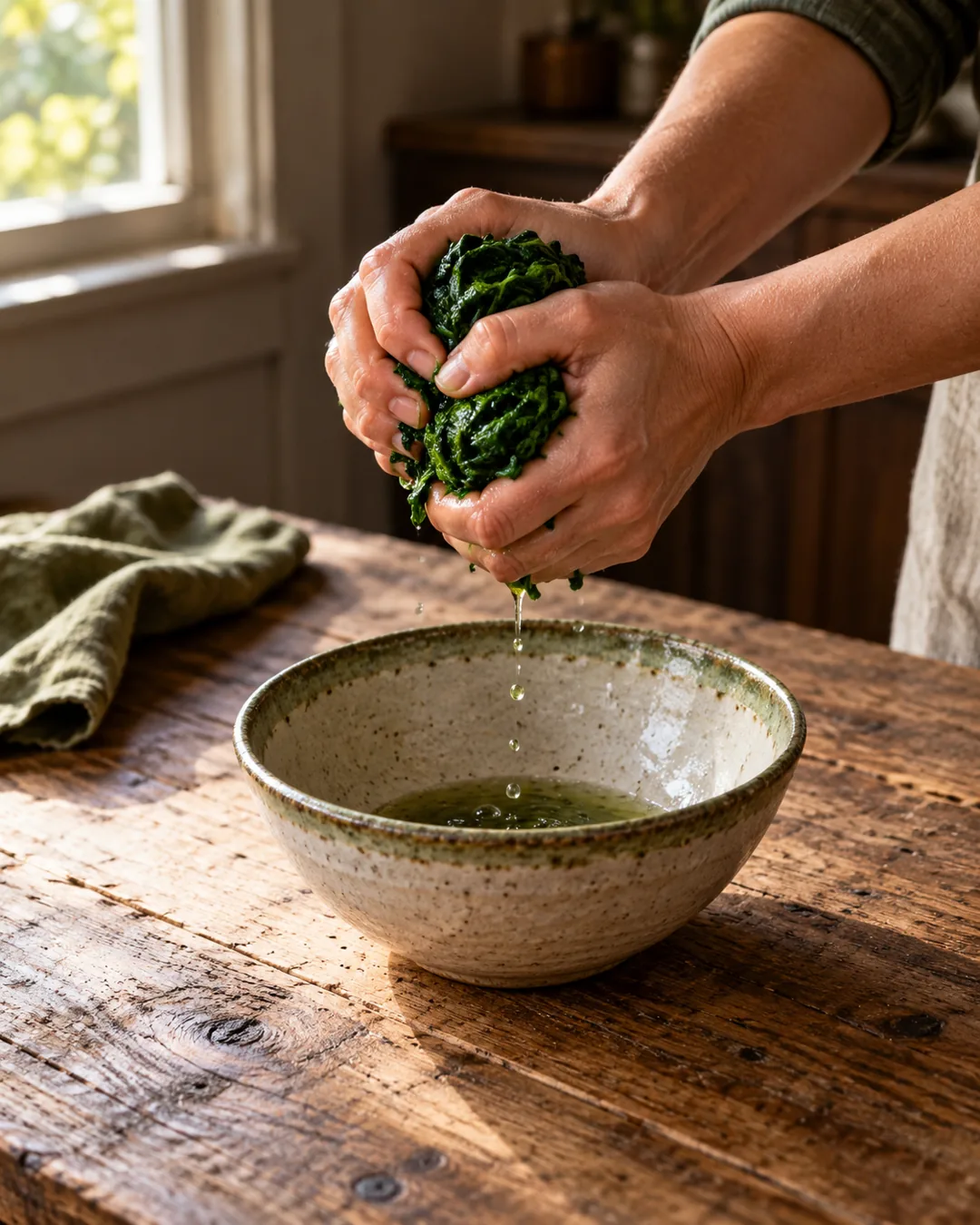
Residual water in the spinach is the dominant failure mode across all three dishes, and the fix depends on which spinach you use. For thawed frozen spinach, squeeze it hard until no more liquid runs out before it ever touches the dough. For fresh spinach, cook it down and drain it first: a no-cook filling of fresh leaves releases water into the pastry as it bakes. In börek, the onion and spinach are sautéed, with the onion cooked until translucent (4-5 minutes) and the vegetables then cooled for 15-20 minutes so steam escapes before assembly.
There is one counterintuitive exception. In some börek methods the assembled pastry is rested (even overnight) on purpose, which lets the phyllo absorb liquid from the filling rather than leaving it to pool. For spanakopita and puff-pastry puffs, do the opposite and keep the filling dry; for a wet-finish börek, the rest is part of the method.
Phyllo versus puff pastry: how they differ, and handling each without tearing
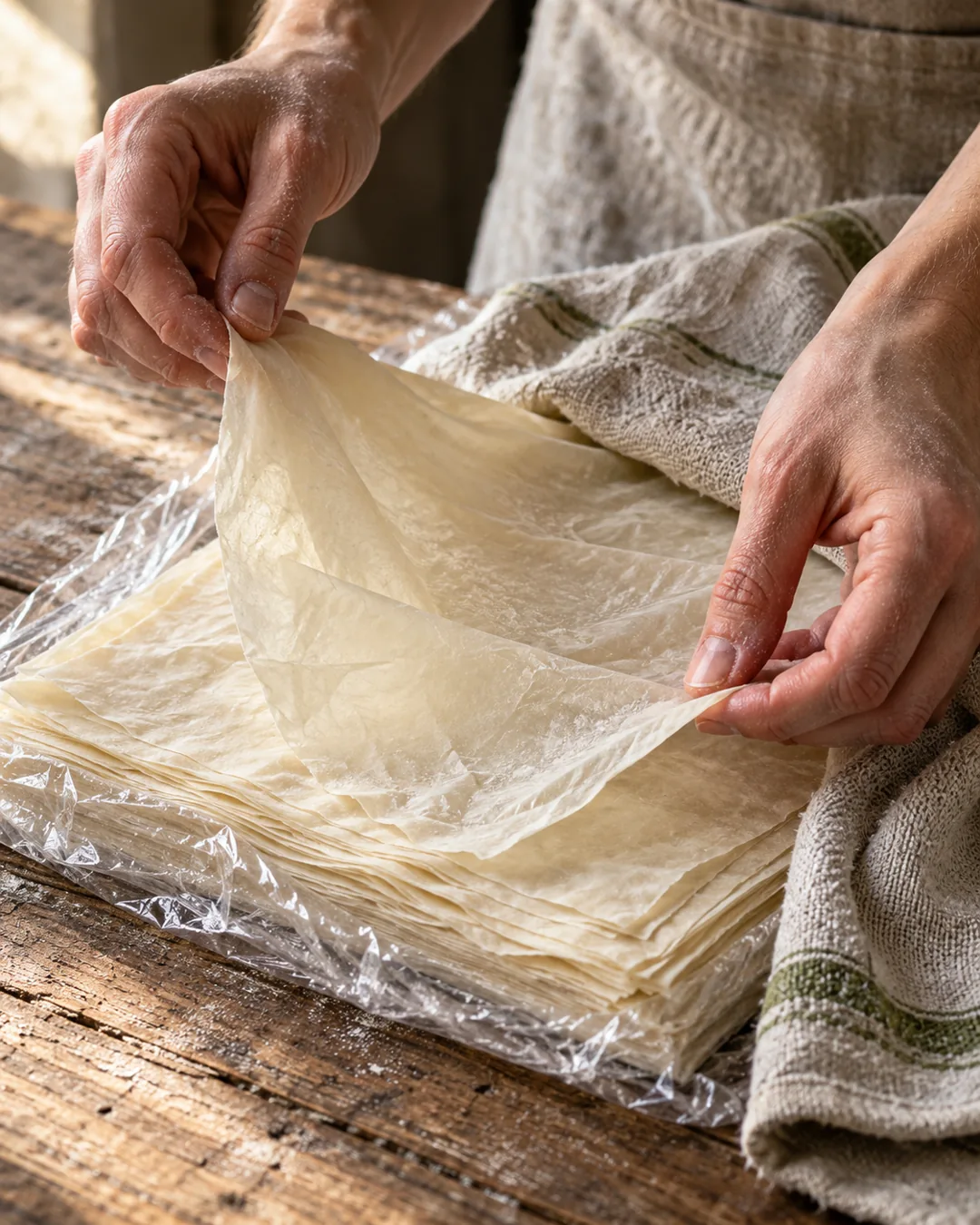
Phyllo and puff pastry are built differently. Phyllo is paper-thin, nearly fat-free sheets you brush with butter or oil and stack; the crispness comes from the stacking and the fat you add. Puff pastry already has butter laminated between folded layers of dough, so it rises on its own. Because of that, swapping one for the other changes both texture and technique, but a spinach pie can be made with either, so the swap is a choice, not an error.
Thawing each dough correctly
Both doughs are sold frozen and both need slow thawing, but not for the same length. Phyllo should be thawed in the refrigerator in its unopened package for 12-14 hours before use; opening it cold and dry is what causes shattering. Puff pastry also thaws best in the refrigerator over several hours up to a full day: thaw it there rather than on the counter, where the butter layers soften and the dough tears.
Working with phyllo once it is thawed
Phyllo dries out in minutes once the package is open. The standard control is to keep the stack under a sheet of plastic and a slightly damp towel, pulling one sheet at a time. The reassuring part: torn phyllo pinches back together, and a missed or cracked layer does not ruin the pie, because the stack hides it. That forgiveness is why the beginner barrier is lower than its reputation.
Folding, rolling, and layering
The shape follows the dish. Spanakopita is built as a layered pan pie: several sheets of buttered phyllo below the filling, filling spread flat, several sheets above, then scored into portions before baking. Triangles and mini versions use a strip of phyllo folded flag-style around a spoon of filling. Puff-pastry puffs are squares folded over the filling with the edges sealed: sealing the edges is what keeps the cheese from leaking and the base from going soft. Börek is layered or rolled, then brushed between and over the layers with a yogurt-milk-egg mixture that sets soft rather than shattering.
For another Greek dish where a single name hides two different methods, see our Greek Chicken and Potatoes guide, and for a related flatbread baked with cheese, our Manakish write-up. The wider collection sits under our european recipes.
What to serve with spinach and feta pastry
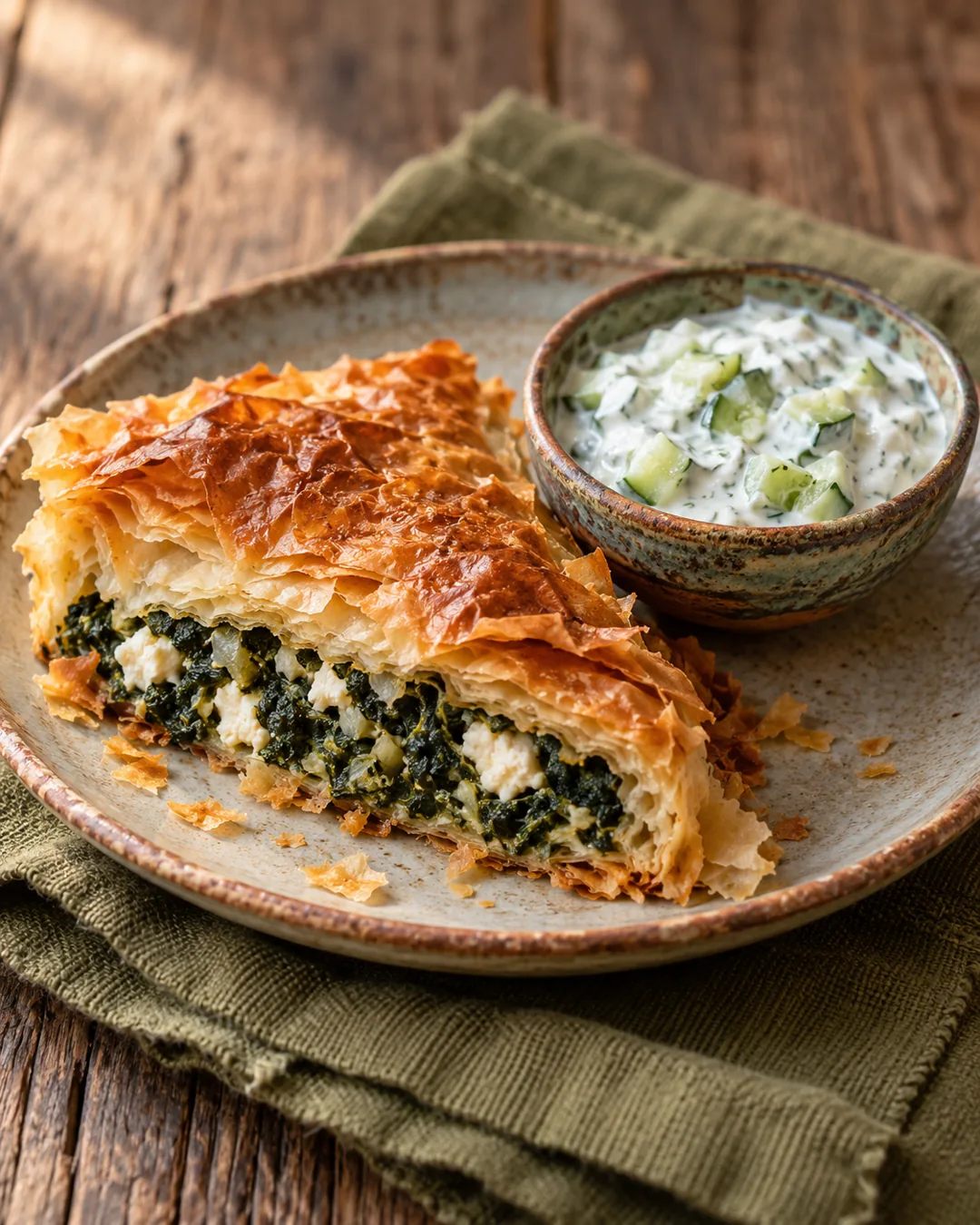
Across sources these pastries read as a meze, starter, or light main, and they pair with a Greek salad of tomato, cucumber, onion, olives, and feta; a cucumber-yogurt dip; or a simple leafy salad. Börek is often eaten warm with tea.
How the three dishes are assembled and baked
The core method is the same shape for all three: build a dry filling, enclose it in dough, bake until the top is set and golden, but the temperature and time are specific to each dish and must not be averaged across them.
- Prepare the filling: squeeze frozen spinach dry, or sauté and cool fresh spinach with onion; combine with the cheese the dish calls for (feta alone for spanakopita, a blend for puff versions). Gimme Delicious cooks the filling on medium-high for 3-4 minutes.
- Thaw and ready the dough: phyllo from the fridge, kept under a damp towel; puff pastry thawed cold and firm.
- Assemble: layer or fold per the dish; seal puff edges; brush börek with its yogurt-milk-egg wash; brush puff tops with beaten egg and, if you like, scatter sesame seeds.
- Bake to the dish’s own setting (see the table), then rest a few minutes before cutting so the filling sets.
Bake settings compared across five published recipes
This is a side-by-side the individual recipes do not give you: the temperature and time each named source bakes its spinach-and-feta pastry at, drawn from their own instructions. The numbers differ because the dishes differ, not because any one is wrong.
| Dish / source | Oven temperature | Bake time |
|---|---|---|
| Spanakopita, The Mediterranean Dish | 325°F | about 1 hour |
| Puff-pastry pastries, Gimme Delicious | 400°F | 20-25 minutes |
| Puff-pastry rolls, EatingWell | 425°F | about 20 minutes |
| Börek, Foolproof Living | 350°F | 30-35 minutes |
| Puffs, The Kitchn | 400°F | 25-30 minutes |
The pattern is worth reading as a rule: the thinner, taller phyllo pie bakes low and long to crisp every layer without burning the top; the pre-laminated puff versions run hot and short to drive the rise. Foolproof Living preheats to 350°F and bakes börek until “the top is golden brown” (Foolproof Living).
Where to buy the ingredients, and swaps when something is missing
Börek traditionally uses yufka, and phyllo is the common substitute the recipes themselves reach for. For a cheese-and-egg-free fasting (Lenten) spanakopita, the filling is bound with olive oil and a little flour instead of feta and egg, which keeps it dairy-free.
Storing, freezing, and making it ahead by dish
Make-ahead rules split by dish. Cooked spanakopita keeps in the fridge for 2 to 3 days and can be portioned and frozen, then reheated in the oven without thawing first. Börek can be assembled and rested or refrigerated before baking: the rest also helps the phyllo settle. Puff pastry must be thawed in the refrigerator before you shape it; do not try to work it frozen. For a leftover filling with no dough left, it folds into eggs or pasta rather than being thrown out.
Per-Piece Calories and Fat: Two Puff-Pastry Versions Side by Side
The two puff-pastry recipes quote their nutrition on different bases, so you cannot compare them as printed: Gimme Delicious reports 508 kcal and 43 g fat for one pastry, while EatingWell reports 466 kcal and 32 g fat for a serving of three rolls. Put both on a single-piece footing and the real difference appears. One EatingWell roll works out to roughly 466 ÷ 3 = 155 kcal and 32 ÷ 3 ≈ 10.7 g fat. That makes each Gimme Delicious pastry about 508 − 155 = 353 kcal heavier and 43 − 10.7 ≈ 32.3 g fattier than a single EatingWell coin: largely because the Gimme Delicious piece is a full wrapped square with a feta-cream-cheese blend, whereas EatingWell slices one log into twelve thin coins.
- One Gimme Delicious pastry: 508 kcal, 43 g fat.
Use this when you are deciding portion size for a party: twelve small EatingWell coins total roughly the calories of three-and-a-half Gimme Delicious pastries, so the choice of format, not just the ingredients, drives how much each guest actually eats.
Frequently asked questions
How to make spinach and feta puff pastry
Squeeze the spinach fully dry, fold it with a cheese blend into puff squares or roll it into a log, seal the edges, and brush the tops with beaten egg. Gimme Delicious bakes the pastries at 400°F for 20-25 minutes until puffed and golden; the sealed edge is what stops leaking.
Can you make spanakopita with puff pastry
Yes, a spinach pie can legitimately use puff pastry, but expect a buttery rise instead of phyllo’s thin, shattering layers. If you do, bake hotter and shorter than a phyllo spanakopita (closer to the 400°F, 25-30 minute window puff puffs use) rather than the long, low phyllo bake.
Does feta have egg
No. Feta is a brined cheese and contains no egg. Any egg in spinach-and-feta pastry comes from the filling binder or the egg wash brushed on top, not from the cheese: relevant if you are cooking for an egg allergy, in which case skip the wash and the bound filling. A note on nutrition and allergies: published calorie and sodium figures for these pastries vary widely because they are measured per different serving bases (a single puff versus a slice versus three rolls), and are not comparable across recipes. Feta, egg wash, and wheat dough are common allergens here. If you have a diagnosed food allergy or a medical dietary restriction, confirm the exact ingredients and amounts with a registered dietitian or your clinician rather than relying on a general recipe figure.